AC Unit for Apartment: The Complete Cooling Guide
Everything you need to choose, size, and install the right air conditioner for your apartment — from window and portable units to ductless mini-splits, including rental rules, BTU sizing, and smart buying tips.
EXPLORE AC TYPESWhy apartments need a different approach: Apartment cooling is not the same as cooling a standalone house. You are dealing with shared walls, limited window space, landlord rules, HOA restrictions, and often no ductwork. This guide walks you through the practical realities of apartment air conditioning so you can pick a unit that actually fits your space, your lease, and your daily comfort needs.
Apartment AC Types Compared
There is no single “best” AC type for every apartment. The right choice depends on your window configuration, whether you rent or own, how many rooms you need to cool, and what your building allows. Here is how the four main options compare.
Window AC Unit
The classic apartment solution. Sits in a double-hung window and cools a single room efficiently.
- Best for standard double-hung windows
- Straightforward DIY installation
- Efficient single-room cooling
- Requires secure window mounting
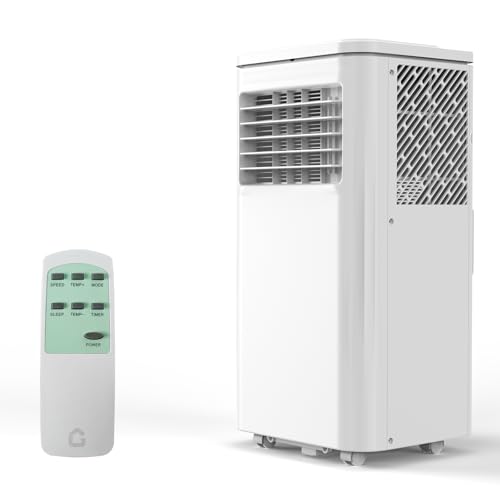
Portable AC Unit
Rolls from room to room and vents through a window or sliding door. No permanent modification required.
- No brackets or drilling
- Move between rooms freely
- Works with casement windows via kits
- Slightly less efficient than window units
Ductless Mini-Split
A wall-mounted indoor head paired with an outdoor compressor. Premium comfort for owners or long-term renters.
- Very quiet indoor operation
- High energy efficiency
- Heating capability with heat pump models
- Requires landlord approval and wall drilling
Through-the-Wall AC
Installed into a sleeve in an exterior wall. Common in older apartment buildings and condos.
- Frees up window space
- Permanent, secure installation
- Requires an existing wall sleeve
- Not suitable for rentals without approval
How to Size an AC Unit for Your Apartment
Sizing is the single most important decision in apartment cooling. An undersized unit runs constantly and never reaches the set temperature. An oversized unit cools too fast, cycles on and off, and leaves the room feeling clammy. Use the table below as a starting point, then adjust for your apartment’s specific conditions.
| Apartment Size | Typical Layout | Recommended Capacity | Best AC Type |
|---|---|---|---|
| Up to 300 sq ft | Studio / efficiency | 6,000 – 8,000 BTU | Window or portable |
| 300 – 550 sq ft | 1-bedroom | 8,000 – 12,000 BTU | Window or mini-split |
| 550 – 800 sq ft | 1-bedroom with living area | 12,000 – 14,000 BTU | Window, mini-split, or two units |
| 800 – 1,100 sq ft | 2-bedroom | 14,000 – 18,000 BTU | Mini-split or multi-zone |
| 1,100 – 1,500 sq ft | 2–3 bedroom | 18,000 – 24,000 BTU | Multi-zone mini-split |
Adjustments that change your BTU number
Start with roughly 20 BTU per square foot, then modify based on your apartment’s real conditions:
- Add 10% if the room faces south or west and gets strong afternoon sun.
- Add 10% for top-floor apartments with a hot roof above.
- Add 10% for kitchen-adjacent living areas where cooking heat loads the space.
- Subtract 10% for heavily shaded rooms or basement-level apartments.
- Add capacity if more than two people regularly occupy the room.
- Account for open-plan layouts — a studio with an open kitchen cools as one large volume.
Rental Rules, Leases, and Building Restrictions
Before you buy any AC unit for an apartment, confirm what your lease and building allow. This step prevents returns, fines, and disputes with your landlord.
What to check before purchasing
- Window AC clauses: Many leases specify whether window units are permitted and whether brackets are required.
- Facade rules: Some buildings prohibit visible window units for aesthetic reasons.
- HOA guidelines: Condos and co-ops often have strict rules on exterior equipment.
- Mini-split approval: Wall drilling and outdoor compressor placement almost always need written permission.
- Electrical capacity: Older apartments may have limited circuits; check the breaker panel before buying a high-capacity unit.
- Drainage: Confirm where condensate water can safely drain without damaging the building or neighboring units.
Best AC Approach for Each Apartment Scenario
Studio apartment renter
A mid-range portable AC unit gives flexibility without permanent changes. Choose a model with a dual-hose design for better efficiency if your window setup allows it.
One-bedroom with double-hung windows
A window AC unit in the essential tier delivers reliable cooling with simple installation. Add a second small unit for the bedroom if the living area is large.
Apartment owner planning long-term
A premium ductless mini-split is the top-tier choice. It is quiet, efficient, and often includes heat pump capability for year-round comfort.
Apartment with casement windows
Standard window units will not fit. Use a portable AC with a casement window kit, or look for a specialized unit designed for vertical and crank-out windows.
Building with wall sleeves
A through-the-wall AC unit is the natural fit if your apartment already has a sleeve. Verify the sleeve dimensions before ordering.
Multi-room apartment
Two single-room units usually beat one oversized unit. For owners, a multi-zone mini-split provides the most balanced comfort across rooms.
Efficiency Ratings and Smart Features Worth Having
Efficiency basics for apartment units
Higher efficiency ratings translate to lower electricity use over the life of the unit. Inverter-driven compressors — found in many mid-range and premium models — modulate speed instead of cycling on and off, which improves comfort and reduces energy consumption. ENERGY STAR certified models meet stricter efficiency thresholds and are worth prioritizing if you run the AC daily during summer.
Features that genuinely improve apartment living
- Remote and app control: Start cooling before you arrive home.
- Programmable timers: Match cooling to your daily schedule.
- Sleep mode: Gradually adjusts temperature overnight for comfort and efficiency.
- Washable filters: Simpler maintenance in small spaces where dust builds quickly.
- Auto-restart: Resumes settings after a power outage — useful in older buildings.
- Quiet operation: Critical in studios where the AC runs next to the bed.
Installation Tips for Apartment AC Units
Window AC installation in an apartment
Use a proper support bracket or window kit rather than relying on the sash alone. Ensure the unit tilts slightly outward so condensate drains outside. Seal gaps with foam or weatherstripping to stop cool air from escaping and hot air from entering. Secure the unit so it cannot shift, and never block the exhaust path.
Portable AC setup
Position the exhaust hose so it vents directly outside with the shortest possible run. Avoid kinks and long hose extensions, which reduce efficiency. Seal the window opening around the hose using the supplied panel. Empty the drain tank regularly, or use a continuous drain hose if the model supports it.
Mini-split installation
Ductless mini-splits should be installed by a licensed HVAC professional. The installer handles the wall penetration, refrigerant line routing, electrical connection, and vacuuming of the line set. Budget for this as part of your long-term investment decision, and confirm the installation complies with your lease and local codes.
Maintenance Routine for Apartment AC Units
Monthly tasks
- Clean or rinse the air filter — a clogged filter is the most common cause of weak cooling.
- Check the drain pan and hose for blockages.
- Wipe down the front grille and intake area.
Seasonal tasks
- Inspect the window seal and bracket before summer begins.
- Clean the condenser coils on window and portable units.
- Schedule professional service for mini-splits once a year.
- Store portable units upright and covered during the off-season.
Common Apartment AC Problems
If your apartment AC is running but not delivering cold air, or the fan works while the unit fails to cool, these targeted guides walk you through diagnosis and fixes.
Related troubleshooting and buying guides
- Fan Spinning But No Cold Air
- Fan Turns On But No Cold Air
- Fan Working But Not Blowing Air
- AC Unit Filter Guide
- AC for a Room With No Windows
- AC for Small Room
- AC Unit for the Wall
- Apartment AC Not Blowing Cold Air
- Ceiling AC Unit Guide
- Running But No Cold Air
- Working But Not Cooling
- Not Keeping Up With Thermostat
- AC That Doesn’t Require a Window
- 10,000 BTU AC Units
- Wall-Hanging AC Units
- AC With Heat Pump
- AC With Thermostat
- Accordion Panels for Window AC
- Adding AC Without Ductwork
- Bracket for Vinyl Windows
Frequently Asked Questions
What is the best AC unit for an apartment?
The best AC unit for an apartment depends on your window situation, lease rules, and room size. Window AC units are the most common choice for standard apartments, portable AC units suit renters who cannot modify windows, and ductless mini-split systems are ideal for long-term apartment owners who want quiet, efficient cooling across multiple rooms.
How many BTU do I need for an apartment AC unit?
As a general rule, apartments need about 20 BTU per square foot of living space. A studio around 300 sq ft typically needs 6,000 to 8,000 BTU, a one-bedroom around 600 sq ft needs 10,000 to 12,000 BTU, and a two-bedroom around 900 sq ft needs 14,000 to 18,000 BTU. Adjust upward for sunny exposures, top floors, and poor insulation.
Can I install a mini-split AC in a rental apartment?
Usually not without written landlord approval, because mini-split installation requires drilling a hole through an exterior wall and mounting hardware on the building facade. Many leases prohibit permanent modifications. Always review your rental agreement and request permission in writing before purchasing a ductless system.
Are portable AC units allowed in apartments with window restrictions?
Portable AC units are often the most flexible option because they only require a small window or sliding door opening for the exhaust hose. However, some buildings restrict venting through windows for aesthetic or safety reasons. Check building rules and HOA guidelines before buying.
How do I cool an apartment bedroom without a window AC?
You have three practical options: a portable AC with a window or sliding-door vent kit, a through-the-wall unit if the building already has a sleeve, or a ductless mini-split if you can get approval for wall-mounted equipment. For rooms with no usable window at all, a portable unit vented through a nearby room or a mini-split with a professionally routed line set is the most workable solution.
Should I buy one large AC or two smaller units for a two-bedroom apartment?
Two smaller units usually deliver better comfort than one oversized unit. They let you cool only the rooms in use, avoid uneven temperature distribution, and reduce the risk of short cycling. For owners, a multi-zone mini-split achieves the same zoning benefit with a single outdoor compressor.