Air Con Units That Don't Need Venting
A complete research guide to ventless and ductless cooling systems — how they work, which types genuinely avoid venting, and how to choose the right one for your room, climate, and building constraints.
Why this matters: Not every home allows a window cut-out, a wall sleeve, or a hot-air exhaust hose. Renters, historic buildings, windowless rooms, and strict HOAs often need a cooling solution that works without a vent. This guide explains which air con units genuinely operate without venting, how each type performs, and what trade-offs to expect — so you can make a confident decision before you buy.
What "No Venting" Really Means
The phrase "air con units that don't need venting" is used loosely in the market, and that ambiguity causes many buyers to purchase the wrong product. In practical terms, a cooling unit can avoid venting in one of three ways:
- No exhaust air at all — the unit transfers heat through refrigerant lines to an outdoor condenser, as ductless mini-splits do. No hot air is dumped into the room and no window hose is required.
- No duct, but water-based cooling — evaporative coolers cool air by passing it through wet media. They do not use a refrigerant cycle and do not expel hot air, but they do raise indoor humidity and need a water supply and airflow.
- No window, but still an exhaust path — some portable units are marketed as "ventless" because they do not need a window, yet they still require a small wall or ceiling exhaust. These are not truly vent-free.
If a product claims to be a "ventless air conditioner" but contains a compressor and a condenser inside a single indoor box, treat the claim with caution. A compressor-based AC must reject heat somewhere. Either the heat goes outdoors through refrigerant lines or an exhaust, or the unit is not a true air conditioner. Understanding this single principle will save you from a disappointing purchase.
Types of Air Con Units Without Venting
Three categories dominate the no-venting market. Each occupies a different position in terms of capability, installation effort, and suitability for specific rooms.
1. Ductless Mini-Split Systems
A ductless mini-split pairs an indoor air handler with an outdoor condenser connected by a thin refrigerant line set. Because the heat is rejected outdoors, the indoor unit produces no exhaust and requires no ductwork and no window opening. This is the closest thing to a true "air con unit that doesn't need venting" in the conventional sense — it cools like a central system but installs with only a small wall penetration for the line set.
Modern inverter-driven mini-splits modulate compressor speed continuously, which makes them highly efficient in the long run and very quiet indoors. Many models also offer heat-pump operation, so the same unit can heat in winter. If you want a permanent, high-performance solution, this is the flagship tier of ventless cooling.
Pros
- Strong, consistent cooling without ducts or window vents
- High energy efficiency, especially inverter models
- Quiet indoor operation
- Zone-by-zone control with multi-zone systems
- Often doubles as a heat pump
Considerations
- Professional installation required
- Small wall penetration for refrigerant lines
- Higher upfront investment than portable options
- Outdoor condenser space needed
2. Evaporative Coolers (Swamp Coolers)
Evaporative coolers pull warm outside air through water-saturated pads and blow the cooled, humidified air into the room. They use no refrigerant and no compressor, and they produce no hot exhaust — which is why they are frequently listed among air con units that don't need venting. Their performance depends entirely on climate: in low-humidity regions they cool effectively and use a fraction of the electricity of a compressor-based system, but in humid conditions they struggle and can make a room feel clammy.
These units require a continuous supply of fresh air and an open path for the humid air to escape, so they work best with cross-ventilation rather than in a sealed, closed room. They are a strong choice for garages, workshops, and dry-climate homes, and a poor choice for humid coastal areas.
Pros
- No compressor, no refrigerant, no hot exhaust
- Very low electricity draw
- Adds moisture in dry air, which many users find comfortable
- Simple mechanical design with few failure points
Considerations
- Only effective in low-humidity climates
- Raises indoor humidity
- Needs water supply and airflow
- Less effective in sealed rooms
3. Windowless Portable Units and Personal Coolers
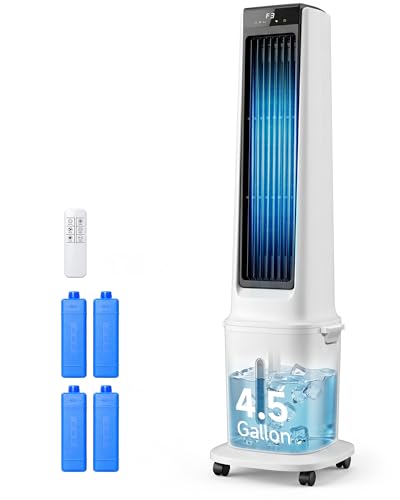
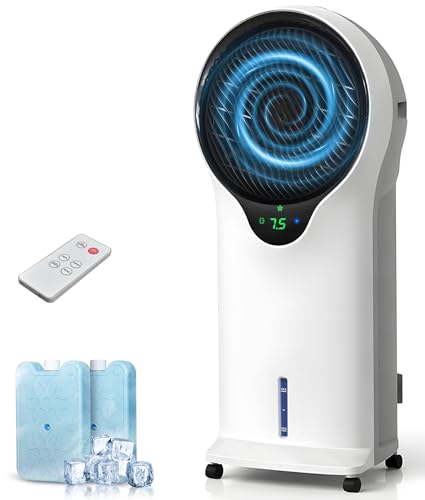
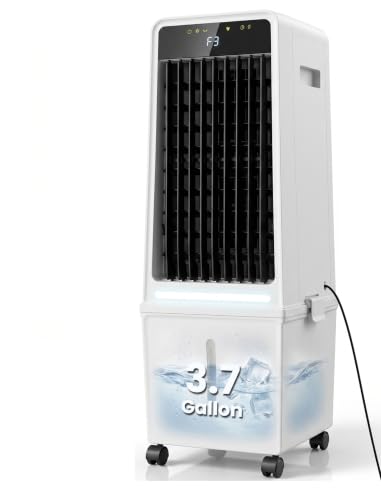
This category covers compact portable coolers, personal evaporative units, and small spot coolers that are designed to work without a window kit. The best of these are evaporative or hybrid designs with a small water tank; they provide localized relief in a small area rather than whole-room cooling. They are the starter tier of ventless cooling — easy to move, easy to set up, and suitable for renters or temporary setups.
Be careful with single-box compressor "portable air conditioners" that promise no venting. Those that contain a compressor must exhaust hot air, and the models that genuinely avoid a window typically require a small wall vent instead. If a compressor unit claims complete ventlessness with no exhaust path, verify the specification carefully before relying on it for real cooling.
Pros
- No installation and no window kit
- Move easily between rooms
- Renter-friendly and temporary-use friendly
- Compact and simple to store
Considerations
- Limited cooling coverage, typically personal or spot cooling
- Requires frequent water refills on evaporative models
- Compressor-based "no vent" claims need verification
- Less effective in humid climates
Side-by-Side Comparison
| Type | Venting Required? | Cooling Strength | Best For | Tier |
|---|---|---|---|---|
| Ductless Mini-Split | No duct or window vent; small line-set wall penetration | Strong, whole-room or multi-zone | Permanent home cooling, windowless rooms, HOAs | Flagship / premium |
| Evaporative Cooler | No exhaust vent; needs airflow and water | Moderate, climate-dependent | Dry climates, garages, workshops, open-plan spaces | Mid-tier |
| Windowless Portable Cooler | No window kit; small water tank | Spot / personal cooling | Renters, small rooms, temporary setups | Entry-level |
| Single-Box Compressor "Ventless" AC | Claim varies; most still need an exhaust path | Variable; often overstated | Niche uses only — verify specifications | Verify before buying |
How to Choose the Right Unit
The right choice depends less on marketing labels and more on four practical questions. Answer these before comparing models:
- 1. What is your climate humidity? If summers are dry, an evaporative cooler is a strong, efficient fit. If humidity is high, a ductless mini-split is the better path because it dehumidifies as it cools.
- 2. Do you own or rent? Owners can install a mini-split for long-term performance. Renters typically need a portable or windowless option that leaves no permanent changes.
- 3. How large is the space? Spot coolers suit a desk or single seat. Evaporative coolers and mini-splits suit full rooms. Match capacity to the room rather than oversizing.
- 4. Is there an outdoor location for a condenser? A mini-split needs a small exterior mounting area and a line-set path. If that is impossible, evaporative or portable options remain.
For a deeper look at rooms that lack traditional openings, see our guide on an AC unit for a room with no windows. If you are comparing wall-hung alternatives, the overview of AC units that hang on the wall is a useful companion read. And if you are weighing a wall-sleeve installation, the notes on an AC unit for the wall explain the trade-offs.
Matching Capacity to Room Size
Capacity is usually expressed in BTU per hour. Undersizing leaves a room warm on peak days; oversizing causes short cycling, poor humidity removal, and uneven comfort. As a starting point for a standard room with average insulation and ceiling height, use roughly 20 BTU per square foot, then adjust for sun exposure, occupancy, and kitchen heat.
| Room Size | Approximate Capacity | Typical Fit |
|---|---|---|
| Up to 150 sq ft | 5,000 – 6,000 BTU | Small bedroom, home office, studio corner |
| 150 – 250 sq ft | 8,000 – 10,000 BTU | Medium bedroom, small living area |
| 250 – 400 sq ft | 12,000 – 14,000 BTU | Large bedroom, open living-dining area |
| 400 – 700 sq ft | 18,000 – 24,000 BTU | Open-plan living space, small apartment |
For compact spaces, see the notes on an AC unit for a small room. If your space is an apartment, the guidance on an AC unit for an apartment covers constraints that affect ventless options. Capacity-shopping in the 10,000 BTU range is covered in the overview of AC units at 10,000 BTU.
Installation and Placement
Placement has a major effect on how well a ventless unit performs. A ductless mini-split indoor head should be mounted high on a wall with clear airflow and a short, accessible path for the line set to the exterior. Avoid mounting directly above heat sources or in corners where supply air will short-circuit back into the return.
Evaporative coolers need an open path for humid air to leave the room and a fresh-air intake, so place them near an open doorway or in a space with cross-ventilation. Windowless portable coolers work best within a few feet of the user, angled so the cool stream reaches the occupied area. For wall-mounted alternatives, the guide on an AC unit that doesn't require a window explains which mounting styles avoid window dependency.
If you are installing a mini-split, plan the outdoor condenser location carefully. Shaded, well-ventilated spots improve efficiency and lifespan. The notes on an AC unit for outside cover clearance and weather considerations for exterior equipment.
Maintenance Essentials
Ventless systems still need routine care to stay efficient and hygienic. The specific tasks depend on the type:
- Mini-split: Clean or replace the indoor filter every 2–4 weeks during heavy use, and schedule a professional coil cleaning annually. Keeping the outdoor condenser clear of leaves and debris protects efficiency. Our guide to the AC unit filter covers filter selection and replacement timing.
- Evaporative cooler: Drain and clean the water tank regularly to prevent scale and odor, replace cooling pads at the start of each season, and check the water distribution system for clogs.
- Portable cooler: Empty and dry the tank after use, clean the pad or filter, and store the unit dry to prevent mold.
- All types: Keep intake and exhaust grilles unobstructed, and inspect seals and mounting hardware annually.
If you notice reduced cooling over time, the cause is often airflow or filter related. The troubleshooting notes in an AC unit running but not blowing air and an AC unit working but not cooling can help you isolate the problem before calling a technician.
Ready to Compare Ventless Cooling Options?
Review the recommended models below, then match the tier and type to your room, climate, and installation constraints. If you need a permanent solution, prioritize a ductless mini-split; for dry climates, an evaporative cooler; for renters, a windowless portable unit.
Frequently Asked Questions
What are air con units that don't need venting?
They are cooling systems that do not require an exhaust hose or window duct to expel hot air. The main examples are ductless mini-splits, which reject heat outdoors through refrigerant lines, and evaporative coolers, which cool air through water evaporation without a compressor.
Do ventless air conditioners really work?
Yes, but effectiveness depends on the type. Ductless mini-splits are highly effective and perform like standard AC. Evaporative coolers work well in dry climates but add humidity. True single-box compressor units with no exhaust path are rare and typically offer limited cooling.
What is the best air con unit that doesn't need venting?
For most homes, a ductless mini-split is the best overall choice because it delivers strong, efficient cooling without ducts or window vents. In dry climates, an evaporative cooler is a strong lower-energy alternative. For renters or temporary setups, a windowless portable evaporative unit is the most practical path.
Can I use a ventless air conditioner in a room without windows?
Yes. Ductless mini-splits and evaporative coolers do not need a window. However, windowless rooms still benefit from fresh-air ventilation and humidity control, so choose a unit with a dehumidify mode or add a separate ventilation source.
Are ventless air conditioners energy efficient?
Ductless mini-splits are among the most efficient cooling options available, often outperforming standard central systems. Evaporative coolers use far less electricity than compressor-based AC but only perform well in low-humidity conditions. Portable ventless coolers vary widely in efficiency, so check the energy guide and match capacity to the room.
Whether you choose a mini-split, an evaporative cooler, or a portable unit, the key is to match the technology to your climate, room size, and building constraints. If you are exploring wall-mounted options, the guide on AC units that hang on the wall pairs well with this article. If you are adding cooling to an existing system, the overview of adding air conditioning to a house without ductwork covers the ductless path in more detail.