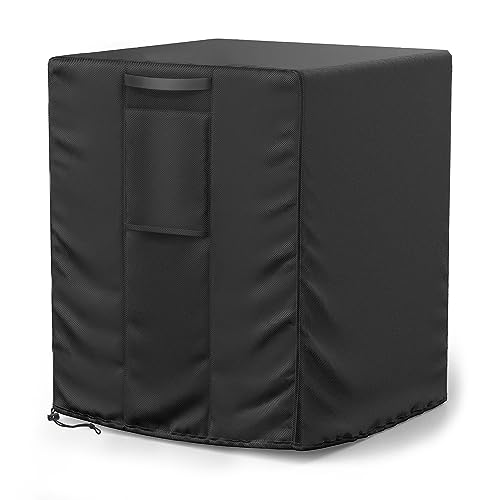
Central Air Conditioner Unit: The Complete Guide
Understand how a central air system works, how to size it correctly for your home, what efficiency ratings actually mean, and which tier of equipment matches your long-term comfort goals.
Explore Sizing & SelectionWho this guide is for: If you already know you want whole-house cooling and are comparing central air conditioner units before making a purchase decision, this page walks you through the technical fundamentals, the key selection criteria, and the trade-offs between equipment tiers — so you can evaluate any model with confidence.
What Exactly Is a Central Air Conditioner Unit?
A central air conditioner unit is a split-system cooling setup that conditions air at a single central location and then distributes it throughout the home through a network of ducts. Unlike a window unit or a ductless mini-split head, a central system is designed to cool an entire house from one coordinated pair of components: an outdoor condenser and an indoor air handler (or coil paired with a furnace).
The outdoor unit houses the compressor and condenser coil. The indoor unit contains the evaporator coil and the blower that pushes cooled air into the supply ducts. Refrigerant circulates between the two, absorbing heat indoors and releasing it outdoors. Because the system is ducted, the quality of the ductwork has a direct impact on how evenly and efficiently the home is cooled.
This architecture is what separates central air from room-by-room solutions. If you are still comparing form factors, the differences between a compact air conditioner and a full ducted system are significant in terms of installation scope and whole-home performance.
How a Central Air System Cools Your Home
The cooling cycle follows a predictable path, and understanding it helps you diagnose performance issues later. Warm indoor air is pulled through the return ducts and across the evaporator coil. The refrigerant inside the coil absorbs heat and evaporates. That heat-laden refrigerant travels to the outdoor condenser, where the compressor raises its pressure and temperature before the condenser coil releases the heat to the outside air. The refrigerant then expands and returns indoors to repeat the cycle.
Meanwhile, the blower in the air handler pushes the now-cooled air through the supply ducts and into each conditioned room. A thermostat monitors indoor temperature and cycles the compressor and blower on and off to maintain the setpoint. In variable-speed and two-stage systems, the compressor can modulate its output rather than running at full capacity or shutting off entirely, which improves both comfort and efficiency.
When a central system underperforms, the cause is often a mismatch between the equipment, the ductwork, and the home's load. That is why sizing and installation quality matter as much as the equipment tier itself.
Common Central Air System Configurations
Standard Split Central AC
The most common configuration. An outdoor condenser pairs with an indoor evaporator coil and blower, typically mounted with a furnace in a closet, attic, or basement. Well-suited to homes with existing ductwork.
Packaged Central Unit
All components — condenser, evaporator, and blower — housed in a single outdoor cabinet. Often used where indoor space is limited or where the home was designed for rooftop or ground-level packaged equipment.
Central Heat Pump System
Provides both cooling and heating by reversing the refrigerant cycle. A strong choice in mild-to-moderate climates where a single system can handle year-round comfort. Pairing cooling with a heat pump is covered in more depth in our adding AC to a furnace overview.
Ducted Mini-Split Alternative
A ducted mini-split uses small-diameter ducts and a compact air handler. It is a middle path between ductless heads and a full central system, useful for additions or homes where retrofitting large ducts is impractical.
Sizing a Central Air Unit: Why Tonnage Matters
Central air capacity is measured in tons of cooling, where one ton equals 12,000 BTU per hour. An undersized unit runs constantly and never reaches the setpoint on hot days. An oversized unit cools too quickly, cycles on and off frequently, and leaves the home feeling clammy because it does not run long enough to remove humidity. Both scenarios shorten equipment life and reduce comfort.
The reliable way to size a central system is a room-by-room load calculation (often called a Manual J calculation) that accounts for window area, insulation, ceiling height, occupancy, and local climate. Square footage alone is a rough starting point, not a final answer. The table below offers general guidance, but a professional load calculation should always confirm the final tonnage.
| Home Size (sq ft) | Approximate Capacity | Typical Use Case |
|---|---|---|
| Up to 1,200 | 1.5 – 2 tons | Small single-story home or condo |
| 1,200 – 1,800 | 2 – 2.5 tons | Average two-bedroom home |
| 1,800 – 2,500 | 2.5 – 3 tons | Three-bedroom family home |
| 2,500 – 3,500 | 3.5 – 4 tons | Larger multi-bedroom home |
| 3,500 – 4,500+ | 4 – 5+ tons | Large or multi-zone home |
If you are also considering a ductless route for a specific room, the capacity logic for a single zone is explained in our 24,000 BTU mini-split guide, which uses the same BTU-per-square-foot principles applied to a single head.
Pro tip: A load calculation is not a formality. Contractors who skip it and size by square footage alone are the most common source of oversized systems and humidity complaints. Ask for the calculation in writing before signing.
Efficiency Ratings: SEER2, EER2, and What They Mean
Central air efficiency in the United States is rated using SEER2 (Seasonal Energy Efficiency Ratio, second edition) and EER2 (Energy Efficiency Ratio). SEER2 estimates seasonal efficiency across a range of outdoor temperatures, while EER2 measures efficiency at a single high-temperature design point. Higher numbers indicate more efficient equipment, but the practical benefit depends on your climate and how many hours the system runs each season.
The U.S. Department of Energy sets minimum SEER2 requirements by region. In the hotter southern regions, the minimum is higher than in northern regions because cooling demand is greater. Beyond the minimum, stepping up to a higher-efficiency tier typically brings a variable-speed compressor, a more advanced fan motor, and better humidity control — not just a better efficiency number.
Equipment tier descriptors are more useful than raw numbers when comparing models. An entry-level central unit meets the regional minimum and uses a single-stage compressor. A mid-tier unit often adds a two-stage compressor and a more refined blower. A premium or top-tier unit typically offers fully variable-speed operation, quieter outdoor fan operation, and more precise temperature and humidity management. Our guide to AC warranties explains why higher tiers often carry longer compressor coverage, which matters for a long-term investment.
Ductwork, Installation, and the Hidden Half of Performance
A central air unit is only as good as the duct system it breathes through. Leaky, undersized, or poorly balanced ducts can waste a significant portion of the cooling the equipment produces. Before or alongside a new central installation, the ducts should be inspected for leaks at joints, disconnected sections, crushed flex runs, and adequate return air paths.
Installation quality is equally decisive. Refrigerant charge must be verified, the air handler must be matched to the condenser, and airflow must be set to the manufacturer's specification. A premium-tier unit installed poorly will underperform a mid-tier unit installed correctly. For a deeper look at the symptoms of installation and duct problems, see our breakdown of AC not cooling solutions and AC unit filter guidance, both of which affect airflow and system performance.
If your home currently has no ductwork, the decision between retrofitting ducts and choosing a ductless approach is covered in our guide on adding central air to a house without ducts.
Keeping a Central Unit Running Efficiently
Routine maintenance is the difference between a central system that lasts its full service life and one that fails early. The core tasks are straightforward: replace or clean the air filter on schedule, keep the outdoor condenser coil free of debris, verify that the condensate drain is flowing, and schedule a professional inspection before each cooling season.
Homeowners can also monitor for early warning signs. A system that runs but does not cool, short-cycles, or produces weak airflow is telling you something. Our resources on AC unit running but not blowing cold air and AC on but house not cooling walk through the likely causes in order of probability, from filter restriction to refrigerant charge issues.
Compressor health deserves special attention because it is the most consequential component. The air conditioner compressor maintenance guide covers the habits that extend compressor life, while compressor cycling on and off explains when short-cycling signals a problem worth calling a technician about.
Repair or Replace? Deciding on an Aging Central Unit
As a central system ages, repair frequency and efficiency losses both climb. The practical decision framework is straightforward: if the system is more than roughly two-thirds through its expected service life, if repairs are recurring, and if the equipment is below current efficiency standards, replacement usually makes more sense than another repair. If the system is younger and the failure is isolated, a targeted repair is the better path.
Refrigerant type also matters. Older systems using phased-out refrigerants can become harder to service over time, which shifts the repair-versus-replace math. If you are evaluating a failing compressor specifically, our air conditioner compressor replacement page outlines what the job involves and when it is the right call.
When replacement is the answer, the selection process should follow the same order as this guide: load calculation first, then duct inspection, then efficiency tier, then equipment brand and installer quality.