Air Conditioner Condenser Units: The Complete Buyer's Guide
Everything you need to know about the outdoor heart of your cooling system — how condenser units work, which type fits your home, how to size and place one, and how to keep it running efficiently for years.
Start LearningWhat Is an Air Conditioner Condenser Unit?
An air conditioner condenser unit is the outdoor portion of a split-system or central air conditioning setup. It is the large metal cabinet you see sitting on a concrete pad beside a house, on a rooftop, or on a wall bracket. Inside that cabinet are the compressor, the condenser coil, and the condenser fan — the three parts responsible for dumping heat from your indoor space into the outside air.
If you are still mapping out how the outdoor half connects to the indoor half, our explainer on how the condenser and air handler work together gives a clear system-level view. In short: the indoor evaporator coil absorbs heat from your rooms, the refrigerant carries that heat outside, and the condenser unit rejects it. Without a healthy condenser, the indoor coil would simply have nowhere to dump the heat it collects.
How a Condenser Unit Works
Refrigerant leaves the indoor evaporator coil as a low-pressure gas carrying absorbed heat. It travels through the line set to the outdoor unit. There, the compressor raises its pressure and temperature dramatically, turning it into a hot, high-pressure gas. That hot gas enters the condenser coil, where the condenser fan pulls outdoor air across the coil fins. The refrigerant releases heat to the air, condenses into a liquid, and flows back indoors through the metering device to repeat the cycle.
Three things must happen well for this cycle to stay efficient:
- Airflow across the coil must be unobstructed, so the fan can move enough outdoor air through the fins.
- The coil must stay clean, because dirt and pollen act as insulation and block heat transfer.
- The compressor must be properly matched to the coil and the indoor evaporator, or the system runs at the wrong pressures.
When any of those three degrade, you get the classic symptoms: the unit runs constantly, the indoor coil freezes, and the house never quite reaches the thermostat setpoint. Our guide to condenser unit fundamentals and the troubleshooting article on AC not cooling cover the diagnostic path in detail.
Key Components Inside the Condenser Cabinet
Understanding the parts helps you ask better questions during a service visit and spot early warning signs before a small issue becomes a system failure.
Compressor
The compressor is the pump that drives the entire refrigerant cycle. It is the single most demanding component in the system and the one most sensitive to poor installation and dirty coils. Compressor failures are rarely sudden — they usually follow months of running at elevated pressures caused by restricted airflow or a refrigerant charge that was never verified.
Condenser Coil
The condenser coil is a serpentine array of copper tubing wrapped in aluminum fins. Its job is to maximize surface area so heat can leave the refrigerant quickly. The coil is also the most exposed component: leaves, grass clippings, cottonwood fluff, and pet hair all collect in the fins. Cleaning this coil is the highest-value maintenance task an owner can perform.
Condenser Fan and Motor
The fan pulls air through the coil and pushes it upward and away. A failing fan motor or a bent blade reduces heat rejection immediately. If you hear a grinding or rattling sound from the outdoor unit, the fan motor bearing is a prime suspect. Our article on the AC cooling fan walks through the diagnosis.
Contactor and Capacitor
These two electrical parts are inexpensive but responsible for a large share of "AC won't start" service calls. The contactor is a relay that closes to send power to the compressor and fan; the capacitor gives the compressor and fan motor the boost they need to start. A bulging capacitor is a common failure point on older units.
Cabinet, Base Pan, and Service Valves
The cabinet protects the internals and directs airflow. The base pan collects condensate and rain runoff. The service valves are where a technician connects gauges to check refrigerant charge. A rusted base pan or a cabinet with missing screws can let water into the electrical compartment — a surprisingly common cause of nuisance trips.
Types of Condenser Units
Condensers are broadly grouped by how they are matched to the rest of the system and by where they are installed. The right choice depends on your home's existing ductwork, available outdoor space, and climate.
| Type | Best For | Notable Trade-offs |
|---|---|---|
| Split-system condenser (matched to an indoor air handler or furnace) | Most homes with existing ductwork; the standard choice for central AC and heat pumps | Requires a matched indoor coil; installation quality matters more than the box itself |
| Packaged unit condenser (all-in-one outdoor cabinet) | Homes without ductwork in the attic or crawlspace; rooftop and side-yard installations | Larger footprint; duct connections are exposed to weather |
| Mini-split condenser (multi-zone outdoor unit) | Ductless homes, room-by-room zoning, additions and conversions | One outdoor unit serves several indoor heads; line-set routing needs planning |
| Heat pump condenser | Year-round heating and cooling from one outdoor unit | Defrost cycles in cold weather; sizing is more sensitive to climate |
| Commercial-grade condenser | Light commercial spaces, restaurants, offices, server rooms | Heavier construction and service access; requires commercial-grade installation |
If your home has no ductwork at all, a ductless setup is usually the cleanest path. Our guide on cooling a room without a window covers the ductless and portable alternatives in detail.
Single-Stage vs Two-Stage vs Variable-Speed Condensers
This is the decision that most affects comfort, noise, and long-term energy use — more than the brand name on the cabinet.
Single-Stage
The compressor runs at one speed: full on or fully off. These units are simple, proven, and easy to service. They are the entry-level tier of the market and remain a solid choice for mild climates and homes where the AC runs in short, predictable bursts.
Two-Stage
The compressor has two operating levels — typically a lower stage for most days and a high stage for peak heat. Two-stage units run longer at the lower stage, which improves humidity control and reduces on/off cycling. They sit in the mid-tier to high-end tier depending on the rest of the system.
Variable-Speed (Inverter)
The compressor modulates smoothly across a wide range of speeds. This is the top-tier and flagship-tier approach: the unit matches output to the actual load instead of cycling. The result is steadier temperature, quieter operation, and better part-load efficiency. If you are weighing this against a conventional compressor, our comparison of inverter vs non-inverter AC lays out the trade-offs honestly.
Sizing a Condenser Unit Correctly
Condenser capacity is measured in BTUs per hour (BTU/h) or in tons, where one ton equals 12,000 BTU/h. Sizing is not a guess based on square footage alone. A proper sizing uses a room-by-room load calculation that accounts for window area, insulation, ceiling height, occupancy, and local design temperatures.
As a rough orientation only, a well-insulated room of about 150 square feet often needs around 5,000–6,000 BTU/h, while 250–400 square feet typically falls in the 8,000–14,000 BTU/h range. Those figures are starting points for a conversation with a contractor, not a substitute for a load calculation.
For whole-home systems, the condenser must be matched to the indoor coil and air handler. The AHRI matched-system certificate is the document that proves the combination was tested together. Insist on seeing it before signing an installation contract.
Placement and Clearance Rules for Condenser Units
Where the condenser sits determines how hard it has to work. Manufacturers publish clearance requirements in the installation manual, and those numbers are not suggestions.
- Side clearance: typically 12–24 inches on all sides, more on the service-access side.
- Top clearance: usually 48–60 inches so the fan can discharge heat without recirculating it.
- Above ground: mount on a level pad or bracket, not directly on soil, to keep debris and water out.
- Away from dryer vents and recirculation zones: hot exhaust air pulled back into the coil defeats the purpose.
- Shade is helpful, enclosure is not: a nearby tree or an awning can help, but a solid fence tight against the unit chokes airflow.
If the unit sits on a wall bracket above grade, check the mounting hardware annually. Our article on the outdoor unit mounting bracket covers the inspection points. For rooftop or side-yard placements, also confirm that the condensate path does not drain onto a walkway or into a basement wall — water intrusion from a poorly routed drain line is a common and preventable problem.
Efficiency Ratings and Market Tiers
Condenser efficiency is expressed through SEER2 (cooling) and, for heat pumps, HSPF2 (heating). Higher numbers mean more cooling per unit of electricity. The U.S. Department of Energy sets minimum efficiency standards by region, and those minimums have risen over time.
Rather than quoting figures that change with each code cycle, it helps to think in market tiers. The table below uses a consistent classification you can apply to any brand.
| Tier | Typical Compressor Type | Best For | What You Notice |
|---|---|---|---|
| Entry-level | Single-stage | Mild climates, rental properties, budget-conscious replacements | Simple operation, louder cycling, basic humidity control |
| Mid-range | Two-stage or high-efficiency single-stage | Most family homes in mixed climates | Better humidity control, quieter outdoor operation, solid longevity |
| Premium | Variable-speed (inverter) | Hot-humid climates, homes with zoned ductwork, noise-sensitive lots | Steady temperatures, very quiet outdoor unit, strong part-load efficiency |
| Flagship tier | Fully modulating inverter with advanced controls | Whole-home comfort systems, high-performance builds | Best-in-class modulation, smart diagnostics, longest expected service life |
A higher tier is a long-term investment, not an automatic upgrade. In a mild climate with a well-insulated house, a mid-range two-stage condenser often delivers most of the comfort benefit of a premium unit. In a hot, humid climate, the premium tier earns its place through humidity control alone.
Condenser Maintenance Checklist
Most condenser failures trace back to skipped maintenance. The good news is that the highest-impact tasks are simple and can be done by the homeowner.
Monthly During Cooling Season
- Clear leaves, grass clippings, and debris from around the cabinet and off the top grille.
- Check that the fan spins freely and that no branches or vines are touching the unit.
- Look at the indoor filter — a clogged filter strains the whole system, not just the indoor coil.
Twice Per Season
- Rinse the condenser coil fins with a garden hose from the inside out, with power off.
- Straighten bent fins with a fin comb where accessible.
- Inspect the base pan and drain path for standing water or rust.
Annually (Professional Service)
- Verify refrigerant charge by superheat and subcooling, not by gauge pressure alone.
- Inspect the contactor for pitting and the capacitor for bulging or leakage.
- Measure amp draw on the compressor and fan motor against nameplate ratings.
- Confirm the outdoor disconnect is functional and the electrical connections are tight.
Between professional visits, keep an eye out for the early warning signs covered in our condenser unit reference and in the broader AC not cooling troubleshooting guide.
Common Condenser Problems and What They Mean
The unit hums but the fan does not spin
Usually a failed capacitor or a seized fan motor. If the compressor is also silent, the contactor or control circuit is the next suspect. Do not keep resetting the breaker on a unit that hums — a stalled compressor draws locked-rotor current and can burn out quickly.
The condenser coil ices over in summer
Outdoor coil icing in cooling mode almost always points to low refrigerant charge, a restricted metering device, or severely restricted airflow. This is a technician-level diagnosis. A frozen indoor coil is more common, and our article on AC freezing outside covers the full set of causes.
The unit runs constantly but the house stays warm
Check three things first: a dirty condenser coil, a blocked return filter, and a fan that is running at the wrong speed. If all three are clean, the system may be undersized or low on charge. Our guide on an AC running but not cooling the house walks through the sequence.
Water pooling around the condenser
Some condensation is normal. Persistent pooling suggests a clogged base-pan drain, a tilted pad, or a condensate line routed incorrectly. Water near the foundation deserves prompt attention; our article on AC leaking water explains the fixes.
Loud rattling, buzzing, or grinding
Loose cabinet panels, a failing fan bearing, or debris inside the cabinet are the usual causes. Buzzing from the contactor is often a sign of pitting. If the noise is accompanied by a burning smell, shut the unit off at the breaker and call a technician.
How to Choose the Right Condenser Unit
Buying a condenser is a system decision, not a box decision. Work through these steps in order.
- Confirm the scope of the replacement. Replacing only the outdoor unit on an aging system is usually a false economy. The condenser, indoor coil, and line set need to be compatible, and a mismatched system will not deliver its rated efficiency. For context on when replacement makes more sense than repair, our article on AC repair considerations is a useful reality check.
- Get a load calculation, not a rule of thumb. A competent contractor will perform a room-by-room load calculation before recommending capacity. If a quote is based only on square footage, ask for the calculation.
- Decide the compressor tier. Single-stage for mild climates and simple budgets; two-stage for most family homes; variable-speed for humid climates and noise-sensitive installations. See the tier table above.
- Check the matched-system certificate. The AHRI certificate proves the condenser and indoor coil were tested together and tells you the actual system efficiency, which is often lower than the condenser's standalone rating.
- Plan placement before delivery. Confirm clearances, pad condition, electrical disconnect location, and line-set routing. A perfect unit installed in a cramped, recirculating corner will underperform.
- Ask about commissioning. The installer should verify airflow and refrigerant charge and leave a written report. This single step separates a professional installation from a box swap.
- Register the warranty. Most manufacturers require registration within a set window to activate the full parts warranty. Keep the certificate and the commissioning report together.
If the indoor side of the system is also due for attention, the companion guide on the evaporator coil explains how the two halves must be matched. For homes with complex layouts or multiple zones, a ducted or multi-zone approach may be the better fit — our overview of AC for a large house covers those configurations.
Ready to Compare Condenser Options?
Use the tier framework in this guide to shortlist models, then verify the matched-system certificate and installation quality before you commit. A well-chosen condenser installed correctly will outperform a premium unit installed poorly, every time.
Explore Condenser OptionsFrequently Asked Questions
What is an air conditioner condenser unit?
It is the outdoor section of a split or central air conditioning system. It contains the compressor, condenser coil, and condenser fan, and its job is to release heat absorbed from your indoor space into the outside air. Without it, the indoor coil would have nowhere to dump the heat it collects.
How long does a condenser unit last?
With regular maintenance, a well-built condenser typically lasts 12 to 20 years. Coastal climates, poor airflow around the unit, and skipped service visits can shorten that lifespan. The compressor is usually the limiting component, and its life depends heavily on whether the system has been running at correct pressures.
Can I replace just the condenser unit?
In most cases, replacing only the outdoor unit is not recommended. Modern condensers use specific refrigerants and metering devices that must match the indoor evaporator coil and line set. A mismatched system loses efficiency and may void warranties. Replacing the condenser and indoor coil together as a matched set is the reliable path.
How much clearance does a condenser unit need?
Most manufacturers recommend a minimum of 12 to 24 inches of clearance on all sides, and 48 to 60 inches above the unit so the fan can discharge heat freely. Always follow the installation manual for your specific model — those figures are the minimum, not the ideal.
Why is my condenser unit making a loud noise?
Loud noises usually point to a failing fan motor bearing, a loose or bent fan blade, debris inside the cabinet, or a compressor that is struggling to start. A single rattle may be a loose panel, but persistent grinding or buzzing should be inspected by a licensed technician before it becomes a compressor failure.
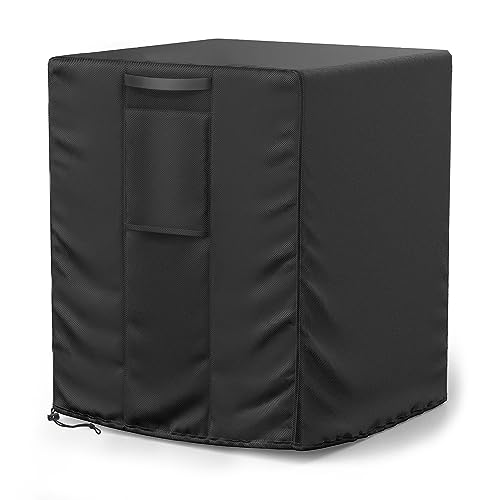
Should I cover my condenser unit in winter?
If the unit is not used for heating, a breathable cover can keep leaves and debris out of the cabinet. Never wrap the unit tightly in plastic — trapped moisture accelerates corrosion. If you run the system as a heat pump in winter, do not cover it at all.