Air Conditioner for Large House: The Complete Selection Guide
A large home has cooling challenges that a single room unit cannot solve. Temperature swings between floors, long duct runs, sun-facing rooms, and open floor plans all demand a carefully matched system. This guide walks you through sizing, system types, zoning, and the features that separate a comfortable large home from one that never quite cools evenly.
Start with SizingWho this guide is for: homeowners and buyers researching a cooling solution for a house of roughly 2,500 square feet and above. You likely already know you need more than a window unit, and you want to understand which system architecture makes sense before you commit. The sections below are ordered the way most buyers should evaluate the decision: size first, then system type, then zoning and features.
Why Large Houses Need a Different Approach
Cooling a large house is not simply a matter of buying a bigger version of a small-room air conditioner. The physics change as square footage grows. Air has to travel farther through ducts or across open spaces, heat gain becomes uneven between floors, and the system spends more time running at partial load rather than at full capacity.
Three issues show up repeatedly in large homes:
- Uneven temperatures between floors. Warm air rises, so upper floors typically run warmer in summer. A single thermostat placed on the ground floor can leave bedrooms uncomfortable.
- Long duct runs and pressure loss. In a large house with a central system, ducts travel farther and lose more static pressure. Poorly designed ductwork is one of the most common reasons a correctly sized system still underperforms.
- Part-load efficiency. A large house rarely needs full cooling capacity. What matters is how well the system performs at partial load, which is where variable-speed and inverter-driven compressors make a real difference.
Understanding these dynamics is the foundation for every decision that follows. If your existing system struggles, the article on an air conditioner running but not cooling the house covers the diagnostic side in more detail.
Sizing an Air Conditioner for a Large House
Sizing is the single most consequential decision. An undersized system runs continuously and never reaches the set temperature on the hottest days. An oversized system cools the air quickly, shuts off before dehumidifying properly, and cycles frequently. Both outcomes are uncomfortable, and in a large home the consequences are magnified because more rooms are affected.
The quick square-footage estimate
The widely used rule of thumb is roughly 20 BTU per square foot of conditioned space, adjusted for climate, ceiling height, window area, and insulation. The table below shows typical starting ranges. Treat these as a planning reference, not a final specification.
| Conditioned Area | Typical Starting Range | Common System Approach |
|---|---|---|
| 2,000 – 2,500 sq ft | 40,000 – 50,000 BTU | Single central system or 2-zone ductless |
| 2,500 – 3,000 sq ft | 50,000 – 60,000 BTU | Central system with 2 zones |
| 3,000 – 3,500 sq ft | 60,000 – 72,000 BTU | Central system with 2–3 zones |
| 3,500 – 4,000 sq ft | 72,000 – 84,000 BTU | Multi-zone central or hybrid central + ductless |
| 4,000+ sq ft | 84,000 BTU and above | Multiple systems, zoning, or hybrid architecture |
The ranges above assume an average climate and standard ceiling heights. Homes with vaulted ceilings, large west-facing glass, poor insulation, or a hot climate should plan toward the upper end or above. Homes in mild climates with excellent insulation may sit at the lower end.
Why a Manual J calculation is worth the effort
A Manual J load calculation accounts for the variables that the square-footage rule ignores: window orientation and glazing type, insulation values, air infiltration, internal heat from appliances and occupants, duct location, and local design temperatures. For a large house, the difference between a rule-of-thumb estimate and a proper load calculation can easily be a full system size step.
A reputable installer will perform this calculation as part of a quote. If a contractor proposes a system size based only on square footage, ask for the load calculation. It protects you from both oversizing and undersizing.
A sizing shortcut that causes real problems
A common mistake is choosing a unit one size larger "just to be safe." In a large house, that habit compounds across multiple zones and produces a system that short-cycles, leaves rooms humid, and wears its compressor faster. Correct sizing is not a margin-of-safety exercise; it is a load-matching exercise.
If you want to work through the numbers yourself, the detailed walkthrough on cooling an entire house explains how room-by-room loads add up and where the common assumptions break down.
System Types for a Large House
Once sizing is settled, the next decision is architecture. Four approaches dominate the market for large homes, and each fits a different combination of existing infrastructure, budget tier, and comfort expectations.
| System | Best For | Strengths | Trade-offs |
|---|---|---|---|
| Central AC | Homes with existing or installable ductwork | Uniform cooling, single control point, low visual impact | Duct losses, one thermostat governs the whole zone |
| Multi-zone ductless mini-split | Homes without ducts or with difficult duct paths | Independent room control, high part-load efficiency | Multiple indoor heads, exterior unit placement planning |
| Hybrid central + ductless | Large homes with problem areas or additions | Targets hot spots without rebuilding the whole duct system | More equipment to maintain, two control interfaces |
| Zoned central with dampers | Large homes wanting per-floor control | Single outdoor unit, room-level scheduling | Requires careful damper and bypass design |
Central AC for large homes
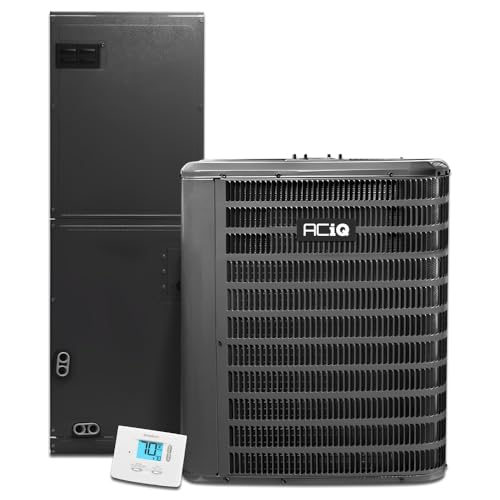
Central air remains the default choice when a house already has ductwork or when ducts can be installed without major structural work. A single outdoor condenser paired with an indoor air handler distributes cooled air through supply and return ducts. The system is visually unobtrusive and straightforward to control from one thermostat.
The main caveat is duct quality. In a large house, duct runs can exceed 50 feet with multiple branches, elbows, and transitions. Each of those introduces static pressure loss. If the ducts are undersized or leaky, even a premium condenser will deliver mediocre results. Before finalizing a central system, have the ductwork inspected for leakage and static pressure. The anatomy of these components is covered in condenser and air handler and condenser units.
Multi-zone ductless mini-splits
Ductless systems shine in large homes where ductwork is absent, impractical, or where different areas have very different cooling needs. A single outdoor unit can support several indoor heads, each with its own thermostat. That means bedrooms, a home office, and a living area can be held at different temperatures simultaneously.
For large homes, the practical pattern is one outdoor unit per floor or per wing, with two to four indoor heads per outdoor unit. This keeps refrigerant line lengths manageable and preserves efficiency. Inverter-driven compressors, covered in the guide to dual inverter technology, allow these systems to modulate output rather than cycling on and off.
Hybrid approaches
Many large homes end up with a central system as the backbone plus one or two ductless heads for problem areas such as a converted attic, a sunroom, or a garage-adjacent office. This is often more practical than rebuilding ductwork or adding a second full central system. It also gives you a graceful upgrade path if one area consistently underperforms.
Zoning: The Key to Even Comfort
In a large house, zoning is less of a luxury and more of a practical requirement. Without it, a single thermostat has to represent the average of many rooms with different heat loads, and comfort suffers everywhere.
A typical large-home zoning plan separates the house into two to four zones:
- Upstairs and downstairs as separate zones, because warm air stratification makes the upper floor run warmer.
- Living and sleeping areas on separate schedules, so daytime cooling does not condition empty bedrooms.
- High-gain rooms such as sunrooms, west-facing living rooms, or home offices with equipment load, isolated into their own zone.
Zoned central systems use motorized dampers in the duct branches, controlled by separate thermostats. Zoned ductless systems achieve the same effect more simply, because each indoor head is its own zone by design. Either way, the benefit is the same: you stop paying to condition rooms that are not in use.
Zoning design mistakes to avoid
A zoned central system must be designed so that the total airflow remains within the blower's safe operating range when only one zone is calling. Without a bypass damper or a variable-speed blower, closing zones can raise static pressure and damage the system. This is a design detail that separates a professional-grade installation from an entry-level one.
Efficiency and Part-Load Performance
Efficiency ratings matter more in a large house because the system runs longer and the difference between a mid-tier and top-tier system compounds over years. Two numbers are worth understanding:
- SEER2 describes cooling efficiency across a seasonal range. Higher is better, and the rating now reflects updated DOE test conditions.
- EER2 describes efficiency at a single high-temperature design point. It is a better indicator of performance on the hottest afternoons.
For large homes, however, the rating that matters most in practice is part-load performance. A variable-speed or inverter-driven compressor can run at a low, steady output for long periods, which removes humidity more effectively and holds temperatures stable. A single-stage system only runs at full capacity or off, which is a poor match for a house that rarely needs full output. If you are comparing compressor technologies, the overview of heating and cooling operation helps clarify the difference.
Ductless systems generally hold an efficiency advantage in large homes because they avoid duct losses entirely. Central systems can close much of that gap with well-sealed, properly sized ducts.
Features That Matter in a Large House
Not every feature on a spec sheet is meaningful for a large home. These are the ones that consistently change the day-to-day experience:
- Variable-speed or inverter compressor. Smooth modulation instead of on/off cycling; better humidity control and quieter operation.
- Multi-zone control with individual thermostats. Essential for keeping upstairs, downstairs, and problem rooms comfortable at the same time.
- Programmable or smart thermostats per zone. Schedules that match occupancy patterns reduce wasted runtime. See programmable thermostat guidance for setup.
- High static pressure air handler. Necessary for long duct runs in large homes; a standard blower may not deliver rated airflow.
- Enhanced filtration. Larger homes move more air, so filter quality and pressure drop matter for both air quality and efficiency.
- Low ambient operation. Useful if the system also handles shoulder-season cooling or if the outdoor unit sits in a hot, confined space.
- Quiet outdoor unit. In a large house, the condenser may sit near a patio or bedroom window; sound ratings deserve attention.
Features that are nice but secondary
Wi-Fi control, voice assistant integration, and decorative indoor head designs are convenient but rarely the deciding factor. Prioritize compressor technology, zoning capability, and duct or line-set design first. Those determine comfort; the rest determines convenience.
Installation Considerations for Large Homes
Installation quality matters more than brand choice in most large-home projects. A premium system installed with undersized ducts, incorrect refrigerant charge, or poor zoning design will underperform a mid-range system installed correctly.
Key installation factors:
- Duct design and sealing. Manual D duct design, mastic-sealed joints, and insulated runs in unconditioned spaces.
- Refrigerant line length and elevation. Ductless systems have limits on line length and vertical separation; plan head placement accordingly.
- Outdoor unit placement. Clearance for airflow, shade where possible, and a mounting surface that reduces vibration transfer into the structure.
- Electrical capacity. Large systems may require dedicated circuits and panel capacity checks before installation.
- Condensate management. Long drain runs need adequate slope and, in some cases, a condensate pump.
If you are preparing for a replacement or new installation, the diagnostic article on an air conditioner not working properly is useful for distinguishing installation issues from equipment faults after the system is running.
Maintenance Priorities for a Large System
A large-home system has more components and more airflow, which means maintenance has more places to matter. The essentials:
- Filter changes on schedule. High airflow systems load filters faster; a clogged filter raises pressure drop and reduces capacity.
- Annual coil cleaning. Both the evaporator coil and the condenser coil should be inspected and cleaned as needed.
- Duct inspection. Look for disconnected joints, crushed flex duct, and evidence of leakage in unconditioned spaces.
- Drain line clearing. A clogged condensate drain can cause water damage; the guide to an air conditioner leaking water covers the common causes.
- Refrigerant charge verification. Charge should be checked by superheat or subcooling, not by pressure alone.
For ductless systems, add indoor head filter cleaning and outdoor unit coil inspection to the routine. Both are straightforward tasks that preserve efficiency.
Quick Troubleshooting Reference
If an existing large-home system is underperforming, the cause is often one of a small set of issues. These references help narrow it down before calling a technician:
- System runs but the house never reaches the set temperature: running but not cooling enough.
- Airflow is weak from the vents: fan running but no air blowing.
- The outdoor unit is not running while the indoor unit is: outdoor unit not running.
- Cooling starts then fades: not cooling but the fan is running.
- Ice forms on the outdoor unit: air conditioner freezing outside.
These are diagnostic starting points, not a substitute for professional service. Refrigerant work and electrical diagnosis should be handled by a licensed technician.
How to Choose Among the Options
With sizing, system type, zoning, and efficiency understood, the final decision usually comes down to matching the architecture to the house and the household's comfort expectations. A practical decision sequence:
- Confirm the load. Get a Manual J calculation for the whole house and for each proposed zone.
- Audit the existing infrastructure. If ducts exist, have them tested before assuming central AC is the answer.
- Decide on zone count. Base it on floor separation, occupancy patterns, and high-gain rooms.
- Choose compressor technology. Variable-speed or inverter is the standard for large homes where part-load comfort matters.
- Compare tier-appropriate options. Entry-level systems can work in mild climates with simple layouts; mid-range and premium tiers add modulation, zoning flexibility, and quieter operation.
- Vet the installer. Ask for load calculations, duct design, and references from comparable large-home projects.
Reading the recommendations below: the products are grouped by their position in the market rather than by any specific figure. Use the tier labels to match a system to your home's complexity and your comfort priorities, then review the specifications for capacity, zone count, and compressor type.
For a large house, a mid-range or premium system with variable-speed operation is generally the appropriate starting point. Entry-level systems can serve well-defined, simple zones but are less suited to whole-house duty in demanding climates.
Frequently Asked Questions
What size air conditioner do I need for a large house?
A large house typically ranges from 2,500 to over 4,000 square feet, which generally translates to a central system of roughly 60,000 to 100,000 BTU or a multi-zone ductless setup. The exact figure depends on climate, insulation, window area, ceiling height, and occupancy. Always confirm sizing with a Manual J load calculation before purchasing.
Is a central AC or ductless mini-split better for a large house?
Central AC is usually the better fit when the house already has well-sealed ductwork and you want uniform cooling from one system. Ductless mini-splits are preferable when ductwork is absent, difficult to install, or when you want independent temperature control per zone. Many large homes combine both approaches.
How many zones does a large house need?
Most large homes benefit from two to four zones, typically separating upstairs from downstairs and isolating areas with different heat loads such as sunrooms or home offices. Zoning reduces energy waste by cooling only the areas that are occupied.
Why is an oversized AC bad for a large house?
An oversized unit cools the air quickly but shuts off before removing enough humidity, leaving the house feeling cold and clammy. It also cycles on and off more often, which adds wear to the compressor and creates uneven temperatures across rooms. Correct sizing matters more in large homes because the cost of a mistake is higher.
Can I cool a large house with portable or window units?
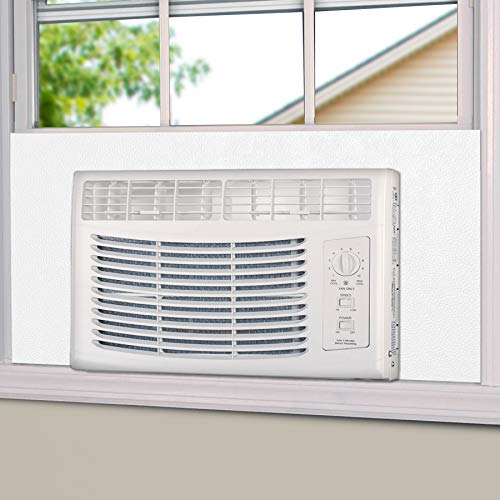
Portable and window units can handle individual rooms, but they are not a practical primary solution for a large house. They cool one space at a time, require window or vent access, and cannot distribute air across floors. For a whole-house approach, central or multi-zone ductless systems are the appropriate categories. If you are cooling a single room within a larger home, see the guidance on living room and kitchen cooling for room-level considerations.
What maintenance does a large-home AC system need?
The essentials are regular filter changes, annual coil cleaning, duct inspection for leakage or disconnections, condensate drain clearing, and refrigerant charge verification by a licensed technician. Ductless systems additionally need indoor head filter cleaning and outdoor unit coil inspection. Consistent maintenance preserves efficiency and extends compressor life.