Air Conditioner for the Floor: Complete Buying Guide
Discover floor-standing and floor-mounted air conditioners that deliver powerful, targeted cooling without complex ductwork or permanent window installations.
EXPLORE FLOOR AC TYPESWhy choose a floor air conditioner? Floor units sit directly on the ground and distribute cool air where it matters most — in the living zone. They are ideal for rooms where window or wall mounting is impractical, and modern floor-standing inverter models now rival traditional split systems in efficiency and quietness.
What Is an Air Conditioner for the Floor?
An air conditioner for the floor is a cooling appliance designed to rest on the ground rather than being mounted in a window, on a wall, or attached to the ceiling. This broad category covers several distinct technologies, each with its own installation method and strengths. The term is commonly used to describe floor-standing split systems, portable floor units, and console-style conditioners that discharge air from a low position.
Because cool air naturally settles, a low discharge point can feel more immediate and comfortable in living rooms, bedrooms, and home offices. Many floor models also double as heating solutions in cooler months, making them a year-round investment. If you are comparing layouts across an entire property, our whole-house cooling guide explains how floor units fit into a broader strategy.
Main Types of Floor Air Conditioners
Floor-Standing Split AC
A tall indoor console connected to an outdoor condenser. Powerful airflow, inverter efficiency, and a slim footprint. Best for large living rooms and open-plan spaces where a wall split would be awkward.
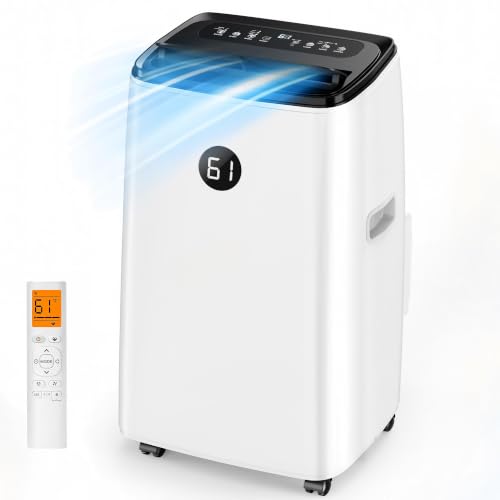
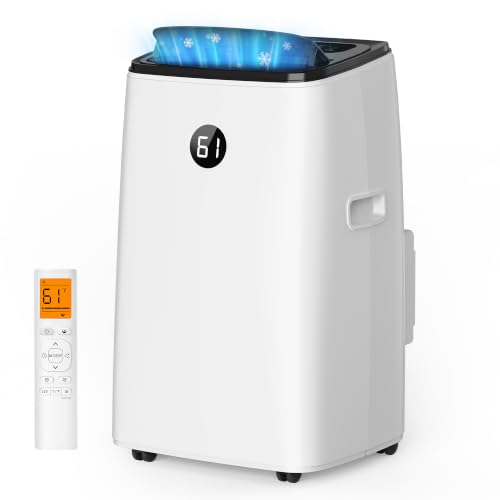
Portable Floor AC
A self-contained wheeled unit with an exhaust hose vented through a window or wall opening. Easy to relocate between rooms and does not require professional installation.
Console / Low-Wall AC
A compact floor-mounted indoor unit often installed near the baseboard. Discreet appearance and even air distribution; commonly paired with a standard outdoor condenser.
Floor AC Types Compared
| Type | Best For | Installation | Efficiency | Portability |
|---|---|---|---|---|
| Floor-Standing Split | Large living rooms, open-plan spaces | Professional install required | High (inverter available) | Fixed |
| Portable Floor AC | Renters, temporary setups, single rooms | Plug-and-play with vent kit | Moderate | Fully mobile |
| Console / Low-Wall | Bedrooms, home offices, tight walls | Professional install required | High (inverter available) | Fixed |
| Ducted Floor Register | Whole-home zoned cooling | Integrated with ductwork | High (system-dependent) | Fixed |
Advantages and Limitations
✔ Advantages
- Cool air is delivered at occupied height for faster perceived comfort
- No window opening required for split-style floor units
- Ideal for rooms with wide windows, sliding doors, or low walls
- Many models include heating and dehumidification modes
- Modern inverter versions are highly energy efficient in the long run
✘ Limitations
- Floor space is consumed; less ideal in very compact rooms
- Portable models require a vent path to the outside
- Split-style units need professional installation and refrigerant handling
- Air filters can collect dust quickly at low level; regular cleaning is essential
- Placement must avoid blocking walkways and furniture
How to Size a Floor Air Conditioner
Correct sizing is the single most important factor in comfort and efficiency. An undersized unit runs continuously and struggles on hot days, while an oversized unit cools too quickly, cycles frequently, and leaves rooms feeling clammy. Use room square footage as a starting point, then adjust for ceiling height, sun exposure, occupancy, and appliance heat load.
| Room Size | Suggested Capacity | Typical Use | Recommended Tier |
|---|---|---|---|
| Up to 150 sq ft | 5,000 – 6,000 BTU | Small bedroom, study nook | Entry-level |
| 150 – 250 sq ft | 8,000 – 10,000 BTU | Standard bedroom, home office | Mid-range |
| 250 – 400 sq ft | 12,000 – 14,000 BTU | Living room, master bedroom | Mid-range to premium |
| 400 – 600 sq ft | 18,000 – 24,000 BTU | Open-plan living, large lounge | Premium |
| 600+ sq ft | 24,000 BTU and above | Multi-zone or commercial spaces | Professional-grade |
For a deeper walkthrough of load calculation, see our guide on cooling living rooms and kitchens, which covers open-plan heat gain and appliance loads in detail.
Key Features to Evaluate
- Inverter compressor: Modulates speed for steadier temperatures and lower energy use over time. Learn more in our dual inverter explainer.
- SEER / EER rating: Higher ratings indicate greater cooling efficiency. Compare models using our HVAC efficiency overview.
- Airflow direction control: Adjustable louvers that direct cool air across the floor zone rather than straight up.
- Noise level: Floor-standing splits are typically quieter than portable units; check decibel ratings for bedrooms.
- Filtration: Washable and HEPA-style filters reduce dust and allergens; easy access matters for maintenance.
- Heating capability: Heat-pump floor units provide year-round climate control. See heating and cooling combinations.
- Smart controls: Wi-Fi and programmable thermostats allow scheduling and remote adjustment.
Installation and Placement Guidelines
Proper placement maximizes performance and avoids common problems. For split-style floor units, the indoor console should sit on a level surface with clearance for air intake and discharge, away from direct sunlight and heat sources. The outdoor condenser needs unobstructed airflow and a sturdy base — mounting brackets are covered in our outdoor bracket guide.
Portable floor units need a vent path. If your room lacks a suitable window, explore cooling options for rooms without windows or portable units with alternative venting. Always avoid blocking doorways and ensure the exhaust hose is as short and straight as possible.
Maintenance for Long-Term Performance
Floor-level units draw in dust, pet hair, and debris near the ground, so filter care is critical. Clean washable filters every two to four weeks during peak season. Inspect the evaporator coil annually and schedule professional servicing to check refrigerant levels and electrical connections. If you notice weak airflow or unusual noises, our troubleshooting resources on AC not blowing cold air and general cooling solutions can help you diagnose issues early.
Ready to Compare Floor Air Conditioners?
Browse our curated selection of floor-standing and portable models below, filtered for performance, efficiency, and reliability.
VIEW RECOMMENDED MODELSFrequently Asked Questions
Can a floor air conditioner cool an entire house?
A single floor unit is designed for one room or a defined zone. For whole-home cooling, a central system or multiple floor units are required. See our whole-house guide for system comparisons.
Do floor-standing AC units need a window?
Split-style floor consoles do not need a window; they connect to an outdoor condenser via refrigerant lines. Portable floor units do require a vent path, which can be a window, sliding door, or wall vent.
Are floor AC units noisy?
Floor-standing inverter splits are generally very quiet, often quieter than portable units. Portable models produce more noise due to the internal compressor and fan, typically in the 50–60 dB range.
How often should floor AC filters be cleaned?
Every two to four weeks during heavy use. Floor-level intake means filters load faster than wall-mounted units, and clogged filters reduce efficiency and cooling performance.