
Air Conditioner Is Running but Not Cooling the House
Your AC is humming, the fan is spinning, but the house stays warm. Learn the most common causes, what you can safely fix yourself, and when it is time to call a professional.
Find the CauseWhy this happens: An air conditioner that runs but does not cool is one of the most common HVAC complaints. The system may be moving air, but something in the cooling cycle has broken down. The good news is that many causes are simple to diagnose and fix. This guide walks you through the entire troubleshooting process so you can decide whether to handle it yourself or bring in a technician.
What This Guide Covers
Common Causes at a Glance
When an air conditioner is running but not cooling the house, the problem usually falls into one of four categories: airflow restriction, refrigerant problems, mechanical or electrical failure, or control and duct issues. Understanding which category your symptoms point to will save you time and help you avoid unnecessary repairs.
1. Clogged or Dirty Air Filter
A dirty filter is the single most common cause of weak cooling. When the filter is clogged with dust and pet hair, the system struggles to pull warm air across the evaporator coil. The coil gets too cold and can freeze, blocking airflow entirely. The blower keeps running, but the air that reaches your rooms is barely cool.
2. Frozen Evaporator Coil
Ice on the indoor coil is a symptom, not a cause. It usually develops because of restricted airflow (dirty filter, closed vents, blocked return) or low refrigerant. When the coil freezes, the system runs but cannot transfer heat, so the house stays warm. You may also notice water leaking or ice visible on the refrigerant lines.
3. Dirty or Blocked Condenser Coils
The outdoor unit releases heat from your home. If the condenser coils are covered in dirt, leaves, or cottonwood fluff, the unit cannot shed heat efficiently. The compressor may run continuously without producing cold air indoors. This is especially common after storms or in dusty environments.
4. Low Refrigerant or a Leak
An air conditioner does not consume refrigerant the way a car consumes fuel. If the charge is low, there is a leak somewhere in the sealed system. Low refrigerant causes weak cooling, ice buildup, and a compressor that runs constantly. Hissing or bubbling sounds near the refrigerant lines are a strong clue.
5. Compressor Not Running
The compressor is the heart of the cooling cycle. If it fails to start, the indoor fan may still blow air, but that air will be warm. You might hear a clicking sound at the outdoor unit, or the unit may be completely silent while the indoor blower runs. Compressor problems can stem from a failed capacitor, a tripped breaker, or a seized compressor.
6. Thermostat or Control Problems
Sometimes the AC is working perfectly but the thermostat is not telling it to cool. A thermostat set to "fan only," a dead battery, a miswired connection, or a faulty temperature sensor can all create the illusion of an AC that runs but does not cool.
7. Duct Leaks or Blocked Vents
Cold air can be lost before it reaches your rooms. Disconnected duct sections, crushed flex duct, or closed registers in unused rooms can starve the living space of cooled air. In attics and crawlspaces, duct leaks can waste a significant portion of the cooling output.
8. Outdoor Unit Not Receiving Power
The indoor blower can run while the outdoor condenser is dead. This happens when the outdoor disconnect is pulled, the breaker is tripped, or a fuse on the control board has blown. The result is air that moves but never cools.
Symptom-to-Cause Table
| Symptom | Most Likely Cause | Difficulty | Action |
|---|---|---|---|
| Weak airflow from vents | Dirty filter, blocked return, frozen coil | Easy | Replace filter, open vents, thaw coil |
| Air is cool but not cold | Low refrigerant, dirty condenser coil | Moderate to hard | Clean coils, call technician for refrigerant |
| Outdoor unit silent, indoor fan running | Tripped breaker, bad capacitor, compressor fault | Moderate | Reset breaker once, then call a professional |
| Ice on indoor unit or refrigerant lines | Low refrigerant, restricted airflow | Moderate | Turn off AC, thaw, replace filter, call technician |
| AC runs constantly, house stays warm | Undersized unit, duct leaks, low refrigerant | Moderate to hard | Inspect ducts, verify sizing, call technician |
| Hissing or bubbling near lines | Refrigerant leak | Hard | Call a licensed HVAC technician |
| Musty smell with warm air | Mold in ducts, clogged drain, dirty coil | Easy to moderate | Clean drain line, inspect ducts, clean coil |
DIY Checks You Can Do Safely
Before you schedule a service call, run through these checks. They cost nothing, take less than an hour, and resolve a surprising number of "running but not cooling" complaints.
Safe DIY Checklist
- Set the thermostat to "cool" and lower the setpoint at least 5 degrees below room temperature.
- Replace the air filter if it looks gray or clogged. Use the correct size and MERV rating for your system.
- Open every supply and return register in the house. Furniture and curtains should not block airflow.
- Check the outdoor unit for debris, leaves, and grass clippings. Clear at least two feet of space around it.
- Inspect the outdoor disconnect box and the breaker panel for a tripped breaker.
- Look for ice on the indoor coil or refrigerant lines. If present, turn the system off and let it thaw.
- Confirm the outdoor unit fan is spinning when the system is on. A stopped fan points to a motor or capacitor issue.
- Check the condensate drain for clogs. A backed-up drain can trigger a safety switch that shuts down cooling. See cleaning the air conditioner drain for guidance.
- Replace thermostat batteries and verify the display is not showing an error code.
- Listen for unusual noises: clicking at the outdoor unit, hissing near the lines, or grinding from the blower.
Refrigerant and Compressor Issues
If the filter is clean, the coils are clear, and the thermostat is calling for cooling, the problem likely lies in the sealed refrigeration system. Two components dominate this category: the refrigerant charge and the compressor.
Refrigerant leaks are the most common sealed-system fault. A system that is low on charge will cool weakly at first and then stop cooling altogether as the pressure drops. Ice may form on the indoor coil. A technician will use gauges and electronic leak detectors to find the leak, repair it, evacuate the system, and recharge it to the nameplate specification. For a deeper explanation of the cooling cycle, see the HVAC refrigerant cycle.
Compressor failure is less common but more serious. Symptoms include a humming outdoor unit that never starts, a tripped breaker that will not reset, or a completely silent compressor while the indoor fan runs. A failed start capacitor is a relatively common and repairable cause, but a seized or shorted compressor may require replacement. For a full diagnostic walkthrough, read my AC compressor is not running.
What to Expect from a Professional Diagnosis
- Entry-level service call: A technician verifies thermostat operation, checks filter and airflow, inspects the outdoor unit, and measures refrigerant pressures.
- Mid-tier diagnostic: Includes electrical testing of capacitors, contactors, and the compressor, plus leak detection with electronic tools.
- High-end diagnostic: Full system performance evaluation, duct static pressure testing, and refrigerant charge verification against manufacturer specifications.
Ask the technician to explain what they tested and what they found. A written report protects you and helps you plan the next step.
Duct and Airflow Problems
An air conditioner can produce perfectly cold air and still fail to cool the house if that air never reaches the living space. Duct problems are especially common in older homes, attic installations, and systems that have been modified over the years.
Start with the visible duct runs. Look for disconnected flex duct at plenum connections, crushed sections behind drywall, and torn insulation. In attics, duct leaks can lose a significant share of cooling output before the air reaches a register. If you can access the ducts safely, seal joints with mastic or foil-backed tape, not standard cloth duct tape, which degrades over time.
Also verify that the return air path is not restricted. A single undersized return can starve the system, causing low airflow and frozen coils. Bedroom doors that close tightly with no return path can pressurize those rooms and reduce cooling. A room-to-room transfer fan with thermostat is one solution for balancing pressure in tight floor plans.
If the system has never cooled well, the problem may be sizing. An undersized unit will run continuously on the hottest days without keeping up. A technician can perform a load calculation to confirm whether the installed capacity matches the home. For reference, see the guides for a central air unit for a 1,000 sq ft house and a unit for a 1,400 square foot house.
Thermostat and Control Issues
Control problems are easy to overlook because the equipment appears to run normally. The thermostat may be in fan-only mode, set to a temperature that the room has already reached, or misreading the room temperature because it is located near a heat source or in direct sunlight.
Check the mode, the setpoint, and the batteries. If you have a smart thermostat, review the app for alerts or offline status. A thermostat without a C-wire may lose power intermittently; a smart thermostat without a C-wire often relies on power stealing that can cause erratic behavior. If you suspect wiring, a technician can verify the control voltage and terminal connections.
Zoned systems add another layer. A failed zone damper or a zone control board fault can leave one part of the house warm while another cools normally. If only certain rooms are affected, ask the technician to test the zone dampers and the control board.
When to Call a Professional
Some problems are safe and simple to handle yourself. Others require licensed expertise, specialized tools, and refrigerant handling certification. Call a professional when you encounter any of the following:
Call a Technician If:
- The coil freezes repeatedly after you have replaced the filter and opened all vents.
- You suspect a refrigerant leak based on hissing sounds, ice, or weak cooling.
- The outdoor unit does not start, or the breaker trips again after one reset.
- You smell burning odors or see scorch marks near electrical components.
- The compressor is noisy, hot, or completely silent while the indoor fan runs.
- Water is leaking from the indoor unit and the drain line is clear.
- The system runs constantly but cannot maintain the set temperature.
Choosing the right contractor matters as much as the diagnosis. Verify licensing and insurance, ask for a written estimate, and confirm the warranty terms before work begins. The guide on choosing an HVAC contractor and the HVAC inspection checklist are useful references. If you are weighing repair against replacement, a professional can help you compare the options honestly.
Prevention and Maintenance
Most "running but not cooling" failures are preventable. A simple maintenance routine keeps the system efficient and catches small problems before they become expensive ones.
Seasonal Maintenance Routine
- Replace or clean the air filter every one to three months, and more often in dusty homes or homes with pets.
- Schedule professional maintenance once a year, ideally in spring before the cooling season begins.
- Keep the outdoor unit clear of debris, vegetation, and shade cloth that can block airflow.
- Flush the condensate drain at the start of the season to prevent clogs and safety-switch shutdowns.
- Inspect visible ductwork annually for disconnected joints, tears, and crushed sections.
- Verify thermostat operation and replace batteries on a regular schedule.
- Listen for changes in sound and watch for ice, water, or unusual odors throughout the season.
A maintenance plan can reduce the chance of mid-summer breakdowns and keep the system operating near its rated efficiency. For a broader set of maintenance tasks, see the HVAC maintenance guide and the common AC problems reference.
Frequently Asked Questions
Why is my AC running but not cooling the house?
The most common causes are a dirty air filter, blocked condenser coils, low refrigerant from a leak, a compressor that is not running, thermostat misconfiguration, or duct leaks. Start with the filter and thermostat, then inspect the outdoor unit for debris and confirm the compressor is running.
Can a dirty filter stop an AC from cooling?
Yes. A clogged filter restricts airflow across the evaporator coil, which can cause the coil to freeze and block cooling entirely. Replace the filter every one to three months during heavy use.
How do I know if my AC is low on refrigerant?
Signs include weak cooling, ice on the indoor coil or refrigerant lines, hissing or bubbling sounds, and a system that runs constantly without reaching the setpoint. Low refrigerant means there is a leak, and only a licensed technician can repair it and recharge the system.
Why does my AC blow warm air when the outdoor unit is running?
If the outdoor fan and compressor are both running but the air is warm, suspect a refrigerant leak, a dirty condenser coil, or a reversing valve issue in a heat pump. If the compressor is silent while the indoor fan runs, the problem is likely electrical or compressor-related.
When should I call a professional instead of DIY?
Call a professional for refrigerant leaks, compressor faults, repeated breaker trips, electrical burning smells, frozen coils that return after filter replacement, and any repair that requires opening the sealed refrigerant circuit. DIY is best limited to filters, cleaning, thermostat checks, and vent inspection.
Need a Second Opinion on Your AC?
Understanding the cause is the first step. If you have completed the safe DIY checks and the house still will not cool, a professional diagnosis will save you time and prevent further damage.
Find HVAC ProfessionalsTop Air Conditioners for Reliable Cooling Performance
⚠️ AFFILIATE DISCLOSURE: This website contains affiliate links. As an Amazon Associate, we earn from qualifying purchases. If you make a purchase through these links, we may receive a small commission at no additional cost to you. Read our full affiliate policy.

Midea 6,000 BTU Window Air Conditioner, Electronic Control, 250 Sq Ft, New | 3-In-1 Cool/Fan/Dehumidifier Modes, Easy-To-Use Controls, Remote Control, And Cooling For Bedrooms, Studies and Home Offices
Check price on Amazon
Portable Air Conditioners, Swamp Cooler Portable AC Unit for Room, Windowless Cooling Fan That Blow Cold Air w/Remote 5L Tank 12 Speeds 9H Timer, Evaporative Air Cooler for Bedroom Garage (White)
Check price on Amazon
Swamp Cooler, 3-IN-1 Portable Air Conditioners,Evaporative Air Cooler, 4-IN-1 Portable Air Conditioners 2508
Check price on Amazon
Arctic Air Pure Chill 2.0 Evaporative Air Cooler by Ontel - Powerful, Quiet, Lightweight and Portable Space Cooler with Hydro-Chill Technology For Bedroom, Office, Living Room & More,Blue
Check price on Amazon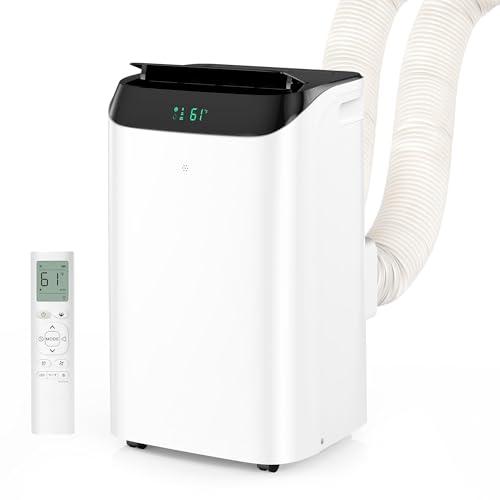
16000 BTU Dual Hose Inverter Portable Air Conditioners, Cooling, Fan, Dehumidification, Sleep Mode for Large Rooms up to 800 Sq.Ft, AC Unit with Remote Control, 24H Timer, Installation Kits Included
Check price on Amazon
Portable Air Conditioner, Portable Evaporative Air Cooler, Swamp Cooler | 9L Water Tank, 2H Timer, 3 Modes, 3 Speeds, 6 Ice Packs, Evaporative Cooler, Windowless Portable Air Conditioners
Check price on Amazon
12000 BTU Portable Air Conditioners, Cooling,Fan,Dehumidification,Sleep Mode for Rooms up to 500 Sq.Ft, AC Unit with Remote Control, 24H Timer, Installation Kits Included
Check price on Amazon