
HVAC Professionals: Your Complete Guide
Understanding who HVAC professionals are, what they do, and how to choose the right one protects your investment, your comfort, and your home. This guide covers licensing, certifications, service tiers, and the exact questions to ask before you sign a work order.
Learn How to HireWhy this guide matters: Heating, ventilation, and air conditioning work is technical, safety-sensitive, and regulation-heavy. The difference between a competent professional and an unqualified one shows up in efficiency, reliability, and the lifespan of your system. Read this before you book a service call or sign an installation quote.
What HVAC Professionals Actually Do
HVAC is a broad discipline that spans heating, ventilation, and air conditioning systems in homes, offices, and commercial facilities. A skilled professional does far more than swap filters or recharge refrigerant. The role blends mechanical diagnostics, electrical troubleshooting, airflow science, and code compliance. Understanding this scope helps you appreciate why credentials matter and why shortcuts often cause long-term problems.
The work breaks down into several specialist roles. Many technicians cover multiple disciplines, while larger firms employ dedicated specialists for each area.
Installation Technicians
Assemble and commission new equipment, connect linesets, wire electrical components, and verify airflow and refrigerant charge against manufacturer specifications.
Service & Repair Technicians
Diagnose faults in compressors, evaporators, condensers, controls, and electrical circuits. They restore cooling or heating and document the root cause.
Maintenance Specialists
Perform scheduled tune-ups, coil cleaning, filter changes, and inspection checklists that catch wear before it becomes a failure.
Design & Engineering
Calculate load requirements, specify equipment, and design ductwork and zoning layouts that match the building envelope.
Controls & Building Automation
Program thermostats, building management systems, and controls systems that optimize performance and energy use.
Refrigeration Specialists
Handle refrigerant recovery, evacuation, and charging under EPA regulations. This work requires certified equipment and documented procedures.
Licensing and Certification: What to Verify
HVAC work is regulated because it touches electrical systems, refrigerant handling, combustion safety, and building codes. Before any professional touches your equipment, confirm three layers of qualification: state licensing, federal refrigerant certification, and voluntary industry credentials.
State Licensing
Most states require HVAC contractors to hold a contractor license issued by a state board. Licensing typically involves proof of experience, passing an exam, and carrying liability insurance and workers' compensation coverage. License requirements vary by state, and some municipalities layer additional permits on top. Always ask for the license number and verify it directly on your state's licensing board website rather than relying on a business card.
EPA Section 608 Certification
Any technician who handles refrigerants must hold EPA Section 608 certification. This federal credential comes in four types (Type I, II, III, and Universal), and Universal certification covers all equipment classes. Ask to see the certification card. A professional who cannot produce it should not be working on refrigerant circuits.
NATE Certification
North American Technician Excellence (NATE) is the largest voluntary certification body in the industry. NATE-certified technicians have passed knowledge assessments in specific domains such as air conditioning, heat pumps, and gas heating. While not legally required, NATE certification signals a baseline of verified competence and a commitment to ongoing education.
Verification Checklist
Ask for the contractor's state license number, EPA 608 card, and proof of general liability and workers' compensation insurance. Cross-check the license on the state board site. Confirm the insurance certificate names the correct business entity and is currently in force.
Service Tiers in the HVAC Market
HVAC providers range from solo owner-operators to national commercial firms. Rather than comparing quotes in isolation, it helps to understand which service tier a provider occupies. Each tier carries different strengths in responsiveness, specialization, warranty support, and project scale.
| Tier | Typical Provider Profile | Best For | Trade-offs |
|---|---|---|---|
| Entry-Level / Starter Tier | Independent technicians, small local shops | Basic repairs, filter changes, single-room service | Limited after-hours availability; narrower warranty support |
| Mid-Range / Balanced Tier | Established local companies with a small fleet | Residential installs, maintenance plans, routine service | Specialty work may be outsourced |
| Premium / High-End Tier | Full-service firms with NATE-certified teams | Complex retrofits, zoned systems, heat pump conversions | Larger organizations; scheduling may be less flexible |
| Professional-Grade / Commercial | Commercial contractors, design-build firms | Offices, retail, warehouses, CRAC units | Residential work is often outside their scope |
In practice, the right tier depends on the project. A straightforward capacitor replacement is well served by an entry-level technician with a solid local reputation. A full heat pump conversion with duct modifications benefits from a premium-tier team that can handle load calculations, electrical upgrades, and commissioning in one coordinated effort.
How to Hire HVAC Professionals
Hiring well is a process, not a single phone call. Use the following sequence to vet providers and reduce the risk of poor workmanship, surprise add-ons, or warranty disputes.
- Step 1 — Define the job. Write down the symptoms, the equipment model, and your goal (repair, replacement, or maintenance). Clear scope leads to accurate estimates and fewer mid-job surprises.
- Step 2 — Request multiple written estimates. Use a formal HVAC quote template or ask each contractor to itemize labor, equipment, and permits. Compare scope line by line, not just the bottom line.
- Step 3 — Verify license and insurance. Confirm the license number on the state board website and request a certificate of insurance. Do this before any work begins.
- Step 4 — Ask about permits. Replacement work usually requires a permit. A professional who suggests skipping the permit is a red flag. Review HVAC building codes for your area to understand what applies.
- Step 5 — Check references and reviews. Ask for two or three recent local references and read recent reviews. Look for patterns in complaints, not isolated ones.
- Step 6 — Confirm warranty terms. Ask how the labor warranty works, who honors manufacturer parts warranties, and what voids coverage. Get it in writing.
- Step 7 — Understand the service agreement. If you sign a maintenance plan, read the cancellation terms, the number of visits included, and what is excluded.
Questions to Ask Before Signing
A credible professional welcomes questions. Use these to separate genuine expertise from sales pressure.
- Will you perform a load calculation before recommending equipment? A proper sizing review prevents short cycling and premature wear. Ask whether they use a design guide or manual calculation method.
- What diagnostic steps will you take? A technician who jumps straight to "you need a new unit" without testing pressures, electrical draw, and airflow is not diagnosing.
- Who will actually perform the work? Some firms subcontract. Ask whether the crew is in-house and whether technicians are NATE-certified.
- What happens if the repair does not resolve the issue? Clarify the callback policy and any diagnostic fee structure in advance.
- Can you show me the old parts? For repairs, a professional will retain and show replaced components such as capacitors or contactors.
Building a Long-Term Relationship
The best HVAC outcomes come from an ongoing relationship rather than one-off emergency calls. A professional who knows your system's history can spot degradation trends, recommend timely upgrades, and respond faster when something fails. Annual maintenance also keeps manufacturer warranties valid and preserves energy efficiency over the life of the equipment.
When selecting a maintenance provider, look for a documented maintenance guide or checklist that includes coil cleaning, filter replacement, refrigerant charge verification, electrical connection inspection, and condensate drainage checks. Ask how they document each visit — photos and written reports are a sign of a disciplined operation. For commercial spaces, commercial HVAC providers typically offer scheduled service contracts that include priority response times.
If your system is older or showing repeated failures, it may be worth consulting a HVAC inspector for an independent assessment before committing to a major repair or replacement. An inspector evaluates the whole system — ductwork, insulation, electrical, and equipment condition — and provides an unbiased view separate from any sales incentive.
Common Mistakes Homeowners Make
Most HVAC disappointments trace back to a handful of avoidable errors. Recognizing them early saves time and protects your equipment.
- Choosing on headline number alone. The lowest or highest quote is rarely the whole story. Scope, warranty, and credentials matter more than a single figure.
- Skipping the load calculation. Oversized or undersized equipment underperforms regardless of installation quality. Insist on a proper sizing review.
- Ignoring ductwork. Even premium equipment cannot compensate for leaky or undersized ductwork. Ask whether duct inspection is part of the scope.
- Forgoing maintenance. Neglected systems lose efficiency and fail earlier. Annual service is a long-term investment, not an optional extra.
- Not verifying insurance. If an uninsured worker is injured on your property, the financial exposure can fall on you. Always confirm coverage.
Frequently Asked Questions
What does an HVAC professional do?
An HVAC professional installs, maintains, and repairs heating, ventilation, and air conditioning systems. Their work spans air conditioners, furnaces, heat pumps, ductwork, and indoor air quality equipment. Many also handle controls, refrigeration, and commercial systems.
How do I verify an HVAC contractor's license?
Check your state's contractor licensing board website, request the license number directly from the contractor, and confirm that both the license and insurance are current and valid for the type of work being performed. Never rely solely on a business card.
What certifications should HVAC professionals have?
Look for EPA Section 608 certification for refrigerant handling, NATE certification for technical competence, and manufacturer-specific credentials. These demonstrate verified skill and compliance with regulations.
How often should HVAC systems be serviced by a professional?
Most manufacturers recommend professional maintenance once per year for cooling and once per year for heating. Annual service keeps efficiency high, preserves warranties, and catches small issues before they escalate.
Should I repair or replace my HVAC system?
The decision depends on equipment age, repair frequency, efficiency, and refrigerant type. A professional assessment that includes a load calculation and a condition review will give you a clearer picture than a single repair quote.
Ready to Explore Equipment Options?
Once you understand how to vet HVAC professionals, the next step is matching the right equipment to your home. Browse our guides on system types, efficiency ratings, and sizing.
Explore HVAC Buying GuideTop-Rated HVAC Equipment for Professionals and Homeowners
⚠️ AFFILIATE DISCLOSURE: This website contains affiliate links. As an Amazon Associate, we earn from qualifying purchases. If you make a purchase through these links, we may receive a small commission at no additional cost to you. Read our full affiliate policy.

HVAC Professional: Customer Service
Check price on Amazon
HVAC Troubleshooting and Diagnostics: A Practical Field Workbook for Diagnosing Common Residential HVAC Problems
Check price on Amazon
HVAC Dad But Cooler Funny Dad Shirt for Men Tee T-Shirt HVAC Technician Father Gift
Check price on Amazon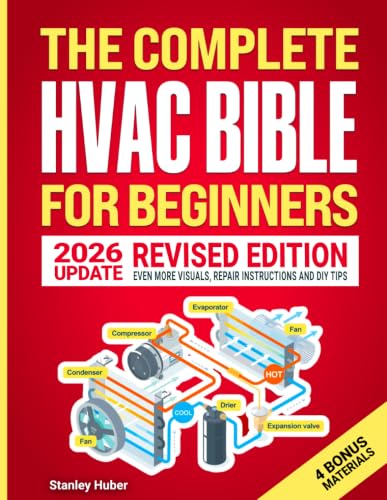
The Complete HVAC BIBLE for Beginners: The Most Practical & Updated Guide to Heating, Ventilation, and Air Conditioning Systems | Installation, Troubleshooting and Repair | Residential & Commercial
Check price on Amazon
Sumnacon 6 Pcs Magnetic Jumper Wires for HVAC Professional,3VAC 5A 2AWG | Silicone Soft Flexible Magnetic Jumper Test Leads for Testing Jumper Test Wires for Thermostats Jumper Cables for Sensors
Check price on Amazon
REDLOONG HVAC Hydraulic Swaging Tool Kit for Copper Tubing | Expanding 3/8" to 1-1/8" with 7 Interchangeable Heads, Portable Tube Expander for HVAC Professionals
Check price on Amazon
100Pcs HVAC Stickers Hard Hat, Water Bottle, Laptop – HVAC Toolbox Decals – Air Conditioning Stickers - Funny Hard Hat Decals - Gifts for Men & Women
Check price on Amazon