Air Conditioning System Repair
A complete, practical guide to diagnosing and fixing common air conditioning faults. Learn which issues you can safely handle yourself and when to bring in a certified technician for a lasting repair.
START DIAGNOSINGWhy repair knowledge matters: A well-maintained air conditioning system cools faster, uses less energy, and lasts far longer. Understanding how your system fails helps you act early, avoid cascading damage, and communicate clearly with service professionals. This guide walks you through symptoms, root causes, safe DIY steps, and the point at which professional repair becomes the responsible choice.
How an Air Conditioning System Works
Before diagnosing a fault, it helps to understand the basic loop. An air conditioner moves heat from inside your home to the outdoors using refrigerant, a compressor, condenser coils, evaporator coils, and an expansion valve. Indoor air passes over the cold evaporator coil, giving up heat and moisture. The refrigerant carries that heat to the outdoor unit, where the condenser releases it into the air. A blower and ductwork distribute the cooled air, while a thermostat controls cycling and temperature setpoints.
Every component depends on the others. A dirty filter restricts airflow, which starves the evaporator coil, which then freezes and blocks cooling entirely. A failing capacitor prevents the compressor from starting, leaving the fan running but the air warm. Recognizing these chain reactions is the foundation of effective air conditioning system repair.
Common Symptoms and What They Mean
The following symptom map helps you narrow down the likely fault before calling a technician. Match your observations to the categories below.
Weak Airflow
Usually caused by a clogged filter, blocked return vents, dirty evaporator coil, or failing blower motor. Start with the filter.
Warm Air From Vents
Often a refrigerant leak, a failing compressor, a bad capacitor, or a thermostat set to fan-only mode. Check settings first.
Water Leaks Indoors
Typically a blocked condensate drain line or a frozen evaporator coil thawing. Clear the drain and check the filter.
Unusual Noises
Banging, rattling, or screeching points to loose components, worn bearings, or debris in the outdoor unit. Stop the system and inspect.
Frequent Cycling
Short cycling can indicate an oversized system, a faulty thermostat, low refrigerant, or a clogged filter. It shortens equipment life.
Frozen Coils
Restricted airflow or low refrigerant causes ice buildup on the evaporator. Turn the system off, thaw it, then investigate airflow first.
Bad Odors
Musty smells suggest microbial growth in the ductwork or on the coil. Chemical smells require immediate shutdown and professional inspection.
High Energy Use
Rising consumption often signals a dirty condenser coil, failing capacitor, or refrigerant undercharge. Schedule a tune-up.
Safe DIY Checks Before Calling a Technician
Many apparent failures turn out to be simple maintenance issues. Work through the following checklist before scheduling a service visit. These steps are safe for most homeowners and often resolve the problem immediately.
1. Replace or Clean the Air Filter
A clogged filter is the single most common cause of poor cooling. Remove the filter, inspect it against a light source, and clean or replace it according to the manufacturer's schedule. In dusty homes or during peak season, check it every month. For detailed guidance, see our article on air conditioning unit cleaning.
2. Verify the Thermostat Settings
Confirm the thermostat is set to cool mode, the fan is on auto, and the setpoint is below room temperature. Replace batteries in battery-powered units. If the display is blank, check the breaker that feeds the air handler.
3. Inspect the Circuit Breakers
Air conditioners typically use two separate circuits: one for the outdoor condenser and one for the indoor air handler. A tripped breaker cuts power to that component. Reset any tripped breaker once. If it trips again, stop and call a technician.
4. Clear the Condensate Drain Line
Water leaks indoors usually trace back to a clogged drain. Locate the drain line near the indoor unit, remove the cap, and flush it with water or a mild vinegar solution. A wet/dry vacuum can clear stubborn clogs.
5. Clean the Outdoor Condenser Coil
Turn off power at the breaker, then gently rinse the outdoor coil with a garden hose. Remove leaves, grass clippings, and debris from around the unit, keeping at least two feet of clearance on all sides.
6. Check the Evaporator Coil for Ice
If you see ice on the indoor coil or refrigerant lines, switch the system off and let it thaw completely. Then restore airflow by cleaning the filter and opening all supply and return vents before restarting.
When Professional Repair Is Necessary
Some faults require licensed expertise, specialized tools, and legal compliance. Do not attempt the following yourself:
- Refrigerant leaks and recharge: Refrigerant handling is regulated by the EPA and requires certified technicians with recovery equipment. Signs include ice on the lines, hissing sounds, and a system that runs constantly without cooling. Learn more about air conditioning unit leaking freon.
- Compressor failure: A compressor that hums but does not start, or that trips the breaker immediately, usually needs professional diagnosis and possibly air conditioning replacement service.
- Electrical faults: Capacitors, contactors, wiring, and control boards require a multimeter and electrical safety training. A failed capacitor is a common and relatively straightforward professional repair.
- Blower motor replacement: The indoor blower motor and its control board are complex components. See our guide to air handler blower motor replacement for what the job involves.
- Ductwork modifications: Sealing or resizing ducts affects system performance and requires careful load calculations.
If your system is not cooling properly and simple checks have not helped, a qualified technician can run pressure tests, electrical diagnostics, and airflow measurements. Our article on air conditioning unit not cooling properly explains the diagnostic process in more detail.
Repair vs Replace: A Practical Framework
When a major component fails, homeowners face a genuine decision. The table below uses quality tiers rather than numeric figures, so the guidance stays useful over time.
| System Tier | Typical Condition | Recommended Action |
|---|---|---|
| Entry-level | Older unit with repeated minor faults | Perform essential repairs; plan for replacement within a few seasons |
| Mid-range | Moderate age with a single component failure | Repair is usually the sound choice; invest in a tune-up afterward |
| High-end tier | Modern, efficient system with a localized fault | Repair promptly to protect the investment and warranty |
| Premium / professional-grade | Recent installation with a warranty-covered issue | Use authorized service to preserve coverage |
As a general rule, a system that has needed multiple repairs in recent seasons and is approaching the end of its expected service life is a stronger candidate for replacement. Conversely, a single failed capacitor or contactor on a well-maintained unit is a straightforward repair that restores full performance.
Preventive Maintenance That Avoids Repairs
The most effective repair strategy is prevention. Schedule an annual tune-up before the cooling season, which typically includes coil cleaning, refrigerant pressure checks, electrical inspections, and drain flushing. Between professional visits, keep filters clean, clear debris from the outdoor unit, and listen for changes in sound or performance.
If you notice early warning signs such as air conditioning unit blowing hot air or air conditioning unit leaking water, address them quickly. Small faults caught early rarely escalate into major failures. Our guide to air conditioning unit tune-up outlines the full checklist a technician should follow.
Choosing a Repair Provider
When professional help is needed, choose a licensed and insured contractor with verifiable references. Ask whether the technician is EPA-certified for refrigerant handling and whether the company offers a written warranty on parts and labor. Local providers who specialize in your equipment brand often have faster access to replacement components. Browse our directory of air conditioning repair specialists and air conditioning technicians to find qualified help in your area.
Get a written diagnosis and estimate before work begins. A reputable technician will explain the fault, show you the failed component when possible, and offer repair options ranked by long-term reliability.
Frequently Asked Questions
How do I know if my air conditioning system needs repair?
Watch for weak airflow, warm air from the vents, unusual noises, water leaks, frequent cycling, and rising energy consumption. Any of these signals indicates the system should be inspected promptly.
Can I repair my air conditioner myself?
Basic maintenance such as cleaning filters, clearing the condensate drain, and checking thermostat settings is safe for most homeowners. Refrigerant work, electrical repairs, and compressor service require licensed professionals.
How often should an air conditioning system be serviced?
An annual professional tune-up is recommended, ideally in spring. Homes in dusty or high-use environments benefit from twice-yearly servicing.
What is the most common cause of AC failure?
Dirty filters and restricted airflow are the leading causes. Clogged filters force the system to overwork, leading to frozen coils, overheating, and premature component failure.
Is it better to repair or replace a failing AC unit?
Consider age, repair history, and efficiency. If the unit is old and facing a major component failure, a high-efficiency replacement is often the better long-term investment.
Ready to Restore Comfortable Cooling?
Explore our full library of repair and maintenance guides, or connect with a qualified specialist in your area to diagnose the problem professionally.
FIND A REPAIR PROVIDERRecommended Air Conditioning Repair Tools and Replacement Parts
⚠️ AFFILIATE DISCLOSURE: This website contains affiliate links. As an Amazon Associate, we earn from qualifying purchases. If you make a purchase through these links, we may receive a small commission at no additional cost to you. Read our full affiliate policy.

Langina 32pcs AC Hose and Fitting Kit,#6#8#10 Air Conditioning A/C Repair | 45°90°180° and UNF thread AC fittings,#6#8#10 A/C Line Adapters, DIY Air Conditioning System Repair
Check price on Amazon
How to Repair Automotive Air-Conditioning & Heating Systems (Workbench)
Check price on Amazon
The Complete HVAC BIBLE for Beginners: The Most Practical & Updated Guide to Heating, Ventilation, and Air Conditioning Systems | Installation, Troubleshooting and Repair | Residential & Commercial
Check price on Amazon
How to Repair Automotive Air-Conditioning and Heating Systems
Check price on Amazon
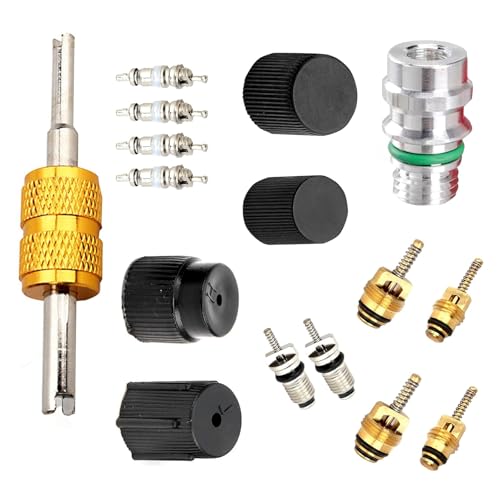
31Pcs R134A Valve Core Quick Remover Installer Tool Set, High Low Pressure AC Valve Core Removal Tool with R134A Valve Core AC Service Port Cap Valve Stem Kit for Refrigerant Air Conditioner System
Check price on Amazon
60PCS AC O Ring Kit Automotive with Multiple Sizes,AC Seal Kit O Ring Assortment Kits for Air Conditioning System Repair & Sealing,Portable ACS O-Ring Kits with Storage Box
Check price on Amazon
AUTOMOTIVE A/C & HEATING REPAIR BIBLE: The Complete DIY Guide to Automotive Air Conditioning, Heating, Climate Control, Diagnostics, Refrigerant Service, Troubleshooting, Maintenance, and Repair
Check price on Amazon