
All in One Heating and Air Conditioning Units: The Complete Guide
Everything you need to know about packaged heating and cooling systems — how they work, who they suit best, and how to choose the right unit for your home or commercial space.
Explore the GuideWhy this guide matters: If you are researching all in one heating and air conditioning units, you likely already know you want a single system that handles both seasons. What you probably still need is clarity — on how packaged systems differ from split systems, what capacity and efficiency ratings mean in practice, and which configuration fits your building. This guide walks you through each decision point so you can move forward with confidence.
What Are All in One Heating and Air Conditioning Units?
An all in one heating and air conditioning unit — often called a packaged unit or packaged HVAC system — consolidates every major component of a comfort system into a single outdoor cabinet. The compressor, condenser coil, evaporator coil, blower, and heating element or heat pump all live inside one weather-resistant enclosure. Conditioned air travels through ductwork into the building, and return air flows back to the unit to be reconditioned.
This design stands in contrast to a traditional split system, where the condenser and compressor sit outside while the air handler and evaporator coil sit inside. By housing everything in one place, packaged units simplify installation logistics, free up indoor floor space, and reduce the number of separate components that require service.
Core Components Inside a Packaged Unit
- Compressor and condenser coil: Manage refrigerant circulation and heat rejection during cooling mode.
- Evaporator coil: Absorbs heat from indoor air as refrigerant expands.
- Blower and air handler: Moves conditioned air through the duct system.
- Heating section: Either a gas furnace, electric resistance heat, or a reversing valve heat pump depending on the model.
- Control board and thermostat interface: Coordinates operation between heating and cooling modes.
Because the heating and cooling sections share the same blower and duct path, the system switches between modes cleanly. A ducted heating system can often be paired with a packaged cooling section if the existing ductwork is in good condition.
How Packaged Units Differ From Split Systems
Understanding the architectural difference helps you evaluate whether an all in one unit makes sense for your property. Split systems remain the most common choice in residential construction because they allow flexible placement of indoor and outdoor components. Packaged systems, by contrast, demand a single location with adequate clearance, structural support, and access for service.
Packaged (All in One)
- Single outdoor cabinet houses all components
- Faster installation in many cases
- Frees up indoor closet or basement space
- One service point for maintenance
- Ideal for rooftops, slabs, and tight lots
Split System
- Indoor air handler plus outdoor condenser
- More flexible component placement
- Common in existing residential ductwork
- Separate service access for each half
- Wide product variety across tiers
For homeowners weighing the two architectures, our guide on ductless versus ducted AC covers a related decision tree, while the comparison of heat pumps versus air conditioners explains how reversing-valve heating changes the calculus for packaged heat pump models.
Types of All in One Heating and Air Conditioning Units
Packaged systems are not a single product category. They span residential, light commercial, and specialty applications, each with distinct design priorities.
Packaged Gas/Electric Units
Pair a gas furnace section with an electric air conditioning section. These are workhorses in residential retrofits where natural gas is available and ductwork already exists. The heating side delivers strong output in cold snaps, while the cooling side follows conventional refrigerant operation.
Packaged Heat Pumps
Use a reversing valve to provide both heating and cooling from the same refrigerant circuit. In moderate climates, packaged heat pumps deliver excellent year-round efficiency. They are a strong fit for properties aiming to reduce reliance on combustion heating.
Packaged Dual-Fuel Systems
Combine a heat pump with a gas furnace backup. The system selects the most efficient heating source based on outdoor temperature, balancing comfort and efficiency across a wide climate range.
Rooftop Packaged Units (RTUs)
Common in light commercial buildings, RTUs sit on the roof and serve spaces through ceiling ductwork. They are professional-grade and commercial-grade fixtures in retail, office, and restaurant settings.
PTAC Units
Packaged terminal air conditioners are self-contained through-the-wall units common in hotels, motels, and apartments. Each room controls its own unit, and heating can be electric resistance or heat pump based.
Vertical Packaged Units
Stand vertically in a closet or mechanical room and connect to ductwork. Useful where slab or rooftop placement is impractical but indoor mechanical space exists.
Where All in One Units Fit Best
Packaged systems shine in specific scenarios. Recognizing those scenarios early saves you from forcing a design that does not match the building.
Residential Applications
Homes with limited indoor mechanical space — slab-foundation houses, manufactured homes, and properties without basements — often benefit from a single outdoor cabinet. A packaged unit can sit on a concrete pad beside the house or on the roof, with ductwork routed through the attic or crawlspace. If you are considering a system for a mobile home, our mobile home AC guide addresses the specific installation constraints.
Light Commercial Applications
Retail storefronts, small offices, and restaurants frequently use rooftop packaged units because they conserve interior floor area and keep mechanical noise away from customers. Our guide on office building AC explores how packaged and split systems compare in commercial settings, and the restaurant AC guide covers ventilation and load considerations unique to food service.
Specialty Spaces
Sunrooms, garages, and additions sometimes use packaged systems when extending ductwork from a central system is impractical. For detached structures, a packaged unit paired with short duct runs can be a clean solution, and our sunroom AC guide and garage AC guide discuss the load calculations involved.
Sizing an All in One Unit Correctly
Capacity is the single most consequential decision in packaged system selection. An undersized unit runs continuously and fails to hold setpoint on design days. An oversized unit short-cycles, struggles to dehumidify, and wears components prematurely. The right approach is a room-by-room load calculation, not a rule-of-thumb guess.
The Load Calculation Approach
A proper Manual J load calculation accounts for envelope insulation, window area and orientation, infiltration, occupant count, and internal gains from appliances and lighting. The output is a required capacity in BTUs per hour for both heating and cooling. Because packaged units serve both modes, you need both numbers — a unit that satisfies cooling load but falls short on heating load will underperform in winter.
Our guide on Manual J load calculation walks through the inputs in detail, and the BTU calculator by room size provides a starting estimate for individual rooms before a full calculation.
Common Capacity Bands
Residential packaged units typically fall into capacity bands that align with home sizes. A small home may suit a unit in the lower band, while larger properties need the upper bands. Our capacity-specific pages help you narrow the field:
- 18,000 – 24,000 BTU — smaller homes and well-insulated spaces
- 30,000 – 36,000 BTU — mid-size homes with standard envelope performance
- 42,000 – 60,000 BTU+ — larger homes and light commercial spaces
If you are comparing whole-home system options, the whole house AC system guide covers how packaged units fit into a broader comfort plan.
Efficiency Ratings That Matter
All in one units are rated on the same efficiency scales as split systems, but because both heating and cooling performance matter, you should evaluate both SEER2 and HSPF2 (for heat pump models) or AFUE (for gas heating sections).
SEER2 for Cooling
SEER2 is the current DOE efficiency metric for cooling. Higher ratings indicate more efficient operation over a typical cooling season. Entry-level units meet the federal minimum for their region, while mid-tier and premium units push into higher bands. Our explainer on what a SEER rating is covers the metric in depth, and the SEER versus SEER2 comparison clarifies the transition to the updated standard.
HSPF2 for Heat Pump Heating
For packaged heat pumps, HSPF2 measures heating efficiency across the season. Cold-climate models carry higher HSPF2 ratings and often include enhanced vapor injection or other cold-weather enhancements. Our HSPF rating guide explains how to interpret the numbers.
ENERGY STAR and Rebates
ENERGY STAR certification signals that a unit exceeds baseline efficiency. Qualifying models may be eligible for utility rebates and federal tax credits, which can shift the long-term economics of a purchase. Our ENERGY STAR certified AC guide and HVAC tax credits and rebates page cover eligibility details.
Installation Considerations for Packaged Systems
Installation quality determines whether a packaged unit reaches its rated performance. A few considerations separate a smooth install from a problematic one.
Placement and Clearance
The outdoor cabinet needs level support, adequate clearance for airflow, and service access on all sides. Rooftop installations require structural review and curb adapters. Slab installations need a reinforced pad and proper drainage away from the foundation. Our guide on AC indoor and outdoor placement covers clearance distances and orientation.
Ductwork Compatibility
Packaged units push air through the building's duct system, so duct sizing, sealing, and insulation directly affect comfort and efficiency. Leaky ducts waste a meaningful share of conditioned air. Our how to seal air ducts guide covers practical sealing steps, and the ductwork design guide explains static pressure and sizing fundamentals.
Electrical and Refrigerant Requirements
Packaged units have specific voltage and amperage requirements. Confirm your electrical panel can support the unit before purchase. Our guide on 110V versus 240V AC units explains the voltage question, and the amps and breaker size guide helps you verify panel capacity. Refrigerant handling must follow EPA rules, covered in our EPA refrigerant handling page.
Maintenance for Long-Term Performance
A packaged unit concentrates all service points in one cabinet, which simplifies routine maintenance. A consistent schedule protects efficiency and extends service life.
- Filter changes: Replace or clean filters every one to three months depending on household conditions. Our when to replace AC filter guide covers the signs.
- Coil cleaning: Condenser and evaporator coils accumulate debris. Annual cleaning preserves heat transfer. See our condenser coil cleaning and evaporator coil cleaning guides.
- Seasonal tune-ups: A spring cooling tune-up and a fall heating check catch small issues before they become failures. Our seasonal AC checklist provides a step-by-step list.
- Professional service plans: An annual maintenance contract keeps the schedule on track. Our annual maintenance contract guide explains what to expect.
If a component fails, knowing the likely repair path helps you evaluate quotes. Our guides on compressor replacement, blower motor replacement, and expansion valve replacement cover common repairs.
Common Problems and Troubleshooting
Packaged units exhibit the same failure modes as split systems. Recognizing symptoms early prevents secondary damage.
Not Cooling
Check the filter, thermostat settings, and outdoor unit for debris. If the system runs but does not cool, refrigerant charge or compressor issues may be involved. See our AC not cooling guide and central AC stopped cooling page.
Blowing Warm Air
In cooling mode, warm air suggests compressor or refrigerant problems. In heating mode, check the heating section and thermostat mode. Our AC blowing warm air guide covers diagnostics.
Water Leaks
Condensate drain clogs are a frequent cause. Clear the drain line and check the drain pan. Our AC leaking water guide walks through the fix.
Noise
Loose panels, failing bearings, or debris in the cabinet can produce noise. Our AC making noise guide helps isolate the source.
Frozen Coils
Restricted airflow or low refrigerant can freeze the evaporator coil. Turn the system off to thaw, then investigate airflow first. See our frozen coils guide.
Odors
Microbial growth in the cabinet or ductwork causes musty smells. Our AC smells bad guide covers cleaning and prevention.
When a problem exceeds DIY scope, a qualified technician is the right call. Our guide on when to call an HVAC technician clarifies the line between routine troubleshooting and professional service.
Comparing All in One Units Across Market Tiers
Packaged systems span a wide range of build quality and feature sets. Rather than focusing on absolute figures, evaluate where a model sits in the market and whether its tier aligns with your priorities. Use the descriptors below as a consistent framework.
| Tier | Typical Characteristics | Best For |
|---|---|---|
| Entry-level | Meets baseline efficiency standards, single-stage operation, essential features | Rental properties, seasonal-use spaces, straightforward replacements |
| Mid-range | Two-stage or variable-speed options, higher SEER2 ratings, improved sound control | Primary residences seeking balanced comfort and efficiency |
| Premium | Variable-speed compressors, advanced controls, enhanced dehumidification, premium materials | Homeowners prioritizing quiet operation and long-term efficiency |
| Commercial-grade | Heavy-duty cabinets, serviceable components, extended runtime ratings | Retail, office, and restaurant environments with continuous operation |
Mid-range models typically offer smoother staging than entry-level units, while premium tiers add finer capacity modulation and quieter operation. The right tier depends on how long you plan to stay in the property and how much you value comfort refinement versus essential function.
Repair or Replace: Making the Call
When a packaged unit reaches the end of its useful life, the repair-versus-replace decision hinges on age, repair frequency, efficiency gap, and refrigerant type. Units using phased-out refrigerants may face rising service difficulty as supplies tighten. Our guide on replace versus repair provides a decision framework, and the R410A phase-out explainer covers refrigerant transition implications.
If replacement is the answer, planning the transition matters. Our first week after installation guide covers what to expect immediately after a new system goes in, and the questions to ask your installer page helps you vet contractor qualifications.
Frequently Asked Questions
What is an all in one heating and air conditioning unit?
It is a packaged system that houses the compressor, condenser, evaporator coil, blower, and heating component in a single outdoor cabinet. It delivers both heated and cooled air through the same ductwork, replacing the split-system arrangement where components are divided between indoor and outdoor locations.
How long does an all in one HVAC unit last?
With proper installation and regular maintenance, a packaged unit typically lasts 15 to 20 years. Commercial-grade units in well-maintained settings reach the upper end of that range. Harsh weather exposure or skipped maintenance can shorten service life.
Do all in one units require ductwork?
Most packaged units connect to existing ductwork, making them a strong fit for homes with a forced-air distribution system. Ductless variants like PTAC units exist for hotel rooms and apartments, but standard residential packaged systems rely on ducts.
What SEER2 rating should I look for in a packaged unit?
Aim for a rating at or above the federal minimum for your region. High-end tier units often reach SEER2 ratings in the upper teens or low twenties, delivering better efficiency over the life of the system. Confirm the rating matches current DOE standards for your climate zone.
Can an all in one unit replace both a furnace and an air conditioner?
Yes. A packaged unit combines heating and cooling in one cabinet, so it can replace both a separate furnace and air conditioner. This consolidation simplifies the equipment footprint and streamlines maintenance since one system serves both functions.
Are packaged heat pumps suitable for cold climates?
Cold-climate packaged heat pumps with enhanced vapor injection and high HSPF2 ratings perform well in cooler regions. In severe cold, a dual-fuel configuration pairing a heat pump with a gas furnace backup provides a reliable balance of efficiency and heating capacity.
Next Steps in Your Research
You now have a working framework for evaluating all in one heating and air conditioning units. The remaining decisions come down to your building's specifics: available space, ductwork condition, climate, and how long you plan to stay in the property. Use the linked guides above to drill into any topic that needs more depth, and confirm capacity with a proper load calculation before committing to a model.
If you are still comparing system architectures, our overview of AC types provides a broader map, and the buying guide consolidates sizing, efficiency, and installation considerations into one place.
Recommended All in One Heating and Air Conditioning Units
⚠️ AFFILIATE DISCLOSURE: This website contains affiliate links. As an Amazon Associate, we earn from qualifying purchases. If you make a purchase through these links, we may receive a small commission at no additional cost to you. Read our full affiliate policy.

SereneLife 8000 BTU Portable Air Conditioner with Heat, Compact 4-in-1 Portable AC & Heater for Room Up to 350 Sq Ft with Dehumidifier & Fan Function, Remote Control, Window Mount Kit, 13" x 11" x 26"
Check price on Amazon
ROVSUN 8000 BTU Air Conditioner Window Unit with Heat, 4-in-1 Window AC Unit Cooler, Heater, Dehumidifier & Fan with Timer, Remote Control & Installation Kit for Rooms up to 350 Sq. Ft, 115V/60Hz
Check price on Amazon
Pioneer 12,000 BTU All-in-One Console Inverter Heat Pump, Through-the-Wall Monoblock Packaged Unit with No Outdoor Condenser, 230V
Check price on Amazon
ACiQ 2.5 Ton 13.4 SEER2 Packaged Heat Pump System with 15kW & Install Kit | R32 Horizontal All-in-One Central AC Heat Pump System Unit & Auxiliary Heat Kit, 30K BTU, 230V Residential or Commercial
Check price on Amazon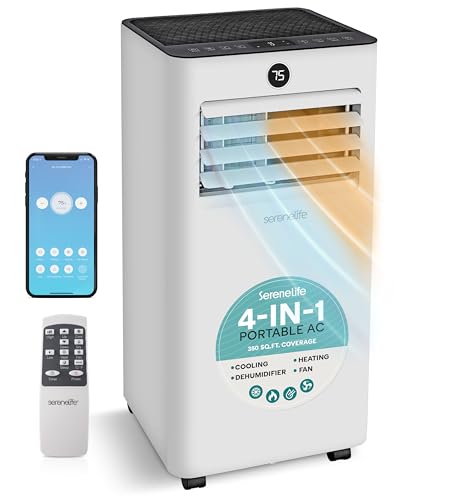
SereneLife 8000 BTU Portable Air Conditioner & Heater with WiFi, 4-in-1 Cooling, Heating, Fan & Dehumidifier, 24-H Timer, Covers 350 Sq Ft, for Bedroom, Home & Office, Includes Window Kit & Remote
Check price on Amazon
AC Infinity Smart Portable Air Conditioner 5-in-1, All-Season Cool & Heat | Auto-Switch Cool and Heat, Drainage-Free, Fan & Dehumidifier, WiFi App, Smart Home, Wireless Remote, 16,000 BTU, 800 sq. ft.
Check price on AmazonDisclaimer
Some of the content on this site uses AI assistance. Information is provided for educational purposes only. We are not responsible for any losses resulting from the use of this information. By using this site, you waive any right to bring legal claims against us arising from your use of the information provided. If you do not agree, please do not use this site. Read the full disclaimer.