Central Heating Thermostat Wireless: The Complete Buyer's Guide
Everything you need to know about wireless central heating thermostats — how they work, which features matter, and how to choose the right one for your home heating system
START READINGWhy a Wireless Central Heating Thermostat Makes Sense
If you are researching central heating thermostat wireless options, you have probably reached the stage where you know you want more control over your home's heating — but you still need clarity on what separates a good thermostat from a mediocre one. A wireless central heating thermostat removes the physical tether between your heating system and the control point. Instead of being stuck to a hallway wall with limited wiring options, you can place the thermostat where it actually measures the temperature that matters: your living room, bedroom, or home office.
This matters more than most homeowners realize. Traditional wired thermostats are often installed in hallways or near draughty doors, places that do not reflect the real comfort level of the rooms you actually use. A wireless thermostat lets you position the sensor in a representative location, giving your central heating system more accurate data and reducing the cycle of overheating and underheating that wastes energy.
Before you dive into specific models, it helps to understand the broader heating context. Your thermostat is one component of a larger central heating and air conditioning system, and its effectiveness depends partly on how well that system is designed and maintained. If you are also reviewing cooling controls, our guide to central air thermostats covers the cooling side in detail.
What You Will Learn on This Page
How a Wireless Central Heating Thermostat Works
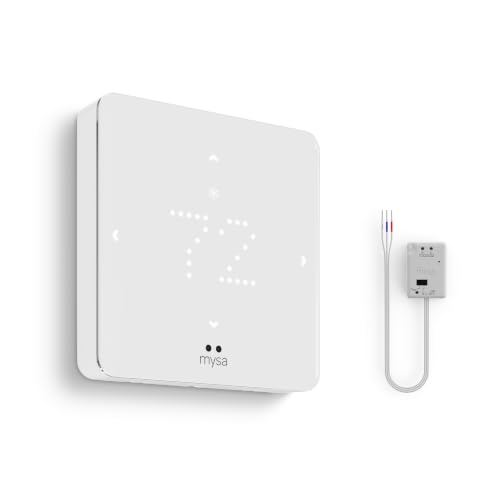
A wireless thermostat system typically consists of two main parts: the thermostat unit (the user interface and temperature sensor) and a receiver or relay module that is wired to your boiler or zone valve. The thermostat communicates wirelessly with the receiver — usually via radio frequency (RF), Wi-Fi, or a proprietary mesh protocol — and the receiver translates those signals into on/off or modulating commands for your heating equipment.
This architecture offers several practical advantages:
- Placement flexibility: You can mount the thermostat where temperature readings are most representative of occupied rooms, rather than where existing wiring happens to run.
- Reduced installation disruption: There is no need to chase new cable runs through walls and ceilings in most retrofit scenarios.
- Multi-zone control: Some wireless systems support multiple thermostats and receivers, enabling room-by-room zoning without extensive rewiring.
- Smart integration: Wi-Fi-enabled wireless thermostats can connect to home automation platforms, learn your schedule, and provide remote control via smartphone.
The control algorithm inside the thermostat also matters. Basic models use simple on/off hysteresis (for example, switching the boiler on at a set threshold and off a degree or two above it). More advanced wireless thermostats use proportional control or adaptive learning to anticipate how long your home takes to heat up, reducing temperature swings and improving efficiency.
If your existing thermostat is causing problems, our troubleshooting guide on a central air thermostat not working covers diagnostic steps that apply to many heating control issues as well.
Essential Features to Compare
When comparing wireless central heating thermostats, the feature set varies significantly across market tiers. The table below outlines what you should look for at each tier level, using neutral tier descriptors rather than numeric references.
| Feature | Entry-Level Tier | Mid-Range Tier | Premium Tier |
|---|---|---|---|
| Wireless protocol | Basic RF (fixed frequency) | RF with improved range, some Wi-Fi | Wi-Fi + RF backup, mesh-capable |
| Programming | Basic 5-2 day schedule | 7-day programmable, multiple periods | Adaptive learning, geofencing, app-based scheduling |
| Sensor accuracy | ±1°C / ±2°F typical | ±0.5°C / ±1°F typical | ±0.3°C / ±0.5°F, remote sensor support |
| Display | Basic LCD, backlight | Clear LCD with humidity display | Color touchscreen, customizable interface |
| Smart features | None | App control, basic energy reports | Voice assistant, occupancy detection, multi-zone |
| Best for | Simple replacement, rental units | Most family homes | Large homes, efficiency-focused owners |
Wireless Range and Reliability
Check the stated range between thermostat and receiver. Walls and floors reduce effective range, so a quoted 30-meter open-air range may translate to 10–15 meters through interior walls. Look for frequency-hopping or mesh capability in larger homes.
Power Source
Most wireless thermostats run on batteries (AA or AAA), while some use a low-voltage wired connection for power only. Battery life typically ranges from one to two years; lithium cells last longer than alkaline.
Heating System Compatibility
Confirm your boiler type — combi, system, or conventional — and whether the thermostat supports modulating control (OpenTherm) or only on/off switching. Modulating control is more efficient with compatible boilers.
User Interface
A clear display and intuitive buttons matter more than you might expect. You will interact with this device daily, so readability in low light and simple schedule editing are practical priorities.
To understand how thermostats fit into the wider heating and cooling setup, see our overview of central heating and air systems.
Types of Wireless Thermostats and Their Best Use Cases
1. Basic Wireless Programmable Thermostats
These are the simplest wireless options. They offer a fixed weekly schedule, manual override, and a clear LCD display. They are a solid choice for homeowners who want placement flexibility without smart features. They suit rental properties and straightforward central heating setups where a single zone covers the whole home.
2. Wi-Fi Smart Thermostats
Smart wireless thermostats connect to your home network and offer app control, geofencing (adjusting heating based on whether you are home), and detailed energy usage reports. Many integrate with voice assistants and home automation platforms. This is the mid-range and premium segment, and it is where most innovation happens. These suit families with irregular schedules who want remote control and data-driven insights.
3. Multi-Zone Wireless Systems
Larger homes with multiple heating zones benefit from wireless thermostats that can control individual zone valves. A single hub or app coordinates several thermostat-receiver pairs. This is a professional-grade approach that requires careful setup but delivers room-by-room comfort. If you are considering a broader system overhaul, our guide to central heating and cooling explains how zones fit into the overall design.
4. Combination Heating and Cooling Thermostats
If your home has both central heating and air conditioning, a combination thermostat controls both modes. Wireless models in this category are increasingly common. Our article on combination heating and air conditioning units provides context on how these systems are configured.
Installation Considerations
One of the main attractions of a wireless central heating thermostat is simplified installation, but there are still important steps and safety considerations.
- Receiver wiring: The receiver module must be wired to your boiler's control terminals. This typically involves low-voltage connections, but if you are not confident working with electrical components, a qualified technician should handle it. Our guide on when to call a certified HVAC technician explains the situations where professional help is the right call.
- Thermostat placement: Avoid direct sunlight, draughts, and locations near heat-generating appliances. Interior walls at roughly eye level or slightly below are usually ideal. Do not place the thermostat behind furniture or curtains.
- Pairing and testing: After mounting, pair the thermostat with the receiver according to the manufacturer's instructions, then test heating cycles at several set points to confirm accurate response.
- Power and backup: If your thermostat uses batteries, set a reminder to replace them annually. Some models warn of low battery on the display.
If you are also updating other parts of your electrical setup, our notes on checking your home electrical panel may be useful before adding new control equipment.
Compatibility With Your Heating System
Wireless thermostats are not universal. Before choosing a model, verify the following:
- Boiler type: Combi boilers often support modulating thermostats (OpenTherm or similar), while older conventional boilers usually work with simple on/off control. Check your boiler manual or consult a technician.
- Voltage and terminals: Most thermostat receivers use low-voltage control circuits, but some systems use line voltage. Never assume — confirm the specifications.
- Zone valves and actuators: Multi-zone systems require compatible zone valves and a receiver that can drive them. Your existing central heating and air conditioning configuration will determine what is feasible.
- Smart home ecosystem: If you use a specific platform (Amazon Alexa, Google Home, Apple HomeKit), confirm the thermostat supports it before committing.
Efficiency and Long-Term Value
A wireless thermostat improves efficiency in two main ways: better placement leads to more accurate temperature readings, and programmable or smart scheduling reduces unnecessary heating. The relative benefit depends on how you currently use your heating.
Homes that are heated intermittently — for example, morning and evening only — tend to see the most noticeable improvement from a programmable wireless thermostat. Homes with someone home all day benefit more from smart features like occupancy detection and weather compensation.
When evaluating long-term value, consider the thermostat as part of your overall heating investment. A well-chosen mid-range wireless thermostat paired with a maintained boiler and properly balanced radiators will outperform a premium thermostat on a poorly maintained system. Our guides on central heating and cooling and central heating and air cover system-level efficiency topics in more depth.
If you are also considering cooling upgrades, the principles are similar — see our comparison content on combination heating and air conditioning units for how combined systems are evaluated.
Frequently Asked Questions
Final Recommendations: Choosing the Right Wireless Thermostat
After reviewing the options, here is a practical decision framework:
- If you want a straightforward upgrade: Choose an entry-level or essential-tier wireless programmable thermostat. You get placement flexibility and a basic schedule without complexity.
- If you want balance of features and simplicity: A mid-range Wi-Fi thermostat with app control and 7-day programming suits most households. This is the sweet spot for most buyers.
- If you want maximum control and efficiency: A premium-tier smart thermostat with occupancy detection, weather compensation, and multi-zone support is the right choice — provided your heating system can take advantage of those features.
Remember that the thermostat is one part of your central heating system. If your heating performance is inconsistent, the thermostat alone may not solve the problem. Issues like a central air unit that turns on but does not cool or a central air unit not blowing cold air point to system-level faults that need diagnosis before you invest in new controls.
For homes planning a broader system review, our content on central heating and air conditioning and central heating and cooling provides the wider context you need to make coordinated decisions.