Coil Clean: The Complete Guide to Cleaner AC Coils and Better Cooling
Dirty coils are one of the most common reasons an air conditioner stops cooling efficiently. Learn how to coil clean evaporator and condenser coils safely, which tools and products to use, and how often to schedule maintenance for a healthier, longer-lasting system.
START THE COIL CLEAN GUIDEWhy coil clean matters: Every air conditioner moves heat through two coils — the evaporator coil indoors and the condenser coil outdoors. When dust, pollen, pet hair, and grease build up on the fins, heat transfer drops, airflow is restricted, and the compressor must run longer. A routine coil clean is one of the highest-impact maintenance tasks a homeowner can perform to protect cooling performance and system lifespan.
What Does Coil Clean Actually Mean?
A "coil clean" is the process of removing accumulated debris from the finned surfaces of your air conditioner's heat exchanger coils. There are two coils in a typical split system, and each requires a slightly different approach:
- Evaporator coil (indoor): Located in the air handler or furnace cabinet. This coil absorbs heat from indoor air and is prone to dust, lint, and mold because it stays damp during operation.
- Condenser coil (outdoor): Located in the outdoor condensing unit. This coil releases heat to the outside and collects dirt, leaves, grass clippings, and pollen.
A thorough coil clean restores airflow and heat transfer, which helps the system reach the thermostat setpoint faster and run more efficiently. For a broader look at upkeep, see our overview of air conditioner condenser maintenance and cleaning evaporator coils on a central air conditioner.
Signs Your AC Needs a Coil Clean
Coils rarely fail suddenly. Instead, performance degrades gradually. Watch for these warning signs that a coil clean is overdue:
- Rooms take noticeably longer to cool than in previous seasons.
- The outdoor unit runs almost continuously on hot days.
- Airflow from vents feels weak even with a fresh filter.
- The system short cycles — starting and stopping frequently (see AC short cycling for causes).
- Visible dust or a matted film on the outdoor coil fins.
- Musty odors when the blower runs, often linked to a dirty evaporator coil and drain pan.
- Higher-than-usual energy consumption without a change in habits.
If your system is running but not delivering cold air, the coil may be part of the problem. Our guides on AC fan on but not blowing cold air and air conditioner blowing cool but not cold explain how to diagnose the issue before assuming a major repair is needed.
Step-by-Step Coil Clean Process
The following process covers a safe, homeowner-level coil clean for both coils. Always disconnect power at the breaker before opening any panel or touching the unit.
Shut Off Power Safely
Turn off the thermostat and switch off the dedicated breaker for the indoor air handler and the outdoor condensing unit. Confirm power is off before removing any access panels.
Clear the Outdoor Area
Remove leaves, grass, and debris from around the condenser. Keep at least two feet of clearance on all sides so airflow is unrestricted during and after cleaning.
Brush the Condenser Fins
Use a soft coil brush or a vacuum with a brush attachment to lift loose dirt from the outside fins. Work gently in the direction of the fins to avoid bending them.
Apply Coil Cleaning Foam
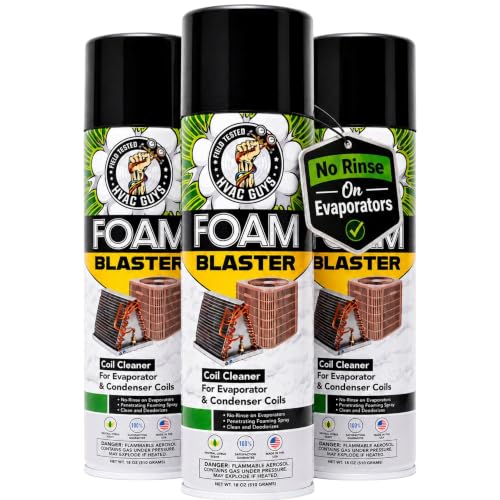
Apply a no-rinse HVAC coil cleaning foam to the condenser fins and, where accessible, the evaporator coil. Let it dwell according to the product instructions so it can lift grime from the fins.
Rinse Gently (Condenser Only)
Rinse the outdoor coil with a low-pressure garden hose, working top to bottom. Never use a pressure washer, which can bend fins and force water into electrical components.
Clean the Evaporator Coil Area
Open the indoor access panel and inspect the evaporator coil. Apply foam cleaner and let it drain with the condensate. Wipe the drain pan and check that the drain line flows freely.
Inspect and Straighten Fins
Use a fin comb to straighten any bent fins on both coils. Straight fins maintain proper airflow and heat transfer after the coil clean is complete.
Reassemble and Restore Power
Reinstall all panels, restore power at the breaker, and run the system. Confirm strong airflow and cold supply air, and check for any water leaks around the indoor coil.
Safety note: Never spray water or cleaning foam near electrical controls, the compressor terminals, or the indoor circuit board. If the evaporator coil is difficult to reach, or if you suspect refrigerant issues, stop and contact a qualified technician. Our guide on when to call an HVAC technician explains which tasks are best left to professionals.
Tools and Products for a Coil Clean
A basic coil clean does not require specialized equipment, but using the right tools protects the fins and improves results. The table below groups commonly used items by tier so you can match the tool to your comfort level.
| Tool / Product | Tier | Best For |
|---|---|---|
| Soft coil brush or vacuum brush attachment | Essential tier | Lifting loose dust and debris before applying cleaner |
| No-rinse coil cleaning foam | Essential tier | Routine evaporator and condenser coil clean for most homes |
| Fin comb | Balanced tier | Straightening bent fins to restore airflow after cleaning |
| Low-pressure garden hose nozzle | Balanced tier | Rinsing outdoor condenser coils without bending fins |
| Condensate drain pan tablets | Balanced tier | Keeping the drain pan fresh after an evaporator coil clean |
| Wet/dry vacuum with soft brush kit | High-end tier | Deeper debris removal around indoor coil cabinets and drain areas |
| Professional coil cleaning service kit | Professional-grade | Technician-level deep cleaning with specialized applicators |
For homes with mini-split systems, the indoor coil is smaller but just as important to maintain. Our guide on cleaning a mini-split covers the specific steps for those units. If you are using a dedicated cleaning foam, review the instructions on cleaning foam for AC to confirm it is safe for both coil types.
Evaporator Coil Clean vs Condenser Coil Clean
Although both are called "coil clean," the two tasks differ in location, soil type, and cleaning method. Understanding the difference helps you avoid damaging components.
| Aspect | Evaporator Coil (Indoor) | Condenser Coil (Outdoor) |
|---|---|---|
| Primary soil | Dust, lint, mold, pet hair | Dirt, leaves, pollen, grass clippings |
| Moisture level | Wet during operation | Usually dry unless raining |
| Typical method | No-rinse foam, gentle wipe, drain pan care | Brush, foam, low-pressure rinse |
| Risk level | Higher — near electrical controls and drain lines | Lower — but fins bend easily |
| Frequency | At least annually, more often with pets | At least annually, more often in dusty climates |
Keeping the drain pan clean is part of the evaporator coil clean routine. Our article on how to clean the drain pan of an air conditioner walks through the steps to prevent standing water and odors after cleaning.
How Often Should You Coil Clean?
There is no single schedule that fits every home, but the following guidelines help most households stay ahead of buildup:
- Standard homes: A coil clean once per year, ideally in spring before the cooling season begins.
- Homes with pets: Every six to nine months, because pet hair accelerates evaporator coil fouling.
- Dusty or rural areas: Every six months, especially for the outdoor condenser coil.
- Coastal or humid climates: Annual cleaning plus regular drain pan checks to limit mold growth.
- After renovations or nearby construction: An extra coil clean once the work is finished, since drywall dust and debris travel through the system.
Pair the coil clean with routine filter changes. Our guide on when to replace an AC filter explains how filter condition affects how quickly coils get dirty.
Common Coil Clean Mistakes to Avoid
- Using a pressure washer: High pressure bends fins and can force water into electrical parts. Always use a low-pressure hose.
- Skipping the power-off step: Always disconnect power at the breaker before removing panels or touching the coils.
- Cleaning only the outdoor coil: The indoor evaporator coil collects just as much debris and is often the source of odors and airflow restrictions.
- Leaving a wet drain pan: Standing water after a coil clean encourages mold. Dry and treat the pan before reassembly.
- Using household cleaners: Abrasive or acidic cleaners can corrode aluminum fins. Use products formulated for HVAC coils.
- Ignoring bent fins: Crushed fins block airflow even on a clean coil. Straighten them with a fin comb as part of the process.
When a Coil Clean Needs a Professional
Some situations call for more than a homeowner-level coil clean. Contact a licensed HVAC technician if:
- The evaporator coil is fully enclosed and not safely accessible.
- You notice ice forming on the indoor coil or refrigerant lines — this may indicate low refrigerant or airflow problems.
- The coil is heavily fouled with grease or a hard mineral film that foam cannot lift.
- There are signs of refrigerant leaks, such as oil residue or hissing sounds.
- The system still does not cool properly after a coil clean and filter change.
Persistent cooling problems may point to issues beyond the coils. Our troubleshooting guides on AC not cooling solutions and AC unit on but not blowing cold air help narrow down the cause. If a component has failed, you can learn about repair scope in our AC compressor replacement guide.
Benefits of Regular Coil Clean Maintenance
- Better cooling performance: Clean coils transfer heat efficiently, so supply air reaches the target temperature faster.
- Lower energy use: A system with clean coils runs shorter cycles and draws less power over the season.
- Longer equipment life: Reduced strain on the compressor and fan motor delays major repairs.
- Healthier indoor air: Removing mold and debris from the evaporator coil and drain pan improves indoor air quality.
- Fewer service calls: Routine coil clean maintenance catches small issues before they become breakdowns.
For a complete seasonal routine that includes coil cleaning alongside filter changes and thermostat checks, review our seasonal AC checklist. If you want to understand how coil condition fits into the broader system, our education section on how an air conditioner works explains the heat transfer cycle in plain language.
Frequently Asked Questions About Coil Clean
How often should I coil clean my AC unit?
Most homes benefit from a coil clean at least once per year, ideally before the cooling season. Homes in dusty areas, near construction, or with pets may need cleaning every six months or more frequently.
Can I coil clean my AC myself or should I hire a technician?
You can safely clean the accessible outer surfaces of condenser coils and the evaporator coil behind the access panel using coil cleaning foam and a soft brush. Deep cleaning that requires dismantling the unit or handling refrigerant should be handled by a licensed HVAC technician.
What happens if I never coil clean my air conditioner?
Neglecting coil cleaning allows dirt to insulate the coils, reducing heat transfer. This forces the compressor to work harder, raising energy use, reducing cooling output, and potentially shortening the lifespan of the system.
What is the best coil cleaning foam for home use?
No-rinse coil cleaning foams designed for HVAC use are the most convenient for homeowners. Look for products labeled for evaporator and condenser coil cleaning that expand into the fins and drain away with condensate.
Does a coil clean fix an AC that is not cooling?
It can, if dirty coils are the cause of restricted heat transfer. However, if the system still does not cool after a coil clean and filter change, other issues such as low refrigerant, a failing compressor, or a faulty thermostat may be responsible and should be diagnosed by a technician.
Keep Your Coils Clean and Your Home Comfortable
Use the steps above to plan a coil clean routine that fits your home. Pair regular cleaning with the right products and, when needed, a professional inspection.
EXPLORE COIL CLEANING PRODUCTS