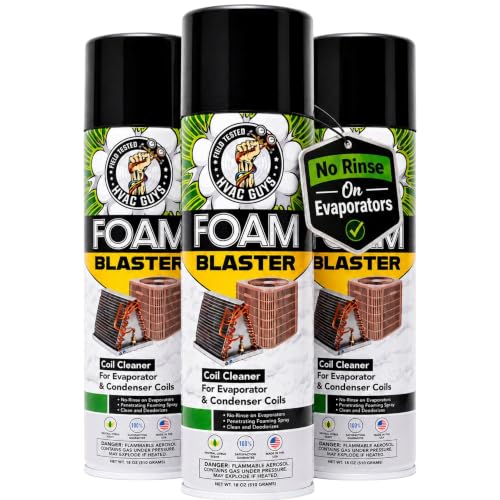
Cleaning Foam for AC: The Complete Coil Cleaning Guide
Discover how specialized cleaning foam restores airflow, improves cooling performance, and protects your air conditioner. Learn which foam to choose, how to apply it safely, and when to call a professional.
EXPLORE CLEANING FOAMWhy cleaning foam matters: Over time, evaporator and condenser coils collect dust, pollen, pet hair, and oily grime. That buildup insulates the fins, reduces heat exchange, and forces your system to work harder. A quality cleaning foam for AC lifts that residue so it can be rinsed away, helping your unit cool more effectively and last longer.
What Is Cleaning Foam for AC?
Cleaning foam for AC is a purpose-built detergent that reacts with air and moisture to expand into a thick, clinging foam. Unlike general household sprays, coil cleaning foam is engineered to penetrate the narrow spaces between aluminum fins and lift away the contaminants that block airflow. The foam's extended dwell time gives the active ingredients time to break down oily residue and biological buildup before rinsing.
Most foams fall into two broad categories: rinse-required formulas and no-rinse formulas. Rinse-required foams deliver a deeper clean and are common for outdoor condenser coils, while no-rinse foams are often used on indoor evaporator coils where water drainage is limited. Both types are part of a broader preventive maintenance routine that also includes cleaning evaporator coils and condenser maintenance.
Why Use Cleaning Foam Instead of Water Alone?
Water rinses away loose dust, but it cannot dissolve the sticky film of oil, pollen, and microbial growth that accumulates on coil fins. Cleaning foam is formulated to break the bond between that film and the metal surface. The result is a deeper clean with less mechanical scrubbing, which reduces the risk of bending delicate fins.
Regular foam cleaning supports several outcomes:
- Better airflow: Clear fins allow the blower to move air efficiently across the coil.
- Improved heat transfer: Clean metal surfaces exchange heat more effectively than insulated, grimy ones.
- Odor control: Foam cleaners help remove the organic matter that causes musty smells.
- Longer equipment life: Reduced strain on the compressor and fan motor supports durability.
- Fewer service calls: Routine cleaning helps prevent the symptoms described in AC not cooling and fan running without cold air.
Types of Cleaning Foam for AC Coils
Rinse-Required Coil Foam
Expands into a heavy foam that requires a thorough water rinse. Ideal for outdoor condenser coils where water runoff is easy to manage. Delivers a deep clean for heavily soiled units.
No-Rinse Coil Foam
Designed to drain away with condensate. Convenient for indoor evaporator coils and situations where rinsing is impractical. Follow the label dwell time carefully.
Self-Rinsing Foam
Uses the unit's own condensate to carry residue to the drain pan. Often chosen for maintenance visits where access to water is limited. Pair with drain pan cleaning.
Microchannel-Safe Foam
Formulated for the aluminum microchannel coils found in newer systems. Avoids aggressive acids that can corrode sensitive alloys. Confirm compatibility before use.
Heavy-Duty Degreasing Foam
Targets kitchen grease and industrial grime. Common in commercial settings and for restaurant or gym equipment. Requires careful rinsing and ventilation.
Enzymatic / Odor-Control Foam
Combines cleaning with biological odor neutralization. Useful for musty systems and homes with pets. Often paired with filter replacement.
How to Choose the Right Cleaning Foam
Selecting the right foam depends on where you plan to use it, the coil material, and how much rinsing you can safely perform. The table below summarizes the main decision factors using universal quality tiers rather than any numeric figures.
| Tier | Best For | Key Characteristics |
|---|---|---|
| Essential tier | Routine seasonal maintenance on lightly soiled coils | Simple surfactant formula, easy application, suitable for DIY users |
| Balanced tier | Homes with pets, pollen, or moderate buildup | Stronger foaming action, longer dwell time, broader material compatibility |
| High-end tier | Heavy grime, grease, or neglected systems | Degreasing additives, self-rinsing options, professional-grade concentration |
| Professional-grade | HVAC technicians and commercial equipment | Microchannel-safe formulations, bulk packaging, documented compatibility |
When comparing options, check the following attributes:
- Coil compatibility: Confirm the foam is safe for aluminum, copper, and microchannel coils as applicable.
- Rinse requirement: Match the product to the location. Indoor evaporator coils often favor no-rinse formulas.
- Foam expansion: A thicker, longer-lasting foam provides more contact time on vertical fins.
- Odor and residue: Look for low-residue formulas that will not leave a film attracting new dust.
- Application method: Aerosol cans are convenient for tight spaces; pump sprayers suit larger condenser coils.
- Safety documentation: Prefer products with clear instructions, PPE guidance, and material compatibility notes.
For related maintenance supplies, see coil clean and cleaning a mini-split.
How to Apply Cleaning Foam for AC: Step by Step
- Power down the system. Turn off the thermostat and the dedicated breaker before touching any coil or electrical component.
- Remove filters and access panels. Take out the air filter and any panels that expose the evaporator coil. If the filter is due for replacement, note the size for your next order.
- Dry-brush loose debris. Use a soft brush or vacuum with a brush attachment to remove surface dust and pet hair. This step reduces how much foam you need.
- Protect the surroundings. Place towels or a drip pan beneath the coil and cover nearby electrical parts.
- Apply the foam evenly. Shake the can or sprayer and apply a consistent layer across the fins. Avoid overspraying into electrical compartments.
- Respect the dwell time. Let the foam expand and work for the period stated on the label. Do not let it dry completely on the coil.
- Rinse if required. Use a low-pressure water spray, moving along the fins rather than against them. For no-rinse formulas, allow condensate to carry the residue to the drain.
- Clean the drain pan and line. Flush the pan and confirm the condensate line is clear. See cleaning the drain pan.
- Reassemble and test. Reinstall panels and filters, restore power, and run the system to confirm normal operation.
- Log the maintenance. Record the date and product used. This helps you plan the next cleaning and supports warranty registration records.
⚠️ Safety Precautions
Coil cleaners are chemical products. Follow these precautions to protect yourself and your equipment:
- Wear gloves and eye protection, and work in a ventilated area.
- Never mix cleaning foam with other chemicals.
- Do not apply foam to electrical components, wiring, or the blower motor.
- Avoid acidic cleaners on microchannel coils unless the label explicitly permits it.
- Keep children and pets away during application and drying.
- If you are unsure about coil access or refrigerant lines, consult a qualified technician.
How Often Should You Deep Clean with Foam?
For most residential systems, a foam deep clean once or twice per year is appropriate. A common rhythm is one cleaning before the cooling season begins and a second after it ends. Homes with pets, construction dust, or heavy pollen may need more frequent attention. Commercial spaces and equipment used in dusty environments often benefit from quarterly cleaning.
Watch for signals that cleaning is overdue: reduced airflow, musty odors, visible dust on the coil face, or a system that runs longer than usual. Many of these symptoms overlap with other faults, so review AC on but not blowing cold air and AC short cycling before assuming cleaning alone will solve the problem.
When to Call a Professional
Some situations call for a trained technician rather than a DIY foam application:
- The coil is deeply fouled with grease, mold, or biological growth that resists normal cleaning.
- The system uses a coil type you cannot confidently identify.
- Access requires opening sealed refrigerant sections or working near high-voltage components.
- You notice refrigerant leaks, ice formation, or persistent performance issues.
- You need a documented maintenance record for warranty or commercial compliance.
Professional service providers often use specialized cleaning foam in combination with coil fin combs, pressure-controlled rinsing, and drain line treatment. If you are unsure, an AC repair company or AC repair tech can advise on the right approach for your system.
Cleaning Foam vs Other Coil Cleaning Methods
| Method | Best For | Notes |
|---|---|---|
| Cleaning foam | Routine and deep cleaning of evaporator and condenser coils | Good contact time, lifts oily residue, available in rinse and no-rinse formats |
| Plain water rinse | Light dust removal | Does not dissolve oils or biological film; best as a follow-up to foam |
| Coil brush | Loose debris on accessible fins | Useful as a pre-step; risk of fin damage if used aggressively |
| Professional chemical wash | Severe fouling and commercial systems | Applied by technicians with controlled pressure and containment |
Where Cleaning Foam Fits in Your Maintenance Routine
Foam cleaning is most effective when combined with regular filter care and airflow checks. A practical routine looks like this:
- Monthly: Inspect and replace or clean the air filter as needed. See air filters for AC vents.
- Seasonal: Vacuum loose debris from accessible coils and confirm the drain line is clear.
- Twice yearly: Apply cleaning foam to the evaporator coil and condenser coil following the label directions.
- Annually: Schedule a professional inspection to check refrigerant charge, electrical connections, and overall system health.
If your system has been neglected, cleaning foam can be a useful first step, but it is not a substitute for diagnosing underlying faults. Review guides such as AC not blowing cold air but fan running and AC blowing cold but not cooling the house to rule out other issues.
Frequently Asked Questions
What is cleaning foam for AC?
Cleaning foam for AC is a specialized detergent that expands into a thick foam when applied to evaporator or condenser coils. The foam lifts dirt, dust, pollen, and oily residue from the fins so it can be rinsed away, restoring airflow and heat transfer.
Do I need to rinse AC cleaning foam?
It depends on the product. Rinse-required foams must be washed off with water after the dwell time. No-rinse foams are designed to drain away with condensate. Always follow the label instructions for the specific cleaner you use.
How often should I use coil cleaning foam?
For most homes, a deep foam cleaning once or twice per year is sufficient, ideally before cooling season and after it ends. Homes with pets, dust, or heavy pollen may benefit from more frequent cleaning.
Is cleaning foam safe for all AC coils?
Not always. Some foams are formulated for aluminum fins, others for microchannel coils. Always confirm compatibility with your coil type and avoid acidic cleaners on sensitive metals.
Can cleaning foam fix a system that is not cooling?
Cleaning foam can restore performance when airflow restriction is the cause. If the system is low on refrigerant, has a failed compressor, or has electrical faults, cleaning alone will not resolve the problem. Review AC not cooling for troubleshooting guidance.
Should I clean the drain pan after using foam?
Yes. Residue and dislodged debris can accumulate in the drain pan and line. Flushing the pan and checking the condensate drain helps prevent clogs and water damage. See drain pan cleaning.
Ready to Restore Your AC Performance?
Cleaning foam is one of the most practical maintenance steps you can take to protect your system. Compare formulations, confirm coil compatibility, and follow the label instructions for a safe, effective deep clean.
VIEW CLEANING FOAM OPTIONS