
Condenser Mini Split: The Complete Outdoor Unit Guide
The condenser is the heart of every ductless mini split system. Learn how it works, how to size and place it, how to keep it running efficiently, and how to choose the right outdoor unit for your home before you buy.
START WITH THE BASICSWhat Is a Condenser Mini Split?
A condenser mini split is the outdoor unit of a ductless mini split system. It sits outside your home and works together with one or more indoor air handlers (also called heads) connected through refrigerant lines. The condenser compresses refrigerant, releases absorbed heat to the outside air, and circulates the cooled refrigerant back indoors. In heating mode, the process reverses and the condenser absorbs heat from outdoor air to warm your rooms.
Because the outdoor condenser does the heavy lifting, its quality, placement, and maintenance have a direct impact on efficiency, noise, and system lifespan. If you are still exploring system options, our overview of ductless mini split air conditioners is a useful companion read.
Condenser vs. Air Handler: Who Does What?
In a ductless setup, the condenser houses the compressor, condenser coil, condenser fan, and control board. The indoor air handler contains the evaporator coil, blower, and filters. Refrigerant travels between the two through a line set. This separation is what makes mini splits ductless and highly flexible for rooms without existing ductwork.
If you want to go deeper into the heat-exchange side, see our explainer on the condenser coil and how it differs from the indoor evaporator coil.
How the Condenser Mini Split Works
The refrigeration cycle inside a mini split condenser follows four main stages:
- Compression: The compressor raises the pressure and temperature of the refrigerant gas.
- Condensation: The hot gas passes through the outdoor condenser coil, where the condenser fan pulls air across the fins. Heat is released to the outside air, and the refrigerant condenses into a liquid.
- Expansion: The liquid refrigerant passes through an expansion device, dropping in pressure and temperature.
- Evaporation: Indoors, the cold refrigerant absorbs heat from your room air through the evaporator coil, then returns to the compressor to repeat the cycle.
Inverter-driven condensers can vary compressor speed instead of simply switching on and off. This smoother operation is a big reason why modern mini splits can maintain stable room temperatures with less energy waste. For a broader explanation, read how an inverter AC works.
Key Components Inside the Outdoor Unit
Knowing what is inside the condenser helps you understand maintenance needs and troubleshoot common issues.
| Component | Function | Maintenance Note |
|---|---|---|
| Compressor | Pumps refrigerant and raises its pressure and temperature | Sealed unit; protect from debris and electrical issues |
| Condenser Coil | Releases heat from refrigerant to outdoor air | Clean fins regularly for efficiency |
| Condenser Fan | Moves air across the coil | Keep blades and motor free of obstructions |
| Control Board | Manages compressor speed, fan, sensors, and communication | Protect from moisture and power surges |
| Refrigerant Line Connections | Connect outdoor unit to indoor air handlers | Check for leaks during annual service |
Two components deserve extra attention: the condenser fan on air conditioner units and the compressor for AC unit systems. A failing fan reduces heat rejection, while a failing compressor can stop cooling entirely.
Placement: Where the Outdoor Unit Should Go
Placement affects airflow, noise, service access, and longevity. A poorly placed condenser mini split will work harder and may fail sooner, even if it is a premium model.
Placement Guidelines
- Clear airflow: Leave at least 12–24 inches of clearance around the unit, with more space in front of the fan discharge.
- Shade and sun: A shaded location reduces workload, but avoid enclosed spaces where hot air recirculates.
- Level surface: Mount on a solid pad or wall bracket rated for the unit's weight.
- Snow and debris: Raise the unit above expected snow line in cold climates.
- Service access: Leave room for a technician to reach panels and valves.
- Distance from bedrooms: Place away from windows where noise would be noticed.
- Line set length: Keep refrigerant runs within manufacturer limits to preserve capacity.
For a full walkthrough, see our guide on AC indoor and outdoor placement.
Sizing the Condenser Mini Split Correctly
An oversized condenser will short-cycle, struggle to remove humidity, and wear out faster. An undersized condenser will run constantly without reaching the set temperature. Proper sizing starts with a room-by-room heat load estimate rather than a simple square-foot rule.
Use our BTU calculator by room size and the detailed guide to sizing an air conditioner to estimate capacity. For multi-zone systems, each indoor head has its own load, and the outdoor condenser must be matched to the combined load with the right turndown ratio.
Single-Zone vs. Multi-Zone Condensers
- Single-zone: One indoor head connected to one outdoor condenser. Ideal for a single room, garage, or addition.
- Multi-zone: One outdoor condenser serving two to five indoor heads, each with independent temperature control. Best for whole-home or multi-room comfort.
Efficiency Ratings You Should Understand
Condenser efficiency is expressed through SEER2 (cooling) and HSPF2 (heating for heat pump models). Higher ratings generally indicate better efficiency, but the real-world benefit depends on climate, installation quality, and usage patterns.
Learn the differences in our articles on the SEER rating, SEER vs SEER2 standards, and HSPF rating. If you want the highest efficiency options, browse highest SEER air conditioner models.
Maintaining the Outdoor Condenser
Regular maintenance is straightforward and protects your investment. A clean, unobstructed condenser runs cooler and lasts longer.
Seasonal Maintenance Checklist
- Remove leaves, grass clippings, and debris from around the unit.
- Rinse the condenser coil fins gently with a garden hose (power off first).
- Straighten bent fins with a fin comb.
- Check that the fan spins freely and is free of debris.
- Inspect refrigerant lines for insulation damage.
- Clear the condensate drain path if applicable.
- Schedule a professional tune-up before peak season.
For detailed steps, read our guides on condenser coil cleaning and how to clean condenser coils. If you notice unusual fan noise, see condenser fan replacement for context on when service is needed.
Common Condenser Problems
- Not cooling: Dirty coil, low refrigerant, or failing compressor.
- Loud operation: Fan imbalance, loose panels, or worn motor bearings.
- Ice buildup: Restricted airflow or refrigerant charge issues.
- Tripping breaker: Electrical fault, shorted compressor, or failing capacitor.
Our troubleshooting articles on AC not cooling, AC making noise, and AC frozen coils walk through diagnostic steps.
Buying a Condenser Mini Split: What to Compare
When comparing models, focus on the specifications that affect long-term satisfaction rather than surface-level features.
| Tier | Typical Characteristics | Best For |
|---|---|---|
| Entry-level | Single-zone focus, standard inverter, basic controls | Single rooms, garages, occasional-use spaces |
| Mid-range | Better turndown ratio, quieter fan, improved filtration options | Bedrooms, home offices, small apartments |
| Premium | High-efficiency inverter, low ambient heating, smart controls | Whole-home comfort, cold-climate heating, multi-zone |
| Top-tier / professional-grade | Advanced diagnostics, wide operating range, robust components | Large homes, commercial spaces, demanding climates |
Features Worth Prioritizing
- Inverter compressor: Smoother temperature control and quieter operation.
- Low-ambient heating: Important if you rely on the system in winter.
- Quiet operation: Sound ratings matter for bedrooms and patios.
- Smart connectivity: Wi-Fi control and scheduling add convenience.
- Filtration: Better filters improve indoor air quality.
- Warranty coverage: Compressor warranties vary significantly.
If you want heat pump capability, see our guide on heat pump vs air conditioner and AC with heat pump options.
Installation and Contractor Selection
Even an excellent condenser mini split underperforms if installed poorly. Improper line set sizing, insufficient vacuum, or incorrect charge can shorten compressor life. Choose a licensed contractor with mini split experience. Our resource on companies that install mini split air conditioners and how to choose an HVAC contractor can help you vet installers.
Placement and Line Set Considerations
Long refrigerant runs reduce capacity and may require added charge. Keep the outdoor condenser as close as practical to the indoor heads, while respecting noise and clearance needs. If you are designing a multi-zone system, plan zones so each head handles a similar load.
Condenser Mini Split vs. Other Outdoor Units
Mini split condensers differ from traditional central AC condensers in size, refrigerant type, and control sophistication. If you are comparing system types, read condensing unit HVAC and components of a central air conditioning system.
For homes without ductwork, ductless is often the most practical path. Our article on cooling options for homes without ductwork covers alternatives.
Frequently Asked Questions
What does the condenser do in a mini split system?
The condenser mini split outdoor unit releases heat absorbed from your indoor space into the outdoor air. It houses the compressor, condenser coil, and fan, and it manages refrigerant flow between indoor and outdoor components.
How often should the condenser be cleaned?
Inspect monthly during peak season and clean the coil at least once or twice a year, more often if you live in a dusty or leafy area. Regular cleaning protects efficiency and compressor life.
Can one condenser serve multiple rooms?
Yes. Multi-zone condensers support two to five indoor heads, each with independent temperature control. Sizing must account for the combined load and the system's minimum turndown.
Why is my condenser running but not cooling?
Common causes include a dirty condenser coil, low refrigerant charge, a failing compressor, or a blocked indoor filter. Start with filter and coil cleaning, then call a technician if the issue persists.
Is a mini split condenser the same as a heat pump?
Many mini split condensers are heat pumps, meaning they can both cool and heat by reversing the refrigerant cycle. Cooling-only models are also available.
Does the outdoor unit need to be in the shade?
Shade helps efficiency, but airflow matters more. Never enclose the unit or restrict clearance. A shaded, well-ventilated location is ideal.
Final Checklist Before You Buy
- Confirm the load calculation for each room or zone.
- Choose single-zone or multi-zone based on usage.
- Compare SEER2 and HSPF2 ratings for your climate.
- Check low-ambient heating performance if needed.
- Verify noise ratings for bedrooms and patios.
- Plan a location with adequate clearance and service access.
- Select a licensed installer with mini split experience.
- Review warranty terms for the compressor and parts.
- Set a seasonal maintenance reminder.
Recommended Mini Split Condenser Outdoor Units
⚠️ AFFILIATE DISCLOSURE: This website contains affiliate links. As an Amazon Associate, we earn from qualifying purchases. If you make a purchase through these links, we may receive a small commission at no additional cost to you. Read our full affiliate policy.

ROVSUN 9000 BTU Wifi Enabled Mini Split Air Conditioner & Heater with Inverter, 20 SEER2 Energy Saving 115V Ductless Split AC Unit with Pre-Charged Condenser, Heat Pump & Installation Kit
Check price on Amazon
VEVEVA Mini Split Pad 18" W*38" L*3" H Inch Anti Vibration Paver Pads for HVAC Accessories,Air Conditioner Thick Rubber Isolation Mat Shock Absorbing Base for Condenser Units Heat Pump System(Gray)
Check price on Amazon
Mini Split Pad AC Condenser Pad,18Wx38Lx3 H Mini Split Base for Ductless AC | Anti-Vibration,Noise-Reduce Outdoor Equipment Ground Pad Base for Mini Split/HVAC AC Unit/Generator/Heat Pump,Max Load 1000lb
Check price on Amazon
ROVSUN 9000 BTU Mini Split AC/Heating System with Inverter, 20 SEER2 Energy Saving 115V Ductless Split-System Air Conditioner with Pre-Charged Condenser, Heat Pump, Remote Control & Installation Kit
Check price on Amazon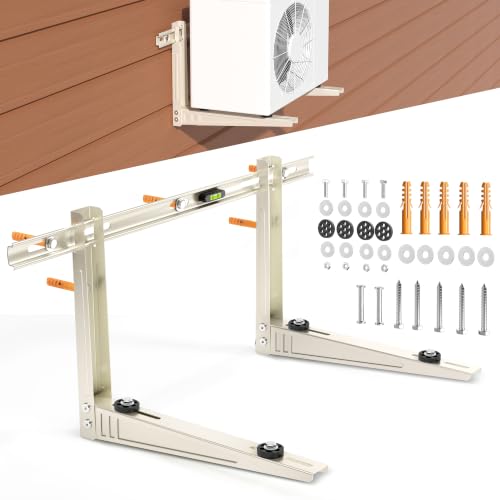
Toutgood Mini Split Wall Mounting Bracket for 7000 BTU to 12000 BTU | Max 400Lb Capacity, Galvanized Steel with Dual Anti-Rust Coating for Outdoor Ductless Air Conditioner Minisplit AC Heat Pump
Check price on Amazon
Tikcode Mini Split Wall Mounting Bracket for 9000 Btu to 18000 Btu Air Conditioner AC Heat Pump Systems, Heavy Duty AC Support Bracket for Outside, Holds Up to 400lbs
Check price on Amazon
Mountman 18000BTU Mini Split AC/Heating System, WIFI,19SEER2 230V Energy Efficient Mini Split Air Conditioner with Heat Pump,Cools Up to 1250sq.ft, Ductless Inverter AC Unit with Pre-Charged Condenser
Check price on Amazon