
Cooling Down a Room Without Air Conditioning
Practical, proven strategies to stay comfortable when you do not have an AC unit—using airflow, shading, and smart daily habits.
Explore Cooling StrategiesWhy this guide matters: Millions of homes rely on passive cooling techniques during warm months. Whether your AC is broken, you are renting a space without cooling, or you simply want to reduce reliance on mechanical cooling, the methods below can make a real difference in comfort and indoor air quality.
Understanding How Heat Enters and Traps in a Room
Before applying cooling methods, it helps to understand the three main ways heat accumulates indoors:
- Solar heat gain: Sunlight passes through windows and warms surfaces inside the room. This is often the largest source of daytime heat.
- Conduction: Heat transfers through walls, ceilings, and floors from the warmer outdoors to the cooler indoors.
- Internal heat sources: Appliances, electronics, lighting, and even human bodies generate heat that accumulates in enclosed spaces.
Addressing all three sources simultaneously produces the best results. No single technique is enough on its own—combining ventilation, shading, and heat reduction creates a compounding effect.
Natural Ventilation: The Cornerstone of Passive Cooling
Cross-ventilation is the most effective non-mechanical cooling method. The principle is simple: allow cooler air to enter on one side of the room and warmer air to exit on the opposite side.
How to Set Up Cross-Ventilation
- Open windows on opposite or adjacent walls to create a flow path.
- Place a box fan in one window blowing inward (intake) and another fan in the opposite window blowing outward (exhaust).
- If you only have one fan, position it to blow air out of the room during the hottest part of the day. This pulls cooler air in through other openings.
- Keep interior doors open to allow air to travel between rooms, unless you are deliberately isolating a space.
Pro tip: The stack effect works in your favor if you have a multi-story home. Open windows on the lower floor and upper floor—warm air rises and escapes through the upper openings, drawing cooler air in below.
For rooms without good window placement, a cooling fan for a room can compensate by directing air through doorways or hallways. Similarly, a cooling fan for a bedroom placed near a window can pull in nighttime air effectively.
Using Fans Strategically
Fans do not lower air temperature, but they create a wind-chill effect that makes your body feel several degrees cooler. The key is placement and timing.
Ceiling Fans
Set your ceiling fan to spin counterclockwise during summer. This pushes air downward, creating a gentle breeze across your skin. Most ceiling fans have a switch on the motor housing to reverse direction. Running a ceiling fan costs far less than an AC unit and can make a room feel 4–7°F cooler.
Box Fans and Window Fans
Box fans are versatile: place one in a window to exhaust hot air during the day, or use two fans for a push-pull cross-ventilation setup. Window fans with dual blades (one intake, one exhaust) are particularly effective for single-window rooms.
Tower and Pedestal Fans
A cooling tower fan oscillates and distributes air across a wider area, making it useful for living rooms and open-plan spaces. Pedestal fans can be aimed directly at occupants for targeted relief.
Evaporative Cooling with Ice
Placing a bowl of ice or a frozen water bottle in front of a fan adds a mild evaporative cooling effect. A cooling fan with ice compartment is purpose-built for this and can lower the perceived temperature by a few degrees in dry climates. Note that evaporative cooling works best when humidity is low; in humid conditions, it adds moisture to the air and may feel less comfortable.
Blocking Solar Heat Before It Enters
Preventing heat from entering is more effective than removing it after the fact. Window shading is the highest-impact intervention for daytime cooling.
Exterior Shading
Awnings, shutters, exterior blinds, and shade sails block sunlight before it reaches the glass. This is the most effective approach because it stops solar heat at the source. If exterior shading is not feasible, consider reflective window film, which reduces solar heat gain by up to 80% depending on the product.
Interior Curtains and Blinds
Light-colored curtains reflect rather than absorb heat. Thermal-backed curtains provide an additional insulating layer. Keep curtains closed during peak sun hours (typically 10 AM to 4 PM) and open them in the evening to allow cooler air in.
Landscaping and External Shade
Planting deciduous trees on the south and west sides of a home provides natural shade in summer and allows sunlight through in winter. A trellis with climbing vines or a patio umbrella near windows can also reduce direct solar exposure.
Reducing Internal Heat Sources
Appliances and electronics generate heat that accumulates in a room. Simple adjustments can meaningfully reduce the indoor temperature load:
- Cook outdoors or use a microwave: Ovens and stoves add significant heat. Opt for cold meals or outdoor grilling during hot spells.
- Switch to LED lighting: Incandescent bulbs convert most of their energy into heat. LEDs produce far less heat for the same brightness.
- Turn off unused electronics: TVs, computers, and gaming consoles generate heat even in standby mode. Unplug devices when not in use.
- Air-dry laundry: A dryer vents hot air into the room or ductwork. Hang clothes outside or indoors with ventilation.
- Use exhaust fans: Run bathroom and kitchen exhaust fans to remove hot, humid air after showers and cooking.
Smart Daily Habits for Passive Cooling
Behavioral adjustments are free and require no equipment. Combined with the techniques above, they amplify comfort:
Timing Windows and Blinds
Open windows in the early morning and late evening when outdoor temperatures are lowest. Close them during the hottest part of the day to trap cooler air inside. This "night flushing" strategy is particularly effective in climates with cool nights.
Personal Cooling
Take cool showers or apply a damp cloth to your wrists and neck. Wear lightweight, loose-fitting clothing made from natural fibers. Stay hydrated—your body's evaporative cooling system works better when you are well-hydrated. Using a cooling fan with ice near your seating area can add localized relief.
Room Zoning
Concentrate your activities in the coolest part of the home—typically the lowest floor or a north-facing room. Close doors to unused rooms to reduce the volume of air that needs cooling. If you have a basement, it will naturally stay cooler than upper floors.
Remember: Closing doors and isolating the room you occupy reduces the cooling load. A single room is faster and easier to cool than an entire house.
When Passive Cooling Is Not Enough
Passive methods have limits. In regions with sustained high humidity or temperatures above 95°F (35°C) for extended periods, passive cooling may not provide adequate comfort. In these cases, consider:
- A portable cooler or evaporative air cooler for dry climates.
- A cooling unit for room applications, such as a window or portable AC, if you decide mechanical cooling is necessary.
- Exploring cooling options for homes without ductwork, including mini-split systems.
- Visiting cooling centers or public spaces during extreme heat events for health and safety.
Quick Reference: Cooling Methods by Effectiveness
| Method | Best For | Effectiveness |
|---|---|---|
| Cross-ventilation with fans | Daytime and evening | High (with temperature differential) |
| Exterior window shading | Peak sun hours | High (prevents heat gain) |
| Ceiling fan (counterclockwise) | Occupied rooms | Moderate (wind-chill effect) |
| Evaporative cooling with ice | Dry climates | Moderate (localized) |
| Reducing internal heat sources | All day | Moderate (cumulative) |
| Night flushing (open windows at night) | Cool nights | High (thermal mass cooling) |
Frequently Asked Questions
What is the fastest way to cool a room without an air conditioner?
The fastest method is cross-ventilation combined with a high-velocity fan. Open windows on opposite sides of the room and place a box fan in one window blowing inward while another fan exhausts air out the opposite window. This creates a strong airflow that replaces warm indoor air with cooler outdoor air in minutes.
Does closing doors help cool a room without AC?
Yes, closing doors to unused rooms helps concentrate your cooling efforts in the space you occupy. It prevents cool air from escaping into empty rooms and reduces the volume of air that needs to be cooled. Combine this with window shading and fan placement for the best results.
How can I cool a room at night without air conditioning?
At night, open windows on opposite sides of the room to create cross-ventilation. Use a fan to draw in cooler nighttime air. Keep blinds or curtains closed during the day to prevent heat buildup. A damp towel or sheet placed in front of a fan can also add a mild evaporative cooling effect.
Do fans actually cool the air in a room?
Fans do not lower the actual air temperature, but they create a wind-chill effect that makes your body feel cooler. Moving air accelerates sweat evaporation from your skin, which is the body's natural cooling mechanism. Ceiling fans, box fans, and tower fans are effective for this purpose.
What is the best way to block heat from windows without AC?
Use reflective window films, light-colored curtains, or exterior shading such as awnings and shutters. Closing blinds and curtains during peak sun hours prevents solar heat gain. Exterior shading is more effective than interior blinds because it stops heat before it enters the glass.
Final Thoughts
Cooling a room without air conditioning is entirely achievable with the right combination of ventilation, shading, and heat management. Start with cross-ventilation and window shading—these two strategies alone can significantly reduce indoor temperatures. Add fans for personal comfort, reduce internal heat sources, and adopt smart daily habits. In most climates, these passive methods provide meaningful relief, and they cost nothing to operate beyond the electricity used by fans.
If you are considering mechanical cooling options after trying passive methods, explore our guide to cooling options for homes without ductwork for a comparison of alternatives like mini-splits and portable units.
Recommended Fans and Cooling Products
⚠️ AFFILIATE DISCLOSURE: This website contains affiliate links. As an Amazon Associate, we earn from qualifying purchases. If you make a purchase through these links, we may receive a small commission at no additional cost to you. Read our full affiliate policy.
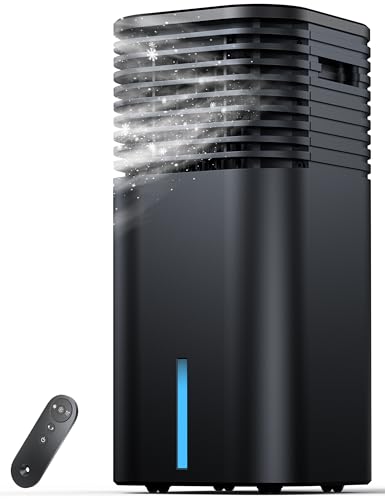
Windowless Portable Air Conditioner, 24.3" Small Evaporative Air Cooler for Room No Window, 3-Speed Settings, 4 Modes, 15H Timer, Remote Control, 4 Ice Packs, Quiet AC Unit for Bedroom, Black
Check price on Amazon
SereneLife Evaporative Air Cooler Tower with Remote, 5L Tank, 4 Ice Boxes, 3 Speeds, Quiet Standing Cooler with Oscillation for Home, Office or Bedroom, Portable & Energy Efficient, 10” x 13” x 39”
Check price on Amazon
FLOWBREEZE 3-IN-1 Portable ac for Car, Dual Mist, 5400mAh Battery | Mini Air Conditioner for Camping, Personal Air Cooling Fan with 2 Ice Packs,1.2L Water Tank, 7H Timer, for Tent Desktop
Check price on Amazon
Arctic Air Pure Chill 2.0 Evaporative Air Cooler by Ontel - Powerful, Quiet, Lightweight and Portable Space Cooler with Hydro-Chill Technology For Bedroom, Office, Living Room & More,Blue
Check price on Amazon
Glimibox Evaporative Air Cooler Cooling Fan Portable AC Unit with Timer,3 Speeds 2 Mist Modes,1000ml,7-Color Light,USB Mini Air Cooling Fan for Bedroom Kitchen RV Camping Car
Check price on Amazon
Arctic Air Turbo Chill Evaporative Air Cooler, Swamp Cooler, 4 Speed | Hydro-Chill Technology, Up to 8 Hrs per Fill | 7-Color LED | Whisper Quiet Room Cooler for Bedroom or Office
Check price on Amazon
DREO Evaporative Air Swamp Cooler, 43" Cooling Fans that Blow Cold Air | 2026 Upgraded 80° Oscillating Floor Fan for Bedroom, Easy Cleaning, APP Control, Ice Pack, 4 Speeds 4 Modes, 12H Timer, White
Check price on Amazon