
Cost of Central Heating and Air Conditioning Units
Everything you need to know about the market positioning, tier levels, components, and efficiency factors of central heating and air conditioning units — so you can choose the right system with confidence.
Start LearningAC Units Guide Philosophy: A central heating and air conditioning system is one of the most significant long-term investments in a home. Instead of chasing the lowest figure, smart buyers compare tier levels, efficiency ratings, and installation scope. This guide helps you understand what shapes the overall investment so you can make a well-informed decision.
Understanding Central Heating and Air Conditioning Units
A central heating and air conditioning system is a whole-home comfort solution that distributes conditioned air through a network of ducts. Unlike room-specific units, a central system pairs an outdoor condenser with an indoor air handler, furnace, or heat pump, working together to heat and cool every room connected to the ductwork.
Because it serves the entire home, the scope of a central system is broader than a single-room unit. Understanding the main components helps you evaluate what contributes to the overall investment in a system and why two homes with similar square footage can still have very different project scopes.
Key Components of a Central System
- Outdoor condenser unit — houses the compressor and condenser coil that release heat outdoors during cooling cycles.
- Indoor air handler or furnace — circulates air through the ductwork and, in heating mode, warms the air before distribution.
- Ductwork — the distribution network that carries conditioned air to each room and returns air to the system.
- Thermostat and controls — the interface that manages temperature settings and, in advanced tiers, zoning and smart scheduling.
- Refrigerant lines and electrical connections — the link between indoor and outdoor components that must be correctly sized and installed.
To explore how these parts work together in detail, see our guide on the components of a central air conditioning system, and learn more about the condensing unit in HVAC.
Market Tiers: How Central Systems Are Positioned
Central heating and air conditioning systems are generally grouped into three broad market tiers. These tiers reflect the level of technology, efficiency, comfort features, and build quality — not a specific figure. Understanding them helps you match a system to your home and climate.
Essential Tier
Reliable single-stage performance with standard components. A solid choice for straightforward homes in mild climates where basic comfort is the priority.
Balanced Tier
Two-stage operation, improved efficiency, and quieter operation. A well-rounded option for most households seeking a good balance of comfort and long-term efficiency.
High-End Tier
Variable-speed compressors, zoning compatibility, smart controls, and enhanced sound insulation. Designed for larger homes and buyers who prioritize advanced comfort and efficiency.
Entry-level systems focus on dependable cooling and heating with fewer moving parts. Mid-range models typically add two-stage compressors that run at lower capacity most of the time, improving humidity control and reducing temperature swings. Premium and luxury tiers push further with variable-speed technology, quieter outdoor units, and integration with smart home platforms.
| Tier | Typical Features | Best For |
|---|---|---|
| Entry-Level | Single-stage compressor, standard thermostat, basic filtration | Simple layouts, mild climates, essential comfort |
| Mid-Range | Two-stage compressor, programmable thermostat, improved sound insulation | Family homes, mixed climates, balanced efficiency |
| Premium | Variable-speed compressor, zoning, smart thermostat, advanced filtration | Large homes, extreme climates, advanced comfort |
Efficiency Ratings and Long-Term Investment
Efficiency is one of the strongest indicators of a system's long-term value. Central systems are rated by SEER2 for cooling efficiency and HSPF2 for heating efficiency. A higher rating generally means the system uses less energy to deliver the same comfort, which can make a premium tier a worthwhile investment over many years of use.
However, efficiency should be weighed against climate and usage. In regions with long, hot summers, a high-efficiency variable-speed system may deliver the best long-term returns. In milder climates, a mid-tier two-stage system often provides excellent balance without over-specifying.
To go deeper, read about what a SEER rating is and the updated SEER vs SEER2 DOE standards. If you are comparing a heat pump to a traditional setup, our guide on heat pump vs air conditioner explains the differences clearly.
What Shapes the Scope of a Central HVAC Project
The overall scope of a central heating and air conditioning project depends on more than the equipment tier. Installation conditions often determine whether a project is straightforward or requires additional work. Key factors include:
- System sizing and load calculation — a proper Manual J load calculation ensures the system matches the home, avoiding oversized or undersized equipment. Learn more in our Manual J load calculation guide.
- Ductwork condition — existing ducts may need sealing, resizing, or replacement. See our guide on HVAC duct replacement for context.
- Electrical capacity — the electrical panel must support the new system. Read about amps and breaker size for AC units.
- Outdoor unit placement — clearance, noise, and accessibility affect installation complexity.
- Permits and code compliance — local requirements vary and can influence the project timeline.
If your home lacks ductwork, a ductless approach may be more practical. Explore cooling options for homes without ductwork and compare ductless vs ducted AC before deciding.
Matching a Central System to Your Home Size
Home size is one of the most practical starting points when evaluating a central system. Larger homes generally require higher-capacity equipment and more extensive ductwork, which influences the tier that makes sense. The guides below explain how sizing works for common home sizes:
- Central air for a 1,000 sq ft house — compact systems and ductless alternatives.
- Central air for a 1,400 sq ft house — mid-tier options for typical family homes.
- Central air for a 2,000 sq ft house — balancing capacity and efficiency.
- Central air for a 2,500 sq ft house — larger systems with zoning potential.
- AC unit for a 3,000 square foot house — high-capacity and premium tier considerations.
The Heating Side of a Central System
Central heating and air conditioning units are often discussed as a single package, but the heating portion deserves equal attention. Depending on your region, the heating side may use a gas furnace, an electric furnace, or a heat pump. Each option has different installation requirements and efficiency profiles.
If you are evaluating heating equipment separately, our guides on heating and air conditioning units and new heating and air conditioning units provide additional context. For homes considering a combined replacement, the new air conditioning and heating systems guide covers the decision factors.
Heat Pump vs Furnace: A Quick Comparison
| Heating Option | Strengths | Considerations |
|---|---|---|
| Gas Furnace | Fast, strong heating in cold climates; familiar technology | Requires gas line; combustion venting needed |
| Electric Furnace | Simpler installation; no combustion | Higher operating energy demand in severe cold |
| Heat Pump | Efficient heating and cooling in one system; mild-to-moderate climates | Performance drops in extreme cold without a backup source |
Replacement vs New Installation
Replacing an existing central system is usually simpler than adding central air to a home that never had it. Replacement projects can often reuse existing ductwork and electrical infrastructure, while new installations require a full design, ductwork layout, and often electrical upgrades.
If you are adding central air for the first time, our guide on the cost of adding central air to a house walks through the scope. For replacement projects, see central air conditioning system and replacing a central air conditioning unit for a detailed breakdown of what to expect.
When Repair Makes More Sense Than Replacement
Not every underperforming system needs replacement. If the equipment is relatively recent and the issue is isolated — such as a failing capacitor or a clogged condensate line — repair is often the practical path. Our HVAC repair guide and replace vs repair comparison help clarify the decision. For compressor-specific issues, see compressor replacement.
Protecting Your Investment with Maintenance
A central system is a long-term investment, and routine maintenance protects that investment. Simple habits — changing filters on schedule, keeping the outdoor unit clear, and scheduling seasonal tune-ups — help the system run efficiently and reduce the likelihood of premature wear.
- Replace or clean air filters every 1–3 months, depending on usage and household conditions.
- Keep the outdoor condenser free of leaves, debris, and obstructions.
- Schedule a professional tune-up before each cooling and heating season. See our guide on HVAC tune-up.
- Inspect ductwork for leaks and disconnected sections periodically.
For a broader maintenance reference, read our AC maintenance guide and the seasonal AC checklist.
Choosing the Right Contractor for a Central System
Because central HVAC work involves refrigerant handling, electrical connections, and ductwork, choosing a qualified contractor is essential. Look for licensed and insured professionals with experience in your system type, and ask for references from projects similar to yours.
- Verify licensing and insurance before signing any agreement.
- Request a written load calculation and a detailed proposal.
- Ask about warranty coverage for equipment and labor.
- Confirm permit responsibility and inspection scheduling.
For help finding professionals, see our guides on companies that install air conditioners and how to choose an HVAC contractor. If you are considering a ductless option instead, explore companies that install ductless air conditioners.
Frequently Asked Questions
What factors influence the overall investment in a central heating and air conditioning unit?
Several factors affect the tier and scope of a central HVAC project, including system capacity, efficiency rating, ductwork condition, brand positioning, and installation complexity. Entry-level systems focus on basic comfort, while premium and luxury tiers add advanced controls, higher efficiency, and quieter operation. Installation conditions — such as whether ductwork already exists — often have as much influence on the project scope as the equipment itself.
How do entry-level and premium central HVAC systems differ?
Entry-level systems typically use single-stage compressors and standard components, delivering reliable comfort for straightforward homes. Premium and luxury tiers often include variable-speed compressors, zoning compatibility, smart thermostats, and improved sound insulation for greater comfort and efficiency. Mid-range systems bridge the two with two-stage compressors and programmable controls, offering a balanced option for most households.
Is a higher SEER rating always the better choice for a central system?
A higher SEER rating generally means greater efficiency, but the best choice depends on climate, usage patterns, and home size. In hot climates with long cooling seasons, high-efficiency models can be a worthwhile long-term investment. In mild climates, mid-tier efficiency may be sufficient, and the difference in long-term energy use may be modest. A proper load calculation and an honest conversation with your contractor will clarify the right target for your home.
What should I check before installing a central heating and air conditioning unit?
Before installation, verify the electrical panel capacity, inspect ductwork for leaks or sizing issues, confirm the outdoor unit placement, and ask your contractor about permits, load calculations, and warranty terms. These checks help avoid surprises during and after the project. It is also wise to request a written scope of work that lists equipment model numbers, ductwork modifications, and any electrical upgrades.
Can I add central air to a home that has never had it?
Yes, central air can be added to homes without existing ductwork, but the project is more involved than a replacement. It requires a full system design, ductwork layout, and often electrical upgrades. Homes with limited attic or crawlspace access may face additional challenges. In some cases, a ductless mini-split system is a more practical alternative. Our guide on adding central air to a house covers the details.
Recommended Central Heating and Air Conditioning Units
⚠️ AFFILIATE DISCLOSURE: This website contains affiliate links. As an Amazon Associate, we earn from qualifying purchases. If you make a purchase through these links, we may receive a small commission at no additional cost to you. Read our full affiliate policy.
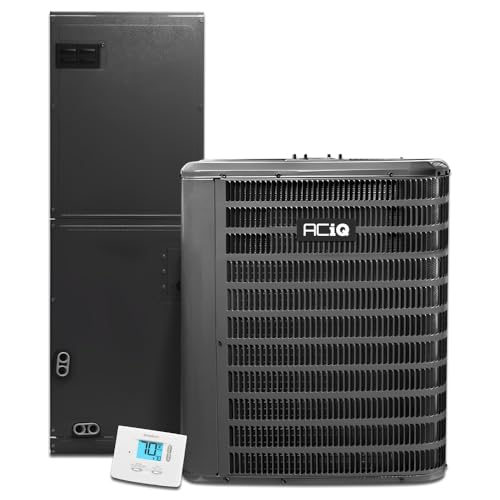
2.5 Ton 14.5 SEER2 Central Air Conditioner Heat Pump System, 5kW & Thermo | ACiQ R32 Complete Electric Heat Pump Split System, Central AC Heating HVAC Unit with Multi-Positional Air Handler, ECM Blower
Check price on Amazon
ACiQ 1.5 Ton 14.3 SEER2 Central Air Conditioner Heat Pump Condenser - R32 | 230V Single Stage, Energy Efficient AC/Heating, Outdoor Central HVAC Unit for Ducted Split Systems (AQ-GLZS4BA1810)
Check price on Amazon
Senville Central Air Conditioning System, Heat Pump, Inverter, 3 Ton | 36000 BTU Air Handler and Condenser Included, 208/230V, Whole House Air Conditioner
Check price on Amazon
ACiQ 2.5 Ton 14.3 SEER2 Central Air Conditioner Heat Pump Condenser - R32 | 230V Single Stage, Energy Efficient AC/Heating, Outdoor Central HVAC Unit for Ducted Split Systems (AQ-GLZS4BA3010)
Check price on Amazon
Senville Central Air Conditioning System, Heat Pump, 4 Ton, 10kW Aux | 48000 BTU Air Handler and Condenser Included, 208/230V, Whole House Air Conditioner
Check price on Amazon
Senville Central Air Conditioning System, Heat Pump, 3 Ton, 20kW Aux | 36000 BTU Air Handler and Condenser Included, 208/230V, Whole House Air Conditioner
Check price on Amazon
MrCool SEER2 VERSAPRO Central Ducted Split System | 2.5 Ton 17 SEER2 Heat Pump Multiposition R454B 35ft Line Set
Check price on Amazon
ACiQ 2.5 Ton 14.3 SEER2 Central Air Conditioner Unit - R32 AC Condenser | 230V Single Stage, Energy Efficient Air Conditioning, Outdoor Central HVAC Unit for Ducted AC Split Systems
Check price on AmazonDisclaimer
Some of the content on this site uses AI assistance. Information is provided for educational purposes only. We are not responsible for any losses resulting from the use of this information. By using this site, you waive any right to bring legal claims against us arising from your use of the information provided. If you do not agree, please do not use this site. Read the full disclaimer.