
After Every Load
Clean the lint filter before or after each cycle. This is the single most effective habit for reducing lint that reaches the vent run.
Learn how to choose the right cleaning hose, clean your dryer vent properly, and protect your home from lint buildup and fire hazards.
Explore Hose TypesWhy the Right Cleaning Hose Matters: A dryer vent clogged with lint is one of the leading causes of residential fires. The right cleaning hose helps you remove lint thoroughly from the entire vent run—not just the first few inches—so your dryer runs efficiently and your home stays safe. This guide covers hose types, step-by-step cleaning, maintenance schedules, and shopping considerations.
Not every cleaning hose is suited to every vent configuration. Understanding the differences helps you select the right tool for your home's ductwork, whether it runs a short straight path or winds through walls and ceilings.
Connects to a shop vacuum and uses suction to pull lint from the vent run.
Uses a spinning brush head driven by a drill to scrub duct walls clean.
Long, semi-rigid rods with brush tips reach deep into long vent runs.
Uses compressed air to flail and knock lint loose from duct surfaces.
Compact telescoping design for short, straight vent runs behind the dryer.
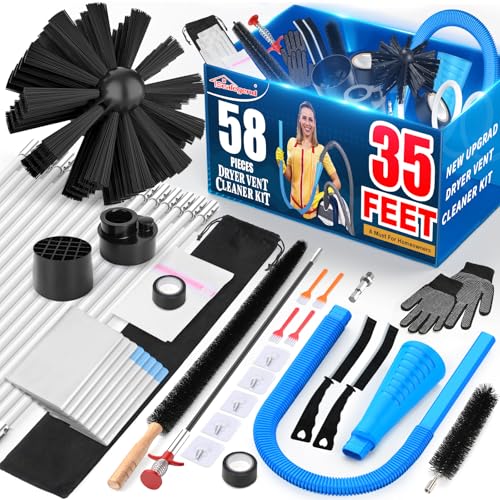
Multi-piece kits with adapters for vacuum and drill-driven brushes.
Heavy-duty hoses designed for repeated use by vent cleaning professionals.
Flexible connectors that fit most vacuum brands and duct diameters.
Use this table to match a cleaning hose type to your vent layout and cleaning frequency. Tier descriptors reflect relative build quality and intended use, not specific brands.
| Hose Type | Best For | Tier | Key Consideration |
|---|---|---|---|
| Vacuum-Attached Hose | Short to medium vent runs | Entry-level | Requires a compatible shop vacuum |
| Rotary Brush Hose | Heavy lint buildup on duct walls | Mid-range | Needs a power drill with variable speed |
| Flexible Rod Hose | Long or angled vent runs | Mid-range to high-end tier | Rod flexibility matters for tight turns |
| Air-Driven Whip Hose | Loose lint in accessible ducts | Professional-grade | Requires an air compressor |
| Periscope Hose | Very short, straight vent runs | Essential tier | Limited reach beyond the immediate area |
| Duct Cleaning Kit Hose | DIY homeowners wanting versatility | Balanced tier | Check adapter compatibility before use |
| Commercial-Grade Hose | Frequent or professional use | Commercial-grade | Durable construction for repeated cleaning |
Follow these steps for a thorough, safe cleaning session. Always unplug the dryer before beginning and work in a well-ventilated area.
Never use a cleaning hose near an active gas line or electrical component without shutting off the corresponding supply. If you notice crushed ductwork, disconnected joints, or a vent run that cannot be cleaned thoroughly, consult a professional. Proper dryer vent maintenance is a fire-safety matter, not just an efficiency concern.
Consistency matters more than intensity. A simple routine keeps lint from accumulating to dangerous levels and helps your dryer operate efficiently over its service life.
Clean the lint filter before or after each cycle. This is the single most effective habit for reducing lint that reaches the vent run.
Inspect the exterior vent flap for lint buildup and confirm it opens freely when the dryer runs. Check the flexible transition hose behind the dryer for kinks.
Perform a full cleaning with a dryer vent cleaning hose. Homes with heavy laundry use or long vent runs may benefit from cleaning every 6 months.
Maintenance benefit: Regular cleaning with the right hose improves airflow, shortens drying times, reduces wear on the dryer's heating element, and lowers the risk of lint fires. It is a worthwhile long-term investment in household safety.
When comparing options, focus on compatibility, durability, and reach rather than marketing claims. These factors determine whether a hose will actually work with your vent configuration.
For related duct and vent topics, you may find the guides on dryer vent cleaning, dryer air duct, and dryer vent duct replacement helpful as you plan a maintenance routine.
Even with the right hose, technique matters. These mistakes can reduce cleaning effectiveness or damage your vent system.
Lint accumulates deeper in the run. Use a hose long enough to reach the entire duct path, including elbows and the exterior hood.
A hose that does not seal against the duct allows lint to escape into the room and reduces suction or brush contact.
The exterior hood and flap trap lint and should be cleaned every time you service the duct run.
Dryer vent maintenance is part of a broader home air-quality strategy. These related resources cover duct cleaning, humidity control, and HVAC upkeep.
Most households should perform a full cleaning every 6 to 12 months. Homes with heavy laundry use, long vent runs, or pets may need cleaning every 6 months or more frequently.
A standard vacuum hose is usually too short and lacks the reach for a full vent run. A dedicated dryer vent cleaning hose is designed to fit ducting and reach deeper, often with brush attachments for scrubbing duct walls.
Most residential dryer ducts are 4 inches in diameter, so a hose and adapter designed for 4-inch ducting is the standard choice. Check the transition hose and exterior vent size in your home before selecting a kit.
DIY cleaning is practical for short, accessible vent runs with basic tools. For long, winding, or roof-terminated vents—or if you suspect crushed ductwork—a professional-grade service is the safer choice.
Common signs include clothes taking longer to dry, the dryer feeling hot to the touch, a burning smell, excessive lint around the lint filter housing, and the exterior vent flap not opening fully during operation.
Yes. Lint is highly flammable, and accumulated lint in the vent run can ignite from dryer heat. Regular cleaning with a proper hose is a key fire-prevention measure for any home with a clothes dryer.
⚠️ AFFILIATE DISCLOSURE: This website contains affiliate links. As an Amazon Associate, we earn from qualifying purchases. If you make a purchase through these links, we may receive a small commission at no additional cost to you. Read our full affiliate policy.



Some of the content on this site uses AI assistance. Information is provided for educational purposes only. We are not responsible for any losses resulting from the use of this information. By using this site, you waive any right to bring legal claims against us arising from your use of the information provided. If you do not agree, please do not use this site. Read the full disclaimer.