Energy Saving Air Conditioner: The Complete Buyer's Guide
Understand how high-efficiency cooling works, compare inverter and variable-speed technology, and learn which features genuinely reduce energy consumption before you choose a new system.
EXPLORE THE GUIDEWhy this page exists: Most shoppers searching for an energy saving air conditioner already know they want efficient cooling — the challenge is separating genuine efficiency from marketing claims. This guide explains the technologies, ratings, and habits that actually matter, so you can evaluate any model on the shelf with confidence.
How an Energy Saving Air Conditioner Actually Works
Efficiency is not a single feature — it is the result of several systems working together inside the unit.
An air conditioner does not create cold air; it moves heat from indoors to outdoors. Every improvement in efficiency comes from doing that job with less electrical work per unit of cooling delivered. The core components involved are the compressor, the condenser and evaporator coils, the expansion valve, and the control electronics that decide how hard the system should run at any given moment.
In a conventional single-stage unit, the compressor is either fully on or fully off. That binary operation delivers cooling in bursts, which means the system often overshoots the target temperature and then cycles repeatedly. Each restart draws a surge of electricity, and the constant on/off rhythm wastes energy compared with steady operation. Modern energy saving designs address this problem in different ways:
- Inverter-driven compressors vary their rotational speed continuously instead of switching on and off. Once the room reaches the set temperature, the compressor slows down and holds it with minimal energy input.
- Two-stage and variable-speed compressors offer a middle ground, running at a low capacity most of the time and ramping up only during extreme heat.
- Improved coil and refrigerant design increases heat exchange per watt, so less compressor work is needed for the same cooling effect.
- Smart controls and sensors adjust fan speed, humidity removal, and scheduling to avoid unnecessary runtime.
The practical takeaway: when evaluating an energy efficient AC, look beyond the headline efficiency rating and consider whether the compressor technology matches how you actually use the room. A unit that runs for long, steady periods in a bedroom benefits enormously from inverter modulation, while a rarely used guest room may not justify the added complexity.
Efficiency Ratings Explained: SEER, SEER2, EER, and HSPF
These acronyms describe how much cooling (or heating) a system delivers per unit of electricity over a defined test period.
Efficiency ratings are the fastest way to compare systems on paper, but each one measures something slightly different. Understanding the distinction prevents you from comparing apples to oranges when you review specification sheets from different manufacturers.
| Rating | What It Measures | Best Used For | What to Know |
|---|---|---|---|
| SEER | Seasonal Energy Efficiency Ratio — cooling output across a full cooling season divided by electricity used. | Comparing central and ductless systems in mild-to-moderate climates. | Older metric still widely quoted; useful as a baseline when SEER2 data is unavailable. |
| SEER2 | Updated version of SEER using more realistic duct-static and airflow test conditions. | Current regulatory comparisons and rebate eligibility. | Values typically run slightly lower than legacy SEER for the same equipment. |
| EER | Energy Efficiency Ratio — instantaneous efficiency at a single peak test condition. | Hot-climate performance where systems run near full load for long stretches. | More meaningful than SEER in consistently hot regions. |
| HSPF | Heating Seasonal Performance Factor — heating efficiency for heat-pump systems. | Year-round systems that also provide heating. | Only relevant if the unit doubles as a heater. |
Higher numbers indicate better efficiency, but the gap between tiers is not linear in real-world use. Moving from an entry-level rating to a mid-range rating usually delivers noticeable energy reductions; moving from mid-range to top-tier produces diminishing returns unless the system runs many hours per day. The U.S. Department of Energy maintains minimum standards, and the ENERGY STAR certified models exceed those minimums by a defined margin, which makes them a reliable starting filter for shoppers.
Practical tip: match the rating to your climate and runtime
In a hot, humid climate where the system runs six or more hours daily, a higher SEER2 or EER rating pays back through reduced electricity consumption. In a mild climate with occasional use, a mid-range rating paired with good installation quality typically delivers better overall results than a top-tier unit installed poorly.
Inverter vs. Non-Inverter vs. Variable-Speed: Technology Compared
The compressor control strategy is the single biggest factor separating efficient systems from conventional ones.
Compressor technology determines how smoothly a system responds to changing cooling demand. The three main approaches behave quite differently in day-to-day use:
- Non-inverter (single-stage): The compressor runs at full capacity or not at all. Simple, durable, and common in entry-level window and portable units. Efficiency suffers during part-load conditions, which is most of the time.
- Inverter: The compressor speed modulates continuously, typically between roughly 30% and 100% of capacity. This allows the system to hold a steady temperature with fewer starts and stops, reducing both energy use and indoor temperature swings. The inverter AC design has become the default for modern split and ductless systems.
- Variable-speed / two-stage: A broader category that includes inverter drives and stepped-capacity compressors. Two-stage units offer a low and high setting; fully variable-speed units offer many operating points. Both improve part-load efficiency compared with single-stage.
For a deeper comparison of how these systems behave over a full season, including humidity control differences and expected longevity, the energy efficiency of an air conditioner explainer covers the underlying physics in more detail.
Product Tiers: How Energy Saving Models Are Positioned
Efficiency-focused air conditioners generally fall into three market tiers, each suited to different usage patterns.
Essential Efficiency
Solid, reliable units that meet current minimum standards and include basic energy-saving modes.
- Single-stage or simple inverter compressors
- Sleep timers and eco modes
- Good fit for occasional-use rooms
- Straightforward maintenance
Balanced Efficiency
The sweet spot for most households, combining proven inverter technology with smart controls.
- Full inverter modulation
- Programmable or app-based scheduling
- Improved coil and fan designs
- Strong fit for daily-use living areas
Top-Tier Efficiency
High-end systems engineered for maximum seasonal efficiency and advanced comfort control.
- Variable-speed compressors with wide modulation range
- Advanced humidity and zoning controls
- Premium materials and quieter operation
- Best for whole-home or high-runtime applications
When comparing tiers, focus on how long the system will run each day and how sensitive you are to temperature swings. A mid-range model with well-matched capacity usually outperforms a premium model that is incorrectly sized, because oversizing forces short cycling regardless of how advanced the compressor is. The AC sizing guide explains how to calculate the correct capacity before you shop.
Features That Genuinely Reduce Energy Consumption
Not every feature marketed as “eco” saves meaningful energy. These are the ones that consistently matter.
-
Inverter or variable-speed compressor
Modulates output to match demand, avoiding the energy spikes of on/off cycling and improving part-load efficiency substantially.
-
Programmable and smart thermostats
Scheduled setbacks and occupancy sensing prevent cooling empty rooms. A digital air conditioner thermostat is one of the highest-impact upgrades available.
-
High-efficiency coils and fans
Larger coil surface area and optimized fan blades move more heat per watt, reducing compressor workload at any given capacity.
-
Humidity control modes
Dehumidification-focused operation improves comfort at higher set temperatures, which directly reduces cooling energy use.
-
ECM blower motors
Electronically commutated motors use significantly less electricity than older PSC motors, especially at low fan speeds.
-
Fresh-air and filter monitoring
Clogged filters force the system to work harder. Filter alerts and easy-access designs keep airflow — and efficiency — where it should be.
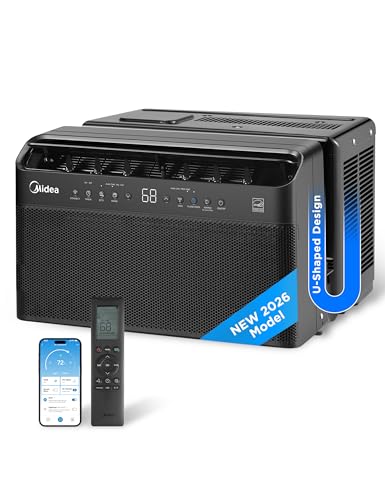
Window and portable units follow the same principles in miniature. If you are shopping for a compact solution, the energy saving window air conditioner and energy saving portable air conditioner guides cover the specific efficiency features worth prioritizing in those form factors.
Installation and Maintenance: Where Efficiency Is Won or Lost
A top-tier unit installed poorly will underperform a mid-range unit installed correctly. These factors matter as much as the equipment itself.
Efficiency ratings are measured under controlled laboratory conditions. In a real home, duct leakage, refrigerant charge, airflow restrictions, and thermostat placement can erase a significant portion of the rated advantage. The most common efficiency losses include:
- Incorrect refrigerant charge: Under- or over-charging reduces capacity and raises energy use. The EPA refrigerant handling rules explain why qualified technicians must perform this work.
- Duct leakage: In ducted systems, leaks in unconditioned spaces can waste a substantial share of cooling. Sealing and insulating ducts is often the highest-return efficiency improvement available.
- Restricted airflow: Dirty filters, blocked returns, and undersized ducts force the blower to work harder and reduce heat exchange efficiency.
- Poor outdoor unit placement: A condenser shaded from direct sun and given adequate clearance rejects heat more effectively.
Routine maintenance preserves efficiency over the life of the system. Cleaning or replacing filters monthly during heavy-use seasons, scheduling professional coil cleaning, and verifying refrigerant charge at the start of each cooling season keep performance close to the rated specification. For households planning a larger upgrade, the energy efficient heating and cooling systems for homes overview covers how AC efficiency fits into a whole-home strategy.
Behavioral savings that cost nothing
Raising the setpoint by a few degrees when the house is empty, using ceiling fans to allow a higher thermostat setting, and closing blinds during peak sun hours all reduce cooling load. Combined with a programmable schedule, these habits often deliver savings comparable to upgrading a single efficiency tier.
Choosing an Energy Saving AC for Specific Rooms
Usage patterns vary dramatically by room, and the right efficiency tier follows the pattern.
- Bedrooms: Long overnight runtime rewards quiet, modulating inverter systems. See the energy efficient air conditioner for bedroom guide for capacity and noise considerations.
- Living areas: Variable occupancy and larger heat loads favor programmable mid-range systems with strong part-load efficiency.
- Whole home: Central and ducted systems benefit most from high SEER2 ratings and duct sealing. The energy efficient central air conditioners overview compares configurations.
- Rentals and temporary spaces: Portable and window units with eco modes and timers deliver practical savings without permanent installation.
For homes without existing ductwork, ductless systems are often the most efficient path. The ENERGY STAR mini split air conditioner guide explains how ductless efficiency compares with central systems, and the ENERGY STAR ducted mini split page covers concealed-duct alternatives.
A Practical Buying Checklist
Work through these steps in order — capacity first, efficiency second, features third.
- Calculate the correct capacity. Oversizing is the most common efficiency mistake. Use a room-by-room load estimate or a professional Manual J calculation.
- Confirm the efficiency rating for your climate. Compare SEER2 and EER values, and check eligibility for local rebate programs.
- Match compressor technology to runtime. Daily-use rooms justify inverter or variable-speed; occasional-use rooms may be fine with simpler systems.
- Plan the installation. Verify electrical capacity, placement, and duct condition before purchase. The guide to choosing an HVAC contractor helps you vet installers.
- Set up controls. A programmable or smart thermostat turns efficiency ratings into real savings through scheduling and setback behavior.
If you are also weighing repair against replacement, the high efficiency HVAC overview discusses when upgrading to a more efficient system makes sense from an energy-use standpoint.
Frequently Asked Questions
Is an inverter air conditioner always more energy efficient?
In most real-world usage, yes — especially when the system runs for long periods. Inverter compressors modulate output to match demand, avoiding the energy spikes and temperature swings of on/off cycling. However, a poorly sized inverter unit can still underperform a correctly sized conventional unit, so capacity matching remains essential.
What SEER2 rating should I look for?
Start with the current federal minimum for your region, then look for models that exceed it by a meaningful margin. ENERGY STAR certified units are a reliable filter because they exceed the minimum by a defined threshold. In hot climates, check EER as well, since it better reflects peak-load performance.
Does a higher efficiency rating always mean lower energy use?
Only if the system is correctly sized, installed, and maintained. Duct leakage, refrigerant charge, airflow restrictions, and thermostat behavior can erase much of a rating advantage. Installation quality and usage habits are as important as the equipment tier.
How much can I reduce cooling energy use without replacing my AC?
Substantial reductions are possible through behavioral and maintenance changes: scheduled setbacks, higher setpoints paired with ceiling fans, regular filter changes, sealing duct leaks, and shading windows during peak sun. These measures often achieve savings comparable to upgrading one efficiency tier.
Are portable and window energy saving models as efficient as central systems?
Central and ductless split systems generally achieve higher absolute efficiency because they separate the condenser from the conditioned space and avoid the air-leakage losses of window and portable installations. However, for cooling a single room, a well-chosen window or portable unit can be more efficient overall than running a large central system for one occupant.