Fans Heating and Cooling
How fans support heating and cooling at home: which fan types suit each room, how airflow changes perceived comfort, and how to combine fans with your HVAC system for better results in both summer and winter.
START LEARNINGQuick answer: Fans do not cool or heat the air themselves. They move air across your skin to change how comfortable you feel, and they distribute conditioned air more evenly through a room. Used well, a ceiling fan in summer or a low-speed fan in winter can let you relax your thermostat setting without sacrificing comfort. This guide explains the fan types, placement rules, and practical strategies that make fans a useful part of a home comfort plan.
What Fans Do in a Heating and Cooling System
Fans are one of the most misunderstood tools in home comfort. A fan does not lower the air temperature or add heat. What it does is move air, which affects how heat leaves your skin in summer and how warmth is distributed in winter. That makes fans a complement to your air conditioner, furnace, or heat pump, not a replacement for them.
When a fan pushes air across your skin, it speeds up evaporation and convective heat loss, so the same room feels cooler even though the thermometer has not changed. In winter, a ceiling fan running in reverse mode gently pushes warm air down from the ceiling, which helps balance rooms that feel chilly at floor level. The principles are simple, but applying them well depends on choosing the right fan for each space and running it correctly.
Fans for Cooling
In cooling season, the goal is air movement across occupied areas. The fan type matters less than whether the air actually reaches people, so placement and speed control are the deciding factors.
Ceiling Fans
Mounted overhead, ceiling fans move large volumes of air across an entire room. A standard forward-direction fan in summer creates a gentle breeze that makes occupied spaces feel cooler.
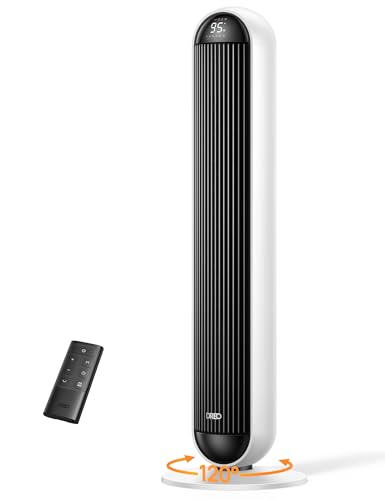
Primary comfort fanTower Fans
Slim floor-standing fans that produce a narrow vertical stream. Useful in rooms where floor space is limited or where a targeted breeze is more useful than broad coverage.
Space-savingPedestal and Floor Fans
Adjustable height and tilt make these useful for directing airflow at seating areas, beds, or workstations. Common in bedrooms and home offices.
Directional airflowBox Fans
High airflow in a simple square housing. Often used to pull cool evening air through a window or to exhaust warm air from a room.
High-volume airflowWhole-House Fans
Installed in the ceiling or attic, these pull outside air through open windows and exhaust hot indoor air. Effective in mild climates and in the evening.
Whole-home ventilationAttic Fans
Vent hot attic air to reduce heat buildup that radiates into the living space below. A useful support for the main cooling system in hot climates.
Heat reductionFans are often most useful when paired with an existing cooling system, especially in homes where some rooms lag behind the thermostat. The same thinking underlies our overview of the most efficient way to heat and cool a house.
Fans for Heating Support
Fans are not heaters, but they can improve how warm air feels and how evenly it is distributed. The main use is with a ceiling fan running in reverse, which gently circulates warm air trapped near the ceiling down into the occupied zone.
- Reverse ceiling fan: Set the fan to run clockwise at low speed in winter. The upward pull moves warm air along the ceiling and down the walls, reducing temperature stratification.
- Low-speed floor or tower fans: Placed away from seating, a low-speed fan can help move warm air from a register or radiator into the rest of the room without creating an uncomfortable draft.
- Return-air support: In rooms with a single supply register, a small fan can help mix air so the room reaches the thermostat setpoint more evenly.
These uses work best when the heating system is already performing well. If a room stays cold even after the thermostat is satisfied, the issue is more likely distribution than airflow. Reviewing the operation of a heating and air conditioning split system helps identify whether a fan will actually help.
How Fans Interact With HVAC Systems
Fans and HVAC equipment solve different problems. The HVAC system conditions air; the fan moves it. When they work together, the result is a room that reaches setpoint faster and feels more consistent.
- Fan-only mode on the thermostat: Running the blower without heating or cooling mixes air and reduces stratification. This is often useful in multi-level homes. The control logic is explained in our guide to the electronic home thermostat.
- Supporting a ductless system: In a room conditioned by a mini-split, a separate fan can help spread air into adjacent areas that the indoor head does not reach directly. The broader principles are covered in ductless heating and air conditioning systems.
- Supporting window and portable units: A small fan can help distribute air from a window or portable AC more evenly across a room, especially in long or narrow spaces. The operating characteristics of these units are described in our guides to the heat and air conditioner window unit and the evaporative air cooler portable air conditioner.
- Attic and whole-house ventilation: In hot climates, reducing attic heat load with an attic fan reduces the burden on the cooling system. Whole-house fans pull cool outside air through open windows, which is effective in mild climates and in the evening.
Choosing the Right Fan by Room
Fan selection is about matching airflow to room size and usage. A small bedroom does not need a large box fan, and a large open living room is underserved by a single tower fan.
| Room | Recommended Fan | Why |
|---|---|---|
| Bedroom | Ceiling fan or pedestal fan | Direct airflow at the bed; ceiling fan for overhead circulation |
| Living room | Ceiling fan | Broad coverage across seating areas |
| Home office | Desk or tower fan | Targeted airflow at the workstation; compact footprint |
| Kitchen | Tower fan or wall-mounted fan | Space-saving; keeps airflow off counters |
| Whole home | Whole-house fan | Ventilation-based cooling in mild climates |
For rooms without a window or with limited wall space, the fan placement question becomes more important. Our guide to the problem of I need an air conditioner but no window covers some of the same constraints.
Features That Matter When Buying
Fan features are usually easy to compare once you know what to look for. The differences that affect daily satisfaction are usually quiet operation, speed control, and physical stability.
- Speed control: More speed settings allow finer adjustment. Variable-speed fans are notably quieter at low settings.
- Blade design and pitch: Wider blades and steeper pitch move more air at lower speed, which is quieter for the same airflow.
- Noise level: Decibel ratings vary widely. Smaller blades spinning fast are noisier than larger blades spinning slowly for similar airflow.
- Motor quality: DC motors are generally quieter, more efficient, and offer more speed settings than AC motors.
- Remote and smart control: Convenience features, especially useful for ceiling fans mounted high and for scheduling.
- Build quality: Solid build and stable base matter for floor and pedestal fans, which can wobble at high speed.
For homes with a heat pump or central system, choosing a quiet fan matters more than fan speed, because the fan will be running for long periods. Our overview of high efficiency heating and air conditioning explains how comfort systems are designed to run longer at lower output.
Placement and Operation Rules
Placement is the difference between a fan that helps and a fan that just makes noise. A few simple rules cover most situations.
- Aim airflow at people, not empty space. A fan moving air across an unoccupied area produces no comfort benefit.
- Match fan direction to season. Ceiling fans run counter-clockwise in summer and clockwise at low speed in winter.
- Do not block HVAC returns. A fan placed too close to a return grille disrupts system airflow.
- Use fans only in occupied rooms. A fan left running in an empty room uses electricity without benefit.
- Keep fans away from open flames and moisture. Basic safety, but worth repeating for kitchen and bathroom use.
Common Mistakes to Avoid
- Expecting a fan to cool an empty room. Fans move air; they do not lower air temperature.
- Running a ceiling fan at high speed in winter. The draft cancels the benefit of warm air mixing.
- Placing a fan where it blows hot air from a window or register back into the room. This can reduce comfort rather than improve it.
- Choosing a fan by appearance alone. Blade design, motor type, and speed control determine how it actually performs.
- Ignoring the HVAC system's own blower. In many homes, the thermostat's fan-only mode is a better solution than adding another fan.
Frequently Asked Questions
Do fans actually cool the air?
No. Fans move air, which increases heat loss from your skin and makes you feel cooler. The air temperature itself does not change, so a fan running in an empty room does not provide any comfort benefit.
Can I run a ceiling fan together with my air conditioner?
Yes, and doing so is often a good idea. A ceiling fan can let you set the thermostat slightly higher while keeping the room comfortable, because the moving air makes the higher temperature feel cooler. The key is to run the fan only in occupied rooms.
Which direction should a ceiling fan spin in winter?
In winter, set the ceiling fan to run clockwise at low speed. This gently pulls cool air up and pushes warm air along the ceiling and down the walls, helping to reduce temperature stratification without creating a draft.
Is a whole-house fan a replacement for an air conditioner?
Not in hot, humid climates. A whole-house fan pulls outside air through open windows and exhausts hot indoor air, which works well in mild climates and in the evening. In sustained heat or high humidity, a cooling system is still necessary.
Do fans use a lot of electricity?
Fans use far less electricity than air conditioners or furnaces. Even so, running a fan in an unoccupied room is wasted energy, so the practical rule is to use fans only where people are present.
Bottom Line
Fans are a practical and often underused part of home comfort. In summer, the right airflow lets you relax the thermostat setting while staying comfortable. In winter, a low-speed reverse ceiling fan reduces temperature stratification and makes the occupied space feel warmer.
The key is to match the fan to the room, aim airflow at people, and combine it sensibly with your HVAC system rather than treating it as a replacement. Once the strategy is clear, the fan itself is a straightforward choice: prioritize quiet operation, useful speed control, and solid build quality. Explore the recommended models below to move from planning to selection.