Most Efficient Way to Heat and Cool a House: A Practical Guide
Learn the combination of equipment, insulation, zoning, and control strategies that delivers the lowest energy use and the most consistent comfort across every season.
Explore the LayersQuick Summary: The most efficient way to heat and cool a house combines four elements: a high-efficiency heat pump system (often ductless), a well-sealed and insulated building envelope, zoned distribution so you only condition occupied rooms, and smart controls that match operation to occupancy. No single product delivers the best result on its own — efficiency is a system outcome.
Homeowners who search for the most efficient way to heat and cool a house are usually looking for a single answer. The reality is that heating and cooling efficiency is a system-level outcome. Equipment matters, but it only performs as well as the building envelope and the distribution system allow. A premium heat pump installed in a leaky house with undersized ducts will use more energy than a mid-range system installed correctly in a well-sealed home.
This guide explains the components of an efficient heating and cooling strategy in the order of impact. It starts with the building envelope, moves to equipment selection, then covers distribution, controls, and maintenance. By the end, you will understand which upgrades deliver the most value in different home situations and how to prioritize them.
Layer 1: The Building Envelope Comes First
No heating or cooling system can overcome a poorly sealed and insulated house. Before investing in equipment, address the envelope. This is the single highest-return step in most homes, and it is often overlooked because it is invisible.
- Air sealing. Gaps around windows, doors, electrical outlets, and penetrations allow conditioned air to escape and unconditioned air to enter. Sealing these gaps is inexpensive and immediately reduces load.
- Attic insulation. The attic is typically the largest source of heat gain in summer and heat loss in winter. Adding insulation to recommended levels has a strong impact on both heating and cooling loads.
- Window upgrades. Double-pane windows with low-E coatings reduce solar heat gain in summer and heat loss in winter. Storm windows are a lower-tier option for older homes.
- Duct sealing. If the home has ducts, sealing leaks is essential. A leaky duct system can lose a significant share of conditioned air before it reaches the rooms. Our ductwork design guide explains how duct layout affects performance.
- Radiant barriers. In hot climates, a radiant barrier in the attic reduces heat gain through the roof deck and can lower cooling load noticeably.
The envelope improvements are often the least expensive per unit of energy saved, which is why professionals recommend addressing them before or alongside equipment upgrades. In older homes, a comprehensive weatherization pass can reduce heating and cooling loads enough to justify a smaller, more efficient system.
Layer 2: Choose the Right Heating and Cooling Equipment
Once the envelope is addressed, equipment selection determines the remaining efficiency. The most efficient approach in most climates is a heat pump, because it moves heat rather than generating it. For homes without ductwork, a ductless mini-split heat pump is the most practical high-efficiency option.
Ductless Mini-Split Heat Pump
Delivers both heating and cooling with no duct losses. Highest efficiency per unit of energy in most climates. Best for homes without ducts, additions, and room-specific comfort.
Ducted Heat Pump
Uses existing or new ductwork. Highly efficient when ducts are sealed and insulated. Best for homes with well-designed distribution systems.
High-Efficiency Gas Furnace + AC
Furnace handles heating; AC handles cooling. A sensible choice where gas is readily available and heat pump performance is limited by climate.
Geothermal Heat Pump
Uses stable ground temperature for very high efficiency. Highest upfront outlay but the lowest long-term energy use in suitable locations.
For a closer comparison of the main categories, our overview of the different types of air conditioning for homes explains the trade-offs in plain language. The key efficiency insight is that a heat pump is usually the most efficient heating and cooling option in a single system, because it moves heat rather than converting fuel into heat.
Layer 3: Distribution and Zoning
Even efficient equipment underperforms if the distribution system is poor. Distribution choices are as important as the equipment itself.
- Ductless systems eliminate duct losses entirely. A ductless mini split delivers conditioned air directly into the room, which is why it often outperforms a central system in homes with imperfect ducts.
- Ducted systems need sealed, insulated, and correctly sized ducts. Undersized ducts increase static pressure and reduce efficiency. Oversized ducts waste material and can lead to poor air distribution.
- Zoning lets you condition only occupied spaces. A multi-zone mini split, or a zoned central system with dampers, allows different rooms to be heated or cooled independently. This is one of the highest-impact efficiency strategies for multi-room homes.
- Room-by-room control reduces waste. Zoning is especially valuable in multi-story homes, where upper floors heat up faster than lower floors, and in homes with rooms that are rarely used.
For multi-room applications, a five-zone mini split illustrates how a single outdoor unit can serve several rooms with independent control. For homes with existing ducts, zoning dampers can achieve similar results at lower installation complexity.
Layer 4: Controls and Operation
The way a system is operated matters as much as the equipment. Two homes with identical systems can have very different energy use depending on how the system is used.
- Programmable thermostats reduce runtime during unoccupied hours. A programmable electronic home thermostat allows schedules that match occupancy.
- Setback strategy. Raising the cooling setpoint when the home is empty and lowering the heating setpoint overnight reduces energy use without sacrificing comfort during occupied hours.
- Fan circulation with ceiling fans. Using ceiling fans with the AC allows a higher thermostat setting while maintaining comfort. Our guide on fans for heating and cooling explains the interaction.
- Maintenance as an efficiency strategy. Clean filters, clean coils, and correct refrigerant charge all preserve efficiency. Neglecting these reduces performance over time.
Efficiency Comparison by Approach
The table below summarizes how different approaches compare on efficiency and suitability. It uses neutral descriptors rather than figures.
| Approach | Efficiency Profile | Best For |
|---|---|---|
| Ductless mini split heat pump | Very high | Homes without ducts, additions, room-specific comfort |
| Ducted heat pump with sealed ducts | High | Homes with good existing ducts and central distribution |
| High-efficiency furnace + AC | Moderate to high | Cold climates with reliable gas supply |
| Geothermal heat pump | Highest | Suitable lots and long-term owners prioritizing efficiency |
| Window or portable AC only | Moderate | Single rooms where ductwork is not feasible |
Prioritizing Upgrades: A Practical Order
For most homeowners, the most efficient sequence is:
- Air seal and insulate the envelope. This reduces the load that the system must handle, which improves the performance of any equipment.
- Address duct sealing if ducts exist. Leaky ducts waste capacity and undermine any system upgrade.
- Choose the most efficient equipment that fits the home. A heat pump is usually the right answer; ductless mini-splits are ideal where ducts are absent or in poor condition.
- Add zoning and smart controls. These reduce waste by matching operation to occupancy.
- Maintain the system consistently. Clean filters and annual service preserve efficiency over the system's life.
Key insight: Equipment efficiency ratings tell you how the system performs under test conditions. Real-world efficiency depends on installation quality, envelope condition, and how the system is operated. The best-performing homes in any neighborhood are usually those where all three are addressed.
Climate Considerations
The most efficient approach depends heavily on climate. In mild climates, a ductless heat pump alone can handle nearly all heating and cooling needs. In colder climates, a cold-climate heat pump or a hybrid system with a furnace backup is often the most efficient practical option. In hot, humid climates, humidity control matters as much as temperature, so inverter-driven systems with good latent capacity perform best.
For cold-climate buyers considering a heat pump, our guide on heat pump vs air conditioner explains how reversible systems work and what to check for low-temperature performance. For homes in hot climates, efficiency is often optimized by pairing a high-efficiency cooling system with attic insulation and radiant barriers to reduce the cooling load.
Long-Term Maintenance That Preserves Efficiency
The most efficient system on the day of installation does not stay efficient without maintenance. The following habits matter most:
- Replace filters on schedule. This is the single most impactful habit for preserving efficiency.
- Clean coils annually. Dust on the evaporator and condenser coils reduces heat transfer and increases energy use.
- Verify refrigerant charge at service. Undercharged or overcharged systems operate inefficiently.
- Seal the home and ducts periodically. Weatherstripping wears out; ducts can develop new leaks over time.
- Review controls annually. Adjust schedules and setpoints as household routines change.
If a system is not delivering expected efficiency, the diagnostic process starts with the basics. Our guide on why a house is not cooling from the air conditioner covers the checks that a homeowner can perform before calling a technician.
Ready to Upgrade to an Efficient System?
If you have assessed your envelope and identified your heating and cooling needs, browse our recommended energy-efficient systems to compare options for your home.
Explore Recommended UnitsFrequently Asked Questions
What is the single most efficient way to heat and cool a house?
No single product delivers the best result on its own. The most efficient approach combines a heat pump (often ductless), a well-sealed and insulated envelope, zoned distribution, and smart controls. Efficiency is the outcome of the entire system.
Is a ductless mini split the most efficient option?
Ductless mini splits are among the most efficient options in most homes because they eliminate duct losses. For homes with well-sealed and correctly sized ducts, a ducted heat pump can be nearly as efficient. The right choice depends on the home's existing infrastructure.
Should I upgrade insulation before buying a new HVAC system?
In most homes, yes. Envelope improvements reduce the heating and cooling load, which means the new system can be sized smaller and will operate more efficiently. Addressing the envelope first is the recommended order for maximum long-term efficiency.
Does zoning really improve efficiency?
Yes, especially in multi-room homes. Zoning allows you to condition only the rooms in use, which reduces wasted capacity. In homes with uneven temperatures across floors, zoning also improves comfort without over-cooling other areas.
How does a heat pump compare with a furnace and AC for efficiency?
A heat pump is typically the more efficient option in moderate climates because it moves heat rather than generating it. In very cold climates, a hybrid system combining a heat pump with a furnace backup may deliver the best practical efficiency.
What maintenance preserves efficiency over time?
Filter replacement, coil cleaning, refrigerant charge verification, and periodic envelope and duct sealing are the highest-impact maintenance tasks. Annual professional service catches small issues before they reduce efficiency.
Recommended Energy-Efficient Heating and Cooling Systems
⚠️ AFFILIATE DISCLOSURE: This website contains affiliate links. As an Amazon Associate, we earn from qualifying purchases. If you make a purchase through these links, we may receive a small commission at no additional cost to you. Read our full affiliate policy.

Dr Infrared Heater DR-968 Portable Space Heater, 1500-Watt, Cherry
Check price on Amazon
Thermostat for Home,NonProgrammable ac thermostats House,smart and Simple Thermostat,1 Heat Or 1 Cool,Easy DIY,White Backlight
Check price on Amazon
Heat Storm HS-1000-WX-WIFI Infrared Wi-Fi Heater, 1000 Watt
Check price on Amazon
Dura Heat 240V Electric Space Heater for Garage, 3750W, 12800 BTU - EUH4000 | 6-20P Plug, Electric Industrial Garage Heater, Workshop, Wall & Ceiling Mount, Steel Body, Thermostat, Overheat Shut Off
Check price on Amazon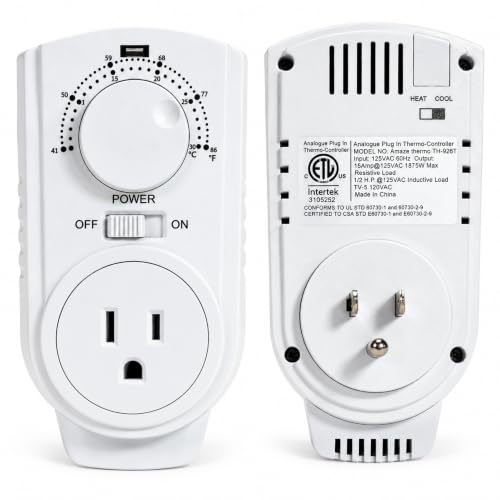
Plug in Thermostat for Heater or AC – Universal Temperature Controlled Outlet with Heat & Cool Modes – Thermostats for Home, Energy Saving with Analog Dial - Amaze Heaters
Check price on Amazon
YITAHOME 20 SEER2 12000BTU Mini Split AC/Heating System 115V, Pre-charged Inverter AC Cool & Heat Up to 750 Sq. Ft, 3 Level Eco Mode, Complete Installation Kit, White
Check price on Amazon