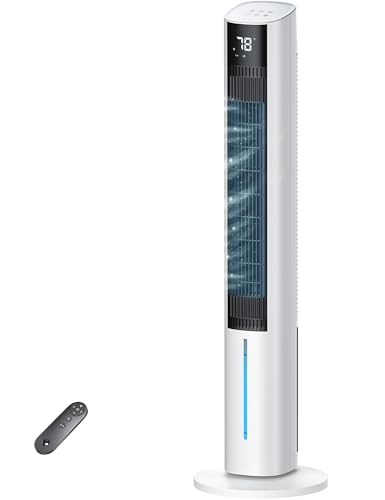
Evaporative Air Cooler Portable Air Conditioner: The Complete Buyer's Guide
If you live in a dry climate and want a portable cooling solution that uses less energy than a compressor-based air conditioner, an evaporative air cooler portable unit is worth understanding in detail. This guide explains how evaporative cooling works, where it performs best, how it compares with a true portable AC, and how to choose the right model for your room before you buy.
What Is an Evaporative Air Cooler Portable Unit?
An evaporative air cooler is a cooling appliance that lowers air temperature by passing warm, dry air through a water-saturated cooling pad. As water evaporates, it absorbs heat from the air, and the fan pushes the cooled air into the room. A portable evaporative cooler packages this process into a wheeled unit with a built-in water tank, so it can be moved between rooms without permanent installation.
It is important to understand that an evaporative cooler is not the same as a compressor-based air conditioner, even though many product listings use the phrase "portable air conditioner." A true portable AC uses refrigerant and a compressor to remove heat from the room and exhaust it through a hose. An evaporative cooler adds moisture to the air instead of removing it. That difference is the key to knowing whether it will work well in your home.
If you are still comparing cooling categories, our overview of different types of air conditioning for homes will help you place evaporative cooling in context alongside window, wall, and mini-split options.
How Evaporative Cooling Works
Evaporative cooling relies on a simple physical principle: when water evaporates, it absorbs heat from its surroundings. A portable evaporative cooler uses a pump to wet a cooling pad, and a fan draws warm outdoor or room air through the pad. The air gives up some of its heat to evaporate the water, and the fan then delivers the cooler, moister air into the space.
The Core Components
- Water tank and pump: Stores water and continuously wets the cooling pad.
- Cooling pad (media): A honeycomb or rigid cellulose pad that maximizes the water-to-air contact area.
- Fan and motor: Moves air through the pad and into the room; some models use a variable-speed fan for finer control.
- Air grille and louvers: Direct the cooled airflow and distribute it across the room.
Because the process depends on evaporation, performance drops as humidity rises. In a dry climate, the temperature drop can be significant. In a humid climate, the air is already close to saturation, so evaporation slows and the cooling effect becomes minimal. This is the single most important factor in deciding whether an evaporative cooler is right for you.
If you want a deeper comparison of the technologies, the guide on inverter vs non-inverter air conditioners explains how compressor-based cooling differs in operation and efficiency.
Key Benefits and Ideal Conditions
An evaporative air cooler portable unit is not a universal replacement for a compressor-based air conditioner. It is a specialized tool that performs very well under the right conditions and poorly under the wrong ones. Understanding this distinction will save you from disappointment.
Lower Energy Draw
Evaporative coolers typically use far less electricity than compressor-based AC units because they rely on a fan and a small pump rather than a compressor.
No Refrigerant
There is no refrigerant circuit or compressor, which simplifies maintenance and avoids refrigerant handling concerns.
Adds Moisture
In dry climates, the added humidity can improve comfort. In humid climates, it is a drawback, so climate is the deciding factor.
Portability
Wheeled designs with a built-in tank can be moved between rooms, making them flexible for renters and temporary setups.
Simple Setup
No window venting or wall modification is required. Fill the tank, plug in, and turn it on.
Outdoor and Semi-Outdoor Use
They work well on covered patios, garages, and workshops where ventilation is abundant and humidity is low.
The ideal conditions are a hot, dry climate with relative humidity roughly below 40 percent and a space with good cross-ventilation. In these conditions, an evaporative cooler can deliver meaningful comfort at a low energy draw. If you want a more detailed comparison of a fully evaporative design, our guide on a fully evaporative portable air conditioner covers the design variations.
Evaporative Cooler vs Portable AC
Many shoppers compare an evaporative cooler against a portable air conditioner because both are wheeled, plug-in appliances. The underlying technologies are very different, and the right choice depends on your climate and your room.
| Feature | Evaporative Air Cooler | Portable AC (Compressor) |
|---|---|---|
| Cooling method | Water evaporation | Refrigerant compressor |
| Best climate | Hot and dry (low humidity) | Any climate, including humid |
| Humidity effect | Adds moisture to the air | Removes moisture during cooling |
| Venting | No vent hose required | Requires a window vent kit |
| Energy draw | Low (fan and pump only) | Higher (compressor-driven) |
| Maintenance | Pad cleaning and water refills | Filter cleaning and condensate drainage |
| Best for | Dry climates, garages, patios, workshops | Bedrooms and living rooms in any climate |
If you are in a humid area, a compressor-based portable AC is the more reliable choice. For a dual inverter design, see our guide on a dual inverter portable air conditioner. If you want to understand how portable units handle exhaust, the article on a long exhaust hose for a portable air conditioner explains the venting setup. If you are comparing energy use across categories, the overview of a most cost-effective portable air conditioner is a useful read.
For a broader view of fans and cooling appliances, the guide on fans, heating, and cooling explains where evaporative coolers fit alongside other options.
How to Size an Evaporative Cooler for Your Room
Sizing an evaporative cooler is less about BTU and more about airflow, measured in cubic feet per minute (CFM). The goal is to move enough cooled air through the space to create a noticeable comfort improvement. Because evaporative coolers work best with ventilation, the sizing approach also considers how much air can be exhausted from the room.
Step-by-Step Sizing Approach
- Measure the room volume in cubic feet (length × width × ceiling height).
- Estimate required airflow using a general rule of thumb of roughly 2 to 3 air changes per hour for living spaces, and higher for workshops or garages.
- Adjust for climate using the humidity level. Lower humidity supports higher cooling effectiveness and can justify slightly higher airflow.
- Confirm ventilation so that warm, moist air can escape. A room that is sealed tight will become humid and uncomfortable.
- Check the tank capacity against your intended run time. Larger tanks reduce refill frequency.
For a general sizing framework, our guide on how to size an air conditioner explains the BTU-based method for compressor systems, which is useful as a contrast. If you are considering a compact room cooler, the overview of a mini air conditioner for room covers small-space options.
Understanding Market Tiers and Feature Sets
Portable evaporative coolers are available across several market tiers. Instead of focusing on figures, it helps to understand what each tier typically delivers in terms of build quality, control features, and comfort.
| Tier | Typical Focus | What to Expect | Best For |
|---|---|---|---|
| Entry-Level | Core cooling, simple controls | Basic pad, manual or simple digital controls, small tank, single fan speed | Small rooms and occasional use |
| Mid-Range | Balanced comfort and features | Larger tank, multiple fan speeds, oscillating louvers, remote control, timer | Living rooms, home offices, covered patios |
| Premium | Refined comfort and control | High-efficiency pads, variable-speed fan, ice compartment, smart scheduling, quieter operation | Primary living areas and users who want finer control |
| High-End Tier | Heavy-duty and large-space cooling | Durable construction, very large tanks, high airflow, reinforced housing for semi-outdoor use | Workshops, garages, and large open spaces |
A mid-range model usually offers a noticeably smoother experience than an entry-level unit, mainly through better fan control, oscillating louvers, and a larger tank that reduces refill frequency. Premium and high-end tiers add finer airflow control and durable construction for demanding environments. If you value scheduling and remote access, compare how smart controls work in electronic home thermostats, since some premium evaporative coolers support scheduling or external control.
If you are comparing a cooling appliance for a long-term setup, the article on an investment AC for long-term use is a useful read on durable equipment choices.
Maintenance and Water Management
Because an evaporative cooler relies on water, maintenance is centered on keeping the water path clean and the cooling pad in good condition. Neglecting these tasks reduces cooling performance and can create odors or scale buildup.
Routine Maintenance Checklist
- Drain and refill the water tank regularly to prevent stagnation.
- Clean or replace the cooling pad according to the manufacturer's schedule.
- Wipe down the tank and pump strainer to remove mineral buildup.
- Inspect the pump and water distribution system for clogs.
- Store the unit dry when it is not in use for an extended period.
- Check the fan and grille for dust buildup and clean as needed.
For a more detailed routine, see our guide on evaporative cooler maintenance. If the unit is not cooling as expected, the troubleshooting notes in fixing an air conditioner can help you isolate whether the issue is airflow, water flow, or pad condition. If you are pairing a cooler with other air-moving equipment, the overview of fans, heating, and cooling explains how airflow interacts with cooling performance.
Setup and Safety Considerations
An evaporative cooler is a low-risk appliance, but a few setup practices will help you get the most from it and avoid common problems.
Setup Best Practices
- Place near an open window or door so warm, humid air can escape. Cross-ventilation is essential.
- Keep the unit level so water does not spill and the pump operates correctly.
- Avoid enclosed rooms where humidity will rise quickly and cooling effectiveness will drop.
- Use a grounded outlet and follow the manufacturer's electrical guidance. Our guide on electrical outlet plugs explains outlet types and ratings.
- Do not place the unit near water-sensitive electronics or directly against a wall that could trap moisture.
If you are setting up a temporary cooling arrangement near a wall, the article on a heat and air unit for wall installation explains how wall-mounted alternatives differ from portable setups. If you need a cooling solution where a window is not available, the overview of an air conditioner with no window covers alternative approaches.
For broader guidance on maintaining indoor comfort during the cooling season, the article on the first week after AC installation covers what to check after a new cooling setup is running.
Frequently Asked Questions
Is an evaporative air cooler portable unit the same as a portable air conditioner?
No. A portable air conditioner uses a compressor and refrigerant to remove heat and exhausts it through a hose. An evaporative cooler uses water evaporation and a fan to deliver cooler, more humid air. They serve different climates and setups.
Where does an evaporative cooler work best?
It performs best in hot, dry climates with low relative humidity and good ventilation. In humid climates, the cooling effect is minimal because the air is already close to saturation.
Do I need to vent an evaporative cooler through a window?
No vent hose is required. However, you do need ventilation in the room so warm, humid air can escape. An open window or door supports the cooling process.
Can an evaporative cooler lower the temperature as much as an AC unit?
In dry climates, it can deliver a noticeable temperature drop, but the effect depends on humidity and airflow. It typically does not match a compressor-based AC in humid conditions or in sealed rooms.
How often should I change the water in the tank?
Drain and refill the tank regularly, especially before each use and any time the unit has been idle. This prevents stagnation and keeps the water path clean.
Is an evaporative cooler suitable for a bedroom?
It can be suitable in a dry climate with ventilation, but the added humidity and airflow noise may matter for sleep. In humid climates, a compressor-based portable AC or a mini-split is usually a better fit.
Ready to Compare Evaporative Air Cooler Portable Models?
Browse our hand-picked recommendations below to compare tank capacity, airflow, fan control, and market tiers side by side. Every model is selected to help you make a confident, informed decision for your climate and space.
View Recommended Models