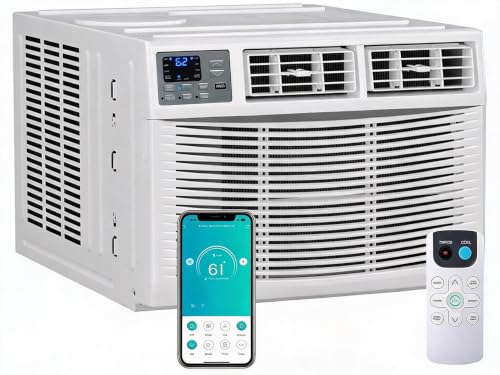
Heat and Air Conditioner Window Unit: A Complete Buyer Guide
A heat and air conditioner window unit delivers both cooling and heating from a single window-mounted appliance. Learn how the two modes work, how to size the unit, and what to expect during installation.
Explore the BasicsFor homes without ductwork, a heat and air conditioner window unit is one of the most practical ways to deliver year-round comfort to a single room. It installs in a standard window opening, plugs into the wall, and provides both cooling in summer and heating in cooler months. This guide explains how the two operating modes differ, how to choose the right capacity, and what to consider before you buy.
What Is a Heat and Air Conditioner Window Unit?
A heat and air conditioner window unit is a self-contained appliance that installs in a window frame and conditions the room it faces. It includes a compressor, coils, fans, and controls in a single chassis, so no outdoor equipment or ductwork is required. Cooling works on the same refrigeration cycle used by all air conditioners; the difference is that the unit also includes a heating mode.
Two heating approaches exist in the window-unit market. Heat pump models use a reversing valve to run the refrigeration cycle in reverse, absorbing heat from outdoor air and releasing it indoors. Resistance-heat models use an electric heating element to warm air as it passes through the unit. Each approach has trade-offs in efficiency, cold-weather performance, and complexity.
These units are often chosen for bedrooms, home offices, additions, and older homes where adding ductwork would be disruptive. For a broader look at how window units compare with other formats, see our guide to different types of air conditioning for homes. Our overview of a heat and air unit for wall installations covers a related format used in some homes.
How Heating and Cooling Modes Work
Understanding the internal flow helps explain why some models perform better than others in cold weather. The two modes share most of the hardware but use it differently.
Cooling mode
In cooling mode, the unit absorbs heat from indoor air at the evaporator coil, moves it through the compressor, and releases it outdoors at the condenser coil. The indoor fan circulates cooled, dehumidified air back into the room. This is the standard vapor-compression cycle used by all air conditioners.
Heat pump heating mode
In heat pump heating mode, the reversing valve swaps the roles of the two coils. The outdoor coil becomes the evaporator, absorbing heat from outdoor air even when it feels cold outside. The indoor coil becomes the condenser, releasing that heat into the room. Because the unit is moving heat rather than generating it, efficiency is generally higher than resistance heating.
Resistance heating mode
Resistance models use an electric heating element positioned in the air path. Air passes over the element, absorbs heat, and is delivered to the room by the fan. This approach is simple and works in any outdoor temperature, but it converts electricity to heat at roughly one-to-one efficiency. Some heat pump models include resistance backup for the coldest days.
For a deeper comparison of the underlying technologies, see our article on heat pump vs air conditioner.
Heat Pump vs Resistance Models
The table below summarizes the practical differences between the two main types of heating in a heat and air window unit.
| Feature | Heat Pump Model | Resistance Model |
|---|---|---|
| Heating efficiency | Higher in mild-to-moderate weather | Consistent but lower overall |
| Cold-weather performance | Declines as outdoor temperature drops; resistance backup helps | Unaffected by outdoor temperature |
| Complexity | Reversing valve and additional controls | Simpler heating element and controls |
| Noise in heating mode | Compressor runs during heating | Typically quieter during heating |
| Best for | Mild winters and buyers prioritizing efficiency | Very cold climates or buyers wanting simplicity |
Some models combine both approaches, using a heat pump as the primary heating source and resistance heat as a backup when outdoor temperatures fall. This hybrid design is common in units marketed for year-round use.
Sizing and Room Fit
Correct sizing is the single biggest factor in how well a window unit performs. Oversized units cool too quickly and cycle frequently, which reduces dehumidification and comfort. Undersized units run continuously and may never reach the set temperature on hot days.
Cooling capacity
Cooling capacity is typically measured in British thermal units (BTU) per hour. A rough starting point is roughly 20 BTU per square foot of floor area, adjusted for ceiling height, window area, sun exposure, and occupancy. Our guide on a low-profile 5,000 BTU window air conditioner illustrates how small units are typically used, and our overview of the ENERGY STAR 6,000 BTU air conditioner covers efficient small-room options.
Heating capacity
Heating capacity is often rated differently from cooling capacity. For heat pump models, look for the heating capacity at the outdoor temperature typical of your coldest expected use. For resistance models, the heating output is generally predictable across outdoor temperatures. Size the heating capacity to the room, not to the whole home.
Installation Considerations
Window units are among the simpler HVAC installations, but a few factors determine whether a particular model will work in your home.
Window type and size
Double-hung windows are the most common fit. Casement, slider, and awning windows often require a special bracket or an adapter kit. Measure the window opening width and height before choosing a unit.
Electrical requirements
Smaller units often run on a standard 115-volt outlet, while larger heat-capable units may require a dedicated 240-volt circuit. Confirm the requirement before buying.
Support and safety
Larger units need a proper support bracket and should be installed with the manufacturer's recommended tilt so that condensate drains outdoors.
Weather sealing
Sealing the sides of the unit with foam insulation reduces air leakage around the window opening and improves efficiency.
Noise and vibration
Window units transmit some compressor noise into the room. Anti-vibration pads and correct leveling reduce this.
Placement
Choose a window that faces away from direct afternoon sun if possible. Shade the outdoor side of the unit to improve cooling efficiency.
If you are not comfortable installing a window unit yourself, professional help is available. Our overview of a handyman to install a window air conditioner explains what to expect from a professional installation.
Homes that cannot use a window opening may need a different approach. Our article on cooling options when there is no window and the guide to a dual inverter through-the-wall air conditioner cover alternatives.
Market Tiers and What They Offer
Heat and air window units span a range of build quality and feature sets. The following three-tier framework helps you compare models without relying on numeric figures.
Essential Tier
Basic models focused on essential heating and cooling. Usually resistance heat, straightforward controls, and a simple installation kit. A solid choice for occasional use or a spare room.
Balanced Tier
Mid-tier units combine better efficiency, quieter operation, and more refined controls. Some add heat pump heating or smart thermostat compatibility. Well-specified for the category.
Premium Tier
Top-tier models emphasize heat pump efficiency, Wi-Fi controls, better dehumidification, and quieter compressors. Suited to primary living spaces and buyers prioritizing long-term comfort.
For smart-control options, see our guide on a dual inverter smart Wi-Fi-enabled window air conditioner. Our article on the most efficient window air conditioner with heater covers efficiency-focused choices. If you value portability instead, the dual inverter portable air conditioner overview explains the alternative format.
Maintenance Essentials
A heat and air window unit is exposed to outdoor conditions for much of the year. Regular maintenance keeps it efficient and extends its service life.
Filter care
Clean or replace the filter every few weeks during heavy use. Our article on how to clean an AC filter walks through the process, and the guide on when to replace an AC filter explains replacement intervals.
Coil cleaning
The outdoor-facing condenser coil collects dust and debris. Gentle cleaning with a coil cleaner and soft brush keeps heat transfer efficient. Our guide on cleaning condenser coils covers the process in detail.
Drain and drain pan
Confirm that condensate drains out of the unit and away from the window. Standing water inside the unit can cause odors and damage. If you notice dripping indoors, the tilt or drain path may need adjustment. Our article on a drip pan for an AC unit in an attic covers related drainage issues for other formats.
Off-season care
If you remove the unit for winter, store it upright in a dry place. If you leave it installed, use a weather cover to keep out rain and debris when not in use.
For troubleshooting common issues, our guides on AC not cooling, AC making noise, and AC smells bad explain the typical causes and when to call for service.
Frequently Asked Questions
What is a heat and air conditioner window unit?
A heat and air conditioner window unit is a window-mounted appliance that both cools and heats the room it serves. Cooling works through a standard refrigeration cycle, while heating may be provided by a heat pump reversing valve or by an electric resistance element, depending on the model.
Is a heat pump window unit more efficient than an electric heater model?
In most climates, a heat pump window unit delivers more heating per unit of electricity than a resistance-element model, because it moves heat rather than generating it. However, heat pump performance drops in very cold outdoor temperatures, so homes in severe winter climates may rely on the resistance backup for the coldest days.
Can a heat and air window unit heat an entire room?
It can heat the room it is installed in, provided the unit is sized correctly for that space. Window units are designed for single-room use, not whole-home heating. Check the heating capacity rating for the coldest expected outdoor temperature and match it to the room's size and insulation.
Do heat and air window units need special electrical circuits?
Larger units with heating capability often require a dedicated 240-volt circuit, while smaller models may run on a standard 115-volt outlet. Always confirm the electrical requirement in the product specifications and have a qualified electrician install any new circuit.
Ready to Compare Window Units with Heating?
Review our curated selection of heat and air window units to find a model that fits your room, climate, and comfort goals.
View Recommended Models