
High Efficient Air Conditioner: The Complete Buyer's Guide
Understand what makes an air conditioner genuinely efficient, compare SEER2 ratings, inverter technology, and system types, and learn how to match a high efficiency unit to your home before you commit.
Jump to Buying ChecklistWhy this page exists: If you already know you want a high efficient air conditioner but feel lost in the technical labels, this guide translates the jargon into practical decision points. By the end, you should be able to walk into a showroom or online listing and know exactly which specifications matter for your situation.
1. What "High Efficiency" Really Means
Efficiency is the ratio of cooling delivered to energy consumed. A high efficient air conditioner produces the same comfort using less electricity than a standard unit of comparable capacity. This sounds simple, but the label on a specification sheet only tells part of the story, because real-world efficiency also depends on installation quality, ductwork integrity, refrigerant charge, and how the system is operated.
The U.S. Department of Energy sets minimum efficiency standards by region, and the current benchmark is the SEER2 rating. Units that comfortably exceed the regional minimum are the ones marketed as high efficiency. The gap between entry-level and top-tier equipment can be significant, and so can the difference in long-term energy consumption. If you want a broader foundation on how efficiency fits into system selection, the overview of heating and air conditioning units is a useful starting point.
Three concepts sit at the heart of every efficiency discussion:
- Compressor modulation: how the system adjusts output to match the actual cooling load.
- Heat exchange surface area: larger coils transfer heat more effectively at lower fan speeds.
- Airflow and duct design: even an excellent condenser underperforms if the duct system leaks or is restricted.
That is why a high efficiency unit installed poorly can perform worse than a mid-range unit installed correctly. The equipment sets the ceiling; the installation determines how close to that ceiling the system actually runs.
2. SEER2, EER2, and HSPF2 Explained
SEER2 is the seasonal energy efficiency ratio tested under updated DOE procedures that account for realistic duct static pressure. The higher the number, the less energy the system uses to deliver a given amount of cooling across a typical season. SEER2 ratings are usually about 4.5 percent lower than the older SEER values for identical equipment, so never compare numbers across the two standards.
EER2 measures efficiency at a single high-temperature design condition. It is especially relevant in hot climates where the system runs near peak capacity during the hottest afternoons. HSPF2 applies to heat pump operation in heating mode and matters if you plan to use the same system year-round.
| Efficiency Tier | Typical SEER2 Range | Best For |
|---|---|---|
| Entry-level | Near regional minimum | Mild climates, seasonal use, rental properties |
| Mid-range | Moderately above minimum | Most households with typical cooling seasons |
| High-end tier | Clearly above minimum | Hot climates, long cooling seasons, whole-home comfort |
| Top-tier / flagship | Highest certified ratings | Maximum efficiency goals, variable-speed whole-home systems |
When comparing listings, confirm that every unit is rated under SEER2. A legacy SEER rating is not directly comparable, and mixing the two standards is one of the most common mistakes buyers make. For a deeper explanation of the rating itself, see the guide to SEER ratings.
3. Inverter vs Single-Stage Compressors
The compressor is the component that consumes the most electricity in any air conditioning system, so how it modulates output determines much of the efficiency story. A single-stage compressor runs at full speed or not at all. A two-stage compressor offers a low and a high setting. An inverter-driven compressor adjusts speed continuously across a wide range.
Single-Stage
Simple and durable. Cycles on and off at full capacity, which causes larger temperature swings and higher average energy use in mild weather.
Two-Stage
Runs at a low setting most of the time and shifts to high only when needed. Better humidity control and smoother comfort than single-stage.
Inverter / Variable-Speed
Continuously modulates compressor speed to match the load. Delivers the most stable temperatures, lowest cycling losses, and the best real-world efficiency.
Inverter technology is the single most important efficiency feature in modern residential cooling. It is especially valuable in climates with long, hot summers and in homes with variable occupancy, because the system can run at a low, steady output instead of repeatedly starting and stopping. For a full comparison of the two compressor philosophies, read inverter AC and the broader analysis of inverter versus non-inverter systems.
4. High Efficiency System Types Compared
High efficiency equipment exists in every major system category. The right choice depends on whether your home already has ductwork, how many rooms you need to condition, and whether you want a single-zone or whole-home solution.
High Efficiency Central AC
Best for homes with existing ductwork. Modern variable-speed central systems reach the highest SEER2 ratings and pair well with high efficiency furnaces or heat pumps.
High Efficiency Ductless Mini-Split
Ideal for older homes, additions, and room-by-room zoning. Top-tier mini-splits often achieve the highest efficiency numbers of any residential category.
High Efficiency Window AC
A practical entry point for apartments and single rooms. Look for inverter-driven window units with high CEER ratings for the best efficiency in this category.
High Efficiency Portable AC
Useful for temporary or rental situations. Efficiency is generally lower than fixed systems, so choose dual-hose inverter models when possible.
For a detailed breakdown of whole-home options, explore high efficiency air conditioner units and the high efficiency air conditioning system overview. If your home lacks ductwork, the high efficiency split system air conditioning guide explains how ductless systems fit into that scenario.
5. Sizing and Load Calculation
An oversized high efficiency unit is still an inefficient system in practice. Short cycling prevents the compressor from reaching its steady-state efficiency, reduces dehumidification, and adds wear. Undersizing, on the other hand, leaves the system running continuously during peak heat without maintaining the setpoint.
The correct approach is a room-by-room load calculation, commonly known as a Manual J calculation. It accounts for square footage, window area and orientation, insulation levels, air infiltration, occupant count, and local climate data. A reputable contractor will perform this before recommending capacity.
- Use the AC sizing guide to understand the inputs.
- Cross-check with the BTU calculator by room size for a quick estimate.
- Review the risks of an AC that is too big or too small.
For whole-home projects, the AC sizing for whole home guide walks through the process step by step, and the Manual J load calculation page explains the methodology contractors use.
6. Features That Actually Improve Efficiency
Not every marketing feature translates into measurable efficiency. The following list focuses on capabilities with a direct impact on energy use and comfort consistency.
- Variable-speed compressor and air handler: the core of high efficiency performance, enabling continuous low-output operation.
- Electronic expansion valve (EEV): precisely meters refrigerant flow and improves part-load efficiency compared with fixed orifice metering.
- Larger condenser coil surface: more heat exchange area at the same airflow reduces compressor workload.
- ECM blower motor: substantially more efficient than older PSC motors and allows finer airflow control.
- Smart thermostat compatibility: scheduling and geofencing reduce runtime when the home is empty. See the thermostat guide for selection criteria.
- Improved humidity control: lower sensible heat ratio and longer low-speed runtimes keep indoor humidity in the comfortable range without overcooling.
- Sealed, insulated refrigerant lines: reduces thermal losses between the indoor and outdoor units.
Note on smart features: Wi-Fi and app control do not directly increase the SEER2 rating, but they enable better scheduling and monitoring habits, which often produce measurable energy reductions in daily use.
7. Installation Quality Matters More Than the Label
A high efficient air conditioner is a system, not a box. The rated efficiency assumes correct refrigerant charge, properly sized and sealed ductwork, adequate airflow, and a matched indoor and outdoor unit combination. Any weakness in these areas erodes the efficiency advantage you paid for.
Key installation factors to verify:
- Matched system components from the same manufacturer, confirmed by AHRI reference number.
- Duct leakage tested and sealed, especially in unconditioned spaces.
- Refrigerant charge verified by subcooling or superheat measurement, not just gauge pressure.
- Static pressure measured to confirm the air handler is within its rated airflow range.
- Condensate drainage and safety switch installed correctly.
For guidance on selecting a qualified installer, see the heating and air contractors in my area resource and the overview of heating and air services in my area. If ductwork is part of the project, the heating and air duct cleaning guide explains when cleaning and sealing should be scheduled relative to installation.
8. The High Efficiency Buying Checklist
Use this sequence to move from research to a confident decision. Each step builds on the previous one, so resist the temptation to skip ahead to product selection.
- Define the scope: single room, multiple zones, or whole home. This determines which system categories are even relevant.
- Get a load calculation: insist on a room-by-room Manual J or equivalent before any capacity recommendation.
- Set an efficiency target: decide whether you are aiming for the mid-range, high-end tier, or top-tier based on climate and expected years of use.
- Confirm SEER2 and EER2: compare only units rated under the same standard, and check AHRI certification.
- Evaluate compressor modulation: prioritize variable-speed or two-stage if your climate has long cooling seasons.
- Check the matched system: indoor and outdoor units should be an AHRI-matched pair, not mixed arbitrarily.
- Review the installation plan: duct sealing, line set routing, electrical requirements, and condensate management.
- Verify warranty terms: register the product promptly and confirm labor coverage separately from parts coverage.
- Plan maintenance: schedule filter changes and an annual professional inspection to preserve rated performance.
For a wider view of how high efficiency cooling fits alongside heating equipment, see the high efficiency heating and air conditioning guide and the high efficiency HVAC system overview. If you are also considering a combined heating and cooling upgrade, the high efficiency furnace and air conditioner page explains how to coordinate the two.
Ready to Compare High Efficiency Models?
Browse curated high efficiency air conditioners and filter by system type, capacity, and efficiency tier to find the right fit for your home.
Explore High Efficiency OptionsFrequently Asked Questions
What SEER2 rating makes an air conditioner high efficiency?
In most U.S. regions, a SEER2 rating of 16 or higher is generally considered high efficiency. Premium and top-tier models frequently reach SEER2 ratings in the 18 to 26 range, while entry-level units typically sit near the minimum federal standard.
Is a high efficient air conditioner worth the higher upfront tier?
Yes, for most households that run cooling for several months each year. A high efficiency unit consumes less electricity per unit of cooling, and the difference compounds over a 10 to 15 year lifespan. Combined with available tax credits and utility rebates, the long-term investment often outweighs the initial tier difference.
Do high efficiency air conditioners need special maintenance?
They follow the same maintenance routine as standard units: regular filter changes, coil cleaning, and an annual professional inspection. Because high efficiency systems rely on precise refrigerant charge and clean coils to hit their rated performance, skipping maintenance can reduce their efficiency advantage over time.
What is the difference between SEER and SEER2?
SEER2 is an updated testing standard introduced by the DOE that reflects real-world duct static pressure more accurately. SEER2 ratings are typically about 4.5 percent lower than legacy SEER ratings for the same equipment, so always compare units using the same rating system.
Can a high efficiency air conditioner lower my electricity bill?
Yes. A high efficiency unit uses less energy to deliver the same cooling output. The savings depend on your climate, home insulation, thermostat habits, and the efficiency gap between your old and new system. In hot climates with long cooling seasons, the reduction in energy use is most noticeable.
Top-Rated High Efficiency Air Conditioners
⚠️ AFFILIATE DISCLOSURE: This website contains affiliate links. As an Amazon Associate, we earn from qualifying purchases. If you make a purchase through these links, we may receive a small commission at no additional cost to you. Read our full affiliate policy.

Midea Duo 14,000 BTU Portable Air Conditioner with Heat, Inverter Quiet | 12,000 BTU SACC High Efficiency Inverter Portable AC, with Heat up to 550 Sq.Ft. Smart/Remote Control, Alexa/Google Assistant
Check price on Amazon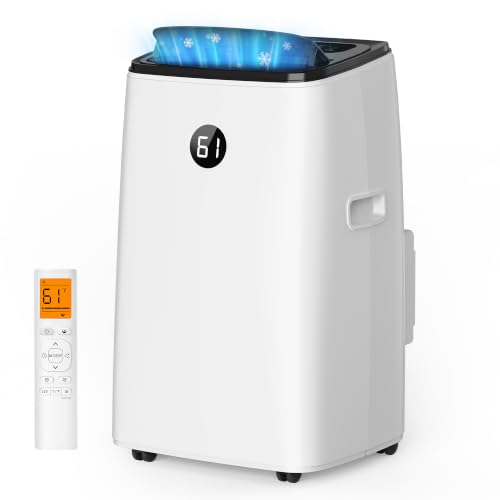
AGTANA 14000 BTU Portable Air Conditioner for Large Room up to 700 Sq. Ft, 3-in-1 Self-Evaporating AC with Fan & Dehumidifier, Floor Standing Portable AC Unit with Remote Control, Auto Swing, White
Check price on Amazon
Midea 5,000 BTU EasyCool Small Window Air Conditioner - Cool up to 150 Sq. Ft. with Easy-to-Use Mechanical Controls and Reusable Filter, Perfect for Small Bedroom, Living Room, Home Office
Check price on Amazon
Midea 10,000 BTU U Shaped Window Air Conditioner, Cools up to 450 Sq Ft | Ultra Quiet U-Shaped Design, Inverter Control, Open Window Flexibility, Alexa/Google Assistant, 37% Energy Savings, 2026 New
Check price on Amazon
SereneLife 14000 BTU Portable Inverter Air Conditioner, 115V Smart Cooling & Heating with WiFi, Energy Efficient, For Bedrooms, Living Spaces & Offices, 650 Sq Ft Coverage, (White)
Check price on Amazon
Keystone 10,000 BTU Wall Mounted Air Conditioner with Supplemental Heat and Dehumidifier, 230V, Wall AC with Remote Control for Small and Medium Sized Rooms up to 450 Sq.Ft., Quiet, High Efficiency AC
Check price on Amazon
Midea Duo 14,000 BTU(12,000 BTU SACC) High Efficiency Inverter, Quiet Portable Air Conditioner, Cools up to 550 Sq.Ft., Works with Alexa/Google Assistant, Includes Remote Control&Window Kit (Renewed)
Check price on Amazon