How to Use a Window AC Without a Window
Discover safe, practical, and code-compliant ways to install a window air conditioner when a standard window is not available — whether you live in a basement, an interior room, or a space with only a sliding door.
Quick Summary: A window AC unit needs two things to work correctly: a stable platform to sit on, and a way to exhaust hot air outside while pulling in indoor air for cooling. Without a window, you can still achieve this using a through-the-wall sleeve, a sliding glass door adapter kit, a modified wall opening, or by switching to a portable AC with a venting kit. The right method depends on your building type, rental rules, and how much structural modification is allowed.
Why a Window AC Needs an Outside Access Point
A window air conditioner is a self-contained cooling system. It pulls warm indoor air across an evaporator coil, cools it, and blows it back into the room. At the same time, it must reject the absorbed heat and humidity to the outdoors through its condenser coil and exhaust. If the rear of the unit is not vented outside, the device will recirculate hot air, overheat its compressor, and fail to cool the room. Understanding the basic refrigeration cycle of an air conditioner helps clarify why proper outdoor venting is non-negotiable.
The two essential requirements are:
- Structural support: The unit weighs between 40 and 80 pounds on average, so it must rest on a secure bracket, sleeve, or frame.
- Outdoor exhaust path: The rear condenser coil must face open outdoor air with at least 12 to 24 inches of clearance for heat dissipation.
If your room lacks a traditional double-hung window, you have several viable alternatives. Below, each method is explained with its difficulty level, ideal use case, and safety considerations.
Method 1: Through-the-Wall Installation with a Sleeve
Install a Wall Sleeve on an Exterior Wall
This is the most permanent and reliable solution for rooms without windows. A through-the-wall AC sleeve is a metal or polymer frame embedded into an exterior wall opening. The window unit slides into the sleeve, with the front facing the room and the rear exposed to the outside.
Steps involved:
- Select an exterior wall that faces open outdoor space (not a shared corridor or enclosed courtyard).
- Cut an opening sized to the sleeve's outer dimensions, typically 16 to 18 inches high and 25 to 27 inches wide.
- Frame the opening with lumber, insert the sleeve, and seal the perimeter with weather-resistant flashing and caulk.
- Slide the AC unit into the sleeve and secure it with the manufacturer's mounting brackets.
This approach is common in hotels and motels that use packaged terminal air conditioners and in residential basements. It requires a permit in most jurisdictions and should be performed by a licensed contractor. The finished installation is weather-tight, secure, and allows the unit to cool efficiently. If you are exploring related wall-mounted solutions, our guide on installing a wall-mounted AC unit covers bracket selection and load-bearing requirements.
Best for: Homeowners with an exterior wall who want a permanent, code-compliant solution. Not suitable for: Renters or interior rooms with no exterior wall.
Method 2: Sliding Glass Door Adapter Kit
Use a Sliding Door Window AC Bracket
If your room has a sliding glass door instead of a window, you can install a window AC using a specialized sliding door kit. These kits include a vertical filler panel, a top seal, and a security bracket that locks the door in place while the AC sits in the opening.
How it works:
- The AC unit rests on a support bracket anchored to the door frame or floor.
- A filler panel seals the gap above and beside the unit.
- The sliding door is locked against the unit to prevent forced entry.
This method is reversible and rental-friendly. It is important to use a bracket rated for the unit's weight and to reinforce the door track. Our detailed guide on installing a window AC in a sliding glass door walks through the exact measurements and sealing steps.
Best for: Apartments, condos, and rental units with sliding patio doors. Consideration: The door is unusable for foot traffic while the AC is installed.
Method 3: Sliding Window Opening
Adapt a Horizontal Sliding Window
Some rooms have sliding windows rather than double-hung windows. A standard window AC is designed for vertical openings, but you can install it in a horizontal sliding window with a side-filler kit and a support bracket. The unit sits in the opening, and the sliding pane closes against the AC's side panel.
For a step-by-step walkthrough, see our articles on installing a window AC in a sliding window and installing a horizontal air conditioner in a sliding window. These guides explain how to reinforce the track and prevent the unit from tipping.
Best for: Rooms with horizontal sliding windows that are at least 15 inches wide. Important: Use a heavy-duty bracket; the leverage on a horizontal opening is greater than on a vertical one.
Method 4: Portable AC as an Alternative
Switch to a Portable AC with a Venting Kit
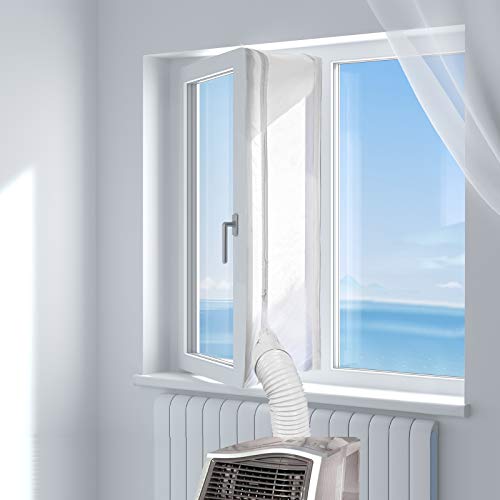
If structural modification is not an option, a portable air conditioner is the most flexible alternative. Portable units sit on the floor and exhaust hot air through a flexible hose that can be routed through a sliding door gap, a drop ceiling, a wall vent, or a small opening cut into drywall.
While a portable AC is not a window AC, it solves the same cooling problem without requiring a window. The trade-off is slightly lower efficiency and a larger footprint in the room. Our guide on using a portable AC without a window covers venting options in detail, and the article on installing a portable AC without a window provides installation steps.
Best for: Renters, interior rooms, basements, and spaces where cutting a wall is not permitted. Consideration: The exhaust hose must lead outdoors; venting into another interior room will not work.
Comparison of Methods
| Tier / Category | Best For | Reversible | Structural Work |
|---|---|---|---|
| Through-the-wall sleeve (mid-range modification) | Homeowners with an exterior wall | No | Yes — wall opening required |
| Sliding door kit (essential tier) | Apartments and rentals with patio doors | Yes | No — bracket and filler panel only |
| Sliding window adapter (starter tier) | Rooms with horizontal sliding windows | Yes | Minimal — track reinforcement |
| Portable AC alternative (top-tier flexibility) | Interior rooms and strict rentals | Yes | None — hose routing only |
Never operate a window AC unit indoors without outdoor venting. Doing so recirculates heat, can overheat the compressor, and may create a fire hazard. Always secure the unit with a manufacturer-approved bracket. If you are unsure about load-bearing walls or electrical capacity, consult a licensed HVAC technician. For electrical considerations, review our guide on getting an installation quote before committing to a permanent modification.
Frequently Asked Questions
Can I just put a window AC on the floor and vent it out a door?
No. A window AC is designed to sit in a horizontal opening with its rear facing outdoors. Placing it on the floor blocks airflow and prevents proper condensation drainage. Use a portable AC instead if you need a floor-level solution.
Can I install a window AC in an interior wall?
Only if that wall separates the room from an outdoor space. An interior wall that separates two rooms will simply move heat from one room to the other and will not cool effectively. You need a wall that faces outside.
Do I need a permit to cut a wall for an AC sleeve?
In most U.S. jurisdictions, yes. Structural wall modifications typically require a building permit and inspection. Check with your local building department before starting work, and hire a licensed contractor for the cut and framing.
What if my only opening is a small basement window?
A small basement hopper window may not fit a standard window AC. In that case, a through-the-wall sleeve installed above the foundation line or a portable AC with a window vent kit is usually the better option. Our guide on installing a window AC in a wall covers sleeve sizing.
Is it safe to leave a window AC in a sliding door overnight?
Yes, provided the unit is secured with a bracket and the door is locked against the filler panel. Never rely on friction alone. Use a security bar or lock to prevent the door from sliding open.
Final Checklist Before You Install
- Confirm the unit's weight and choose a bracket rated for at least 1.5 times that weight.
- Verify that the outdoor side has at least 12 inches of clearance and is not blocked by a fence or enclosure.
- Check the electrical circuit: most window ACs require a dedicated 15-amp or 20-amp circuit. See testing a new AC installation for verification steps.
- Seal all gaps with foam insulation or weatherstripping to prevent cool air loss and pest entry.
- For sliding doors, add a security lock or bar to prevent forced entry.
With the right adapter kit or sleeve, a window AC can cool a room even without a traditional window. Choose the method that matches your building type and comfort with modification. For more guidance on securing a unit, see our article on securing a window with an air conditioner.