Furnace Air Cleaner System: A Complete Home Air Quality Guide
A furnace air cleaner system is one of the most effective upgrades you can make to a ducted HVAC system. This guide explains how whole-house air cleaners work, the different types, what MERV ratings really mean, and how to choose and maintain one so your family breathes noticeably cleaner air year-round.
Start the GuideWhy the furnace is the smartest place to filter: Your HVAC system already circulates the air in your home many times per day. Placing a high-quality cleaner in that airflow path filters the entire house — not just one room — and does so using the system's existing fan. For homes with ductwork, it is usually the most efficient way to improve indoor air quality. If you are still weighing your overall HVAC setup, our guide to different types of air conditioning for homes is a useful companion read.
What a Furnace Air Cleaner System Is
A furnace air cleaner system — also called a whole-house air cleaner or furnace air purifier — is an in-line filtration device installed in the return-air path of a forced-air heating and cooling system. Air moving from the home back to the furnace passes through the cleaner before being conditioned and redistributed. It removes a meaningful share of the dust, pollen, pet dander, mold spores, and fine particles circulating through the home.
The idea is simple and effective: instead of relying on small standalone air purifiers scattered from room to room, a single central filter treats all the air the HVAC system moves. In a typical single-family home, the furnace blower circulates the home's air volume several times per day, so the cumulative effect is substantial.
There are three common places a furnace air cleaner can be installed:
- At the air handler return — the standard location in most homes with a forced-air system.
- In the return-air duct — a dedicated filter cabinet that replaces a thin one-inch filter slot with a larger filter bed.
- As a separate unit — a self-contained purifier with its own fan that treats a stream of air separate from the HVAC path.
Residential systems typically cover the whole home, while small purifiers cover a single room. If your HVAC has an air handler but no furnace (for example, in a home with a heat-pump or hydronic system), the same concept applies — the filter goes into the air handler's return path. Related topics are covered in our house air conditioner overview.
How It Works with Your HVAC System
A furnace air cleaner is passive — it relies on the blower of your HVAC system to move air through the filter. As room air returns to the furnace via the return ducts, it passes through the air cleaner's filtration media or electronic collection cells. Cleaned air then flows through the evaporator coil (in cooling season) or heat exchanger (in heating season) before being distributed through the supply ducts.
That placement is strategic: the air cleaner sits just upstream of the main equipment, so it protects the coil and heat exchanger from dust buildup as well. A clean coil transfers heat more efficiently, which supports efficiency ratings like those discussed in our ENERGY STAR HVAC article.
Because the filter is in the return path, its effectiveness scales with how much air the system moves. Homes with variable-speed blowers or multi-stage equipment often run the fan longer at lower speeds, which keeps filtration active for more hours per day — a benefit for air quality in addition to comfort.
Types of Furnace Air Cleaners
There are four main categories of furnace air cleaner. They differ in filtration efficiency, maintenance requirements, and airflow impact.
1. Basic Media Filter Entry-level
The familiar one-inch or four-inch pleated filter already present in most HVAC systems. Disposable, widely available, and effective at capturing large particles like lint and dust. Filtration efficiency typically ranges from MERV 6 to MERV 8. An essential tier of protection for the equipment, but not designed for meaningful improvements to indoor air quality.
2. High-MERV Media Filter Mid-range
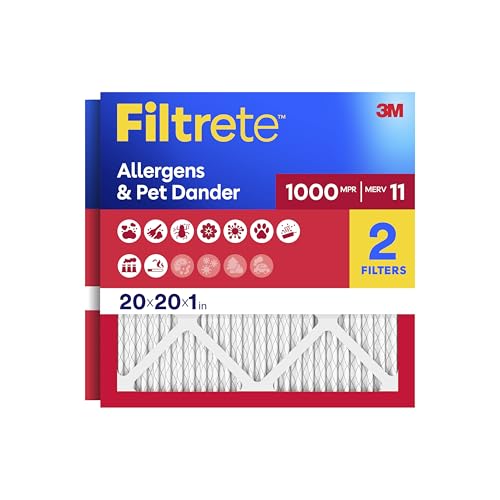
A thicker, pleated filter — usually four to five inches deep — that fits a dedicated filter cabinet. MERV 11 to MERV 13 ratings capture a much higher share of fine particles including pollen, pet dander, and fine dust. This is the most common upgrade for homeowners seeking real air-quality improvements. Still passive, still simple, but noticeably more effective than a one-inch filter.
3. Electronic Air Cleaner (EAC) Mid to high-end
Uses an electrostatic charge to attract and trap particles on washable collection cells. Very efficient at capturing fine particles, including some that media filters miss. The trade-off is that EACs produce a small amount of ozone and need regular cleaning of the cells. Some models are washable and reusable, which makes them a reasonable long-term investment.
4. HEPA Bypass or True HEPA System Premium
HEPA filters capture 99.97% of particles at 0.3 microns, which is the threshold used to define HEPA efficiency. A true HEPA filter in the HVAC path would be too restrictive, so whole-house HEPA systems usually run as a bypass: a portion of the return air is routed through the HEPA filter by an auxiliary fan, then returned to the system. These are the most effective solution for homes with severe allergy or asthma concerns, and they sit at the top-tier of the category.
Understanding MERV Ratings
MERV (Minimum Efficiency Reporting Value) is the standard rating for air filters. Higher numbers mean better filtration — but also more airflow resistance, which matters for HVAC compatibility.
| MERV Rating | Particle Capture | Best For | Airflow Impact |
|---|---|---|---|
| MERV 1–4 | Large particles only (lint, dust mites) | Basic equipment protection | Minimal |
| MERV 5–8 | Dust, pollen, mold spores | Standard residential HVAC | Low |
| MERV 9–12 | Fine dust, pet dander, auto emissions | Homes with pets or allergy concerns | Moderate |
| MERV 13–16 | Very fine particles, bacteria, smoke | Serious allergy or asthma support | High — verify HVAC compatibility |
| HEPA (beyond MERV 16) | 99.97% of particles at 0.3 microns | Medical-grade filtration | Very high — bypass system required |
For most residential HVAC systems, MERV 11 to MERV 13 is the sweet spot: strong filtration without overloading the blower. Before stepping up to a higher MERV, verify that the system can handle the added resistance — more on that in the airflow section below.
Health and Comfort Benefits
A properly chosen furnace air cleaner delivers benefits that go beyond just cleaner air:
- Fewer airborne allergens: pollen, pet dander, dust mite debris, and mold spores are captured before they settle or are inhaled.
- Less dust on surfaces: filtered air means surfaces stay cleaner longer, reducing the frequency of dusting and vacuuming.
- Improved comfort for allergy and asthma sufferers: a well-sealed home with strong filtration makes it noticeably easier to manage symptoms during allergy season.
- Protection for the HVAC equipment: a clean coil and heat exchanger operate more efficiently and last longer — see furnace evaporator coil cleaning for why this matters.
- Better indoor air quality overall: reduced fine particulate levels support respiratory health for the whole household.
- Complements other air quality measures: combined with humidity control and ventilation, filtration becomes part of a broader strategy. See furnace with humidifier options for the humidity side.
A clean filter also supports the efficiency of the whole system. Dust buildup on the coil reduces heat transfer and forces the system to work harder, which is exactly what our article on most efficient way to heat and cool a house recommends avoiding.
Airflow and HVAC Compatibility
This is the most overlooked factor when upgrading a furnace air cleaner, and the most important. Filters are not just passive barriers — they create resistance to airflow. Too much resistance and the blower cannot move the designed volume of air through the system.
What can go wrong with an oversized filter
- Reduced heating and cooling capacity, because less air is moving through the coil.
- Increased energy use, since the blower must work harder to push air through.
- Coil freezing in cooling mode, because the airflow across the coil is too low.
- Compressor strain and reduced equipment life over time.
- Higher noise levels from the blower.
A well-designed high-MERV media filter avoids much of this problem because its larger surface area spreads the resistance over more pleats. A four- or five-inch media filter at MERV 13 usually has less airflow resistance than a one-inch filter at the same MERV. That is why upgrading to a deeper filter cabinet is often the right move when stepping up filtration strength.
Before installing a high-MERV upgrade, have an HVAC technician confirm the system's static pressure is within design limits. If the equipment is older or already airflow-limited, an electronic air cleaner or a bypass HEPA system may be a better path than a thick high-MERV media filter.
Strengths and Trade-offs
A furnace air cleaner is a worthwhile investment for many homes, but it is not the right fit for every situation. Weigh both sides before committing.
Strengths
- Filters the air throughout the entire home
- Uses existing HVAC airflow — no extra equipment running
- Protects the evaporator coil and heat exchanger from dust
- Low ongoing maintenance for media filter systems
- Noticeable improvements for allergy and asthma sufferers
- Works continuously, day and night, whenever the fan runs
Trade-offs
- High-MERV filters can restrict airflow if not matched to the system
- Requires a ducted HVAC system to be present and functioning
- Electronic air cleaners produce a small amount of ozone
- Ongoing filter replacement is required for media types
- Won't help as much if the home is not reasonably sealed
- HEPA bypass systems add equipment and fan complexity
Homes without ducts — for example, those cooled primarily by mini-splits — cannot use a whole-house air cleaner in the same way. In those homes, high-quality standalone air purifiers per room are the usual alternative. For a discussion of ductless options, see our ductless mini-split guide.
Installation Considerations
Installation varies substantially by type. Basic media filters in existing slots are DIY-installable. High-MERV filter cabinets, electronic air cleaners, and HEPA bypass systems should be installed by a qualified HVAC technician.
Key installation factors
- Filter cabinet sizing: a wider filter cabinet is easier to install during an equipment replacement or duct modification, so plan ahead.
- Return-air path: the filter must be upstream of the blower and coil, and it must seal tightly to prevent bypass — unfiltered air slipping around the filter defeats the purpose.
- Electrical supply for powered units: electronic air cleaners and UV or PCO systems need a power source. For general electrical context, see electrical outlet plugs.
- Static pressure check: a technician should measure system static pressure after installation to confirm the filter is not restricting airflow.
- Integration with controls: some powered cleaners run continuously while others activate with the blower. Matching behavior to your household's habits matters. See electronic home thermostat for thermostat-based control options.
Before installation, ask the contractor to confirm the system is compatible with the proposed filter and that the added resistance will not reduce performance. Our guide to HVAC contracting covers what to look for in a contractor.
Maintenance Essentials
The long-term performance of a furnace air cleaner depends on regular upkeep. Maintenance tasks differ by type:
Media filters
- Replace one-inch filters every one to three months depending on use and dust load.
- Replace four- to five-inch media filters every three to six months.
- Write the replacement date on the filter's edge as a reminder.
- Never try to clean and reinstall a disposable media filter — it will not restore the original performance.
Electronic air cleaners
- Wash the collection cells every one to three months, following the manufacturer's instructions.
- Inspect the pre-filter and replace as needed.
- Check the ionizing wires for breakage or coating.
- Confirm the cell is completely dry before reinstalling.
HEPA bypass systems
- Replace the HEPA filter according to the manufacturer's recommendation, typically every one to two years.
- Confirm the auxiliary fan is operating when the main system runs.
- Inspect duct seals periodically for leaks.
For overall HVAC maintenance context, our furnace and air conditioning service guide covers scheduling and scope. If the home is also served by an AC system, the filter interacts with the evaporator coil — see furnace evaporator coil cleaning for coil upkeep, and furnace cleaning service cost for the scope of professional cleaning visits.
Ready to Compare Furnace Air Cleaners?
Once you have picked your target MERV rating and confirmed your HVAC system can handle the filter, the next step is comparing specific products. Browse our recommended selections below.
View Recommended UnitsFrequently Asked Questions
What is a furnace air cleaner system?
A furnace air cleaner system is an air filtration device installed in line with your furnace or air handler. It filters the air as it circulates through the HVAC system, removing dust, pollen, pet dander, and other particles before the air is distributed back into your home.
How often does a furnace air cleaner filter need to be replaced or cleaned?
Media filters typically need replacement every three to six months. Electronic air cleaners require washing the collection cells every one to three months. Homes with pets or heavy dust may need more frequent attention. Always follow the manufacturer's recommendation and check the filter regularly.
Does a furnace air cleaner improve allergies?
A high-efficiency furnace air cleaner can significantly reduce airborne allergens such as pollen, dust mite debris, and pet dander. For best results, choose a filter rated MERV 11 or higher and pair it with regular cleaning and humidity control throughout the home.
Can a furnace air cleaner restrict airflow?
Yes. High-MERV filters can create more resistance than the furnace's blower is designed for. Choosing the correct filter thickness and rating, and confirming the HVAC system can handle the added resistance, is important to avoid reduced airflow and increased energy use.
Is a whole-house air cleaner better than a portable air purifier?
A whole-house furnace air cleaner treats all the air moving through your HVAC system, which is typically far more air than a single portable unit can handle. Portable purifiers are useful for individual rooms, but a whole-house system offers more consistent filtration for the entire home.
The bottom line: A furnace air cleaner system is the most effective way to improve indoor air quality in a ducted home, because it treats the entire air volume of the house using airflow the HVAC system already produces. Match the MERV rating to your HVAC system's capabilities — MERV 11 to MERV 13 covers most residential needs, with deeper filter media being easier on airflow — and plan for regular filter replacement. Pair it with humidity control for a genuinely cleaner, healthier home environment. If you are considering broader HVAC upgrades, our high-efficiency furnace and air conditioner and high-efficiency heating and air conditioning guides are useful next reads.