HVAC Unit Rooftop: Complete Guide to Rooftop AC Systems
Everything building owners and facility managers need to know about packaged rooftop units — from selecting the right configuration and capacity to installation, maintenance, and long-term performance.
What Is a Rooftop HVAC Unit?
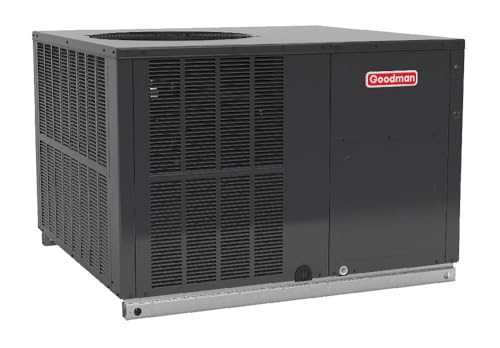
A rooftop HVAC unit — commonly called a packaged rooftop unit or RTU — is a self-contained heating, ventilation, and air conditioning system mounted on the roof of a commercial or large residential building. Unlike split systems that separate indoor and outdoor components, a rooftop unit houses the compressor, condenser coil, evaporator coil, blower, and often the heating element within a single weather-resistant cabinet. Conditioned air travels through ductwork that penetrates the roof deck and distributes throughout the building.
Rooftop units are the standard choice for retail stores, restaurants, office buildings, warehouses, schools, and light industrial facilities. They offer a compact footprint, simplified installation, and centralized service access. For a broader overview of how these systems fit into commercial buildings, see HVAC systems for commercial buildings.
Key distinction: A rooftop HVAC unit is not the same as a residential split system placed on a roof. RTUs are engineered as packaged systems with integrated controls, economizers, and curb-mounted connections designed specifically for rooftop installation and commercial duty cycles.
Types of Rooftop Units
Rooftop units come in several configurations, each suited to different building requirements and climate zones:
- Cooling-only RTUs — Provide air conditioning only; common in warm climates where heating is handled separately.
- Gas-electric packaged units — Combine electric air conditioning with a gas furnace for year-round comfort in a single cabinet.
- Electric-electric units — Use electric resistance or heat pump heating alongside cooling; suitable where gas infrastructure is unavailable.
- Heat pump rooftop units — Reverse refrigerant flow to provide both heating and cooling efficiently, ideal for mild climates.
- Dedicated outdoor air systems (DOAS) — Condition ventilation air separately from space conditioning, often paired with other systems.
- Variable air volume (VAV) RTUs — Modulate airflow to match zone demand, improving energy efficiency in multi-zone buildings.
For buildings without traditional ductwork, alternatives like small-duct high-velocity systems may complement or replace conventional rooftop distribution in retrofit scenarios.
How Rooftop Units Work
A rooftop unit operates on the same vapor-compression refrigeration cycle as any air conditioner, but packaged for outdoor rooftop duty. The process works as follows:
- Return air from the building enters the unit through a return duct.
- The air passes through a filter section that captures dust and particulates.
- The evaporator coil absorbs heat from the air, cooling it.
- The blower pushes conditioned air through supply ducts back into the building.
- The compressor circulates refrigerant between the evaporator and condenser.
- The condenser fan expels absorbed heat to the outdoor air.
- An economizer (when equipped) brings in cool outdoor air for free cooling when conditions allow.
Modern units often integrate variable frequency drives (VFDs) on supply fans and compressors to match output to real-time load, reducing energy waste during part-load conditions.
Sizing & Capacity Planning
Correct sizing is the single most important factor in rooftop unit performance and longevity. An undersized unit runs continuously and struggles to maintain setpoints; an oversized unit short-cycles, dehumidifies poorly, and wears out components prematurely. Proper HVAC sizing requires a professional load calculation that accounts for:
- Building square footage and ceiling height
- Insulation levels in walls, roof, and windows
- Window area, glazing type, and solar orientation
- Occupancy count and internal heat gains from equipment and lighting
- Local design temperature and humidity conditions
- Ventilation air requirements per building code
Rooftop units are rated in tons of cooling capacity (1 ton = 12,000 BTU per hour). Commercial spaces typically require roughly 1 ton per 400–600 square feet, but this rule of thumb should never replace a formal load calculation. For precise equipment selection, work with qualified HVAC specialists who can run Manual J or equivalent commercial load software.
Pro tip: Always request a load calculation report from your contractor before approving equipment selection. This document protects you from oversizing and provides a baseline for future troubleshooting.
Efficiency Ratings Explained
Rooftop unit efficiency is measured by several standardized ratings. Understanding these helps you compare models within the same quality tier:
- EER (Energy Efficiency Ratio) — Cooling output divided by power input at a single rated condition. Higher is better.
- IEER (Integrated Energy Efficiency Ratio) — A part-load rating that better reflects real-world performance across varying conditions. Commercial units are increasingly rated on IEER.
- SEER2 — The updated seasonal efficiency metric for residential and light commercial equipment, reflecting revised test procedures.
- COP (Coefficient of Performance) — Used for heating efficiency, especially on heat pump rooftop units.
When comparing units, prioritize IEER over EER for buildings with variable occupancy, and verify that the model meets local energy code minimums. For context on how efficiency metrics apply across system types, see what is SEER rating.
Quality Tiers & Market Positioning
Rooftop HVAC units are commonly grouped into three broad market tiers. Rather than relying on numeric figures, consider how each tier positions a unit in terms of construction, controls, and service life:
| Tier | Best For | Typical Characteristics |
|---|---|---|
| Entry-level | Light commercial, low-occupancy spaces, short-term installations | Basic controls, standard coil construction, single-speed compressors, simplified economizer options |
| Mid-range | Retail, restaurants, offices, schools with moderate duty cycles | Improved coil coatings, two-stage or variable-speed compressors, integrated economizers, better insulation and cabinet sealing |
| Premium / commercial-grade | High-occupancy facilities, critical environments, long-horizon owners | Heavy-duty cabinet construction, advanced controls and BAS integration, high IEER performance, enhanced corrosion protection, extended warranty coverage |
Mid-range units typically offer the best balance of performance and serviceability for most commercial applications. Premium units justify their position through lower lifetime energy consumption, reduced maintenance frequency, and superior part-load control — a meaningful long-term investment for facilities with continuous operation.
Advantages of Rooftop Units
- Frees up interior floor space
- Single-package installation simplifies service
- Centralized access for technicians
- Integrates economizers and ventilation easily
- Reduces duct runs compared to split systems
Considerations
- Requires structural roof support and curb
- Weather exposure accelerates wear on entry-level models
- Rooftop access can complicate routine service
- Leak risk at roof penetrations if seals degrade
- Noise transmission through roof deck requires attention
Installation Considerations
Proper installation determines whether a rooftop unit delivers its rated performance. Key factors include:
- Structural support — Roof framing and curbs must handle the unit's operating weight plus snow and wind loads.
- Curb and flashing — A properly sealed curb prevents water intrusion at roof penetrations; this is a common source of leaks.
- Duct connections — Supply and return ducts must be sealed and insulated to prevent energy loss and condensation.
- Clearances — Maintain manufacturer-specified clearance around condenser coils for adequate airflow.
- Electrical service — Verify disconnect location, breaker sizing, and control wiring per code.
- Gas piping — For gas-electric units, ensure proper sizing, shutoff valves, and venting.
- Condensate drainage — Route condensate away from the roof surface and into approved drains.
Engage licensed HVAC system installation professionals with commercial rooftop experience. Improper installation voids warranties and often leads to premature component failure. For ongoing service partnerships after installation, consider establishing a relationship with HVAC service companies that specialize in commercial RTUs.
Maintenance Best Practices
Rooftop units operate in harsh conditions — sun, rain, wind, and temperature extremes — making a disciplined maintenance schedule essential. A typical program includes:
- Filter replacement — Monthly or per pressure-drop readings; dirty filters reduce airflow and strain the blower.
- Coil cleaning — Condenser and evaporator coils should be cleaned at least annually to maintain heat transfer efficiency.
- Belt and bearing inspection — Check tension, alignment, and wear on belt-driven blowers.
- Refrigerant charge verification — Confirm proper charge and check for leaks; low charge reduces capacity and can damage the compressor.
- Electrical inspection — Tighten connections, inspect contactors, and test capacitors and controls.
- Economizer testing — Verify damper operation, actuator function, and sensor calibration.
- Drain pan and condensate line clearing — Prevent overflow and biological growth.
- Cabinet and gasket inspection — Seal gaps and replace worn gaskets to prevent air and water infiltration.
Scheduled HVAC unit maintenance extends equipment life, preserves efficiency, and reduces emergency repair calls. Many facility managers schedule spring and fall tune-ups through a dedicated HVAC tune-up service to prepare for peak cooling and heating seasons. For buildings requiring documented service histories, partner with providers experienced in HVAC system inspection and reporting.
Common Problems & Troubleshooting
Rooftop units exhibit several recurring issues. Recognizing symptoms early prevents costly failures:
- Insufficient cooling — Often caused by dirty filters, low refrigerant charge, failed compressors, or blocked condenser coils. See if my AC is running but not cooling for diagnostic guidance.
- Water leaks inside the building — Typically traced to clogged condensate drains, frozen evaporator coils, or failed roof curb seals.
- Short cycling — Oversized units, thermostat issues, or refrigerant problems cause rapid on-off cycling.
- Excessive noise or vibration — Worn bearings, loose panels, or failing fan motors are common culprits.
- Blower motor failure — Often preceded by bearing noise or overheating; VFD faults may also be involved.
- Economizer stuck open or closed — Actuator failure or sensor drift leads to energy waste or inadequate ventilation.
When issues exceed in-house capabilities, engage qualified HVAC repair technicians familiar with commercial packaged units. Preventative HVAC system repair during scheduled visits is almost always preferable to emergency intervention after a failure.
Facility management insight: Keep a service log for each rooftop unit recording filter changes, coil cleanings, refrigerant checks, and component replacements. This history accelerates troubleshooting and supports warranty claims.
Frequently Asked Questions
What is a rooftop HVAC unit?
A rooftop HVAC unit, also called a packaged rooftop unit or RTU, is a self-contained heating, ventilation, and air conditioning system installed on a building's roof. It combines the compressor, condenser, evaporator, and blower in a single cabinet and distributes conditioned air through ductwork. These units are standard for retail, office, restaurant, and light industrial buildings.
How long do rooftop HVAC units last?
With proper maintenance, rooftop HVAC units typically last 15 to 20 years. Premium commercial-grade units in well-maintained conditions can exceed 20 years, while entry-level units in harsh environments or with neglected servicing may need replacement sooner. Regular filter changes, coil cleaning, and annual professional tune-ups are the biggest factors in longevity.
What size rooftop HVAC unit do I need?
Sizing depends on building square footage, ceiling height, insulation quality, window area, occupancy levels, and local climate. Professional load calculations using Manual J or equivalent commercial methods are essential. Rooftop units are rated in tons (1 ton = 12,000 BTU/hour), and commercial spaces typically require roughly 1 ton per 400–600 square feet — but a formal calculation should always replace rules of thumb.
How often should rooftop HVAC units be serviced?
Rooftop units should receive professional servicing at least twice annually — in spring before cooling season and in fall before heating season. High-demand commercial environments such as restaurants and retail stores benefit from quarterly inspections. Filter changes are typically monthly or based on pressure-drop readings.
Can a rooftop unit provide both heating and cooling?
Yes. Gas-electric packaged rooftop units combine electric air conditioning with a gas furnace, while heat pump rooftop units provide both heating and cooling by reversing refrigerant flow. Cooling-only units are also available for warm climates where heating is handled separately. The right configuration depends on your climate, fuel availability, and building requirements.
What is an economizer on a rooftop unit?
An economizer is a damper system that brings in cool outdoor air for free cooling when outdoor conditions are favorable, reducing compressor runtime. Proper economizer operation can significantly cut energy use during mild weather. However, economizers require regular testing — stuck dampers and sensor drift are common issues that waste energy if not addressed during maintenance visits.
Making Your Rooftop HVAC Decision
Selecting the right rooftop HVAC unit requires balancing building load requirements, climate conditions, efficiency targets, and long-term serviceability. Start with a professional load calculation, compare models within the appropriate quality tier, and prioritize units with strong part-load efficiency and serviceable designs. Pair your equipment choice with a preventive maintenance agreement from a reputable commercial HVAC service provider to protect your investment over its full service life.
For additional context on system selection and comparison, explore our HVAC system buying guide and review how rooftop units compare with HVAC split systems for different building types.