HVAC with Air Purifier: The Complete Clean Air Comfort Guide
Discover how an integrated HVAC air purification system delivers cooling, heating, and cleaner indoor air through a single, whole-home solution — and learn exactly what to evaluate before you choose one.
Explore Top SystemsWhy this guide matters: If you are researching an HVAC system with a built-in air purifier, you already know you want more than basic temperature control. You want a system that filters dust, allergens, and airborne particles while it heats or cools. This guide walks you through every decision point — filtration technology, system type, sizing, maintenance, and real-world trade-offs — so you can choose with confidence. If you are still exploring general system categories, start with our broader HVAC system buying guide.
What Is an HVAC System with an Air Purifier?
An HVAC system with an air purifier is exactly what the name suggests: a heating, ventilation, and air conditioning setup that includes a dedicated purification stage inside the air-handling path. Rather than relying on a separate portable unit in one room, the purifier is integrated into the return-air side or the supply plenum of the system. Every cubic foot of air that passes through the equipment is treated before it reaches your living space.
This integration is the key advantage. A standalone purifier cleans a single room and must be moved or duplicated to cover a home. An integrated system treats the entire conditioned volume consistently. When the blower runs, purification happens automatically — no extra steps, no extra floor space, and no competing devices humming in each room.
In practical terms, an HVAC air purifier adds one or more treatment stages to the system: a high-MERV media filter, a HEPA bypass module, activated carbon for odors and volatile organic compounds, UV-C germicidal lamps, photocatalytic oxidation, or bipolar ionization. Many modern premium systems combine several of these stages in sequence. Understanding how these stages work together is essential — our guide to HVAC ventilation systems explains the airflow side in more detail.
Core Benefits of an Integrated HVAC Air Purifier
Whole-Home Coverage
A single integrated unit treats air across every room connected to the ductwork, eliminating the room-by-room limitation of portable purifiers.
Consistent Air Quality
Because the system runs on a thermostat schedule, purification happens continuously whenever the blower operates, keeping particle counts stable throughout the day.
Space-Saving Design
The purifier lives inside the air handler or ductwork. There is no extra appliance occupying floor space or blocking a wall outlet in any room.
Multi-Stage Filtration
Premium configurations layer a media filter, carbon stage, and UV or ionization treatment so particles, odors, and biological contaminants are addressed in one pass.
Reduced Allergen Load
High-MERV and HEPA bypass stages capture pollen, pet dander, dust mite debris, and fine particulate matter before they settle on surfaces or enter the breathing zone.
Long-Term Investment Value
An integrated purification stage protects the indoor coil from dust buildup, which helps the entire system run efficiently over its service life — an efficient long-term investment in equipment health.
Types of HVAC Air Purifier Configurations
Not all integrated purification setups are built the same way. The configuration you choose affects filtration performance, maintenance rhythm, and how well the system fits your existing ductwork. Below are the most common approaches, grouped by market tier so you can match expectations to category.
High-MERV Media Filter System
The simplest and most common integrated approach. A pleated media filter rated MERV 11 to MERV 16 sits in a dedicated filter cabinet on the return side. It captures fine particles, pollen, and mold spores without adding significant static pressure when properly sized. This is the go-to configuration for entry-level integrated purification and works well with most standard blower assemblies.
Media Filter + Activated Carbon Stage
Adds a carbon-impregnated layer or separate carbon canister downstream of the media filter. The carbon stage targets odors, cooking fumes, and volatile organic compounds that a particle filter alone cannot capture. This balanced tier is popular in homes near busy roads or in households with strong cooking and pet odors. Pair it with a smart thermostat for scheduled fan circulation — see our smart thermostat guide.
HEPA Bypass Module
A true HEPA filter (capturing 99.97% of particles at 0.3 microns) is too restrictive to sit directly in the main airstream of most residential systems. A bypass module solves this by routing a portion of the return air through a secondary HEPA loop with its own small blower. The result is near-HEPA whole-home filtration without overloading the main blower. This configuration belongs to the high-end tier and requires careful commissioning.
UV-C Germicidal Lamp Integration
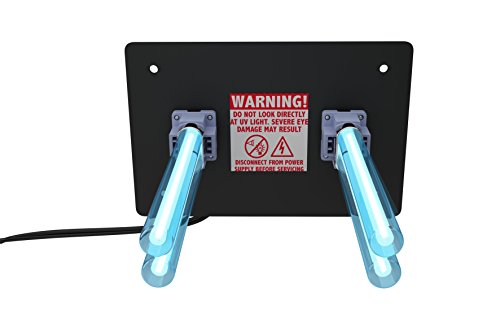
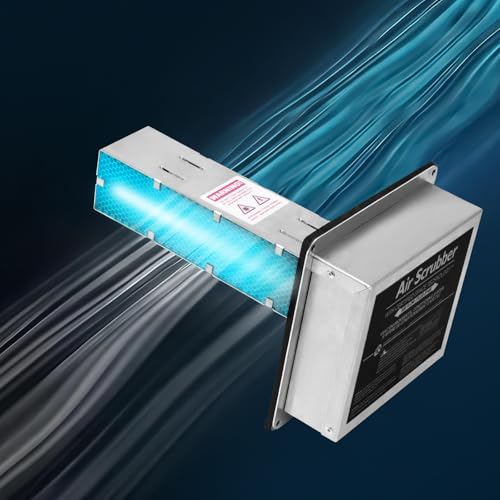
UV-C lamps installed at the evaporator coil or in the supply plenum neutralize mold, bacteria, and viruses on surfaces and in the airstream. UV treatment is often combined with a media filter and carbon stage to create a multi-barrier premium system. Lamp output degrades over time, so annual replacement is part of the maintenance rhythm. This configuration is common in professionally specified residential and light commercial projects — see HVAC systems for commercial buildings for larger-scale applications.
Photocatalytic Oxidation (PCO) + Ionization
The most advanced integrated setups combine a PCO stage (UV light reacting with a titanium dioxide catalyst to break down VOCs and odors) with bipolar ionization to clump fine particles for easier capture. These systems are feature-rich for their class and typically require professional design, commissioning, and periodic cell cleaning. They represent the top-tier of residential integrated purification and are increasingly specified in new high-performance builds.
Configuration Comparison at a Glance
Use the table below to compare the main configurations across the factors that matter most during the research phase. The "Tier" column reflects relative market positioning, not any numeric figure.
| Configuration | Tier | Best For | Maintenance Rhythm |
|---|---|---|---|
| High-MERV Media Filter | Essential tier | General dust and allergen control in standard homes | Filter change every 3–6 months |
| Media + Activated Carbon | Mid-tier | Odors, cooking fumes, VOCs, pet households | Filter change 3–6 months; carbon stage annually |
| HEPA Bypass Module | High-end tier | Allergy-sensitive occupants and fine particulate control | HEPA cartridge 12–18 months; pre-filter quarterly |
| UV-C Germicidal Integration | Premium | Mold, bacteria, and coil-surface sanitation | Lamp replacement annually; coil inspection yearly |
| PCO + Bipolar Ionization | Top-tier | Comprehensive VOC, odor, and particle treatment | Cell cleaning quarterly; lamp annually |
How to Choose the Right HVAC Air Purifier System
Choosing well comes down to matching the purification stage to your actual indoor air concerns, then confirming your HVAC equipment and ductwork can support it. Work through the checklist below before you commit to a configuration.
- Identify your primary concern: dust and allergens, odors and VOCs, biological contaminants, or a combination.
- Confirm your blower can handle the static pressure added by the chosen filter stage — this is where proper HVAC sizing matters.
- Check that the filter cabinet or bypass module fits your return-air plenum and service clearance.
- Decide whether you want continuous low-speed fan circulation for steady purification between heating and cooling cycles.
- Review the maintenance schedule for each stage and confirm you can keep up with it.
- Ask whether the purifier is compatible with your existing split system or requires an air-handler upgrade.
- Verify warranty terms for the purifier module and how it interacts with the main equipment warranty.
- Plan for professional commissioning so airflow and pressure drop are measured, not assumed.
Key insight: The most common mistake is choosing the highest-MERV filter available without checking blower capacity. An oversized filter stage starves airflow, raises energy draw, and can freeze the coil. The right approach is to match the purification stage to the equipment — a properly specified mid-tier media filter often outperforms an over-specified high-end stage that the blower cannot support. A qualified HVAC technician can measure static pressure and confirm the match.
Installation and Maintenance Considerations
Integrated purification is not a plug-and-play add-on. The filter cabinet, bypass loop, or UV housing must be installed in the correct location with proper sealing and service access. Installation typically falls into the scope of a full HVAC system installation or a dedicated retrofit by a qualified contractor. Poorly sealed filter cabinets leak unfiltered air around the media, which defeats the purpose entirely.
Maintenance is where integrated systems earn their keep. Media filters load up and must be replaced on schedule; a clogged filter increases pressure drop and reduces airflow. UV lamps lose intensity long before they burn out, so annual replacement is the norm. Ionization needles and electronic cells need periodic cleaning to prevent arcing and performance loss. Building a simple seasonal routine around HVAC unit maintenance keeps every stage working as designed.
If you are pairing a new purifier with an aging system, have the equipment inspected first. Our guide to HVAC system inspection covers what a technician checks and why it matters before adding filtration hardware.
Sizing, Airflow, and Compatibility
An air purifier stage is only as effective as the airflow moving through it. If the system is undersized for the home, the blower runs longer and the filter loads faster. If the ductwork is restrictive, the added pressure drop from a high-MERV stage compounds the problem. Start with a proper load calculation — the principles in our HVAC sizing guide apply directly to purification retrofits.
Ductless and small-duct high-velocity systems need special attention. A small-duct high-velocity system moves air at higher pressure through narrow tubes, so the purifier stage must be selected with that pressure profile in mind. For zoned homes, confirm the purification module is positioned upstream of the zone dampers so every zone receives treated air — see HVAC zoning systems for the layout logic.
Who Should Consider an HVAC with Air Purifier?
An integrated purifier makes the most sense for households where air quality is a daily concern rather than an occasional one. If you answer yes to several of the following, an integrated configuration is likely a solid choice for the tier:
- Household members with seasonal allergies or asthma triggered by airborne particles.
- Pets that shed dander and track in dust from outdoors.
- Homes near busy roads, construction, or agricultural dust sources.
- Frequent cooking that produces lingering odors and grease aerosol.
- Older homes with ductwork that distributes dust when the blower starts.
- A desire to avoid multiple portable purifiers in individual rooms.
- A planned system replacement where purification can be specified from the start.
If your primary goal is whole-home comfort with filtration as a secondary benefit, a standard system with a quality media filter may be sufficient. But if clean air is a core requirement, specifying the purification stage from the beginning is far more effective than retrofitting later.
Frequently Asked Questions
What is an HVAC system with an air purifier?
It is a combined climate control and air treatment setup. The purifier module is integrated into the ductwork or air handler so that every cubic foot of conditioned air is filtered and purified before it reaches your rooms.
How does an integrated HVAC air purifier differ from a standalone purifier?
A standalone purifier cleans only the air in one room. An integrated HVAC purifier treats the entire volume of air moving through your ductwork, which means consistent air quality across all connected rooms and no extra floor space used.
Which filtration technologies are used in HVAC air purifiers?
Common technologies include high-MERV media filters, HEPA bypass modules, activated carbon for odors and VOCs, UV-C germicidal lamps, photocatalytic oxidation, and bipolar ionization. Many premium systems combine two or more of these stages.
Do HVAC air purifiers increase energy consumption?
A well-matched purifier adds modest static pressure. High-MERV filters and HEPA bypass modules require a blower that can handle the extra resistance. When sized correctly, the additional electrical draw is minor compared with the comfort and health benefits.
How often should HVAC air purifier components be serviced?
Media filters typically need replacement every three to six months. UV lamps should be replaced annually. Ionization needles and electronic cells require cleaning every few months. An annual professional inspection keeps the whole system at peak performance.
Ready to Choose Your HVAC with Air Purifier?
You have the framework — now compare real systems side by side. Browse our curated selection of integrated purification units and evaluate them against the configuration and tier guidance above.
View Recommended Systems