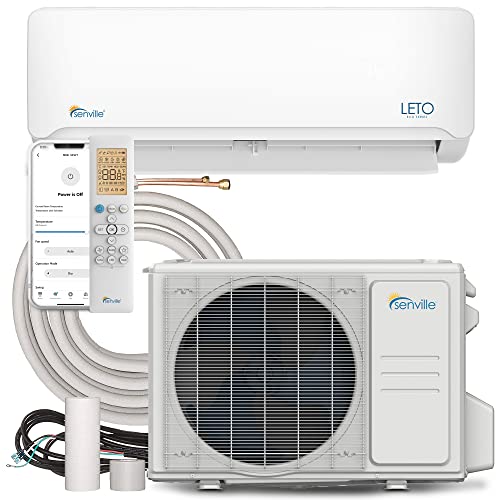
1 Ton Mini Split: The Complete Guide for Smart Buyers
Everything you need to know about 1 ton mini split systems — sizing, efficiency, installation, and how to choose the right ductless unit for a room, addition, or whole-home zone.
START WITH SIZINGWhy a 1 ton mini split is a smart choice: A 1 ton mini split delivers 12,000 BTU of cooling capacity — the sweet spot for many bedrooms, living rooms, home offices, and additions. It is one of the most popular ductless capacities in the US because it balances performance, efficiency, and installation flexibility. This guide explains exactly who should buy one, what to check before ordering, and how to get the most from your system.
What Is a 1 Ton Mini Split?
A 1 ton mini split is a ductless air conditioning system rated at 12,000 BTU per hour of cooling capacity. In the US, one ton of cooling equals 12,000 BTU, so "1 ton mini split" and "12,000 BTU mini split" describe the same capacity. Mini splits are split systems: an outdoor condenser connects to one or more indoor air handlers through refrigerant lines, with no ductwork required.
This capacity class is favored for single rooms and open-plan areas where extending central ductwork is impractical or inefficient. Because there is no duct loss, a 1 ton mini split often delivers more usable cooling than a similarly rated central system. Many models are heat pumps, meaning they also provide heating in cooler months.
Ductless Design
No ductwork means no duct losses and no invasive remodeling. Ideal for additions, converted attics, garages, and older homes.
Zone Control
Cool only the rooms you use. A single-zone 1 ton mini split focuses capacity where it is needed most.
High Efficiency
Modern inverter-driven 1 ton mini splits achieve high SEER2 ratings and modulate output to match load precisely.
Quiet Operation
Indoor air handlers typically run quieter than window or portable units, making them suitable for bedrooms and offices.
Is a 1 Ton Mini Split the Right Size for Your Room?
Sizing is the single most important decision. An undersized unit runs constantly and struggles on hot days; an oversized unit cools too quickly, cycles frequently, and may leave the room feeling clammy. For a 1 ton mini split, the general rule of thumb is 450 to 600 square feet per 12,000 BTU, adjusted for real-world conditions.
| Room Type | Typical Area | Sizing Notes |
|---|---|---|
| Bedroom | 300 – 500 sq ft | 1 ton is often the upper sweet spot; consider 9,000 BTU for smaller rooms. |
| Living Room | 400 – 600 sq ft | Well-suited when ceiling height is standard and windows are moderate. |
| Home Office | 350 – 550 sq ft | Good choice if equipment and occupancy add heat load. |
| Open-Plan Kitchen/Living | 450 – 550 sq ft | Check cooking heat and appliance load; may need a larger capacity. |
| Addition / Sunroom | 400 – 600 sq ft | Insulation and glazing quality matter most here. |
Factors That Change the Calculation
- Ceiling height: Rooms taller than 8 feet hold more air volume and may need extra capacity.
- Insulation quality: Poorly insulated rooms lose cooling faster, pushing capacity needs upward.
- Window area and sun exposure: South- and west-facing rooms with large glass gain more heat.
- Occupancy and appliances: Kitchens, home offices, and entertainment rooms generate internal heat.
- Climate: Hotter, more humid climates often justify sizing at the upper end of the range.
For a more precise estimate, use a room-size-based BTU method or consult a load calculation. If you are comparing capacity classes, our guide on 1 ton air conditioning units explains how tonnage maps to real cooling performance.
Pro tip: Do not size up "just to be safe." A properly sized 1 ton mini split will run longer at lower output, which improves humidity control and comfort. Oversizing is one of the most common ductless mistakes.
1 Ton vs. 12,000 BTU: Understanding the Numbers
The terms are interchangeable in the US market, but you will see both in product listings. A 1 ton mini split is 12,000 BTU per hour. Some listings use "12K BTU" or "12,000 BTU" to describe the same capacity class. When comparing brands, verify the rated cooling capacity on the specification sheet rather than relying on marketing names.
If you are also considering smaller systems for a single room, our overview of the best mini air conditioner for a room covers capacity ranges below 1 ton, while the single-zone ductless mini split guide explains how one outdoor unit serves one indoor head.
Efficiency Ratings That Matter for a 1 Ton Mini Split
Efficiency directly affects long-term operating performance. For mini splits, focus on SEER2 for cooling and HSPF2 for heat pump models. A higher rating indicates better efficiency within the same capacity class. Inverter-driven compressors are standard in quality 1 ton mini splits and allow the system to modulate output instead of cycling on and off.
| Tier | Typical Efficiency Profile | Best For |
|---|---|---|
| Entry-level | Standard SEER2, fixed or basic inverter | Seasonal use, mild climates, secondary rooms |
| Mid-range | Higher SEER2, variable-speed inverter | Primary bedrooms, home offices, daily use |
| Premium | Top-tier SEER2 and HSPF2, advanced controls | Year-round heating and cooling, energy-conscious homes |
Inverter technology is a major differentiator. If you are deciding between compressor types, our comparison of inverter AC vs non-inverter and the broader inverter vs non-inverter analysis explain how modulation affects comfort and energy use. For systems that ramp output even more smoothly, see the variable speed air conditioner overview.
Installation Requirements and Planning
A 1 ton mini split installation involves an outdoor condenser, an indoor air handler, refrigerant lines, condensate drainage, and electrical work. Proper installation is critical: refrigerant charge, line-set length, and vacuum procedures directly affect performance and lifespan.
Key Installation Considerations
- Electrical supply: Many 1 ton mini splits run on 115V, while others require 230V. Check the nameplate before purchasing.
- Line-set length: Longer runs can reduce capacity if not accounted for during installation.
- Indoor unit placement: Mount high on a wall for even air distribution and avoid obstructions.
- Outdoor unit clearance: Ensure adequate airflow and a stable, level base.
- Condensate drainage: Plan a gravity drain or condensate pump route.
- Permits: Many jurisdictions require an electrical or mechanical permit.
Professional installation protects your warranty and ensures the system is charged and commissioned correctly. Our HVAC installation guide walks through the process, and if you are evaluating contractors, the directory of local heating and air conditioning companies can help you compare licensed providers.
Important: Mini split warranties often require installation by a licensed HVAC technician. DIY installation may void coverage, especially for refrigerant-related failures.
Single-Zone vs. Multi-Zone: Which Configuration Fits?
A 1 ton mini split is most commonly configured as a single-zone system: one outdoor unit paired with one indoor air handler. This is the most efficient way to cool one room or one open area. If you need to condition multiple rooms, a multi-zone system with a larger outdoor unit and multiple indoor heads may be more appropriate.
For homes without ductwork where multiple rooms need conditioning, evaluate whether a whole house AC system or a multi-zone ductless layout is the better long-term fit. If you specifically want cooling only, our guide to a mini split air conditioner without heat pump explains cooling-only options.
Features Worth Prioritizing
Inverter Compressor
Modulates speed for steadier temperatures, quieter operation, and better efficiency than fixed-speed compressors.
Wi-Fi and Smart Control
App control and scheduling add convenience. If you want deeper integration, explore a mini split Wi-Fi thermostat.
Heat Pump Capability
Many 1 ton mini splits provide both cooling and heating, making them a year-round solution.
Quiet Indoor Unit
Look for low decibel ratings on the indoor air handler, especially for bedrooms and home offices.
Filtration
Washable filters and optional advanced filtration improve indoor air quality with minimal maintenance.
Brand Reliability
Compare warranty terms and service networks. Our guide to the most reliable mini split brand covers what to check.
Maintenance That Protects Your Investment
A 1 ton mini split is a long-term investment. Regular maintenance keeps efficiency high and prevents common problems such as reduced airflow, frozen coils, and drainage issues.
- Clean or replace filters every 2–4 weeks during heavy use. Clogged filters reduce airflow and efficiency.
- Clean the indoor coil and blower annually. Dust buildup affects performance and indoor air quality.
- Keep the outdoor unit clear of debris. Leaves and dirt reduce heat rejection.
- Check condensate drainage. A clogged drain line can cause water leaks indoors.
- Schedule professional service annually. Technicians check refrigerant charge, electrical connections, and coil condition.
If your system is running but airflow has dropped, the troubleshooting steps in my air conditioner is running but not blowing air can help you identify simple causes before calling a technician. For routine service, see the HVAC cleaning and service guide.
How to Choose the Right 1 Ton Mini Split
Use a structured approach to narrow your options. Start with the room, then match capacity, efficiency, and features to your actual usage.
- Confirm the load: Verify that 12,000 BTU matches your room size, insulation, and climate.
- Decide cooling-only or heat pump: Choose a heat pump model if you need year-round comfort.
- Set an efficiency target: Higher SEER2 and HSPF2 ratings pay off with daily use.
- Check electrical requirements: Confirm 115V or 230V compatibility with your panel.
- Prioritize quiet operation: Important for bedrooms, nurseries, and home offices.
- Review warranty and service: A strong service network matters as much as the specifications.
If you are also comparing conventional capacities, our 1.1 ton AC guide and 1 ton air conditioning unit overview provide useful context. For homes with unique installation constraints, the space-saving air conditioner ideas article covers compact alternatives.
1 Ton Mini Split vs. Other Cooling Options
| Option | Best For | Key Trade-off |
|---|---|---|
| 1 Ton Mini Split | Single rooms, additions, zones without ducts | Requires professional installation and a wall penetration |
| Window AC | Single rooms with a suitable window | Lower upfront tier; blocks window view and light |
| Portable AC | Renters and temporary cooling | Lower efficiency; requires venting and floor space |
| Central AC | Whole-home cooling with existing ducts | Higher installation complexity; duct losses |
For a deeper comparison of ductless against traditional systems, see single-zone ductless mini split systems. If you need heating as well, wall air conditioner with heat covers an alternative form factor.
Frequently Asked Questions
What size room does a 1 ton mini split cool?
A 1 ton mini split (12,000 BTU) is typically designed for rooms between 450 and 600 square feet, depending on ceiling height, insulation quality, window area, and local climate conditions. Rooms with large windows, poor insulation, or high occupancy may need a larger capacity or a load calculation.
Is a 1 ton mini split the same as 12,000 BTU?
Yes. In the United States, 1 ton of cooling capacity equals 12,000 BTU per hour. A 1 ton mini split is the same as a 12,000 BTU mini split system. Listings may use either term, so always confirm the rated capacity on the specification sheet.
How many amps does a 1 ton mini split use?
Most 1 ton mini split systems draw between 8 and 12 amps at 115V, or roughly 4 to 6 amps at 230V. Actual draw depends on the model, compressor type, and operating conditions. Always check the manufacturer's nameplate and consult a licensed electrician before installation.
Can a 1 ton mini split heat and cool?
Many 1 ton mini split systems are heat pumps that provide both cooling and heating. Heat pump models are identified by an HSPF or HSPF2 rating in addition to a SEER or SEER2 rating. If you only need cooling, cooling-only models are also available.
How long does a 1 ton mini split last?
With proper installation and regular maintenance, a quality 1 ton mini split typically lasts 15 to 20 years. Annual cleaning, filter changes, and professional service extend the lifespan significantly and help maintain efficiency.
Does a 1 ton mini split need a dedicated circuit?
Yes, most mini splits require a dedicated electrical circuit. Depending on the model, this may be a 115V or 230V circuit with an appropriately sized breaker. A licensed electrician should confirm your panel capacity and install the circuit.
Ready to Compare 1 Ton Mini Split Options?
Browse recommended ductless systems, check efficiency ratings, and compare features to find the right fit for your space.
VIEW RECOMMENDED SYSTEMS