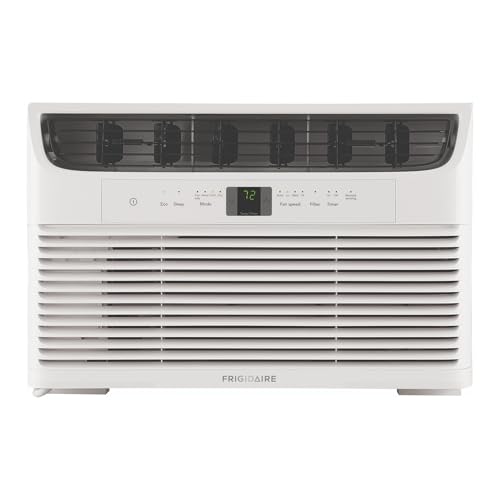
Most Energy Efficient 8000 BTU Air Conditioner
An 8000 BTU unit is the sweet spot for medium rooms — roughly 150 to 250 square feet. But not all 8000 BTU air conditioners are created equal. This guide breaks down which models and technologies deliver the lowest energy consumption, the highest SEER2 or CEER ratings, and the most stable cooling for your space.
Explore Top PicksWhy 8000 BTU Is the Efficiency Sweet Spot
Cooling capacity is measured in British Thermal Units (BTU). An 8000 BTU air conditioner is designed to cool a medium-sized room — typically a primary bedroom, a home office, or a small living area. The reason this capacity class matters for efficiency is simple: undersized units run nonstop and never reach the set temperature, while oversized units short-cycle, wasting energy on repeated startups.
An 8000 BTU unit hits the middle ground. It is large enough to cool a 200-square-foot room comfortably but small enough that modern inverter compressors and high-efficiency window designs can operate within their optimal range. That balance is why the most energy efficient room air conditioner recommendations so often land in the 8000 BTU range.
If your room falls outside this capacity band, you can compare options in the efficient small room air conditioner category or step up to higher-capacity classes. Getting the sizing right is the first and most important efficiency decision you will make.
Room sizing rule of thumb: 8000 BTU suits rooms of about 150–250 square feet. Add capacity for south-facing windows, kitchen heat, or more than two occupants. Use a proper load calculation for whole-home decisions.
Efficiency Metrics That Actually Matter
Efficiency labels can be confusing because different unit types use different metrics. Here is what to look for on an 8000 BTU air conditioner.
SEER2 for Ducted and Mini-Split Systems
SEER2 (Seasonal Energy Efficiency Ratio) replaced the older SEER metric under updated DOE standards. It measures cooling output over a typical cooling season relative to electricity input. Higher is better. For mini-splits in this capacity class, a SEER2 above 20 is excellent; above 23 is top-tier. Central and ducted systems sit lower, usually in the 14–18 range.
CEER for Window Units
Window and portable units use CEER (Combined Energy Efficiency Ratio), which factors in standby power and cycling losses. For an 8000 BTU window unit, a CEER of 12 or higher is strong, and 14+ is premium. The most efficient window air conditioner models typically sit in the 12–15 CEER band.
Inverter vs. Non-Inverter
The single biggest efficiency lever in this capacity class is the compressor type. Traditional non-inverter units run at full power until the room hits the setpoint, then shut off entirely. Inverter compressors throttle up and down smoothly, holding the temperature steady with far less energy waste. The inverter vs non-inverter comparison explains this in depth, but the short version: inverter wins on efficiency, comfort, and noise. The most efficient air conditioner split system options are almost universally inverter-driven.
ENERGY STAR and Smart Features
ENERGY STAR certification confirms a unit meets or exceeds federal efficiency thresholds. Beyond the label, look for Eco mode, programmable or smart scheduling, and a follow-me remote sensor — all of which reduce runtime when the room is empty or already comfortable.
Tier Comparison: Entry to Premium
Not every buyer needs a flagship unit. The table below maps market tiers to efficiency expectations so you can match a tier to your priorities. No pricing is shown — tiers reflect relative positioning in the market.
| Tier | Typical Efficiency Range | Best For | Key Trade-offs |
|---|---|---|---|
| Essential tier | SEER2 ~14–16 or CEER ~10–11 | Occasional-use rooms, garages, guest spaces | Simple on/off compressor, louder operation, less stable temperature |
| Balanced tier | SEER2 ~18–20 or CEER ~11–12 | Bedrooms and home offices used daily in summer | Some inverter models, moderate noise, basic smart features |
| High-end tier | SEER2 ~21–23 or CEER ~12–14 | Primary living spaces, long cooling seasons | Full inverter, quiet operation, Eco and scheduling modes |
| Top-tier | SEER2 23+ or CEER 14+ | Efficiency-focused buyers, homes with high cooling demand | Flagship build quality, advanced sensors, premium materials |
As a rule, a balanced-tier inverter unit will outperform an essential-tier non-inverter unit on energy use over a full season, even if the essential unit has a higher nominal capacity. The most energy efficient air conditioner window unit picks generally land in the balanced-to-high-end tiers, where inverter tech is common.
AC Types and Their Efficiency
8000 BTU units come in several form factors, and each has a different efficiency ceiling.
Ductless Mini-Split (Highest Efficiency)
Mini-splits separate the compressor outdoors from the air handler indoors, eliminating duct losses and enabling very high SEER2 ratings. In the 8000 BTU class, mini-splits are the efficiency leaders. If your room lacks ductwork, this is the form factor to prioritize. The mini-split AC system overview covers installation and zoning considerations. For homes that need both heating and cooling, a ductless mini-split heat pump adds year-round value.
Window Unit (Best for Rooms Without Ducts or Wall Space)
Window units are the most practical 8000 BTU option for renters and older homes. Efficiency varies widely: essential-tier models use on/off compressors, while top-tier models use inverter compressors and reach CEER 14+. If a window install is not feasible, the air conditioner without a window guide covers alternatives. For a broader look at this category, see the most energy efficient wall air conditioner roundup.
Portable Unit (Convenience Over Peak Efficiency)
Portable ACs are easy to move but generally less efficient than window or mini-split units because of hose heat gain. If portability is essential, choose a dual-hose inverter model — the most efficient dual-hose portable air conditioner guide explains why dual-hose designs beat single-hose units.
Through-the-Wall and Central
Through-the-wall units behave like window units but install permanently. Central systems are rarely sized at 8000 BTU, but if you are weighing whole-home options, the most efficient central air conditioning units guide is the right starting point.
Recommended 8000 BTU Air Conditioners
The units below are organized by form factor and efficiency tier. Each listing reflects the model's position in the market, not a specific figure. Use the filters on the retailer page to confirm capacity, SEER2/CEER, and installation type before deciding.