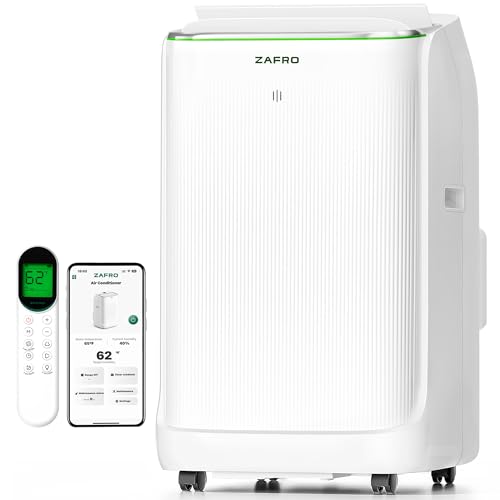
Most Efficient Dual Hose Portable Air Conditioner: Complete Buyer's Guide
Understand how dual hose portable ACs work, why they outperform single hose units, how to size BTU capacity correctly, and which efficiency features actually matter before you decide.
Explore Top PicksWhy this guide matters: If you are researching the most efficient dual hose portable air conditioner, you already know the category you want. This page helps you compare the technical details that separate a genuinely efficient unit from a marketing claim — airflow design, EER, BTU sizing, hose configuration, and real-world installation factors.
How a Dual Hose Portable Air Conditioner Works
A dual hose portable air conditioner uses two separate air paths. One hose draws outdoor air into the unit to cool the condenser coil, and the second hose exhausts the heated air back outside. The indoor air is cooled by the evaporator coil and blown back into the room through the front grille.
This two-hose design creates a balanced pressure system. Because the unit takes in and rejects air from outside simultaneously, it does not pull warm outside air into the room through door gaps and window seams. Single hose units, by contrast, exhaust room air outdoors and create negative pressure, which draws replacement air back in through every leak in the building envelope.
The practical result is that a dual hose portable unit cools a room faster, holds the target temperature with less compressor cycling, and feels more consistent during hot afternoons. If you are comparing configurations, the difference in comfort is noticeable in rooms with sliding windows and older frames where sealing is imperfect.
What Makes a Dual Hose Portable AC Energy Efficient
Efficiency in portable air conditioners is not a single number. It is the combined outcome of compressor technology, heat exchanger design, airflow balance, and how well the unit is installed. When researching the most efficient dual hose portable air conditioner, evaluate these factors together.
1. Compressor Type and Modulation
Inverter-driven compressors adjust speed continuously instead of switching fully on and off. This reduces temperature swings and avoids the high inrush current that fixed-speed compressors demand at every startup. Units with variable-speed or inverter compressors typically hold a setpoint more steadily and run quieter in steady-state operation. For a deeper explanation of the technology, see our guide on inverter vs non-inverter AC.
2. EER Rating
The Energy Efficiency Ratio (EER) expresses cooling output relative to electrical input. A higher EER indicates more cooling per unit of electricity. Portable ACs generally have lower EER values than window or mini-split units because the entire compressor and condenser sit inside the conditioned space, which adds heat load. Within the portable category, compare EER values side by side rather than assuming all units perform similarly.
3. Heat Exchanger Surface Area
Larger evaporator and condenser coils transfer heat more effectively. Premium-tier dual hose models often use denser coil arrangements and dual-row configurations, which improve heat rejection without increasing compressor workload. This is one of the main engineering differences between entry-level and high-end tier portable units.
4. Airflow Balance Between Hoses
A well-engineered dual hose system keeps intake and exhaust airflow in balance. If the exhaust volume significantly exceeds the intake, the unit still creates partial negative pressure. Look for models where the manufacturer specifies balanced dual-hose airflow rather than simply adding a second hose to a single-hose chassis.
5. Condensate Management
Self-evaporative systems use the condensate water to help cool the condenser coil, reducing the need for manual draining. This improves efficiency and convenience. In humid climates, some units still require periodic draining, so check whether the model offers auto-evaporation, a drain pump, or both.
BTU Sizing: Matching Capacity to Your Room
An oversized portable AC short-cycles, which wastes energy and removes humidity poorly. An undersized unit runs continuously and never reaches the setpoint. Correct BTU sizing is the foundation of efficiency.
| BTU Range | Typical Room Size | Best For | Market Tier |
|---|---|---|---|
| 8,000 – 10,000 BTU | Up to 250 sq ft | Bedrooms, home offices, small studios | Entry-level |
| 12,000 – 14,000 BTU | 250 – 400 sq ft | Living rooms, open-plan apartments | Mid-range |
| 14,000 – 18,000 BTU | 400 – 550 sq ft | Large living areas, sun-exposed rooms | High-end tier |
| 18,000 BTU and above | 550+ sq ft | Open commercial spaces, server rooms | Commercial-grade |
Adjust upward for these conditions: rooms with ceilings above 8 feet, west- or south-facing windows, kitchens with heat-producing appliances, rooms with multiple occupants, and spaces with poor insulation. A room that nominally measures 300 square feet but receives full afternoon sun may perform closer to a 400-square-foot heat load. For a detailed walkthrough, read our air conditioner sizing guide.
Dual Hose vs Single Hose vs Window AC
| Category | Efficiency | Installation Flexibility | Best For |
|---|---|---|---|
| Dual Hose Portable | Good within portable class | High — no permanent mounting | Renters, rooms without window AC support |
| Single Hose Portable | Lower — creates negative pressure | High | Casual, short-duration cooling |
| Window AC | Higher — condenser sits outside | Moderate — requires window or wall opening | Bedrooms and rooms with compatible windows |
| Ductless Mini-Split | Highest | Low — professional installation | Long-term whole-room comfort |
Dual hose portable units occupy a useful middle position. They are significantly more efficient than single hose portable models and far more flexible than window or mini-split systems. If your window type cannot support a window unit, portable dual hose options remain a practical route. Our article on what to do when you need an AC but have no window covers additional alternatives.
Features to Prioritize in an Efficient Dual Hose Portable AC
Inverter or Variable-Speed Compressor
Smoother temperature control and less energy waste from repeated startup cycles. Common in mid-range and high-end tier units.
Programmable Thermostat and Timer
Allows scheduling around occupancy and utility peak periods. A simple feature that meaningfully reduces run time.
Self-Evaporative Condensate System
Reuses condensate to assist condenser cooling and reduces manual draining, especially useful in humid climates.
Balanced Dual Hose Design
Look for explicitly balanced intake and exhaust airflow, not just a second hose added to a single-hose platform.
Washable Dual-Layer Filters
Easy-access filters maintain airflow and heat exchange efficiency over the life of the unit.
Sleep Mode and Low Fan Setting
Reduces compressor and fan speed at night, lowering energy use while maintaining acceptable comfort.
Window Kit Compatibility
Verify the included kit fits your window type — double-hung, slider, or casement — before deciding.
Drain Pump Option
Useful for continuous operation in high-humidity rooms where gravity draining is not convenient.
Installation and Venting Tips for Maximum Efficiency
Even the most efficient dual hose portable air conditioner underperforms if it is vented poorly. These installation practices directly affect energy use and cooling performance.
- Seal the window kit thoroughly. Use foam insulation or weatherstripping around the hose panel. Air leaks around the kit negate much of the dual hose advantage.
- Keep hoses as short and straight as possible. Bends and extra length increase airflow resistance and reduce heat rejection. If your layout requires more reach, see our note on long exhaust hoses for portable air conditioners.
- Position the unit away from direct sun. A unit placed in a sunbaked corner works against its own thermostat.
- Do not obstruct the intake or exhaust grilles. Maintain at least 12 inches of clearance around the unit.
- Check window compatibility early. Casement and crank-out windows often need specialized adapter plates. Our guides on installing a portable AC in a casement window and crank-out window installation explain the workarounds.
- Close doors to the cooled zone. Cooling an open floor plan with a portable unit wastes capacity.
Maintenance That Preserves Efficiency Over Time
Portable air conditioners lose efficiency gradually as filters clog, coils collect dust, and condensate systems develop mineral buildup. A simple maintenance routine keeps the unit performing near its rated capacity.
- Clean or replace filters every two to four weeks during heavy use. Clogged filters restrict airflow and force the compressor to work longer.
- Inspect and clean the evaporator coil at the start and end of each cooling season. Dust on the coil reduces heat transfer.
- Drain the condensate tank according to the manufacturer's schedule, or set up continuous drainage if the unit supports it.
- Store the unit upright during the off-season and cover it to prevent dust accumulation inside the chassis.
- Check the hose connections for cracks or loose seals each season. Air leaks reduce the benefit of the dual hose design.
For a broader seasonal checklist, see our HVAC maintenance resources. If the unit begins losing cooling capacity despite clean filters, a refrigerant issue or compressor fault may be involved — in that case, consult a qualified HVAC repair technician rather than attempting a repair yourself.
Frequently Asked Questions
What makes a dual hose portable air conditioner more efficient than a single hose unit?
A dual hose unit draws outdoor air for the condenser and exhausts hot air separately. This balanced airflow avoids negative pressure inside the room, preventing warm outside air from being pulled in through gaps. The result is faster cooling, steadier room temperature, and less compressor strain than single hose designs.
How do I choose the right BTU capacity for a dual hose portable AC?
As a baseline, 8,000 to 10,000 BTU suits rooms up to about 250 square feet, 12,000 to 14,000 BTU suits rooms up to about 400 square feet, and 18,000 BTU and above suits larger or sun-exposed spaces. Increase the capacity for high ceilings, direct sunlight, kitchens, and rooms with many occupants.
Does a dual hose portable air conditioner need to be vented through a window?
Yes. Both the intake and exhaust hoses must vent outdoors through a window or wall opening using the included window kit. Casement, slider, and crank-out windows may require specialized adapters — check compatibility before purchasing.
Can a dual hose portable AC cool more than one room?
Not effectively. Portable units are designed for a single zone. Cooling multiple rooms with one unit wastes capacity through doorways and hallways. For multi-room cooling, a ductless mini-split system is the more efficient long-term choice — see our mini-split AC system overview.
How can I improve the energy efficiency of my portable air conditioner?
Seal window gaps around the hose kit, shade the room during peak sun, keep filters clean, use the thermostat timer, and close doors to the cooled zone. Choosing an inverter-driven or high-EER model and pairing it with ceiling fans further reduces run time.
Is a dual hose portable AC better than a window AC?
It depends on your constraints. Window ACs are generally more efficient because the condenser sits outside the conditioned space. However, dual hose portable units are more flexible when window mounting is not possible and are significantly better than single hose portable units. Review our most efficient window air conditioner guide if your windows can support a window unit.
Ready to compare models? The recommended units below are selected for balanced dual hose airflow, efficient compressor design, and practical installation kits.
View Recommended Units