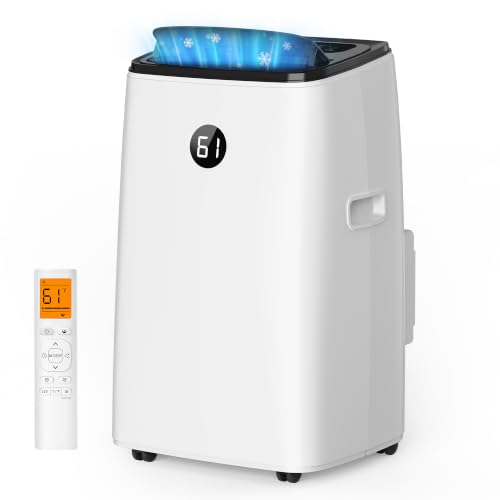
Most Energy Efficient Portable Room Air Conditioner
Learn how to identify truly efficient portable cooling, match capacity to your room, and choose the right features before you buy.
START LEARNINGWhy this guide matters: Portable air conditioners are convenient, but their real-world efficiency depends on more than a headline BTU number. The most energy efficient portable room air conditioner for your space will combine appropriate sizing, a smart exhaust design, and compressor technology that matches how long you actually run the unit. This guide explains exactly what to look for.
Efficiency First
Compare CEER or EER ratings, inverter compressors, and dual-hose designs before anything else.
Right-Size Cooling
An accurately sized unit avoids short cycling and keeps humidity under control.
Smart Exhaust Setup
Sealed window kits and short, straight exhaust routes reduce wasted cooling.
Realistic Expectations
Portable AC is best for single rooms, spot cooling, and spaces without ductwork.
What Makes a Portable Room Air Conditioner Energy Efficient?
Portable air conditioners face a unique efficiency challenge: the compressor, evaporator, and condenser are all inside the room, and heat must be exhausted through a window or wall opening. Because of this design, the most energy efficient portable room air conditioner is not simply the one with the highest cooling capacity. It is the model that minimizes heat gain, runs at modulated speeds, and matches the room's actual load.
Efficiency Metrics to Compare
- CEER (Combined Energy Efficiency Ratio): The primary efficiency metric for portable ACs. Higher CEER means more cooling output per unit of electricity across a standardized test cycle.
- EER (Energy Efficiency Ratio): A snapshot of efficiency at a specific test condition. Useful for comparing models, but less representative of seasonal performance than CEER.
- Inverter compressor: Modulates speed rather than cycling fully on and off. This improves part-load efficiency and temperature stability during long runtime periods.
- Dual-hose design: Draws intake air from outside and exhausts hot air outside. This reduces negative pressure and warm-air infiltration compared with single-hose models.
- Accurate thermostat: Better sensing and control reduce unnecessary compressor operation.
Why Portable AC Efficiency Is Different
Unlike a ductless mini-split system that separates indoor and outdoor components, a portable unit operates entirely inside the conditioned space. That means every inefficiency — a leaky window kit, a long exhaust hose, or a poorly matched BTU rating — directly affects the room. When comparing the most efficient portable air conditioner options, focus on how well the design manages this inherent challenge.
Dual-Hose vs Single-Hose: Which Is More Efficient?
Hose configuration is one of the most consequential decisions for real-world efficiency. A single-hose portable AC pulls air from the room, uses it to cool the condenser, and exhausts it outside. This creates negative pressure that pulls warm outdoor air back into the room through gaps and cracks. A dual-hose design uses one hose for outdoor intake air and another for exhaust, which largely avoids that pressure imbalance.
For buyers searching for the most efficient dual hose portable air conditioner, the practical takeaway is straightforward: dual-hose models generally deliver more predictable cooling and better comfort in sealed rooms. Single-hose units can still be serviceable in small, well-shaded spaces where runtime is short, but dual-hose designs are usually the stronger choice for extended daily use.
| Feature | Single-Hose Portable AC | Dual-Hose Portable AC | Efficiency Implication |
|---|---|---|---|
| Air pressure balance | Creates negative pressure indoors | Maintains more neutral pressure | Dual-hose reduces warm-air infiltration |
| Installation complexity | Simpler window kit | Requires two hose connections | Dual-hose needs careful sealing to perform well |
| Cooling consistency | More variable in sealed rooms | Generally steadier | Dual-hose often performs better in practice |
| Best use case | Small rooms, short sessions | Larger rooms, long sessions | Dual-hose suits sustained cooling |
| Typical tier | Entry-level | Mid-range | Dual-hose models sit higher in the category |
Compressor Technology: Inverter vs Fixed-Speed
Compressor behavior has a major impact on both efficiency and comfort. Fixed-speed compressors run at full power until the thermostat setpoint is reached, then shut off. This on-off cycling can cause temperature swings and reduced dehumidification. Inverter compressors adjust speed continuously, which allows the unit to hold a steadier temperature and operate more efficiently during partial-load conditions.
Inverter technology is common in mini-split heat pumps and is increasingly available in portable ACs. If your goal is the most energy efficient portable room air conditioner for daily use, prioritize models with inverter-driven compressors and a high CEER rating. Fixed-speed units can still be a reasonable choice for occasional use, but they are less effective at maintaining steady comfort over long cooling sessions.
What Inverter Operation Actually Changes
- Temperature stability: Continuous modulation avoids the wide swings typical of on-off cycling.
- Part-load efficiency: Most cooling hours occur at partial load, where inverter systems tend to excel.
- Noise profile: Lower compressor speeds often translate to quieter operation during steady-state cooling.
- Dehumidification: Longer, gentler runtime can improve moisture removal compared with short bursts of full-power cooling.
Sizing: The Most Overlooked Efficiency Factor
Even a highly rated portable AC can perform poorly if it is the wrong size for the room. An oversized unit cools the air quickly but may not run long enough to remove humidity, leaving the room feeling clammy. An undersized unit runs continuously, struggles to reach the setpoint, and wears down faster. The most energy efficient portable room air conditioner for your space is the one that is correctly matched to the room's heat load.
Start with a BTU calculator by room size, then adjust for ceiling height, sun exposure, occupant count, and heat-producing appliances. For a deeper explanation of load matching, see the guide on how to size an air conditioner.
Room Conditions That Change Effective Load
- Sun exposure: West- and south-facing rooms gain more heat and may need a capacity step up.
- Ceiling height: Rooms with ceilings above the standard height contain more air volume to cool.
- Occupancy: Each person adds a meaningful heat load during extended use.
- Appliance heat: Computers, televisions, and kitchen equipment all add to the room's cooling demand.
- Insulation and glazing: Poor insulation or large single-pane windows increase heat gain significantly.
Portable AC Market Tiers at a Glance
| Tier | Typical Characteristics | Efficiency Profile | Best For |
|---|---|---|---|
| Entry-level | Single-hose, fixed-speed compressor, basic controls | Lower CEER, more variable real-world performance | Occasional spot cooling in small rooms |
| Mid-range | Dual-hose option, digital thermostat, improved window kit | Moderate CEER, better pressure balance | Daily use in bedrooms and home offices |
| High-end tier | Inverter compressor, dual-hose, smart controls | Higher CEER, steadier temperatures, quieter operation | Long daily sessions and larger single rooms |
| Top-tier | Premium inverter system, advanced sealing kit, app control | Best-in-class CEER for the category | Maximum efficiency and comfort in one room |
Features That Improve Real-World Efficiency
Beyond the headline efficiency rating, several practical features determine how well a portable AC performs in an actual room. These details often separate a well-specified model from a basic one.
Window Kit Quality
The window kit is the weakest link in most portable AC installations. A loose or poorly sealed kit allows hot outdoor air to leak in, undermining the unit's cooling effort. Look for reinforced panels, adjustable sliders, and sealing accessories that create a tight fit. This is one area where a mid-range model often outperforms an entry-level unit in practice.
Thermostat Accuracy and Control
Accurate temperature sensing and programmable or smart controls reduce unnecessary runtime. A remote thermostat or app-based scheduling can help align cooling with occupancy. For related reading, see the guide to the most accurate AC thermostat.
Noise and Airflow Design
Efficient airflow design reduces the need to run the fan at maximum speed. Variable fan settings and a well-designed air path improve comfort while drawing less power. Quieter operation is often a side benefit of efficient inverter compressors.
Pre-Purchase Efficiency Checklist
- Confirm the room's square footage and adjust BTU for sun, occupancy, and ceiling height.
- Check the CEER rating and compare models within the same capacity class.
- Prefer a dual-hose design if you plan to run the unit for several hours per day.
- Look for inverter compressor technology for steadier temperatures and part-load efficiency.
- Inspect the window kit for sealing quality and adjustability.
- Verify that the exhaust hose can run short and straight to the window.
- Check whether the unit offers programmable scheduling or smart controls.
- Review the manufacturer's maintenance requirements before purchase.
Installation and Usage Tips for Maximum Efficiency
Proper installation and usage habits can meaningfully improve portable AC performance. Small adjustments often deliver noticeable improvements in comfort and energy use.
- Seal the window opening: Use weatherstripping or foam insulation around the window kit to prevent hot-air leaks.
- Keep the exhaust hose short and straight: Long, coiled hoses trap heat and reduce airflow efficiency.
- Shade the room: Closing blinds during peak sun reduces the load the unit must handle.
- Use the right fan speed: Higher fan speeds are not always more efficient; auto mode can balance comfort and power draw.
- Clean the filter regularly: A clogged filter restricts airflow and forces the compressor to work harder.
- Schedule cooling around occupancy: Avoid running the unit in empty rooms for extended periods.
For broader context on efficient usage, the guide to the most efficient way to use air conditioning covers habits that apply across AC types. If you are also considering a ductless system for whole-room cooling, the overview of energy efficient mini-split air conditioners provides a useful comparison.
When a Portable AC Is the Right Efficiency Choice
Portable air conditioners are not the most efficient cooling category overall, but they serve specific situations well. Understanding those situations helps set realistic expectations.
Good Fits for Portable Cooling
- Renters and temporary spaces: No permanent installation or structural changes required.
- Rooms without ductwork: Where central air or a ducted system is not feasible.
- Spot cooling: Targeting a single occupied room rather than a whole home.
- Supplemental cooling: Adding comfort to a room that central air does not reach well.
When Another System May Be More Efficient
If you own the home and plan to stay long term, a ductless mini-split or central system is typically more efficient per unit of cooling. The guide to the most energy efficient home air conditioner explains the alternatives. For a broader comparison across categories, see the overview of the most energy efficient air conditioning system options.
Frequently Asked Questions
What makes a portable room air conditioner energy efficient?
Key factors include a high CEER or EER rating, inverter-driven compressor technology, a dual-hose design, accurate thermostat control, and correct sizing for the room. Efficient models reduce compressor cycling and limit heat gain through the exhaust setup.
Is a dual-hose portable AC more efficient than a single-hose unit?
Generally, yes. A dual-hose design separates intake and exhaust air, which reduces negative pressure inside the room and limits warm-air infiltration. This often improves real-world cooling efficiency and comfort compared with single-hose models.
Does an inverter compressor improve portable AC efficiency?
An inverter compressor can modulate its speed instead of switching fully on and off. This usually provides steadier temperatures, quieter operation, and better part-load efficiency, especially during long cooling sessions.
How do I size a portable air conditioner for efficient operation?
Match BTU capacity to room size, ceiling height, sun exposure, occupancy, and appliance heat load. An oversized unit may short-cycle and dehumidify poorly, while an undersized unit runs continuously. Use a BTU calculator and adjust for your specific room conditions.
Can a portable AC cool more than one room?
Portable ACs are designed for single-room cooling. Trying to cool multiple rooms usually leads to continuous operation at maximum output, which reduces efficiency and comfort. For multi-room needs, a multi-zone or ductless system is more appropriate.
Ready to Compare Efficient Portable AC Options?
Use the checklist above to evaluate capacity, hose design, compressor technology, and window kit quality. When you are ready, explore recommended models that match these efficiency criteria.
Explore Recommended Models