Mini Split Heat Pumps: Complete Heating & Cooling Guide
Everything you need to know before choosing a ductless heat pump — how it works, how to size it, efficiency ratings, installation essentials, and the best options for your space.
START READINGResearch-stage clarity: If you already know you want a ductless heat pump but still need confidence before purchasing, this guide walks you through the technical fundamentals, practical sizing, and product tiers so you can compare options with clear criteria — not guesswork.
1. What Is a Mini Split Heat Pump?
A mini split heat pump is a ductless HVAC system that provides both heating and cooling from a single outdoor compressor connected to one or more indoor air handlers. Unlike traditional central systems that rely on ductwork, a mini split delivers conditioned air directly into each room, eliminating duct losses and enabling room-by-room zoning.
The term "heat pump" refers to the system's ability to reverse the refrigerant cycle: in summer, it extracts heat from indoor air and releases it outside; in winter, it captures heat from outdoor air and moves it indoors. Modern cold-climate models operate efficiently even in sub-freezing temperatures, making them viable primary heating solutions in many regions.
If you are exploring the broader category, see our dedicated overview of mini split heat pumps for ductless heating and cooling. For systems specifically optimized for year-round performance, the mini split heating and air conditioning systems guide covers additional selection criteria.
2. How Mini Split Heat Pumps Work
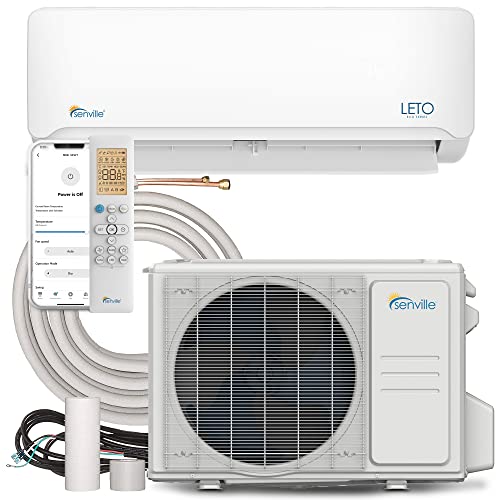
Understanding the mechanics helps you evaluate product specifications and installation requirements more confidently. The system consists of four core components:
- Outdoor condenser unit — houses the compressor and outdoor coil; responsible for heat exchange with the outside air.
- Indoor air handler(s) — mounted on a wall, ceiling, or floor; contains the evaporator coil, blower, and air filter. Also called mini split heads.
- Refrigerant line set — connects indoor and outdoor units; proper sizing and insulation are critical for efficiency. See our guide to the mini split line set.
- Condensate drain — removes moisture collected during cooling; gravity or pump-assisted depending on installation.
In heating mode, the cycle reverses via a reversing valve: the outdoor coil becomes the evaporator and absorbs ambient heat, while the indoor coil becomes the condenser and releases heat into the room. Inverter-driven compressors — common in modern units — modulate speed continuously rather than cycling on and off, which improves comfort and efficiency. Learn more about mini split systems with inverter technology.
For a deeper technical walkthrough of the heating and cooling cycle, see mini split heating and air conditioning.
3. Mini Split vs Central Heat Pump
Both systems use heat pump technology, but they differ in distribution method and installation scope. The table below summarizes the key distinctions to help you determine which approach fits your home.
| Factor | Mini Split Heat Pump | Central Heat Pump |
|---|---|---|
| Ductwork | None required | Required throughout home |
| Zoning | Room-by-room with multiple heads | Single zone unless dampers added |
| Installation | Minimal structural work; flexible placement | Extensive; often requires remodeling |
| Efficiency | No duct losses; high SEER2/HSPF2 | Duct losses can reduce performance |
| Best For | Additions, older homes, single rooms, multi-zone layouts | New construction with existing ductwork |
If your home already has ductwork and you want to extend comfort to a specific area, a mini split can also supplement central air conditioning without modifying the existing system. For homes without ducts, a ductless mini split AC configuration may be the most practical path.
4. Sizing Your Mini Split Heat Pump
Correct sizing is the single most important factor in comfort and efficiency. An undersized unit struggles to maintain temperature during peak demand; an oversized unit short-cycles, which reduces dehumidification and increases wear. Professional load calculation (Manual J) is always recommended, but the following reference points help you frame the conversation.
| Room / Home Size | Approximate Capacity Range | Typical Application |
|---|---|---|
| Up to 400 sq ft | 9,000 – 12,000 BTU | Single bedroom, studio, office |
| 400 – 500 sq ft | 12,000 – 15,000 BTU | Large bedroom, open living area |
| 500 – 1,000 sq ft | 15,000 – 24,000 BTU | Apartment, small home, multi-room |
| 1,000+ sq ft | 24,000 – 36,000+ BTU (multi-zone) | Whole-home or multi-zone configuration |
For more specific sizing guidance, refer to these focused resources:
- Mini split heat pump for 400 sq ft
- Mini split heat pump for 500 sq ft
- Mini split heat pump for 1,000 square feet
Practical tip: Insulation quality, ceiling height, window area, and local climate all influence the final capacity requirement. A mid-range unit sized correctly will outperform a premium unit sized incorrectly. Always verify with a contractor using a room-by-room load calculation before committing to a multi-zone system.
5. Efficiency Ratings Explained (SEER2 / HSPF2)
Efficiency metrics tell you how much energy the system uses to deliver a given amount of heating or cooling. Two ratings matter most for heat pumps:
- SEER2 — Seasonal Energy Efficiency Ratio for cooling. Higher values indicate greater cooling efficiency. Federal minimums vary by region, but most modern mini splits exceed baseline requirements.
- HSPF2 — Heating Seasonal Performance Factor for heating. Higher values indicate greater heating efficiency, especially relevant in colder climates.
Inverter-driven compressors typically achieve higher ratings than fixed-speed units because they modulate output rather than cycling between full power and off. When comparing products, look for models with strong HSPF2 values if heating is a priority, and verify that the rated capacity holds at your expected winter temperatures.
For a broader discussion of how efficiency translates into real-world performance, see most energy-efficient mini split air conditioner and most efficient air conditioner split system.
6. Common Mini Split Heat Pump Configurations
Mini splits are available in several configurations, each suited to different room layouts and design preferences.
- Single-zone wall-mounted — the most common configuration; one outdoor unit paired with one indoor head. Ideal for a single room, addition, or garage.
- Multi-zone — one outdoor unit connected to multiple indoor heads, each with independent temperature control. See multi-zone mini split and multi-head mini split.
- Ceiling cassette — recessed into the ceiling for a cleaner look; distributes air in four directions. Explore mini split heat pump with ceiling cassette.
- Floor-mounted — useful where wall space is limited or for rooms with high ceilings.
- Ducted mini split — connects to short duct runs for concealed distribution; suitable for larger open spaces.
If you are considering a whole-home approach, the mini split system for heating and cooling guide compares single-zone and multi-zone strategies in detail.
7. Installation Essentials
Proper installation directly affects efficiency, longevity, and warranty coverage. While some homeowners consider DIY, refrigerant handling requires certification in most jurisdictions. Key installation considerations include:
- Outdoor unit placement — ensure adequate clearance for airflow; use a mini split pad or wall bracket for stability and drainage.
- Line set routing — minimize length and avoid sharp bends; insulated lines prevent condensation and energy loss. See mini split line set.
- Electrical requirements — verify voltage, amperage, and dedicated circuit requirements with a licensed electrician.
- Condensate management — ensure proper slope or install a condensate pump if gravity drainage is not feasible.
- Commissioning — pressure test, vacuum evacuation, and refrigerant charge verification are non-negotiable steps.
For a full walkthrough, see mini split heating and cooling installation. If you prefer professional support, explore mini split installation services or find mini split installers in my area. The mini split DIY guide covers what homeowners can safely handle versus what requires a licensed technician.
8. Maintenance & Longevity
Routine maintenance preserves efficiency and extends system life. Most tasks are simple and can be performed by homeowners; others require professional service.
- Filter cleaning — every 2–4 weeks during heavy use; clogged filters reduce airflow and strain the blower.
- Coil inspection — indoor and outdoor coils should be cleaned annually to maintain heat transfer efficiency.
- Drain line check — ensure condensate drains freely; standing water can promote mold and algae growth.
- Outdoor unit clearance — remove debris, leaves, and snow accumulation around the condenser.
- Professional tune-up — annual service checks refrigerant charge, electrical connections, and compressor performance.
If a component fails, understanding replacement options is important. See mini split compressor replacement for what to expect and how to evaluate repair versus replacement.
9. How to Compare Product Tiers
Mini split heat pumps are available across a wide range of capability tiers. Rather than focusing on any single specification, evaluate products across the following dimensions using universal tier descriptors:
| Tier | Typical Characteristics | Best For |
|---|---|---|
| Entry-Level | Single-zone, fixed or basic inverter compressor, essential features | Single rooms, seasonal use, straightforward installations |
| Mid-Range | Inverter compressor, improved HSPF2/SEER2, Wi-Fi or programmable control | Primary living spaces, year-round heating and cooling |
| Premium | Cold-climate performance, advanced filtration, whisper-quiet operation, multi-zone capability | Whole-home comfort, harsh winters, design-sensitive spaces |
| Top-Tier / Professional-Grade | Highest efficiency ratings, robust construction, extended warranty, advanced diagnostics | Long-term primary systems, commercial or high-demand applications |
Within each tier, focus on: rated capacity at design temperature, warranty terms for compressor and parts, noise levels (measured in decibels), and availability of replacement parts. A mid-tier unit with strong local service support often delivers a better ownership experience than a top-tier unit with no nearby technicians.
For a curated starting point, browse our mini splits for sale overview and mini split units comparison pages. If your application is a recreational vehicle, see mini split RV air conditioner.
10. Frequently Asked Questions
Can a mini split heat pump replace a furnace entirely?
In many climates, yes — modern cold-climate mini splits maintain capacity well below freezing. However, in regions with prolonged extreme cold, a dual-fuel setup (heat pump plus backup furnace) may be more practical. A load calculation will determine whether the heat pump alone can meet design-day demand.
How many indoor heads can one outdoor unit support?
Most multi-zone outdoor units support between two and five indoor heads, depending on the model and total connected capacity. The combined capacity of indoor units is typically allowed to exceed the outdoor unit's rated capacity within manufacturer-specified limits. Always verify compatibility with the specific model's engineering data.
Do mini split heat pumps require a dedicated electrical circuit?
Yes, most systems require a dedicated circuit sized to the outdoor unit's electrical specifications. Voltage varies by capacity: smaller units often use 115V, while larger and multi-zone systems typically require 208/230V. A licensed electrician should confirm panel capacity before installation.
How long does a mini split heat pump last?
With proper installation and regular maintenance, a quality mini split heat pump can provide 15–20 years of service. Compressor lifespan is influenced by runtime hours, electrical stability, and refrigerant charge accuracy. Annual professional service helps catch issues before they become failures.
Is a mini split heat pump noisy?
Indoor heads are generally very quiet — often in the 19–35 dB range at low fan speeds, comparable to a whisper. Outdoor units produce more sound, typically 45–60 dB depending on capacity and compressor speed. Placement away from bedroom windows and property lines reduces impact.
Can I install a mini split heat pump myself?
Homeowners can handle site preparation, mounting brackets, and some electrical rough-in, but refrigerant line connections, vacuum evacuation, and charging require EPA Section 608 certification and specialized tools. Improper installation voids warranties and risks refrigerant leaks. See the mini split DIY guide for a realistic breakdown of tasks.
Ready to Compare Real Products?
Browse our curated selection of mini split heat pumps across capability tiers and find the configuration that matches your space, climate, and comfort goals.
View Recommended ModelsNext step: Once you have a shortlist, verify local installation support and confirm that the rated capacity matches your room-by-room load calculation. The right system for your home is the one that is sized correctly, installed professionally, and serviced regularly.