New Air Conditioner Unit for House: What You Need to Know Before Buying
Choosing a new air conditioner unit for your house is a long-term investment in comfort and efficiency. This guide walks you through system types, proper sizing, efficiency ratings, installation considerations, and product tiers so you can make a confident, well-informed decision.
START THE GUIDEWho this guide is for: Homeowners who have decided to install a new air conditioner unit for their house and are now comparing options. You already know you want to buy — this page helps you understand exactly what to look for, what questions to ask, and how to match the right system to your home before you purchase.
Why Homeowners Invest in a New Air Conditioner Unit
An aging cooling system often signals its limits in ways that are hard to ignore: rooms that no longer reach the set temperature, humidity that lingers, rising energy consumption, and repair visits that become more frequent. When an existing unit approaches or passes the end of its expected service life, the decision shifts from repairing to replacing.
A properly selected new air conditioner unit for a house brings several practical benefits: consistent room-to-room comfort, quieter operation, modern refrigerant handling, smart thermostat compatibility, and verified efficiency ratings. For homeowners who notice symptoms like a unit that runs constantly but never cools the house, or one that switches on but does not deliver cold air, replacing the system is often the more sensible path than chasing repeated fixes. You can read more about diagnosing those symptoms in guides such as my AC unit is running but not cooling and my AC is on but not cooling the house.
Types of New Air Conditioner Units for a House
The right system type depends on your home's construction, whether ductwork already exists, and how you use your living spaces. These are the main categories homeowners compare when shopping for a new air conditioner unit.
Central Air Conditioning
A split system with an outdoor condenser and an indoor air handler connected to ductwork. Best suited to houses with existing ducts, delivering whole-home cooling from a single system.
Ductless Mini-Split
An outdoor unit paired with one or more wall-mounted indoor heads. Ideal for homes without ductwork, room additions, and zoned comfort where different areas need different temperatures.
Window Air Conditioner
A self-contained unit installed in a window frame. A practical choice for single rooms, rentals, and supplemental cooling where a full system is not feasible.
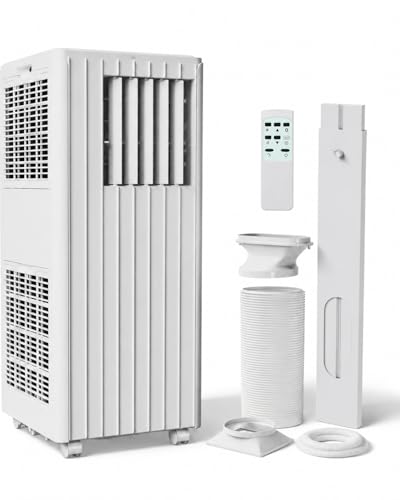
Portable Air Conditioner
A freestanding unit with an exhaust hose vented through a window. Flexible placement and easy relocation, well suited to temporary or rental situations.
Through-the-Wall AC
Installed permanently through an exterior wall. A good fit for rooms where window space is limited or where a permanent, secure installation is preferred.
Packaged AC Unit
A single outdoor cabinet containing all components, connected to indoor ductwork. Common in certain home layouts where a split system is impractical.
If your home already has ductwork but the system is failing, a central replacement is usually the most direct route. If your house has no ducts and you want whole-home coverage, a ductless mini-split or a ducted mini-split is often the more practical path. For homes where the existing system is paired with a gas furnace, homeowners sometimes consider upgrading both components together — details on that combination are covered in new air conditioner and furnace.
Sizing: The Most Important Decision When Buying a New AC Unit
An undersized unit struggles to keep up during peak heat, running continuously and wearing out faster. An oversized unit cools too quickly, cycles on and off frequently, and leaves humidity uncontrolled — a common reason a house feels clammy even when the thermostat reads cool. That is why correct sizing matters more than any single feature on the spec sheet.
A practical starting point is roughly 20 BTU per square foot of conditioned living space, adjusted upward for high ceilings, large windows, poor insulation, or a hot climate. For a more precise figure, a Manual J load calculation performed by a qualified contractor accounts for wall construction, window orientation, air leakage, and local design temperatures. You can explore room-by-room sizing references in new AC unit for a 3000 square foot house and new AC unit for a 1200 sq ft house.
| Home Size (Conditioned) | Typical Capacity Range | Best For |
|---|---|---|
| Up to 1,000 sq ft | 18,000 – 24,000 BTU | Small homes, apartments, condos |
| 1,000 – 1,500 sq ft | 24,000 – 30,000 BTU | Starter homes, townhouses |
| 1,500 – 2,500 sq ft | 30,000 – 42,000 BTU | Mid-size single-family homes |
| 2,500 – 3,500 sq ft | 42,000 – 60,000 BTU | Large homes, multi-zone layouts |
| 3,500+ sq ft | 60,000 BTU+ or multi-system | Large or multi-story homes with zoning |
Efficiency Ratings Explained
Efficiency ratings tell you how much cooling a system delivers per unit of electricity consumed. When comparing new air conditioner units for a house, look at these ratings:
- SEER2: The current seasonal efficiency standard. Higher numbers indicate greater efficiency across a cooling season. Minimums vary by region, so check your local requirements.
- EER2: Measures efficiency at peak design conditions. Useful for understanding performance during the hottest part of the day.
- HSPF2: Applies to heat pump systems and measures heating efficiency across a heating season.
- ENERGY STAR: Independent certification for models that meet verified efficiency thresholds above the minimum standard.
Inverter-driven compressors are now common across mid-range and premium systems. Instead of cycling on and off at full power, an inverter compressor modulates its speed to match the cooling load. This generally produces steadier temperatures, quieter operation, and better humidity control. Homeowners researching this technology can compare it in new AC thermostat compatibility discussions and efficiency-focused comparisons.
Key Factors When Choosing a New Air Conditioner Unit for Your House
Beyond capacity and efficiency, these factors shape the day-to-day experience of a new system and should be weighed during research:
1. Existing Ductwork and Home Layout
Homes with sound ductwork can usually support a central system replacement directly. Homes without ducts, or with ducts in poor condition, often benefit from a ductless approach. Duct condition itself matters — leaks and poor sealing waste cooling capacity and can make a new unit seem underperforming.
2. Electrical Capacity
Central systems and larger mini-splits require dedicated circuits and proper breaker sizing. Before committing to a model, confirm your electrical panel can support it. If it cannot, the installation plan should account for panel upgrades or dedicated outlet work — topics covered in new electrical outlets.
3. Refrigerant Type
Modern systems use current-generation refrigerants with lower environmental impact. If your existing system uses an older refrigerant that is being phased out, a new unit also means a future-proof refrigerant circuit and easier service access over the system's life.
4. Smart Controls and Zoning
Programmable and smart thermostats reduce wasted cooling by aligning operation with household schedules. Multi-zone systems let you condition only the rooms in use, which is a meaningful advantage in multi-story homes.
5. Noise Level
Outdoor unit sound ratings matter if the condenser sits near a bedroom, patio, or property line. Indoor air handlers and mini-split heads also vary in sound output; quieter models are typically found in higher market tiers.
6. Installation Quality
The best equipment underperforms when installed poorly. Correct line-set sizing, proper evacuation, adequate airflow, and accurate charge all depend on the installer. Choosing a qualified contractor is as important as choosing the unit itself.
Understanding Product Tiers
New air conditioner units for houses are commonly grouped into market tiers. These descriptors reflect relative position in the market — not any specific figure — and help you compare systems on a like-for-like basis.
| Tier | Typical Characteristics | Best For |
|---|---|---|
| Entry-level | Single-stage compressor, standard efficiency, basic controls, solid build | Homeowners seeking reliable cooling with a straightforward feature set |
| Mid-range | Two-stage or inverter compressor, higher efficiency, quieter operation, smart thermostat compatibility | Households wanting balanced comfort and efficiency in the long run |
| Premium | Variable-speed inverter compressor, top-tier efficiency, very quiet operation, advanced zoning and humidity control | Homeowners prioritizing maximum comfort, quietness, and efficiency |
| Professional-grade | Heavy-duty components, extended warranties, engineered for demanding duty cycles | Large homes and properties with high cooling demand |
Mid-range models generally offer the broadest balance of features for most single-family homes, while premium systems shine in households sensitive to noise or humidity. Entry-level units remain a solid choice when the priority is dependable cooling and the installation is done correctly.
A Step-by-Step Buying Process
- Step 1 — Document your home: Record square footage, ceiling heights, window count and orientation, insulation condition, and any problem rooms.
- Step 2 — Get a load calculation: Ask contractors for a Manual J calculation rather than a square-footage rule of thumb alone.
- Step 3 — Compare system types: Decide between central, ductless, or a hybrid approach based on ductwork and zoning needs.
- Step 4 — Review efficiency and features: Match efficiency ratings to your climate and usage patterns; weigh inverter technology, noise, and smart controls.
- Step 5 — Verify electrical readiness: Confirm panel capacity and plan any necessary electrical work.
- Step 6 — Collect multiple installation quotes: Compare scope, equipment models, warranty terms, and contractor credentials side by side.
- Step 7 — Schedule installation and plan maintenance: Book a qualified installer and set up an annual service routine from day one.
For homeowners who are still early in the process and weighing whether to replace at all, new air conditioning unit provides a broader overview, while new air conditioning system covers matched-system considerations.
Common Mistakes to Avoid
- Choosing capacity by square footage alone: Ceiling height, windows, and insulation can shift the requirement significantly.
- Oversizing the system: Oversized units short-cycle, leaving humidity high and comfort uneven.
- Ignoring duct condition: Leaky or undersized ducts can waste a new unit's efficiency.
- Skipping the electrical check: Discovering panel limitations mid-installation delays the project.
- Choosing the lowest installation bid without comparing scope: Equipment model, line-set work, and warranty support differ between quotes.
- Skipping maintenance after installation: Filter changes and annual servicing protect the investment for years.
After Installation: Protect Your New System
A new air conditioner unit performs best when maintained consistently. Replace or clean filters on schedule, keep the outdoor unit clear of debris, and schedule an annual professional inspection. If you ever notice the system running but not delivering cold air, act early — many issues are more straightforward to resolve when caught at the first sign. Related troubleshooting references include my central air conditioner is not cooling and my home air conditioner is not cold enough.
Ready to Compare New Air Conditioner Units?
Review our curated selection of systems well suited to house installations, and compare features side by side.
VIEW TOP PICKSFrequently Asked Questions
What size air conditioner unit do I need for my house?
Sizing depends on square footage, ceiling height, insulation, window area, and local climate. A rough starting point is about 20 BTU per square foot of living space, but a Manual J load calculation performed by a qualified contractor is the most reliable method for choosing a new air conditioner unit for a house.
What SEER rating should a new air conditioner unit have?
Modern minimum efficiency standards require SEER2 ratings that vary by region. Choosing a unit rated above the minimum in your region typically delivers better long-term efficiency. ENERGY STAR certified models meet verified efficiency thresholds above the minimum standard.
How long does a new air conditioner unit last?
A well-installed central air conditioner typically lasts 15 to 20 years with regular maintenance. Ductless mini-split systems often last 12 to 20 years. Proper sizing, professional installation, and annual servicing all extend the lifespan of a new AC unit.
Should I replace my furnace when installing a new air conditioner?
If your furnace is aging or your existing system uses an older refrigerant being phased out, replacing both together can be a sensible long-term decision. A matched new air conditioner and furnace system improves efficiency and simplifies warranty coverage. See new air conditioner and furnace for a closer comparison.