
Portable Air Conditioner for an Apartment: The Complete Buyer's Guide
Renters and apartment dwellers face unique cooling challenges: no ductwork, strict lease terms, limited window access, and shared walls. This guide explains exactly how to choose, size, vent, and place a portable air conditioner that delivers real comfort without permanent modifications.
Start With SizingWhy Portable Air Conditioner Is Ideal for Apartments
A portable air conditioner for an apartment solves problems that window units and central systems cannot. Many leases prohibit window-mounted hardware, and older apartment buildings often lack ductwork entirely. A portable unit rolls from room to room, requires no permanent installation, and can be packed away or moved when you relocate. For renters, this flexibility is the core advantage.
However, portable units are not simply "plug and play." They exhaust hot air through a hose, usually out a window or a temporary opening. Understanding how that exhaust works — and how much cooling capacity your apartment actually needs — is what separates a comfortable purchase from a disappointing one. The sections below walk through each decision point in order.
Portable AC Types: Which Fits Your Apartment?
Portable air conditioners fall into a few practical categories. Choosing the right category depends on your apartment's window situation, your lease restrictions, and how much maintenance you are willing to do.
Single-Hose Portable AC
The most common type. It draws indoor air, cools it, and exhausts some of that air (and heat) outdoors through one hose. Single-hose units are simple and widely available, but they create negative pressure, which can pull warm outdoor air back in through gaps. In a well-sealed apartment this is a minor issue; in leaky older units it can reduce efficiency.
Dual-Hose Portable AC
Dual-hose models separate intake and exhaust, maintaining balanced pressure and generally delivering better efficiency in a closed room. If your apartment is tightly sealed, a dual-hose design is usually the stronger performer. They are slightly bulkier and require a wider window opening or a vent kit panel.
Portable AC That Doesn't Need Venting
Some units marketed as ventless are actually evaporative coolers, which work well only in dry climates. In humid apartments they can raise indoor humidity and provide little relief. If you are unsure which category you need, explore portable AC that doesn't need to be vented to understand the real trade-offs before deciding.
Portable AC for Rooms Without Windows
This is a common apartment problem, especially in basement or interior rooms. True compressor-based portable AC still needs an exhaust path. Options include venting into a shared hallway (often prohibited) or using a temporary window in an adjacent room. Read the guide on portable AC for a room without windows to see workable setups.
| Type | Best For | Notes |
|---|---|---|
| Single-hose portable AC | Small bedrooms, studios, quick setup | Simpler, but can create negative pressure in tight rooms |
| Dual-hose portable AC | Sealed apartments, living rooms, longer cooling sessions | Better pressure balance and efficiency in closed spaces |
| Evaporative (ventless) cooler | Dry climates, low-humidity apartments | Not a true AC; adds humidity, unsuitable for humid regions |
| Portable AC with heat pump | Year-round use in apartments with cold winters | Combines cooling and heating; confirm venting needs |
How to Size BTU for Apartment Rooms
Portable AC capacity is measured in British Thermal Units (BTU). Undersizing leaves the room warm; oversizing cools quickly but cycles inefficiently and removes less humidity. Apartment rooms are usually smaller than house rooms, so a common mistake is buying an oversized unit for a bedroom. Match the unit to the room, not to the whole apartment.
As a baseline, most apartment rooms fit one of these bands:
| Room Size (approx.) | Typical BTU Range | Example Spaces |
|---|---|---|
| Up to 100 sq ft | 5,000 – 6,000 BTU | Small bedroom, studio corner, home office |
| 100 – 200 sq ft | 8,000 – 10,000 BTU | Standard bedroom, small living room |
| 200 – 400 sq ft | 12,000 – 14,000 BTU | Open studio, combined living/dining area |
| 400 – 600 sq ft | 14,000 – 16,000 BTU | Large studio, open-plan apartment |
Adjust upward for south-facing windows, top-floor heat gain, kitchen adjacency, or poor insulation. Adjust downward for basement units and heavily shaded rooms. For a more detailed walkthrough of individual room sizes, see the guides on portable AC for 200 square feet and portable AC for 400 square feet.
If your apartment is a single open studio, measure the entire cooled area but expect a single portable unit to struggle beyond roughly 500–600 sq ft. In that case, a second unit or a different cooling approach may be more realistic. The article on portable AC for a 100 sq ft room is useful for very small spaces where precision matters.
Venting Without Violating Your Lease
Every compressor-based portable AC must exhaust heat. In an apartment, the exhaust path is the most sensitive part of the purchase. Most leases allow temporary window kits that do not alter the building, but some prohibit anything attached to the exterior. Always check your lease before buying.
Window Kits and Casement Windows
Standard sliding windows accept most universal window kits. Casement and crank-out windows are trickier. If your apartment has casement windows, look for units with dedicated kits or read portable AC for a casement window and portable AC crank-out window kit to see which kits actually seal properly.
Sliding Doors and Side-Opening Windows
Balcony sliding doors and side-opening windows can work with adjustable panel kits. The key is sealing the gap around the hose so hot outdoor air does not re-enter. A poorly sealed vent can cancel much of the unit's cooling benefit.
When Venting Is Not Possible
If your apartment has no usable window or door, a compressor-based portable AC is not a safe long-term choice. Evaporative coolers are an option only in dry climates. For alternatives, review portable AC that does not need a window and portable AC that doesn't need venting — but read carefully, because many of these products are not true air conditioners.
Features That Matter in a Small Space
Apartment living puts a premium on quiet operation, compact footprints, and features that reduce manual work. The following features are worth prioritizing when comparing portable AC models.
Noise Level
Portable ACs are generally louder than window units because the compressor sits inside the room. In a studio or bedroom, noise matters more than in a living room. Look for units with a dedicated low-speed or sleep mode, and check whether the compressor cycles or runs continuously. If quiet operation is your top priority, the quiet AC guide provides a broader comparison.
Dehumidification and Drainage
Portable ACs produce condensate. Many units handle most water through evaporation but still require occasional draining. In humid apartments, a unit with a strong dehumidify mode is valuable. If you want to avoid manual draining, review portable AC that doesn't need to be drained and portable AC you don't have to drain — but note that "self-evaporating" still requires draining in very humid conditions.
Heating and Combination Units
If your apartment has cold winters and limited heating, a portable AC with a heat pump can serve year-round. The guides on portable AC and heater combo and portable AC and heater explain how these dual-purpose units perform in small spaces.
Smart Controls and Scheduling
Wi-Fi control is genuinely useful in an apartment: you can cool the bedroom before you arrive home without leaving the unit running all day. If smart features are important, see the AC with Wi-Fi and smart control guide for what to look for.
Air Quality Add-Ons
Some models include washable filters or air-purifier stages. In a small apartment with limited ventilation, this can be a meaningful bonus. The portable AC and air purifier combo article covers which combinations are practical rather than marketing claims.
Installation & Placement Tips for Apartments
Placement determines how well a portable AC performs. A powerful unit in a bad location will underperform a modest unit placed correctly.
- Keep the exhaust hose short and straight. Every bend reduces airflow and efficiency. Position the unit near the window it vents through.
- Avoid blocking airflow. Leave clearance around the front and rear grilles. Do not tuck the unit into a corner or behind furniture.
- Seal the window gap. Use the included panel and add foam or weatherstripping if needed. Small leaks let hot air back in.
- Insulate the hose. A hot exhaust hose radiates heat back into the room. An insulation sleeve is a worthwhile addition.
- Level the unit. Most portable ACs need to sit level for condensate management and compressor reliability.
- Plan for drainage. If the unit requires manual draining, place it where you can reach the drain plug without moving heavy furniture.
For renters who move frequently, keep the original box and window kit. Replacement panels are often specific to the model, and a lost kit can make the unit unusable in a new apartment. If you are comparing portable cooling with other rental-friendly options, the older homes without ducts guide covers the broader alternatives.
Maintenance for Long-Term Performance
Portable AC maintenance is straightforward, but it is easy to neglect in a small apartment where the unit is tucked into a corner. A consistent routine keeps cooling performance stable and extends the unit's service life.
- Clean or replace the filter every two to four weeks during heavy use. A clogged filter reduces airflow and strains the compressor.
- Drain the condensate tank according to the manufacturer's schedule. In humid weather, check more often.
- Inspect the exhaust hose for cracks or loose connections. A leaking hose sends hot air back into the room.
- Clean the exterior grilles and keep dust from accumulating around the intake.
- Store the unit upright during the off-season. If you move it, let it sit upright for several hours before running it again.
If the unit stops cooling effectively despite clean filters and proper venting, the cause may be a refrigerant issue or a failing compressor. The portable AC unit repair guide explains which problems are user-fixable and which require professional service. For general troubleshooting that applies across cooling types, the air conditioner not blowing cold air article is a useful starting point.
Buying Checklist & Tier Framework
Rather than comparing units by price, compare them by tier and by how well they match your apartment's constraints. The framework below uses consistent market-position descriptors so the guidance stays useful over time.
| Tier | Best For | What to Expect |
|---|---|---|
| Entry-level | Small bedrooms, occasional use, first portable AC | Basic single-hose design, manual controls, higher noise, simpler drainage |
| Mid-range | Primary living space, daily use in a studio or one-bedroom | Better airflow, quieter low-speed modes, improved window kits, more reliable drainage |
| Premium | Bedrooms and open-plan apartments where noise and efficiency matter | Dual-hose or refined single-hose design, smart controls, stronger dehumidification, quieter operation |
| Top-tier / flagship | Year-round use, heat-pump models, large open studios | Heat pump capability, advanced filtration, precise scheduling, premium build quality |
Quick Buying Checklist
- Measure the room and confirm the BTU band.
- Confirm your window type and whether a kit fits without permanent changes.
- Decide between single-hose and dual-hose based on how sealed your apartment is.
- Check noise specifications if the unit will run at night.
- Confirm drainage requirements and whether self-evaporation is realistic for your humidity.
- Decide whether heating, smart control, or filtration are must-haves.
- Choose a tier that matches how often and how long you will run the unit.
If you are still deciding between portable cooling and other apartment-friendly systems, the portable AC units overview and the are portable air conditioners any good article provide balanced context. For renters who want a temporary solution that can move with them, portable remains the most flexible choice.
Recommended Portable Air Conditioners for Apartments
⚠️ AFFILIATE DISCLOSURE: This website contains affiliate links. As an Amazon Associate, we earn from qualifying purchases. If you make a purchase through these links, we may receive a small commission at no additional cost to you. Read our full affiliate policy.

BLACK+DECKER Portable Air Conditioner, 10,000 BTU, BPACT10WT, White | 5,500 BTU SACC for Rooms up to 450 Sq. Ft., 3-in-1 Portable AC, Fan and Dehum with Follow Me Remote Control
Check price on Amazon
10000 BTU Portable Air Conditioners, Air Conditioner for Room Cools Up to 450 Sq.Ft with 24H Timer, Remote Control, Dehumidifier, 3-IN-1 AC Unit with Window Kit for Bedroom, Indoor Rooms, Home Office
Check price on Amazon
10,000BTU Energy Saving Portable Air Conditioners for Rooms up to 550 Sq Ft | Self-Evaporating Portable AC Unit with Remote Control&24H Timer, Cool/Dry/Fan/Sleep, LED Display&Installation Kits for Home
Check price on Amazon
BLACK+DECKER Portable Air Conditioner, 9,000 BTU, BPACT08WT, White | 5,300 BTU SACC for Rooms up to 400 Sq. Ft., 3-in-1 Portable AC, Fan and Dehum with Follow Me Remote Control
Check price on Amazon
BLACK+DECKER Smart Portable Air Conditioner, 14,000 BTU, BPACT14WT, White | 10,200 BTU SACC for Rooms up to 700 Sq. Ft., Smart 3-in-1 Portable AC, Fan and Dehum with Follow Me Remote
Check price on Amazon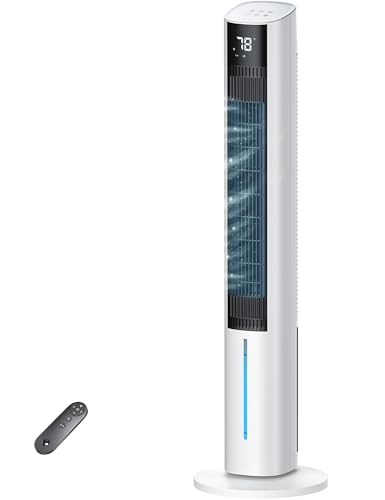
Windowless Portable Air Conditioners, 45.1" Evaporative Cooler for Room No window, 12H Timer & 60° Swing, 1.06Gal Water Tank & 4 Ice Packs, Quiet Portable ac Unit with Remote for Bedroom white
Check price on Amazon
Garvee 8000 BTU Portable Air Conditioner, 3-in-1 Portable AC Cooling, Dehumidifying & Fan for Bedroom, Apartment, Dorm & Rooms Up to 350 Sq. Ft, Sleep Mode, 24-Hr Timer, Remote, Window Kit, White
Check price on AmazonFrequently Asked Questions
Can I use a portable air conditioner in an apartment without a window?
A compressor-based portable AC needs an exhaust path. Without a window or door, you cannot safely vent hot air. Evaporative coolers do not need venting but only work in dry climates and are not true air conditioners. For interior rooms, consider a unit that can vent through an adjacent room's window or explore alternative cooling methods.
Will a portable AC cool an entire apartment?
Generally no. Portable ACs are designed for single rooms or open areas up to roughly 500–600 sq ft, depending on the model and conditions. For a multi-room apartment, cool the primary living space and use fans to circulate air, or add a second unit for the bedroom if needed.
Is a dual-hose portable AC better for apartments?
In well-sealed apartments, dual-hose models usually perform better because they maintain balanced pressure and avoid pulling warm outdoor air in through gaps. Single-hose units are simpler and can work well in smaller or leakier rooms, but dual-hose is generally the stronger choice for daily use in a closed space.
How often should I drain my portable AC?
It depends on humidity and the model. Units with self-evaporative technology may need draining only in very humid conditions, while others require manual draining every few days during heavy use. Check the tank indicator and follow the manufacturer's schedule.
Can a portable AC damage my apartment or violate my lease?
Temporary window kits are usually acceptable, but some leases prohibit exterior attachments. Always check your lease first. Avoid drilling, permanent brackets, or anything that alters the window frame. Insulated hose sleeves and removable panels are lease-friendly because they can be taken down quickly.
What size portable AC do I need for a studio apartment?
Measure the cooled area. A small studio under 200 sq ft often works with 8,000–10,000 BTU; a larger open studio of 300–500 sq ft may need 12,000–14,000 BTU. If the studio is very open or has large sun-facing windows, size toward the upper end of the range.
Related Guides for Apartment Cooling
Ready to Choose Your Apartment Portable AC?
Use the sizing table and checklist above to narrow your options, then compare features within the tier that matches your daily cooling needs. For most apartments, a mid-range or premium dual-hose unit offers the best balance of quiet operation, reliable venting, and consistent comfort.
Explore Recommended Models