
Off Grid Cooling Solutions: The Complete Guide
Learn how solar-powered air conditioners, battery-backed cooling systems, and DC units work together to deliver reliable comfort in cabins, RVs, and remote homes — without relying on the utility grid.
Start LearningWhat You Will Find in This Guide
Why Off Grid Cooling Requires a Different Approach
Off grid cooling solutions are engineered for environments where utility power is unavailable, unreliable, or intentionally avoided. Unlike conventional air conditioning systems that draw freely from the grid, off grid cooling must balance energy production, storage capacity, and cooling demand within a closed loop. This constraint shapes every decision — from the type of compressor used to the insulation of the building envelope.
The most common off grid scenarios include remote cabins, tiny homes, RVs, camper trailers, and agricultural structures. In each case, the cooling system must operate efficiently within the limits of a solar array and battery bank, or rely on alternative cooling methods that use minimal or no electricity. For buildings without ductwork, solutions for older homes without ducts provide a useful foundation before integrating off grid power.
A successful off grid cooling setup typically combines three elements: a high-efficiency cooling unit, a correctly sized solar and battery system, and passive cooling strategies that reduce the load before the AC even turns on. Understanding how these elements interact is the key to avoiding frustration and unnecessary expense.
Types of Off Grid Cooling Solutions
Off grid cooling systems fall into several categories, each with distinct advantages and trade-offs. The right choice depends on climate, available space, power budget, and how much cooling capacity is required.
Solar-powered mini-split systems are the most versatile option for cabins and small homes. These units pair a high-efficiency inverter compressor with a dedicated solar array, sometimes using DC power directly to avoid the conversion losses of an inverter. For larger spaces or whole-home setups, a dedicated off grid solar AC system can be sized to handle multiple zones with a battery bank for nighttime operation.
Evaporative coolers, also known as swamp coolers, are highly effective in dry climates and consume a fraction of the energy of compressor-based systems. They work by drawing outside air through water-saturated pads, cooling it before it enters the living space. An outdoor evaporative air cooler can be a practical supplement in low-humidity regions, while portable evaporative units offer flexibility for renters and temporary setups.
DC-powered air conditioners, including 12-volt and 24-volt units, are designed to run directly from battery banks without an inverter. These are common in RVs and camper trailers, where a portable 12 volt air conditioner can provide targeted cooling without the overhead of a full solar installation. For tent camping and emergency scenarios, a portable AC unit for a tent offers a practical entry point into off grid cooling.
Passive and low-power cooling methods — including shading, reflective roofing, night flushing, and solar chimney ventilation — should not be overlooked. They reduce the cooling load so that a smaller, more efficient system can meet demand. In many off grid homes, a combination of passive strategies and a modest solar AC unit outperforms a larger system relying solely on mechanical cooling.
Solar AC Systems: How They Work
A solar air conditioning system converts sunlight into cooling through one of two primary architectures: DC-coupled or AC-coupled. In a DC-coupled system, solar panels charge a battery bank, and the air conditioner draws DC power directly from the batteries or through a DC-DC converter. This approach minimizes conversion losses and is common in small-scale and mobile installations. For a deeper look at how these systems are configured, see the off grid cooling overview.
AC-coupled systems use an inverter to convert DC power from solar panels and batteries into standard AC power, which then feeds a conventional air conditioner. This architecture is simpler to integrate with existing AC appliances but incurs efficiency losses during each conversion. The choice between DC and AC coupling depends on the size of the installation, the availability of compatible equipment, and whether the system will also power other household loads.
Battery storage is the critical enabler of nighttime and cloudy-day cooling. Lithium iron phosphate (LiFePO4) batteries are increasingly favored for off grid cooling because of their deep discharge capability, long cycle life, and stable performance under high discharge rates. Lead-acid batteries remain a lower upfront option but require more maintenance and deeper derating. Regardless of chemistry, the battery bank must be sized to cover the cooling system's overnight demand plus a reserve margin.
The inverter or charge controller plays a central role in system reliability. A pure sine wave inverter is essential for compressor-driven AC units, as modified sine wave output can cause motor overheating and premature failure. Charge controllers — MPPT or PWM — must be matched to the solar array's voltage and current characteristics to maximize harvest.
Sizing Your Solar Cooling System
Sizing an off grid cooling system is a multi-step process that begins with an accurate cooling load calculation. The load depends on room volume, insulation quality, window area and orientation, occupancy, and local climate. A common shortcut is to estimate BTU requirements based on square footage, but for off grid installations, a more detailed assessment is warranted because oversizing the AC wastes energy and undersizing it leaves comfort gaps.
Once the cooling load is known, the next step is to determine the daily energy consumption of the chosen AC unit. This is calculated by multiplying the unit's power draw in watts by the number of hours it runs per day. Because off grid AC units cycle on and off, a duty cycle estimate — often 50 to 70 percent during peak cooling hours — provides a realistic daily figure.
The solar array is then sized to replace the daily energy consumption plus a margin for efficiency losses and cloudy days. A common rule of thumb is to multiply daily consumption by 1.3 to 1.5 and divide by the average peak sun hours for the location. The battery bank is sized separately to cover nighttime operation and a reserve for consecutive cloudy days.
For a structured walkthrough of load calculation and equipment matching, the off grid cooling solutions guide expands on these steps with worked examples. It is also worth reviewing normal humidity levels inside the house, since humidity affects both cooling load and the suitability of evaporative cooling.
Off Grid Cooling Options Compared
The table below compares the main off grid cooling approaches by tier, category, and best-use scenario. Tiers reflect relative market positioning and capability, not numeric values.
| Tier | Category | Best For | Key Consideration |
|---|---|---|---|
| Entry-Level | Portable evaporative cooler | Dry climates, small rooms, temporary setups | Requires ventilation and water refills; ineffective in high humidity |
| Entry-Level | 12V DC portable AC | RVs, camper trailers, tents | Limited cooling capacity; best for spot cooling |
| Mid-Range | DC-powered mini-split | Cabins, tiny homes, off grid bedrooms | Requires dedicated solar and battery sizing |
| Mid-Range | High-efficiency inverter AC with solar | Small off grid homes with AC-coupled systems | Inverter losses reduce overall efficiency |
| Premium | Solar-direct mini-split with battery bank | Whole-cabin cooling, multi-zone setups | Higher upfront system complexity; best long-term efficiency |
| Top-Tier | Professional-grade off grid HVAC | Remote homes, commercial off grid structures | Requires professional design and installation |
Energy Efficiency Strategies for Off Grid Cooling
Efficiency is not optional in off grid cooling — it is the difference between a system that works and one that drains batteries before midnight. The first line of defense is the building envelope. Insulation, air sealing, and high-performance windows reduce the cooling load before any mechanical system is engaged. Shading and reflective coatings on roofs and walls further cut solar heat gain.
Within the cooling system itself, inverter-driven compressors offer significant advantages over single-speed units. By modulating compressor speed to match demand, inverter ACs avoid the energy spikes and temperature swings of on/off operation. For a comparison of compressor technologies, see non-inverter AC versus inverter models.
Smart controls and scheduling also play a role. Programmable thermostats and remote monitoring allow the system to pre-cool during peak solar production and reduce output during battery-limited periods. Zoning — cooling only the rooms in use — is especially valuable in off grid homes where every watt counts.
Passive cooling techniques deserve equal attention. Night flushing, cross-ventilation, thermal mass, and solar chimneys can reduce or eliminate the need for mechanical cooling during shoulder seasons. In humid climates, dehumidification may be necessary to maintain comfort, and a portable air conditioner dehumidifier can complement a smaller cooling system.
Planning tip: Before committing to a solar AC system, model your daily cooling energy use in kilowatt-hours and compare it against your planned solar harvest. A mismatch here is the most common reason off grid cooling projects fall short. For related reading on system components, see off grid solar AC and outdoor AC for humid climates.
Installation and Maintenance Considerations
Off grid cooling installations demand careful planning across electrical, mechanical, and structural dimensions. The electrical system — solar array, charge controller, battery bank, and inverter — must be designed as an integrated whole, with proper fusing, disconnects, and grounding. Undersized wiring or inadequate overcurrent protection can create safety hazards and void equipment warranties.
Mechanical installation follows the same principles as grid-tied systems, with additional attention to refrigerant line routing and condensate management in locations without utility drainage. DC-powered units often require shorter line runs and specialized fittings. For mini-split systems, proper evacuation and charging are essential; a outdoor condensing unit placed in a shaded, well-ventilated location will operate more efficiently.
Maintenance schedules for off grid systems mirror those of conventional ACs: filter cleaning, coil inspection, refrigerant charge verification, and electrical connection checks. Battery maintenance — including state-of-charge monitoring and terminal cleaning — is unique to off grid setups and should be performed on a regular schedule. In dusty or remote locations, more frequent filter service is advisable.
When repairs are needed, access to qualified technicians can be a challenge in remote areas. Selecting equipment with robust service networks and clear documentation reduces downtime. For systems with compressors or specialized components, portable AC unit repair guidance can help diagnose common issues before calling a professional.
Finally, consider the interaction between the cooling system and other off grid loads. A well-designed energy budget accounts for refrigeration, lighting, water pumping, and electronics alongside air conditioning. Load prioritization and energy management controls can prevent one high-demand appliance from compromising the entire system.
Frequently Asked Questions
Can a solar air conditioner run entirely off grid?
Yes, a properly sized solar AC system can run entirely off grid when paired with sufficient solar panels, a battery bank, and an inverter or DC-powered unit. The key is matching the cooling load to your energy production and storage capacity. Systems that combine DC-coupled solar with lithium batteries and a high-efficiency inverter compressor are the most capable of full off grid operation.
What is the most energy-efficient off grid cooling solution?
Evaporative coolers and high-efficiency DC-powered mini-split systems are typically the most energy-efficient off grid options. In low-humidity climates, evaporative cooling uses far less power than compressor-based systems, making it ideal for solar setups. In humid climates, a high-SEER inverter mini-split paired with a well-insulated envelope is usually the best balance of comfort and efficiency.
How many solar panels do I need to run an air conditioner?
The number of solar panels depends on the AC unit's power draw and your peak sun hours. As a general rule, you need a solar array that produces roughly 1.3 to 1.5 times the daily energy consumption of your cooling system to account for efficiency losses and cloudy days. A qualified off grid designer can refine this estimate using local irradiance data and your specific equipment.
Do off grid AC units require special installation?
Off grid AC units typically require professional installation, especially DC-powered systems and those integrated with battery banks. Proper wiring, inverter sizing, and refrigerant handling should be performed by a qualified technician to ensure safety and warranty compliance. DIY installation is possible for small portable units but not recommended for permanent split systems or high-voltage DC equipment.
What is the difference between off grid cooling and solar-assisted cooling?
Off grid cooling operates independently of the utility grid, relying entirely on on-site solar production and battery storage. Solar-assisted cooling remains connected to the grid but uses solar panels to offset part of the AC's energy consumption. Off grid systems require larger solar arrays and battery banks, while solar-assisted systems are simpler and can fall back on grid power during extended cloudy periods.
Choosing the Right Off Grid Cooling Path
The best off grid cooling solution is the one that matches your climate, building, and energy budget. For small, dry-climate spaces, an evaporative cooler or 12V portable unit may be sufficient. For year-round off grid homes, a DC-coupled solar mini-split with lithium storage offers the most reliable performance. In every case, start with load reduction, size the system conservatively, and plan for maintenance access.
Readers who are still evaluating their broader cooling options may find value in the off grid cooling guide and the off grid cooling solutions reference. For specific product categories, explore the recommended units below and compare features against your planned system.
Recommended Off Grid Cooling Solutions
⚠️ AFFILIATE DISCLOSURE: This website contains affiliate links. As an Amazon Associate, we earn from qualifying purchases. If you make a purchase through these links, we may receive a small commission at no additional cost to you. Read our full affiliate policy.

Advanced Passive Cooling: Natural solutions, off grid systems, and DIY projects to cool your space without traditional energy
Check price on Amazon
Easy DIY And Off-Grid Cooling: Homemade Cooling Setups for Camping, Cabins, Vans, and Outages
Check price on Amazon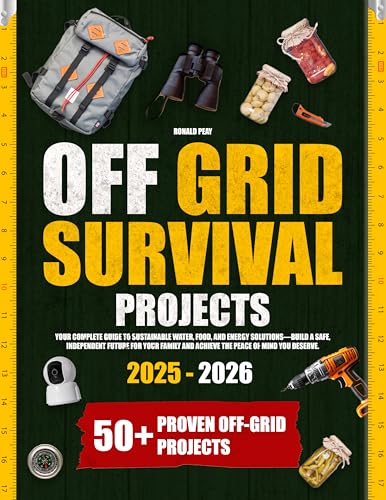
Off Grid Survival Projects: Your Complete Guide to Sustainable Water, Food, and Energy Solutions—Build a Safe, Independent Future for Your Family and Achieve the Peace of Mind You Deserve.
Check price on Amazon
Cool Your Home Cheaply
Check price on Amazon
Off the Grid Mastery: Thriving without Traditional Utilities (Harvesting Dreams: Thriving on Your Homestead Adventure)
Check price on Amazon
Off-Grid Essentials: Mastering Water, Power, and Food Production
Check price on Amazon
Survival by Sun and Nature Off-Grid Systems for Real-World Emergencies
Check price on Amazon