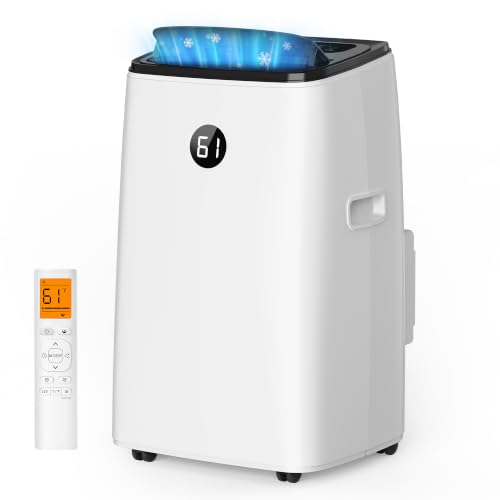
Portable Air Conditioner for Office Without Windows: The Complete Cooling Guide
Windowless offices trap heat from computers, monitors, and body warmth with no natural escape route. This guide explains how to choose, vent, and run a portable AC in an enclosed workspace so your team stays productive and comfortable all day.
Explore Recommended UnitsWhy Cooling a Windowless Office Is Different
A typical office with windows has three natural cooling advantages: daylight that lets you judge the room's temperature, an opening for cross-ventilation, and a place to route an exhaust hose. A windowless office has none of these. Heat generated by servers, monitors, printers, and people accumulates in a sealed box, and there is no obvious path for hot air to leave.
That does not mean a windowless office cannot be cooled. It means the cooling strategy has to be more deliberate. Portable air conditioners are the most common solution because they are self-contained, do not require permanent installation, and can be moved between rooms. The catch is that every portable AC—even models marketed as "ventless"—has to reject heat somewhere. Understanding that constraint is the foundation of a successful setup.
If your situation is closer to a residential enclosed room, the same principles apply—see our guide on portable air conditioners for rooms without windows for a parallel walkthrough.
How Venting Works Without a Window
Every portable air conditioner has two air paths. Room air is drawn in, passed over a cold evaporator coil, and blown back into the office as cool air. At the same time, a separate stream of air absorbs heat from the condenser coil and is pushed out through the exhaust hose. If that exhaust hose discharges into the same room, the heat returns immediately, and the unit effectively becomes a space heater with extra steps.
In a windowless office, the exhaust must travel to one of several possible destinations:
- Drop ceiling plenum — many commercial offices have a suspended ceiling with open space above. A vent kit can discharge exhaust into the plenum if building management permits it.
- Wall-mounted vent — a dryer-style louvered vent installed through an exterior wall. This is the cleanest permanent solution for an office you own or lease long-term.
- Door-mounted exhaust panel — a fabric or rigid panel that fits into a door frame and holds the hose. This works well for rented spaces because it requires no drilling.
- Existing duct or exhaust shaft — some office buildings have shared exhaust risers or return-air shafts. Confirm with the building engineer before tying into them.
- Adjacent room with a window — route the hose through a shared doorway into a neighboring space that has an exhaust path, if the layout allows.
If your office truly has no path at all—no ceiling access, no exterior wall, no door—then a single-hose portable AC will struggle. In that case, consider a dual-hose model, which separates intake and exhaust and puts less negative pressure on the room, or explore portable AC options that require no venting with realistic expectations about their limits.
Sizing Your Portable AC Correctly
Undersizing is the single most common reason a portable AC disappoints in a windowless office. A unit that is too small will run nonstop, never reach the set temperature, and wear out faster. Oversizing is less of a problem with modern inverter units, but it can still cause short cycling and uneven humidity control.
Start with square footage, then adjust for the office's specific heat load:
| Office Size | Base BTU Range | Adjustment Factors |
|---|---|---|
| Up to 150 sq ft (private cubicle) | 5,000 – 6,000 BTU | Add 10–20% for a server or printer nearby |
| 150 – 250 sq ft (small private office) | 8,000 – 10,000 BTU | Add 10% per additional occupant |
| 250 – 400 sq ft (shared office) | 12,000 – 14,000 BTU | Add 20% for east/west sun exposure through glass doors |
| 400 – 600 sq ft (open workspace) | 14,000 – 18,000 BTU | Consider two units for even distribution |
| 600+ sq ft (large enclosed floor) | 18,000 – 24,000 BTU+ | Zoning with multiple units is usually more effective |
Two adjustments matter more in a windowless office than in a home. First, equipment heat: a single desktop tower plus two monitors adds roughly the heat of one extra person. A small server rack can add far more. Second, occupancy: meeting rooms and shared offices need headroom for the number of people present. When in doubt, choose the next size up—especially if you are comparing a single-room portable AC against a slightly larger model.
Features That Matter in an Office Setting
Office use puts different demands on a portable AC than a bedroom or living room. Noise, airflow direction, drainage, and controllability all carry more weight when the unit runs during working hours.
Noise Level
Look for a unit with a low-speed mode rated for office use. Compressor noise is unavoidable, but fan noise and vibration can be reduced with rubber feet and a unit placed on a solid floor rather than carpet. If your office is a shared space, prioritize models with a quiet night or low mode even if you never use it at night.
Airflow Direction
Adjustable louvers and an oscillating fan help distribute cool air across a desk cluster rather than blasting one person. A unit with a remote control or app control lets you redirect airflow without walking over to the machine.
Drainage and Condensate
Offices often cannot be interrupted for manual draining. Self-evaporating systems reduce how often you need to empty the tank, and a built-in condensate pump lets you route water to a drain or outside wall. If your office is in a humid climate, pair the AC with a portable AC that includes a dehumidifier to keep the space comfortable and reduce condensation.
Smart Controls and Scheduling
Programmable timers and Wi-Fi controls let the unit cool the office before the workday starts and shut off after hours. This is especially useful in a windowless room where the heat builds up overnight and nobody is present to switch the unit on manually.
Exhaust Hose and Window Kit Alternatives
Because there is no window, the standard window kit that ships with most portable ACs is useless. Confirm that the unit uses a standard hose diameter so you can pair it with a vent kit designed for non-standard openings, or a door panel kit. Models with a longer hose give you more flexibility in routing.
Practical Venting Solutions for Renters and Owners
The right venting approach depends on how much control you have over the building. Here is how the main options compare in practice.
| Solution | Best For | Installation Effort | Reversible? |
|---|---|---|---|
| Door-mounted exhaust panel | Renters, shared offices, temporary setups | Low — fits into door frame | Yes |
| Drop ceiling plenum vent | Commercial offices with suspended ceilings | Moderate — requires building approval | Mostly |
| Wall-mounted louvered vent | Owned offices, long-term leases | High — needs drilling and sealing | No |
| Existing duct or exhaust shaft | Buildings with shared HVAC infrastructure | Moderate — requires engineer sign-off | Yes |
| Adjacent room with window | Suites with an interior door to a windowed space | Low — route hose through doorway | Yes |
For a deeper look at how enclosed spaces without any opening at all are handled, our article on portable ACs with no outside venting explains what is realistic and what is marketing spin. If the office is part of a larger commercial facility, the considerations in our commercial-use portable AC guide will also apply.
Tier Comparison: Entry-Level to Premium
Portable ACs for office use fall into three broad market tiers. The differences are mostly in build quality, control features, and how well the unit manages condensate and noise—not in the basic cooling principle.
| Tier | Typical Characteristics | Best For |
|---|---|---|
| Entry-Level | Manual controls or simple remote, single-hose exhaust, basic drain tank, louder fan settings | Small private offices, occasional use, tight floor space |
| Mid-Range | Digital thermostat, timer, self-evaporating system, quieter low mode, better hose insulation | Daily-use offices of 150–400 sq ft, shared workspaces |
| Premium | Inverter compressor, dual-hose or advanced venting, condensate pump, Wi-Fi/app control, low decibel rating | Large enclosed offices, rooms with server equipment, spaces where quiet matters |
A mid-range unit usually hits the best balance for a windowless office: it is quiet enough for phone calls, has a self-evaporating system that reduces draining, and includes a timer so it can run on a schedule. Entry-level models are a reasonable starting point for a small private office used a few hours a day, while premium inverter models make sense when the office is occupied for full workdays and noise is a concern. If your office also needs heating in cooler months, a portable AC with a heat pump can replace two separate appliances.
Maintenance and Daily Operation Tips
A portable AC in a windowless office works harder than one in a ventilated room because the heat load never fully clears. A simple maintenance rhythm keeps performance stable:
- Clean or replace the filter every two to four weeks during heavy use. Dusty office air clogs filters quickly and reduces cooling output.
- Check the drain tank weekly unless the unit has a self-evaporating system or condensate pump. In humid months, check more often.
- Inspect the exhaust hose for kinks, tears, or loose connections. A leaking hose sends hot air back into the office and undermines the whole setup.
- Keep the unit clear of obstructions—at least 12 to 18 inches of space around the intake and exhaust.
- Clean the condenser coil at the start of each cooling season. Dust buildup on the coil is a common cause of reduced cooling capacity.
- Run the fan-only mode for 10 minutes before shutting down to dry the internal components and reduce odors.
If the unit stops cooling effectively despite regular maintenance, work through our troubleshooting guide on portable AC not cooling enough before assuming the appliance has failed.
Common Mistakes to Avoid
- Venting into the same room. The most frequent error. Hot exhaust must leave the space, or the unit cannot cool it.
- Choosing a unit that is too small. An undersized AC runs continuously and never catches up with the office's heat load.
- Ignoring the office's equipment heat. A server, a printer, or a bank of monitors can add more load than the square footage suggests.
- Using an evaporative "ventless" cooler in a humid office. Evaporative cooling adds moisture and works poorly in enclosed, humid spaces. A compressor-based portable AC is the right tool.
- Skipping building approval. Modifying a wall or ceiling without permission can create lease problems and safety issues.
- Placing the unit in a corner behind furniture. Restricted airflow reduces efficiency and can cause the unit to overheat.
Frequently Asked Questions
Can a portable air conditioner work in an office without windows?
Yes, but it requires an exhaust path. Since there is no window, route the exhaust hose through a drop ceiling, a wall vent, a door gap, or an existing duct opening. Units that claim to need no venting at all rely on evaporative cooling and will not work well in an enclosed, humid office.
What size portable AC do I need for a windowless office?
Size by square footage and heat load. A private office of about 150–250 square feet typically needs around 8,000–10,000 BTU. Add capacity for server equipment, multiple monitors, direct sun through glass doors, or poor insulation. Choose slightly higher rather than undersized.
Where can I vent a portable AC in a room with no windows?
Common options include a drop-ceiling plenum, a wall-mounted dryer-style vent, a door frame with an exhaust panel, or a pre-existing duct or exhaust shaft. In rented offices, a door-mounted panel is the least invasive solution. Never vent exhaust into the same enclosed room.
Do portable AC units need to be drained in an office?
Many modern units use a self-evaporating system that recycles condensate, reducing how often you drain them. In high-humidity offices, manual draining may still be needed. Look for a condensate pump or a large internal tank to reduce maintenance.
Will a portable AC make a windowless office too humid?
A compressor-based portable AC dehumidifies as it cools, which is generally beneficial. Evaporative coolers, by contrast, add moisture and are a poor fit for enclosed offices. If humidity is a persistent issue, choose a model with a dedicated dehumidification mode or pair the AC with a separate dehumidifier.
Can I use a regular window AC in a windowless office?
No—window units require a window opening for both support and exhaust. A portable AC is the practical alternative because its exhaust can be routed through non-window openings. For spaces with no opening at all, see our guide on portable ACs that require no window.
Ready to Cool Your Windowless Office?
Browse our recommended portable air conditioners below, selected for enclosed workspaces, quiet operation, and flexible venting. Compare features and choose the tier that matches your office size and daily use.
View Recommended Units