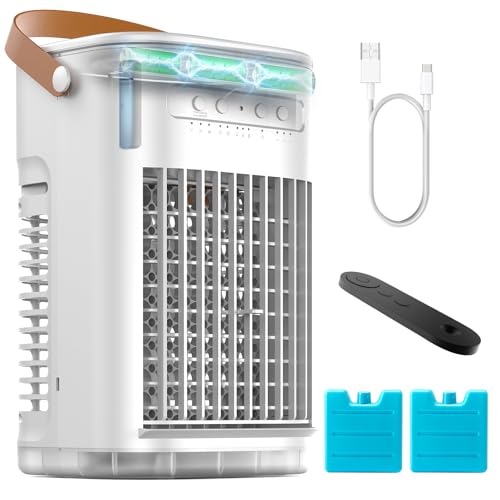
Portable Air Conditioner No Vent Required: What Actually Works
Most shoppers searching for a ventless portable air conditioner discover a confusing truth: compressor-based cooling always needs an exhaust path. This guide explains what "no vent required" really means, which technologies deliver it, and how to pick a unit that keeps a windowless or hard-to-vent space comfortable.
Portable air conditioners are popular because they roll from room to room and install without a contractor. Yet the phrase "no vent required" is one of the most misunderstood labels in the cooling market. Some listings use it loosely, and shoppers end up disappointed when a hose kit appears in the box. The goal of this page is to set expectations precisely, so you know exactly what a ventless unit can and cannot do before you commit.
The Truth About "No Vent Required" Portable AC
Any cooling appliance that uses a compressor and refrigerant must reject heat somewhere. That is simple thermodynamics. A conventional portable AC pulls warm room air across an evaporator coil, absorbs heat, and then dumps that heat into an exhaust airstream that must leave the room through a hose and window kit. Without that exhaust path, the unit would simply push hot air back into the same space and the room would never cool.
So when a product is described as a portable air conditioner with no vent required, it almost always falls into one of two categories:
- Evaporative coolers (swamp coolers) — they cool air by evaporating water through a pad, using only a fan and a pump. No compressor, no refrigerant, no hot exhaust duct.
- Thermoelectric or hybrid spot coolers — small solid-state units that cool a narrow airstream without producing a concentrated hot exhaust that must be ducted away.
Both deliver localized relief rather than the whole-room refrigeration you expect from a compressor unit. That distinction is the single most important thing to understand on this page. If you need true refrigerant-grade cooling in a room with no window, the practical answer is a compressor unit paired with a temporary exhaust route — see the related guidance on portable air conditioner for a room without windows and portable air conditioner with no window required.
Key takeaway: A genuinely ventless portable AC is an evaporative or thermoelectric spot cooler. Compressor portable ACs advertised as "no vent" usually mean "no permanent vent" — they still ship with a hose that must reach a window or opening.
How No-Vent Cooling Works
Evaporative cooling
Air is drawn through a water-soaked cooling pad. As water evaporates, it absorbs heat from the airstream, and a fan blows the cooled, slightly moister air into the room. The process is efficient in dry air and needs only a water tank and a power outlet. Because the unit does not generate refrigerant heat, there is nothing to exhaust — hence the "no vent required" label.
The trade-off is humidity. Evaporative units raise indoor moisture, so they are a poor fit for muggy regions. If you live somewhere with damp summers, review the guidance on portable air conditioner for humid climates and portable air conditioner for high humidity before choosing this technology.
Thermoelectric and hybrid spot cooling
These units use a Peltier-style element to create a cool surface that chills a directed airstream. Output is modest and best described as personal cooling — good for a desk, a bed, or a single chair. They produce very little moisture and no ducted hot air, but they cannot lower the temperature of an entire room the way a compressor can.
Ventless Unit Types Compared
| Type | Cooling Method | Venting Needed | Best For | Market Position |
|---|---|---|---|---|
| Evaporative portable cooler | Water evaporation pad | None | Dry climates, garages, workshops, open living areas | Entry-level to mid-range |
| Thermoelectric spot cooler | Peltier element | None | Desks, bedside, small enclosed work zones | Entry-level |
| Hybrid evaporative + fan | Pad plus high-volume fan | None | Large open spaces with cross-ventilation | Mid-range |
| Compressor portable AC | Refrigerant cycle | Hose to window or opening | Bedrooms, living rooms, any space with an exhaust route | Mid-range to premium |
If your situation does allow a hose to reach an opening, a compressor unit remains the strongest performer. Shoppers weighing that route often compare it against hose-based designs using guides such as single-hose portable air conditioner and what to look for in a portable air conditioner.
Ideal Rooms and Scenarios
Ventless cooling shines where ductwork is impossible or where a window kit would be impractical. The most common successful use cases include:
- Windowless rooms and interior offices — spaces where there is simply no opening to route a hose. See portable air conditioner for an office without windows.
- Basements and converted storage areas — cool, shaded below-grade spaces respond well to evaporative airflow.
- Server closets and equipment nooks — small, enclosed volumes where directed airflow matters more than whole-room chilling. Review portable air conditioner for a server closet.
- Garages, workshops, and screened porches — semi-open spaces where spot cooling plus ventilation is the realistic goal. See portable air conditioner for a screened porch.
- Small apartments and studio units — compact footprints that suit a rolling evaporative unit. Compare portable air conditioner for a small apartment and portable air conditioner for a studio apartment.
- Temporary setups — sporting events, pop-up camper interiors, and pickup-truck camping rigs where no permanent install is possible. See portable air conditioner for sporting events and portable air conditioner for a pop-up camper.
Conversely, ventless units underperform in large open-plan homes, in direct sun with no air exchange, and in very humid regions. Matching the technology to the room is more important than any single spec on the box.
Sizing and Performance Basics
Because evaporative and thermoelectric coolers move air rather than refrigerate a sealed volume, the usual BTU-per-square-foot rule does not translate cleanly. Instead, focus on airflow measured in cubic feet per minute and on how directly the unit can be aimed at occupants.
- Airflow volume — higher cubic-feet-per-minute ratings mean stronger throw distance and better coverage in open areas.
- Tank capacity — a larger reservoir means fewer refills during a long afternoon of use.
- Pad quality — rigid honeycomb pads generally last longer and cool more consistently than thin foam pads.
- Oscillation and louvers — manual or motorized louvers let you sweep the cool airstream across a wider seating area.
For a rough starting point on room-to-unit matching, the sizing discussion in portable air conditioner for a single room and portable air conditioner that can cool a room is a useful cross-reference. If the space is unusually small, the notes on portable air conditioner for a very small room help avoid oversizing.
Features Worth Prioritizing
Water management
Evaporative units need a filled tank to function, and some designs benefit from a continuous fill connection. If hauling water is inconvenient, look for models with a garden-hose inlet or a larger reservoir. Shoppers who want to avoid tank handling entirely should compare against designs covered in portable air conditioner that doesn't need draining and portable air conditioner with no drain required.
Filtration and air quality
Many evaporative coolers include a basic dust filter, and some add a washable pre-filter. If allergy relief is part of the goal, a unit with a replaceable media filter is worth the upgrade. Related reading: portable air conditioner with air purifier.
Mobility and footprint
Castors, a top carry handle, and a slim body make a big difference in small apartments. Models described as portable air conditioner on wheels and stand-up room cooler are built around this use case.
Humidity control
Some hybrid units pair evaporative cooling with a mild dehumidifying mode for shoulder seasons. See portable air conditioner with humidity control and portable air conditioner with dehumidifier.
Pros and Cons at a Glance
✔ Advantages
- No hose, no window kit, no permanent installation
- Works in windowless rooms and interior offices
- Simple setup — fill the tank and plug in
- Lower energy draw than compressor units
- Easy to move between rooms and outdoor setups
✘ Limitations
- Adds moisture — poor fit for humid climates
- Spot cooling only, not whole-room refrigeration
- Requires frequent water refills
- Cooling effect fades in very large or open spaces
- Pad replacement is a recurring maintenance task
Setup and Maintenance Steps
A ventless cooler is quick to deploy, but a little routine care keeps performance consistent across seasons. Follow this sequence:
- Position with airflow in mind. Place the unit near an open doorway or a shaded spot, and aim the louvers toward the seating area rather than a wall.
- Fill the tank with fresh water. Avoid stale water sitting for days; empty and refill before each extended use.
- Pre-soak the cooling pad. On first use, let the pad saturate fully so the fan does not blow dry air.
- Run on high for the first ten minutes. This pushes the initial cool airstream into the room faster before settling to a lower fan speed.
- Clean the pad and tank weekly in peak season. Rinse mineral film, wipe the reservoir, and let parts dry fully before reassembly.
- Replace the pad at the start of each cooling season or sooner if the water in your area is hard.
- Store dry at season end. Empty the tank, remove and dry the pad, and cover the unit to keep dust out of the fan housing.
Common Buying Mistakes
- Assuming a compressor unit is ventless. If the box shows a hose and a window slider, it is not. Read the specification sheet carefully.
- Buying an evaporative cooler for a humid region. It will raise humidity and feel clammy rather than refreshing.
- Oversizing expectations for a large open room. Ventless coolers are best in defined, semi-enclosed zones.
- Ignoring maintenance. A clogged pad or a mineral-crusted tank quickly cuts cooling output.
- Skipping the exhaust question entirely. If you actually do have a window, a compressor model will cool far more effectively — see portable air conditioner with no outside venting for the hybrid middle ground.
Frequently Asked Questions
Do portable air conditioners really work without a vent?
True compressor-based portable air conditioners always need to exhaust heat somewhere, so a ventless unit of that type does not exist. Evaporative portable coolers and some hybrid spot coolers are marketed as no-vent-required because they do not use a compressor and do not produce concentrated hot air that must be ducted outside.
What is the difference between a ventless portable AC and a regular portable AC?
A regular portable AC uses a compressor and refrigerant, and it must push heat out through an exhaust hose. A ventless portable cooler uses evaporation or a small thermoelectric element, produces no refrigerant-based hot exhaust, and therefore needs no window kit or hose.
Can a no-vent portable air conditioner cool a room without windows?
Yes. Because these units do not need an exhaust route, they suit rooms with no windows, basements, server closets, and interior offices. They provide local spot cooling rather than whole-room refrigeration. For a deeper comparison, see portable air conditioner for a windowless room.
Is a ventless portable AC good for humid climates?
Evaporative coolers add moisture to the air, so they perform poorly in humid climates. In high-humidity regions, a compressor-based unit with a proper exhaust hose, or a dehumidifier-led approach, is a better fit.
How much maintenance does a no-vent portable cooler need?
Typical upkeep includes refilling the water tank, cleaning or replacing the cooling pad, and wiping the tank to prevent mineral buildup. Pads usually need replacement once or twice per cooling season depending on water hardness.
Can a ventless unit replace a central air system?
No. Ventless coolers are spot-cooling devices. They complement rather than replace central air, and they are most useful in spaces that central systems do not reach. Shoppers exploring that angle can review portable air conditioner to supplement central air.