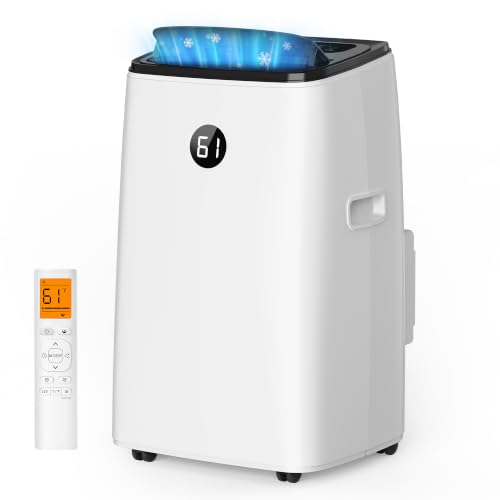
Portable Air Conditioner for Single Room: The Complete Buyer's Guide
Everything you need to know before choosing a portable AC for one room — BTU sizing, hose configurations, venting options, drainage systems, noise levels, and the features that actually matter for a single-room setup.
Explore Recommended UnitsWhy this guide exists: A portable air conditioner for a single room is one of the most practical cooling solutions for renters, apartment dwellers, and homeowners without ductwork. But the category is full of confusing specifications. This guide walks you through every decision point so you can choose with confidence — no guesswork, no wasted effort.
Why Choose a Portable AC for a Single Room
A single-room portable air conditioner is a self-contained cooling unit on wheels. It sits on the floor, cools the room it is placed in, and exhausts hot air through a hose kit that connects to a window or wall opening. Unlike window units, it does not need permanent installation, and unlike central systems, it does not require ductwork.
This makes it a strong fit for several situations:
- Renters who cannot modify windows or walls permanently.
- Older homes without central ductwork.
- Small apartments and studios where one unit can cover the whole living space — see our guide on portable air conditioners for small apartments.
- Bedrooms that need targeted overnight cooling without cooling the entire house.
- Supplemental cooling for rooms that stay warm even with central air — covered in our article on using a portable AC to supplement central air.
- Temporary or seasonal cooling where a permanent installation is not practical.
The trade-off is that portable units are generally less efficient than window or mini-split systems, and they take up floor space. But for a single room with no other viable option, they are often the most practical path to comfortable temperatures.
How to Size a Portable AC for One Room
Getting the capacity right is the single most important decision. An undersized unit runs constantly and never quite cools the room. An oversized unit cools too quickly, cycles on and off, and struggles to remove humidity properly.
The baseline rule of thumb is approximately 20 BTU per square foot of floor area. Start with the table below, then apply the adjustment factors that follow.
| Room Size | Starting BTU Range | Typical Use Case |
|---|---|---|
| Up to 150 sq ft | 5,000 – 6,000 BTU | Small bedroom, home office, dorm room |
| 150 – 250 sq ft | 8,000 – 10,000 BTU | Standard bedroom, small studio |
| 250 – 400 sq ft | 12,000 – 14,000 BTU | Large bedroom, studio apartment, living area |
| 400 – 550 sq ft | 14,000 – 18,000 BTU | Open-plan studio, converted loft |
Adjustment Factors
- Sunny exposure: Add roughly 10% capacity for a room with large south- or west-facing windows.
- Kitchen use: Add 4,000 BTU if the room includes a cooking area.
- High ceilings: Rooms above 8 feet may need a step up in capacity.
- Occupancy: Add about 600 BTU per additional person beyond two regular occupants.
- Insulation quality: Poorly insulated rooms benefit from a higher capacity margin.
- Humidity: In humid climates, a unit with strong dehumidification matters more than raw BTU — see our guide on portable AC for humid climates.
Single Hose vs Dual Hose: Which Matters for One Room
This is the most misunderstood part of portable AC shopping. The hose configuration directly affects cooling performance, especially in a single closed room.
Single Hose Units
A single hose unit draws air from inside the room, uses it to cool the condenser, and exhausts it outside. This creates negative pressure in the room, which pulls warm outdoor air in through gaps around doors and windows. The result is that the unit is partly fighting itself. Single hose units are lighter, simpler, and often entry-level in the category — but they struggle in very hot conditions and in tightly sealed rooms.
Dual Hose Units
A dual hose unit uses one hose to draw outdoor air in for condenser cooling and a second hose to exhaust it back out. Because it does not consume indoor air, it maintains neutral room pressure and cools more efficiently. For a single sealed room, dual hose models are generally the stronger choice. They are usually mid-range to premium in the category and weigh more, but the performance difference is meaningful. You can read more about the mechanics in our article on single hose portable air conditioners.
| Feature | Single Hose | Dual Hose |
|---|---|---|
| Room pressure | Negative (pulls warm air in) | Neutral (no warm air intrusion) |
| Cooling efficiency | Moderate | Higher |
| Weight and portability | Lighter, easier to move | Heavier, bulkier |
| Typical market tier | Entry-level | Mid-range to premium |
| Best for | Mild climates, occasional use | Hot climates, daily use, sealed rooms |
Venting Options for a Single Room
Every compressor-based portable AC needs an exhaust path. The vent kit is what connects the hose to that path. The right kit depends entirely on your window type.
- Sliding windows: A sliding window kit with a adjustable panel is the most common solution — see portable AC sliding window kits.
- Casement windows: These need a specialized kit that fits the crank-out frame — covered in portable AC for casement windows.
- Crank-out and push-out windows: These require a kit designed for outward-opening sashes — see window kit for crank windows.
- Vertical sliding windows: Standard vertical kits work well — see vertical window kits.
- No window at all: You can route the exhaust through a wall sleeve or a door vent kit. Our guide on portable AC for rooms without windows explains the options.
If your room has an unusual window, check our full list of window-specific guides before buying — the wrong kit can make an otherwise good unit frustrating to use.
Drainage: Self-Evaporating vs Manual Drain
Portable ACs produce condensate as they cool and dehumidify. How that water is handled varies by model:
- Self-evaporating systems recycle condensate to cool the condenser, which reduces how often you need to drain. Many mid-range and premium units include this — see portable AC with self-evaporating system.
- Manual drain tanks require periodic emptying. In humid conditions this can be frequent.
- Condensate pumps automatically push water out through a hose, which is useful for continuous operation — see portable AC with condensate pump.
For a single room used daily in summer, a self-evaporating system or a built-in pump significantly reduces maintenance friction.
Noise, Weight, and Portability
Portable ACs are louder than window units and mini-splits because the compressor sits in the same room. Noise levels typically range from the low 50s to high 50s in decibels. For a bedroom, look for models with a sleep mode and a lower minimum noise rating. Premium units tend to have better sound insulation and smoother fan curves than entry-level models.
Weight matters if you plan to move the unit between rooms. Entry-level single hose units are often lighter; dual hose and high-capacity units can be heavy. If mobility is a priority, look at models with sturdy casters and side handles — see portable AC on wheels.
Features Worth Prioritizing for a Single Room
- Programmable timer and sleep mode: Useful for overnight cooling in a bedroom.
- Remote control: Convenient when the unit is placed across the room.
- Dehumidification mode: Important in humid climates — see portable AC with dehumidifier.
- Heat pump function: Extends usability into shoulder seasons — see portable AC with heat pump.
- Air purification: Helpful for allergy sufferers — see portable AC with air purifier.
- Inverter compressor: Smoother operation and better efficiency — see portable AC with inverter compressor.
- Wi-Fi and smart control: Nice to have, but not essential for a single room.
Common Mistakes to Avoid
- Buying by BTU alone. Hose configuration, venting, and drainage matter just as much as capacity.
- Ignoring the window type. A great unit with the wrong vent kit is a frustrating unit.
- Oversizing. A unit that is too large cools quickly but removes less humidity, leaving the room feeling clammy.
- Skipping the exhaust setup. A portable AC that is not vented properly will not cool effectively — see portable AC not vented to outside.
- Expecting whole-home cooling. A single-room unit is designed for one room. For multi-room coverage, see portable AC for multiple rooms.
Quick Decision Checklist
- Measure the room and calculate BTU using the table above plus adjustment factors.
- Identify your window type and confirm a compatible vent kit exists.
- Decide between single hose (lighter, simpler) and dual hose (more efficient, better for sealed rooms).
- Check whether the unit is self-evaporating or needs frequent draining.
- Confirm noise level is acceptable for your use case (especially for bedrooms).
- Verify the unit fits your floor space and can be moved if needed.
- Choose features that match your climate — dehumidification, heat pump, or air purification.
If you are still narrowing down the category, our overview of what to look for in a portable air conditioner covers the buying criteria in more depth.
Frequently Asked Questions
What size portable air conditioner do I need for a single room?
Start with roughly 20 BTU per square foot. A 150 sq ft room typically needs 5,000–6,000 BTU, a 250 sq ft room needs 8,000–10,000 BTU, and a 400 sq ft room needs 12,000–14,000 BTU. Adjust upward for sunny exposure, kitchens, high ceilings, or many occupants.
Is a single hose or dual hose portable AC better for one room?
Dual hose units generally perform better in a sealed single room because they do not create negative pressure that pulls warm outdoor air in. Single hose units are lighter and simpler but less efficient in hot conditions.
Does a portable air conditioner for a single room need to be vented outside?
Yes. Compressor-based portable ACs must exhaust hot air outdoors through a hose kit. Only evaporative coolers avoid venting, but they add humidity and are not suitable for humid climates.
Do I need to drain a portable air conditioner in a single room?
Many modern units use self-evaporating systems that reduce draining frequency. In very humid conditions you may still need to drain manually or use a condensate pump.
Can a portable air conditioner cool a single room without a window?
A compressor-based unit needs an exhaust path. Without a window, you can route the hose through a wall sleeve, drop ceiling vent, or door vent kit. Without any exhaust path, a standard portable AC will not work effectively.