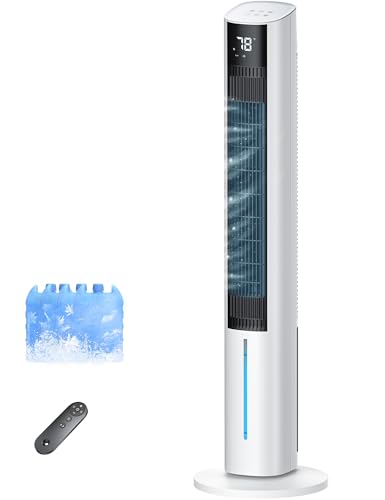
Portable Air Conditioner No Exhaust Hose Needed
Explore hose-free portable cooling: how ventless models work, where they fit best, and how to pick the right one for your space
START READINGQuick summary: A portable air conditioner that needs no exhaust hose is one of the most flexible cooling options available. Instead of routing hot air through a window, these units use evaporative cooling, desiccant drying, or localized spot-cooling designs. This guide explains the trade-offs, the best use cases, and the features that matter most so you can decide whether a hose-free model suits your room before you buy.
What Does "No Exhaust Hose Needed" Really Mean?
Traditional portable air conditioners collect heat from the room and push it outside through a flexible exhaust hose connected to a window kit. That hose is effective, but it brings limitations: the unit must sit near a compatible window, the hose can leak warm air back indoors, and some window styles simply do not accept a standard kit.
Hose-free portable AC units solve those problems in different ways. Most fall into one of three categories:
- Evaporative coolers (swamp coolers): pull air through a water-saturated pad and blow out cooler, moister air. They work well in dry climates and use very little electricity, but they add humidity.
- Desiccant portable AC units: remove moisture from the air and deliver cooler, drier output. They are better suited to humid spaces but consume more energy and often need periodic water disposal.
- Spot-cooling units: combine a compact compressor with a small, directed airflow, cooling only the area immediately around the unit rather than the whole room.
Each approach delivers a different kind of comfort. Understanding which one matches your room and climate is the single most important decision before buying.
How Ventless Portable AC Units Cool a Room
Without a hose, heat cannot be dumped outside. So the unit must either absorb heat into water (evaporative), manage it internally through a desiccant wheel, or direct cool air at a small target zone (spot cooling). That is why hose-free models are usually described as personal or zone coolers rather than whole-room air conditioners.
The practical consequence is a smaller cooling envelope. A ventless unit may drop the temperature several degrees in its immediate vicinity while the far side of the room stays warm. If your goal is to keep one desk, bed, or seating area comfortable, that limitation is acceptable. If your goal is to chill an entire open-plan living space, a hose-based or ducted system remains the better fit.
Airflow placement matters just as much as raw capacity. Units positioned near the occupant, with unobstructed intake and outlet vents, deliver noticeably better perceived cooling than the same unit tucked into a corner. For spaces where ventilation is impossible, such as an interior room, you may also want to read about portable AC for a room without windows to compare hose-free options with low-vent alternatives.
Advantages and Limitations
Advantages
- No window or exterior wall required
- Works in interior rooms, basements, and closets
- Fast setup with no window kit installation
- Easy to move between rooms
- Evaporative models use very little electricity
- No hose means no warm-air leakage back indoors
Limitations
- Smaller cooling zone than hose-based units
- Evaporative models raise indoor humidity
- Desiccant models need periodic water handling
- Not ideal for large open spaces
- Performance depends heavily on room sealing
- Compressor spot coolers produce noticeable noise
Where Hose-Free Portable AC Units Work Best
The strongest use cases are spaces where a hose is impossible, impractical, or simply unnecessary because only a small area needs cooling. These scenarios consistently deliver the best results:
Windowless Rooms
Interior offices, storage rooms, and converted basements with no exterior opening are natural candidates. See the guide to portable AC for a windowless room for setup tips.
Server and Equipment Closets
Small enclosed spaces with heat-generating equipment benefit from directed spot cooling. Compare approaches in portable AC for a server closet.
Campers and RVs
When a roof unit is unavailable or a window kit will not fit, a ventless model can take the edge off. See portable AC for a camper.
Small Apartments and Studios
Personal cooling for a desk or sleeping area in a compact layout. Read portable AC for a small apartment for layout guidance.
Home Offices
Cooling just the workspace during the day keeps energy use focused. See portable AC for a single room.
Supplemental Cooling
Add local relief to a room that central air struggles to reach. Compare options in portable AC to supplement central air.
Hose-Free vs Hose-Based Portable AC
A side-by-side comparison helps clarify when each design is the smarter choice. The right answer depends less on raw cooling power and more on the room, the climate, and how much of the space actually needs relief.
| Factor | No-Hose Portable AC | Hose-Based Portable AC |
|---|---|---|
| Window requirement | None | Compatible window or wall opening |
| Cooling coverage | Personal or zone cooling | Larger room coverage |
| Humidity effect | Evaporative adds moisture; desiccant removes it | Reduces humidity |
| Installation | Plug and place | Window kit assembly required |
| Best for | Interior rooms, small spaces, dry climates | Bedrooms, living rooms, humid climates |
| Portability | High — no hose to disconnect | Moderate — hose and kit must move too |
| Energy use | Low for evaporative; higher for desiccant | Moderate to high |
Climate Matters: Dry vs Humid Environments
The single biggest mistake buyers make is choosing an evaporative unit for a humid climate. Evaporative cooling depends on dry air absorbing moisture; in a muggy room, it adds humidity without meaningful temperature relief. If you live in a humid region, prioritize desiccant or compressor-based spot coolers, and review the guidance on portable AC for humid climates before deciding.
Conversely, in arid climates, evaporative models are remarkably effective and efficient. They consume far less power than compressor units and can make a dry room feel noticeably cooler. For spaces where moisture control is a secondary concern but comfort is not, they represent a strong option.
Features That Matter When Choosing
Because hose-free units vary widely in design, feature selection matters more than in any other cooling category. Focus on the following:
- Cooling method: evaporative, desiccant, or compressor spot cooling. Match it to your climate and room type.
- Airflow direction: adjustable louvers and oscillation help direct cool air toward the occupant.
- Water management: evaporative models need a reservoir; desiccant models may need drainage. Look for easy-fill and easy-empty designs.
- Noise level: personal units sit close to you, so fan noise matters more than in a hose-based unit across the room.
- Footprint and mobility: casters and a compact body make it easy to reposition during the day.
- Controls and scheduling: remote control and timers add convenience for bedroom and office use.
- Filtration: washable filters keep airflow clean and maintain performance over time.
If you want a structured checklist before comparing models, the guide on what to look for in a portable air conditioner walks through the decision points in detail.
Market Tiers for Hose-Free Portable AC Units
Rather than focusing on figures, it helps to understand how hose-free models are positioned in the market. The table below groups them by tier so you can match expectations to design and build quality.
| Tier | Typical Characteristics | Best For |
|---|---|---|
| Entry-level | Basic evaporative design, manual controls, single fan speed, simple reservoir | Occasional personal cooling in dry rooms |
| Mid-range | Multiple fan speeds, oscillation, remote control, larger reservoir, washable filter | Daily use in bedrooms, offices, and small apartments |
| Premium | Desiccant or hybrid design, humidity management, quieter operation, smart controls | Humid climates and spaces where moisture control matters |
| Professional-grade | Heavy-duty spot cooler with reinforced housing, continuous-duty compressor, directed airflow | Server closets, equipment rooms, commercial spot cooling |
Setup and Placement Tips
Because hose-free units cool a limited zone, placement is not a minor detail — it is the difference between satisfaction and disappointment. Follow these practical rules:
- Place the unit within a few feet of the person or area being cooled.
- Keep at least a foot of clearance around intake and outlet vents.
- Direct airflow toward the occupied zone, not toward a wall or ceiling.
- Close doors to keep the cooled air in the target area.
- Shade windows and reduce direct sun load during the hottest hours.
- For evaporative models, refill the reservoir before it runs dry to maintain consistent output.
If your space is unusually small, review the tips on portable AC for a very small room to avoid oversizing the unit for the area.
Maintenance That Keeps Performance High
Hose-free units have fewer installation parts but still require routine care. Clean or replace the filter every few weeks during heavy use, drain and dry the water reservoir to prevent odor and mold, and wipe down the exterior vents. Desiccant models may need their moisture-collection tray emptied regularly, while evaporative models benefit from periodic descaling if your water is mineral-rich.
If a unit starts underperforming, do not assume it is broken. Check filter condition, airflow clearance, and water levels first. Many perceived failures trace back to a clogged filter or a blocked vent rather than a mechanical fault.
Who Should Choose a No-Hose Portable AC?
A portable air conditioner without an exhaust hose is a smart choice if you need to cool a specific area, cannot install a window kit, or live in a dry climate where evaporative cooling is effective. It is a poor choice if you expect to chill a large open room or if you live in a humid region and would be relying on an evaporative design. Match the technology to the room, place the unit close to the occupant, and keep the filter clean — those three decisions account for most of the satisfaction buyers report.
Ready to Compare Hose-Free Models?
Review the recommended options below to find a ventless portable AC that fits your room, climate, and cooling goals.
Frequently Asked Questions
Yes, but with important trade-offs. Hose-free portable units rely on evaporative cooling, desiccant drying, or spot-cooling designs. They cool the air in their immediate vicinity rather than the entire room, and they typically produce smaller temperature drops than hose-based compressor units.
Evaporative (swamp cooler) models do add moisture to the air, which makes them unsuitable for humid climates. Desiccant models remove moisture instead, and some hybrid designs manage humidity more carefully. Always check the cooling method before buying.
Place the unit close to the person or area you want to cool, within a few feet if possible. Keep it away from walls and furniture so airflow is unobstructed, and direct the louvers toward the occupied zone.
Their efficiency varies widely by technology. Evaporative models consume little power but only cool dry air, while desiccant units use more energy to manage humidity. Compare energy factor or CEER ratings across models rather than assuming a single number applies to the category.
Yes, this is one of the best use cases. Without a hose or window requirement, these units work in interior rooms, basements, server closets, and offices that lack exterior windows, as long as the space is reasonably well sealed.
Recommended Portable Air Conditioners Without Exhaust Hose
⚠️ AFFILIATE DISCLOSURE: This website contains affiliate links. As an Amazon Associate, we earn from qualifying purchases. If you make a purchase through these links, we may receive a small commission at no additional cost to you. Read our full affiliate policy.

Windowless Portable Air Conditioners Fan, Swamp Cooler 3 Modes & 3 Speeds, 16FT Remote,12H Timer for Smart Auto-off, No Hose Needed,2-Gal Tank for 20H Cooling 36db Evaporative Air Cooler
Check price on Amazon
BLACK+DECKER Portable Air Conditioner, 10,000 BTU, BPACT10WT, White | 5,500 BTU SACC for Rooms up to 450 Sq. Ft., 3-in-1 Portable AC, Fan and Dehum with Follow Me Remote Control
Check price on Amazon
Windowless Portable Air Conditioner, 24.3" Small Evaporative Air Cooler for Room No Window, 3-Speed Settings, 4 Modes, 15H Timer, Remote Control, 4 Ice Packs, Quiet AC Unit for Bedroom, White
Check price on Amazon
14,000 BTU Portable Air Conditioner Cools Up to 700 Sq.Ft, 3-IN-1 Energy Efficient Portable AC Unit with Remote Control & Installation Kits for Large Room, Office, Temporary Space
Check price on Amazon
Portable Air Conditioner Hose, 5.9" Diameter Anti-Clockwise Thread, Universal Replacement AC Vent Hose Length up to 59" (Does not include coupler)
Check price on Amazon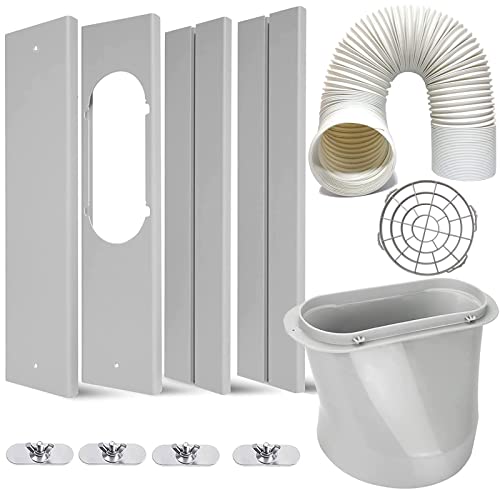
LEZIFU Portable Air Conditioner Kit with Hose, Adjustable Window Seal with 5.9 Inch Diameter 59" Length Hose for Vertical/Horizontal Window
Check price on Amazon
BLACK+DECKER Portable Air Conditioner, 9,000 BTU, BPACT08WT, White | 5,300 BTU SACC for Rooms up to 400 Sq. Ft., 3-in-1 Portable AC, Fan and Dehum with Follow Me Remote Control
Check price on Amazon