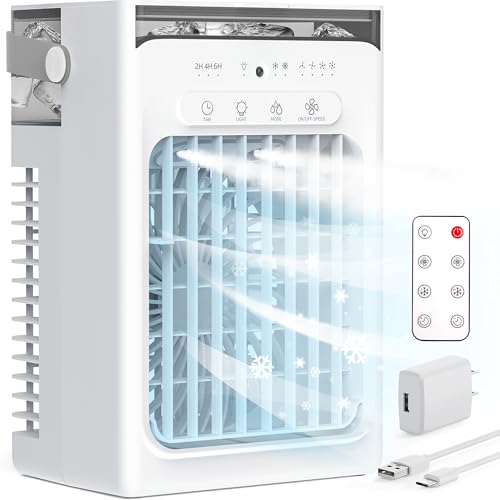
Portable Air Conditioner for Humid Climates
In humid climates, cooling alone is not enough — removing moisture is just as important. This guide explains how portable air conditioners handle humidity, what to look for in a dehumidification-capable unit, and how to set up a system that keeps a muggy room genuinely comfortable.
Understand Humidity ChallengesWhy Humidity Changes Everything
Humidity affects how comfortable a room feels more than temperature alone. A room at 78°F with high humidity can feel significantly warmer and stickier than a room at 82°F with low humidity. The reason is that high humidity slows the evaporation of moisture from your skin, which is the body's primary cooling mechanism.
This means that in humid climates, an air conditioner that cools but does not dehumidify will leave the room feeling clammy even at a lower thermostat setting. A portable AC that removes moisture effectively is often more valuable than one with a higher raw cooling capacity but weaker dehumidification.
Humid climates also create secondary issues: condensation on cold surfaces, musty odors, and mold growth in poorly ventilated rooms. A portable AC that dehumidifies helps address all three, which is why moisture removal deserves as much attention as cooling capacity.
If the room already feels clammy and the AC is running but not helping, the portable air conditioner for high humidity guide covers the specific scenarios where humidity is the dominant problem, and the portable air conditioner for humid climates topic is the broader version of the same question.
How Portable ACs Remove Moisture
Every refrigerated portable air conditioner removes some moisture as a byproduct of cooling. As warm, humid air passes over the cold evaporator coil, moisture condenses on the coil and drips into a drain pan. The amount of moisture removed depends on the coil design, the airflow rate, and how long the unit runs.
There are two broad approaches to managing that condensate:
- Manual drain tanks: The unit collects condensate in an internal tank that must be emptied periodically. In very humid climates, this tank can fill quickly, sometimes within a few hours of continuous operation.
- Self-evaporating systems: The unit uses some of the condensate to cool the condenser and evaporates the rest through the exhaust air. These systems reduce or eliminate manual draining, which is a major convenience in humid climates.
Some units also offer a continuous drain option, where a hose connects to the drain port and routes condensate to a floor drain or outside. This is the most hands-off approach, but it requires a drainage path.
If draining is a concern, the portable air conditioner you don't have to drain and portable air conditioner no drain required guides cover the self-evaporating and continuous-drain categories in more detail. For units that combine cooling and moisture removal explicitly, the portable air conditioner with heater and dehumidifier guide covers combination units.
Features That Matter in Humid Climates
Not every feature on a portable AC matters equally in a humid climate. The following list focuses on what actually improves comfort and reduces maintenance in muggy conditions.
Dehumidification Capacity
Look for a unit with an explicit dehumidification rating, usually expressed in pints per day. A unit with a strong dehumidification rating will remove more moisture per hour, which is the single most important factor in humid climates.
Self-Evaporating or Continuous Drain
As noted above, self-evaporating systems reduce the frequency of manual draining. Continuous drain is the most hands-off option if a drainage path is available.
Dual-Hose Design
A dual-hose portable AC draws outside air in for condenser cooling and exhausts it back out, which avoids depressurizing the room. In humid climates, this matters because a single-hose unit pulls humid outside air in through gaps in the building envelope, which undermines dehumidification. The portable air conditioner single hose guide explains the trade-offs.
Variable-Speed or Inverter Compressor
A variable-speed compressor runs longer at lower capacity, which improves moisture removal because the coil stays cold for longer periods. This is a meaningful advantage in humid climates. The portable air conditioner with inverter technology guide covers this category.
Adjustable Louvers and Fan Speeds
Good airflow distribution helps prevent pockets of humid air from settling in corners. Adjustable louvers and multiple fan speeds make it easier to keep the whole room comfortable.
Washable or Replaceable Filters
In humid climates, filters can become damp and develop odors. A washable filter or an easily replaceable one is a practical advantage.
Sizing and Placement in Humid Rooms
Sizing a portable AC for a humid room follows the same general principles as sizing for any room, with a few humid-climate-specific adjustments.
Sizing Adjustments
- Do not oversize. An oversized unit cools quickly and shuts off before it has time to remove much moisture. In humid climates, a slightly undersized unit that runs longer is often more comfortable than an oversized unit that short-cycles.
- Account for humidity. Rooms with consistently high humidity may need a unit with a stronger dehumidification rating even if the square footage suggests a smaller capacity.
- Consider internal moisture sources. Bathrooms, kitchens, laundry rooms, and basements often have higher moisture loads than living rooms or bedrooms.
Placement Tips
- Place the unit centrally so cool, dry air can circulate throughout the room.
- Keep the exhaust hose short and straight to minimize heat gain and back pressure.
- Avoid placing the unit near moisture sources such as sinks, showers, or damp walls.
- Use a circulator fan to move air into corners and prevent humid pockets from forming.
For rooms with specific layouts, the portable air conditioner for 500 sq ft room and portable air conditioner for 1000 square feet guides cover capacity ranges in more detail. For basement rooms, which are often humid, the portable air conditioner for basement window guide is a useful companion.
Drainage and Condensate Management
In humid climates, condensate management is not a minor detail — it is central to how well the unit performs and how much maintenance it requires. A unit that fills its tank every few hours becomes a chore, and a unit that overflows can damage flooring.
The table below compares the main drainage approaches.
| Approach | Maintenance | Best For |
|---|---|---|
| Manual drain tank | Empty frequently in humid weather | Short cooling sessions, occasional use |
| Self-evaporating system | Minimal; occasional checks | Most humid-climate homes, continuous use |
| Continuous drain hose | Set-and-forget if a drain path exists | Basements, rooms near floor drains, long-run setups |
If you choose a manual-drain unit, plan for frequent emptying during the most humid weeks. If you choose a self-evaporating unit, still check the tank periodically — self-evaporating systems work best in moderate humidity and may still accumulate condensate in very humid conditions. The portable air conditioner that doesn't need draining guide covers the trade-offs in more depth.
Portable AC Tiers for Humid Climates
Portable ACs vary widely in dehumidification capability and build quality. The table below groups them by tier so you can match the unit to the humidity level in your space.
| Tier | Dehumidification | Drainage | Best For |
|---|---|---|---|
| Entry-Level | Basic moisture removal as a byproduct | Manual tank | Mild humidity, short sessions |
| Mid-Range | Explicit dehumidification rating, better coil design | Self-evaporating or manual | Most humid-climate homes |
| Premium | Strong dehumidification, dual-hose design | Self-evaporating plus continuous drain option | Consistently humid rooms, long cooling seasons |
| Flagship | Variable-speed compressor, high dehumidification rating | Self-evaporating plus continuous drain | Very humid climates, bedrooms, high-comfort priorities |
For most humid-climate homes, a mid-range or premium unit with an explicit dehumidification rating and self-evaporating drainage is the practical choice. Flagship units with variable-speed compressors are worth considering for bedrooms, where quiet operation and consistent moisture removal matter most.
If the humidity is severe and the room is also hot, a combination unit may be worth considering. The portable air conditioner with heater and dehumidifier guide covers combination units, and the portable air conditioner dehumidifier heater guide covers the three-in-one category. For rooms where the AC is running but the air still feels wet, the portable air conditioner not cooling enough guide covers the overlap between cooling and humidity problems.
Common Mistakes to Avoid
Several common mistakes undermine portable AC performance specifically in humid climates. Avoiding them is often more impactful than upgrading to a more advanced unit.
- Oversizing the unit. An oversized AC short-cycles and never runs long enough to remove moisture. Choose capacity based on load, not just square footage, and lean toward slightly smaller units in humid rooms.
- Ignoring the drain tank. A full tank shuts the unit off, which stops both cooling and dehumidification. Check the tank regularly, especially during the most humid weeks.
- Using a single-hose unit in a sealed room. A single-hose unit creates negative pressure and pulls humid outside air in through gaps. If the room is well-sealed, a dual-hose unit is a better choice.
- Blocking airflow. Placing furniture or curtains in front of the supply louvers reduces circulation and allows humid air to settle.
- Neglecting the filter. A damp, dirty filter can develop odors and reduce airflow, which worsens humidity problems.
- Expecting an evaporative cooler to help. Evaporative coolers add moisture to the air, which is the opposite of what a humid room needs. The portable evaporative air cooler guide explains the climate conditions where they make sense.
Frequently Asked Questions
Do portable air conditioners work well in humid climates?
Yes, but the quality of the result depends heavily on the unit's dehumidification capability and drainage system. A unit with an explicit dehumidification rating, a self-evaporating system, and good airflow will deliver much better comfort in a humid room than a basic cooling-focused unit.
How do I know how much moisture a portable AC removes?
Look for a dehumidification rating expressed in pints per day. Higher ratings mean more moisture removal. If the manufacturer does not publish a rating, treat the dehumidification capability as basic and plan for a unit with strong cooling performance and a self-evaporating drain.
Should I choose a single-hose or dual-hose unit for a humid climate?
A dual-hose unit is generally better in humid climates because it does not depressurize the room and pull humid outside air in through gaps. A single-hose unit can still work, but it is less efficient in a well-sealed, humid space.
Why does my portable AC fill its tank so quickly?
High humidity means more moisture condenses on the evaporator coil, which means more condensate. In very humid weather, a manual-drain tank can fill within hours. A self-evaporating system or a continuous drain hose reduces this maintenance burden.
Can a portable AC make a humid room feel colder without lowering the thermostat?
Yes. Removing moisture makes the air feel cooler at the same temperature because sweat evaporates more efficiently. This is why dehumidification is often more valuable than a lower thermostat setting in humid climates.
Is an evaporative cooler a good choice for a humid climate?
No. Evaporative coolers add moisture to the air as they cool, which makes a humid room feel worse. They work well in dry climates but are the wrong tool for humid environments.