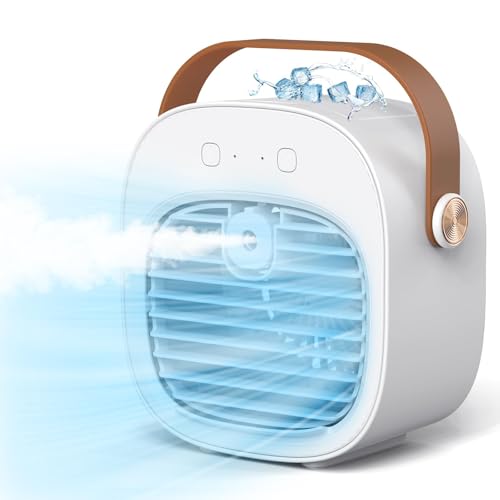
Portable Miniature Air Conditioner: The Complete Buyer's Guide
Compact spot-cooling units are changing how people cool small rooms, home offices, dorm spaces, and camping setups. This guide explains how miniature portable ACs actually work, what they can and cannot do, and how to pick the right one for your space.
Start LearningWhat Is a Portable Miniature Air Conditioner?
A portable miniature air conditioner is a compact, freestanding cooling device designed for personal or small-area spot cooling. Unlike a full-size portable indoor air conditioning unit, which typically handles a whole room, a miniature model is built to cool the immediate zone around a person — a desk, a bed, a small workstation, or a single seat in a camper.
These devices usually fall into one of three design families:
- Compressor-based compact units — the closest thing to a true air conditioner in miniature form. They use refrigerant and a small compressor, and they deliver real sensible cooling for a tightly defined space.
- Evaporative personal coolers — also called swamp coolers. These blow air across a wet pad or misting element. They work well in dry climates but add humidity to the air, which matters in already humid rooms.
- Thermoelectric (Peltier) spot coolers — solid-state units that cool a small plate and fan air across it. They are quiet and compact, but their cooling output is modest and best treated as personal comfort rather than room cooling.
Because “miniature” can mean different things depending on the brand, the key is to look at the cooling specification and the intended application, not just the physical footprint. A unit that fits on a nightstand and a unit that sits on the floor but cools a tiny office are both often marketed as “miniature,” yet they behave very differently.
How Miniature Portable ACs Work
Understanding the mechanism helps you avoid disappointment. A miniature unit’s cooling performance depends entirely on which of the three families it belongs to.
Compressor models pull in warm room air, pass it over an evaporator coil, and release cooled air back into the room. Heat is rejected through a condenser. Because heat has to go somewhere, compressor-based units require an exhaust path — a window kit, a wall vent, or a hose routed outside. This is the same principle described in our broader guide to portable mini-splits, just scaled down.
Evaporative coolers draw air through a saturated cooling pad. As water evaporates, the air temperature drops. The trade-off is humidity: the unit adds moisture to the room, so it is most effective in dry climates and least effective in muggy conditions.
Thermoelectric coolers use the Peltier effect — an electric current creates a hot side and a cold side. A fan pushes air across the cold side toward you. There is no refrigerant and no compressor, which makes these units very quiet and very compact, but the cooling is directional and limited to a small personal zone.
If your space has no window or venting path at all, it is worth reading about portable room air conditioners without an exhaust hose to understand the realistic trade-offs before choosing a ventless design.
Cooling Capacity: Matching the Unit to Your Space
Cooling capacity is expressed in BTU per hour. For miniature units, the practical range is narrow, and oversizing or undersizing both hurt performance. An oversized unit in a tiny room short-cycles, which wastes energy and leaves the space feeling clammy. An undersized unit runs continuously and never quite reaches a comfortable temperature.
As a rule of thumb for compact spot coolers:
- Personal / desk cooling: typically under 5,000 BTU — enough to cool the air directed at one person, not a whole room.
- Very small rooms (up to about 100–150 sq ft): entry-level compact compressor units in the 5,000–6,000 BTU class.
- Small bedrooms or home offices (150–250 sq ft): mid-tier compact units in the 8,000–10,000 BTU class, provided they are true compressor models.
For a more precise starting point, our guide on portable small air conditioning units walks through the sizing logic in more detail, and the 8,000–10,000 BTU category is a useful reference for compact rooms.
Two environmental factors routinely push a room into a higher capacity class: direct sun exposure through large windows and poor insulation. If either applies, size up rather than down.
Comparing Tiers: Entry-Level, Mid-Range, and Premium
Rather than sorting models by numeric figures, it helps to think in tiers. The table below maps the three common tiers of miniature portable ACs to what they realistically deliver.
| Tier | Typical Design | Best For | Key Trade-Off |
|---|---|---|---|
| Entry-level | Thermoelectric or small evaporative personal cooler | Desk, bedside, single-seat spot cooling | Limited cooling reach; evaporative types add humidity |
| Mid-range | Compact compressor unit with window or wall vent kit | Small bedroom, home office, dorm room up to ~250 sq ft | Requires an exhaust path and adds some fan noise |
| Premium | High-efficiency compact compressor with inverter control and smart features | Primary small-room cooling where quiet operation and efficiency matter | Larger footprint than personal coolers; higher upfront tier |
The mid-range tier is where most buyers land, because it is the first tier that delivers genuine room cooling rather than personal comfort. The premium tier is a worthwhile investment for anyone who will run the unit daily through a hot season and values a quieter, more efficient long-term setup.
If you are weighing a compact portable unit against a traditional window unit, our comparison of portable vs window AC covers installation, efficiency, and security considerations side by side.
Venting, Installation, and Placement
Compressor-based miniature units need to exhaust heat. Most ship with a hose and a window slider kit. Before buying, confirm that your window type is compatible — casement and awning windows often need a specialized panel. If you rent, check whether a temporary window kit is permitted; it usually is, since it does not alter the structure.
Placement matters more than most buyers expect. Keep at least a foot of clearance around the intake and exhaust. Do not place the unit in a corner where hot exhaust can recirculate back into the intake — that single mistake can cut effective cooling noticeably. If the hose runs long or bends sharply, airflow drops; keep the exhaust path as short and straight as the layout allows.
For rooms without any venting option, a room air conditioner that does not need venting or a portable windowless air conditioner may be the practical answer — just be clear about the performance ceiling of those designs.
Camping and off-grid users should explore portable tent AC options and, if power is a constraint, portable solar-powered air conditioners for camping paired with portable solar panels.
Efficiency and Everyday Running Considerations
Miniature units are not automatically efficient — efficiency depends on the compressor and controls. Two features separate the better designs from the rest:
- Inverter or variable-speed control: lets the compressor modulate instead of switching fully on and off, which improves comfort and reduces energy waste over long run times. Our explainer on inverter AC covers the principle in depth.
- Programmable or smart scheduling: running a compact unit only when the room is occupied is the single largest efficiency lever. A programmable thermostat for heating and cooling or a smart plug can handle this inexpensively.
Simple habits compound: shade the window during peak sun, seal gaps around doors, and keep the filter clean. Our seasonal AC checklist and preventive maintenance guide are useful references for keeping any compact unit performing at its rated level.
Noise is the other everyday factor. Thermoelectric coolers are near-silent; compressor units produce fan and compressor noise. If quiet operation is a priority, browse our roundup of the quietest air conditioners and the quietest small-room portable air conditioners before deciding.
Common Buying Mistakes to Avoid
Most dissatisfaction with miniature portable ACs traces back to a mismatch between expectations and design. The recurring mistakes:
- Expecting a personal cooler to cool a room. A thermoelectric desk unit cools the air aimed at you; it does not lower the temperature of an entire bedroom.
- Buying a compressor unit without a venting plan. Without an exhaust path, the unit cannot reject heat and will underperform or shut down.
- Ignoring humidity. Evaporative coolers are a poor fit for humid climates; they can make a muggy room feel worse.
- Undersizing for sun-exposed rooms. A west-facing room with large windows needs more capacity than the square footage alone suggests.
- Skipping the filter routine. A clogged filter on a compact unit degrades airflow quickly because the fan is small.
If the unit will serve as the only cooling for a bedroom or office, treat it as a small-room air conditioner first and a “miniature” device second. That framing keeps your expectations aligned with performance.
Who Should Choose a Portable Miniature AC?
A miniature portable AC is a strong fit if you need cooling in a space where installing a permanent system is impractical: a rented apartment, a dorm room, a home office carved out of a spare corner, a converted garage workspace, or a camper. It is also a sensible choice for supplemental cooling in a room that a central system struggles to reach.
It is a weaker fit if you expect whole-room cooling from a personal-size device, if your windows cannot accept any venting kit, or if the room is large and sun-exposed. In those cases, a compact compressor unit in the mid-range tier — or a different system entirely — is the better path. Our guide to residential air conditioning helps frame the bigger picture.
Pre-Purchase Checklist
Before you choose a model, confirm each of the following:
- The room’s square footage and sun exposure are known.
- You have identified a venting path (window or wall) if the unit is compressor-based.
- The unit’s tier matches your intended use — personal spot cooling versus small-room cooling.
- Noise expectations are realistic for the design type.
- Filter access is convenient enough that you will actually clean it.
- Any smart or scheduling features align with how you will use the room.
Once that list is settled, product selection becomes straightforward. You are matching a spec sheet to a known need rather than guessing.
Frequently Asked Questions
What is the difference between a miniature portable AC and a regular portable AC?
Size, capacity, and intent. A regular portable AC is built to cool a room and typically falls in the 8,000–14,000 BTU range with a full exhaust kit. A miniature unit is smaller and often personal in scope — thermoelectric or evaporative designs cool the air around one person, while compact compressor models cool only very small rooms.
Do miniature portable air conditioners need a window?
Compressor-based models need an exhaust path, usually through a window or wall vent, to reject heat. Evaporative and thermoelectric personal coolers do not need venting, but they also do not deliver the same room-level cooling. If no window is available, choose a design that matches that constraint.
How many BTU do I need for a small room?
For rooms up to about 150 square feet, the 5,000–6,000 BTU class is a reasonable starting point. For 150–250 square feet, look at the 8,000–10,000 BTU class. Add capacity for heavy sun exposure or poor insulation.
Are evaporative mini coolers effective in humid climates?
Generally no. Evaporative cooling relies on dry air. In humid conditions the air is already close to saturation, so evaporation is slow and the cooling effect is weak — and the added moisture can make the room feel worse.
Can a miniature AC cool an entire bedroom?
Only a compact compressor model in the appropriate BTU class can meaningfully cool a small bedroom. Thermoelectric and evaporative personal coolers are directional comfort devices, not room coolers.
How do I keep a compact unit running efficiently?
Clean the filter regularly, keep intake and exhaust clear, shade the windows during peak sun, and run the unit only when the space is occupied. Scheduling and inverter control help significantly over a full season.
Is a portable miniature AC suitable for camping?
Yes, with the right design. Battery-friendly and solar-compatible options exist for tent and camper use. Check power draw carefully and plan the power source before committing to a model.
What tier should most buyers choose?
Most buyers who want actual room cooling should target the mid-range tier — a compact compressor unit with a proper vent kit. Personal coolers in the entry-level tier are best treated as supplementary comfort, and the premium tier is for daily, long-season use where quiet and efficiency matter most.