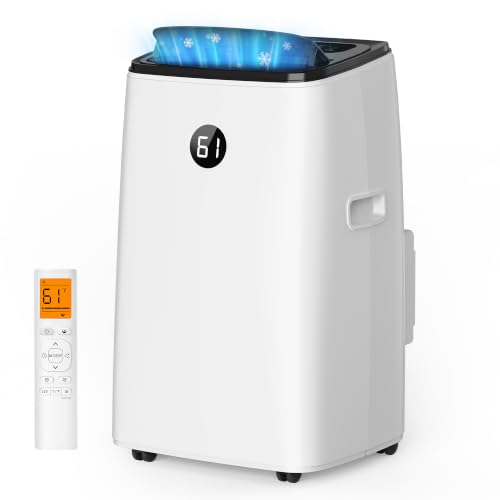
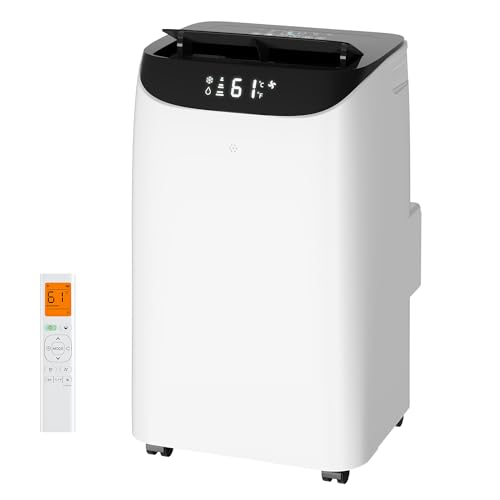
Portable Room Air Conditioner Without Hose
A complete research guide to hose-free portable cooling: how these units work, where they actually perform, their real limits, and how to decide whether one fits your room before you buy.
Start With The BasicsQuick answer: A portable room air conditioner without a hose does not use an exhaust duct. Most units in this category are evaporative coolers that lower air temperature through water evaporation. They provide personal spot cooling in dry climates, but they are not a substitute for a compressor-based air conditioner with a vent hose.
What Is a Portable Room Air Conditioner Without Hose?
A portable room air conditioner without a hose is a freestanding cooling appliance that operates without routing an exhaust duct through a window, wall, or sliding door. This design is sometimes marketed as a room air conditioner without exhaust hose, a windowless portable air conditioner, or a portable indoor air conditioning unit. The names overlap, but the underlying technology usually falls into one of three groups:
- Evaporative air coolers — the most common hose-free design. A fan pulls warm, dry air through a water-saturated pad or filter, and evaporation lowers the air temperature before it is blown into the room.
- Ice-assisted personal coolers — compact units that combine a small water tank, ice packs, and a fan. These are essentially evaporative coolers optimized for close-range use on a desk or nightstand.
- Thermoelectric or hybrid units — a smaller niche category that uses a solid-state cooling element. Output is limited and best treated as personal cooling rather than room cooling.
What all three have in common is the absence of a hot-air exhaust. A conventional portable AC with a compressor must push heat outdoors through a hose, which is why it needs a window or wall opening. A hose-free unit produces no hot exhaust stream, but it also cannot remove heat from the room the way a compressor system does.
Why the "Air Conditioner" Label Needs Context
In strict refrigeration terms, a true air conditioner moves heat from indoors to outdoors. Evaporative and thermoelectric hose-free units do not do that — they cool air locally through evaporation or a cooling element. Understanding this distinction is the single most important step before buying, because it sets realistic expectations for room size, climate, and comfort level.
How Hose-Free Portable Cooling Works
The operating principle is simple and worth understanding before you compare models. An evaporative cooler draws room air through a cooling pad kept wet by a pump or wicking system. As water evaporates from the pad, it absorbs heat from the passing air. The fan then directs that cooler, slightly more humid air toward you.
Because the process depends on evaporation, performance is directly tied to ambient humidity. In dry air, evaporation is fast and the temperature drop is noticeable. In humid air, evaporation slows down and cooling output drops sharply — in some conditions the unit can even make a room feel more uncomfortable by adding moisture.
Key rule of thumb: evaporative and hose-free portable coolers are climate-dependent. They are most effective in hot, dry regions and least effective in hot, humid regions. If your summers are muggy, a compressor-based unit with a vent hose will deliver far more reliable comfort.
For a broader comparison of cooling categories, the guide on portable vs window AC explains how vented portable units and window units differ in efficiency, installation effort, and room coverage.
Hose-Free vs Hose-Based Portable AC: Feature Comparison
The table below compares the two families across the factors that matter most during research. Tier descriptors replace numeric comparisons so the guidance stays relevant over time.
| Feature | Hose-Free Portable Cooler | Portable AC With Exhaust Hose |
|---|---|---|
| Cooling method | Evaporation, ice assist, or thermoelectric element | Compressor-based refrigeration |
| Venting requirement | None | Exhaust hose to window or wall |
| Best climate | Hot and dry | Hot and humid or mixed |
| Room coverage | Personal spot cooling | Small to medium room cooling |
| Humidity effect | Adds moisture to the air | Removes moisture while cooling |
| Installation effort | Minimal — fill tank and plug in | Moderate — window kit and hose setup |
| Portability | High — move between rooms freely | Moderate — tied to a vent location |
| Typical market tier | entry-level to mid-range | mid-range to premium |
If your research points toward genuine room cooling, the overview of portable room air conditioners covers vented models in more depth, including sizing and placement guidance.
Where a Hose-Free Unit Makes Sense
Hose-free portable coolers are a niche product, and they perform well when the use case matches their design. The scenarios below are where they deliver the most value:
- Dry-climate spot cooling — placing the unit near a desk, sofa, or bed so the cooled air stream reaches you directly.
- Rented rooms and dorms — spaces where drilling, window modifications, or permanent installations are not permitted.
- Garages and workshops — open or semi-open spaces in dry regions where directed airflow is more useful than whole-room cooling.
- Supplemental personal comfort — adding a cool breeze next to an existing fan or central system without extra venting.
- Camping and outdoor covered areas — paired with a power source, a compact hose-free cooler can take the edge off dry heat.
Compact models designed for very small spaces are covered in the guide to a portable small air conditioning unit, which is useful if your target room is a study, nursery, or small bedroom.
Where They Fall Short
- Humid climates — added moisture reduces comfort and slows evaporation.
- Large or open rooms — cooling is localized, so a whole living area will not reach a uniform temperature.
- Dehumidification needs — hose-free coolers cannot dry the air; only compressor-based systems can.
- Heat removal — they do not extract heat from the room, so heat buildup from appliances and sunlight remains.
What to Check Before You Buy
Because hose-free units are sensitive to room conditions, a short pre-purchase checklist prevents most disappointments. Work through the points below in order.
- Measure local humidity first. If average summer humidity in your area is high, a vented compressor unit is the more reliable choice.
- Define the cooling target. Decide whether you need personal cooling at a specific seat or genuine room-wide temperature reduction.
- Match unit size to the space. Compact personal coolers suit desks and nightstands; larger evaporative models suit open dry spaces with cross-ventilation.
- Check airflow direction and oscillation. Adjustable louvers and wide oscillation make spot cooling noticeably more effective.
- Review tank capacity and refill effort. A larger tank means fewer refills, but it also adds weight when full.
- Confirm noise level for your use case. Bedroom use benefits from a quieter fan setting; workshop use tolerates more airflow noise.
- Plan for cleaning. Water tanks and cooling pads need regular cleaning to prevent odors and mold. The preventive maintenance of air conditioning unit guide covers routines that apply to portable cooling as well.
- Verify the power draw and cord length. Confirm the unit fits your outlet placement and does not require an extension cord across a walkway.
Quality Tier Guide Without Numeric Labels
Instead of comparing figures, use these relative tier descriptors when reading reviews and product listings. They describe market position, not absolute performance.
| Tier | Typical Characteristics | Best For |
|---|---|---|
| entry-level | Basic fan and pump, smaller tank, simpler controls, lighter build | Personal desk cooling and occasional use |
| mid-range | Better airflow design, larger tank, timer and remote, sturdier housing | Bedroom and home office spot cooling |
| high-end tier | Reinforced construction, wider oscillation, quieter fan profiles, easier tank access | Frequent daily use in dry climates |
| premium | Hybrid cooling elements, smart controls, premium materials, refined airflow | Users who want the most feature-rich hose-free option |
Mid-range models usually offer smoother fan mechanisms and more consistent water distribution than entry-level units, which matters for comfort during long sessions.
Alternatives Worth Considering
If hose-free cooling does not match your climate or room, several adjacent options are worth reviewing before you commit:
- Portable mini splits — a small compressor unit that connects to an indoor head without permanent installation, offering real cooling with far less venting hassle than a traditional split system.
- Room AC unit that doesn't need a window — a broader look at cooling options for rooms without suitable window openings.
- Room air conditioner that doesn't need venting — a focused guide on ventless cooling categories and their trade-offs.
- Portable wall mounted air conditioner — a middle option for rooms where a wall mount is possible but a full installation is not.
- Room to room transfer fan with thermostat — useful for moving already-cooled air between spaces instead of cooling each room separately.
For very small and specific spaces, the portable miniature air conditioner guide narrows down compact options, while the portable room air conditioner without exhaust hose page overlaps closely with this topic and can serve as a cross-check.
If your project extends beyond a single room, the portable room to room air conditioners overview explains when a movable unit can serve multiple spaces and when it cannot.
Ready to Compare Hose-Free Cooling Options?
Review the recommended units below, then match the tier and feature set to your room, climate, and daily routine.
View Recommended UnitsFrequently Asked Questions
What is a portable room air conditioner without a hose?
It is a freestanding cooling appliance that needs no exhaust duct. Most models are evaporative coolers that use water and airflow, while a smaller number rely on thermoelectric elements. They cool the air near the unit rather than refrigerating an entire room.
Does a hose-free portable air conditioner really cool a room?
It lowers the temperature of the air it blows out, but the effect is local and climate-dependent. In dry air the cooling is noticeable within a few feet. In humid air the effect is weak and the unit may add unwanted moisture.
Can I use one in a bedroom?
Yes, as a personal cooler placed near the bed. Expect spot cooling rather than a uniformly cool room. Choose a model with quiet fan settings and a tank you can refill easily.
How is it different from a regular portable AC?
A regular portable AC has a compressor and must vent hot exhaust air outdoors through a hose. A hose-free model produces no hot exhaust and needs no window opening, but it also delivers much less cooling and cannot dehumidify.
Do I need to add water or ice?
Most evaporative models require a filled water tank and work best with cold water or ice packs. Follow the manufacturer's instructions and clean the tank and pad regularly to avoid odors and mold growth.
When should I choose a portable AC with a hose instead?
Choose a vented portable AC if you need real room cooling, live in a humid climate, or want to reduce humidity. Hose-free units are best treated as a supplemental or personal cooling solution for dry conditions.
Bottom line: A portable room air conditioner without a hose is the right tool for dry-climate spot cooling and spaces where venting is impossible. It is not the right tool for humid regions or whole-room cooling. Match the unit to your climate and cooling goal, verify the tier and features against the checklist above, and you will avoid the most common buying mistakes.