
3 Ton Air Conditioning Unit: What to Know Before You Choose
A 3 ton air conditioning unit delivers 36,000 BTU of cooling, making it a common choice for larger homes in warm climates. This guide explains sizing, efficiency tiers, installation factors, and the questions to ask so you can choose a system that cools evenly and performs well over its service life.
Start with SizingQuick answer: A 3 ton air conditioning unit is typically the right fit for homes between roughly 1,800 and 2,400 square feet in a moderate climate. Homes in hot climates, homes with large west-facing windows, or homes with poor insulation may need more capacity, while well-sealed homes in mild climates may need less. The only reliable way to confirm the right size is a professional Manual J load calculation.
What This Guide Covers
Sizing and How a 3 Ton Unit Fits Your Home
One ton of cooling equals 12,000 BTU, so a 3 ton air conditioning unit delivers 36,000 BTU. Applying the common rule of 20 BTU per square foot, that capacity maps to about 1,800 square feet of living space. In practice, many 3 ton systems serve homes from 1,800 to 2,400 square feet depending on climate and construction.
| Home Size | Typical System Size | Best For | Climate Fit |
|---|---|---|---|
| 1,400 - 1,700 sq ft | 2 to 2.5 ton | Smaller homes, well-sealed envelopes | Moderate climates |
| 1,800 - 2,400 sq ft | 3 ton | Most two-story and larger single-story homes | Moderate to warm climates |
| 2,500 - 3,000 sq ft | 3.5 to 4 ton | Larger homes, hot climates | Warm to hot climates |
If your home sits on the boundary between two sizes, lean toward a proper load calculation rather than a rule of thumb. Oversizing is a common and costly mistake. A system that is too large cools quickly, shuts off before it removes humidity, and feels clammy. If you are comparing smaller homes, the guide on a central air unit for a 1400 square foot house and the guide on a unit for a 1000 sq ft house provide useful reference points. For a full-home context, see AC unit for a 2500 sq ft home.
Efficiency Tiers and What Each Delivers
A 3 ton air conditioning unit is available across several efficiency tiers. The tier you choose affects energy use, comfort, and noise. Use the market descriptors below to compare options without relying on fluctuating local figures.
| Tier | Best For | Typical Characteristics |
|---|---|---|
| Essential tier | Homes in mild climates with moderate cooling hours | Single-stage compressor, meets regional SEER2 minimum, basic comfort, durable construction |
| Balanced tier | Most homes in moderate to warm climates | Two-stage compressor, better humidity control, quieter operation, solid build quality |
| High-end tier | Hot climates, long cooling seasons, comfort-focused homes | Variable-speed compressor, top SEER2 efficiency, quietest operation, premium materials |
Efficiency Considerations
- Match the tier to the climate: hot climates benefit most from higher efficiency over the long run.
- Two-stage and variable-speed units provide more even temperatures and better humidity control.
- Verify the SEER2 rating meets or exceeds the minimum for your region.
- Confirm that the evaporator coil and air handler are matched to the outdoor unit for rated efficiency.
- Ask about available tax credits or utility rebates that may apply to high-efficiency systems.
Independent performance data can help you compare brands. The guide on ratings of central air conditioning systems explains how consumer organizations test whole systems. If you are also considering winter heating, a central air with furnace package may be the more sensible configuration.
What Shapes the Overall Investment
The total outlay for a 3 ton air conditioning unit is shaped by several variables. Understanding them helps you read a contractor's estimate with confidence and ask the right questions.
1. Efficiency Tier and Equipment Match
The tier of the outdoor unit, the matched indoor coil, and the air handler all contribute to the total. A premium-tier system with a variable-speed compressor is a larger investment than an essential-tier single-stage system, but it also delivers quieter operation and better efficiency over its service life. OEM components typically carry a premium over aftermarket equivalents but match the system's specification exactly.
2. Replacement vs New Installation
If your home already has central air, a replacement reuses the existing ductwork and electrical service, keeping the scope smaller. If you are adding central air to a home that has never had it, the scope grows to include new ducts, a new thermostat, an electrical circuit, and possibly a permit. Review the central air install with existing ductwork guide and the central air set up guide for context.
3. Ductwork Condition
Ducts that are leaky, undersized, or poorly insulated reduce the performance of any system. A contractor should perform a leakage test and verify static pressure. If the ducts need sealing or partial replacement, that adds to the total. Well-designed and sealed ducts are a worthwhile investment because they deliver more of the cooling the system produces.
4. Refrigerant Type
New 3 ton units use modern refrigerants such as R-410A or its replacements under new regulations. If you are replacing an older system, the refrigerant type affects both the new equipment and the disposal of the old charge. For background, see the HVAC refrigerant cycle explainer and the R-22 replacement guide.
5. Electrical and Site Work
Some homes need an upgraded electrical panel, a new disconnect, or a dedicated circuit. Access conditions matter too: rooftop, attic, and tight mechanical-room installations require more labor. If a permit is required in your jurisdiction, that adds a line item as well.
6. Labor and Regional Rates
Labor is a large share of the total. Rates vary by region and by the complexity of the installation. Obtaining at least three written quotes from licensed contractors is the most reliable way to compare options fairly.
Installation and Ductwork Considerations
A 3 ton system moves a substantial volume of air, so the duct system must be sized correctly. Undersized ducts choke airflow, raise static pressure, and reduce efficiency. Oversized ducts waste energy and may not deliver air to the right places. The contractor should design or verify the ducts against the system's rated airflow.
Other installation details to plan for include the outdoor unit placement, the line-set routing, the condensate drain, and the thermostat location. A thorough pre-installation inspection helps surface issues before work begins. See the HVAC inspection checklist for what a good evaluation should cover, and the HVAC design guide for the principles behind proper system design.
Common Mistakes to Avoid
What to Watch For
- Buying by square footage alone: The rule of thumb is a starting point. A load calculation is the final word.
- Oversizing for "safety margin": A larger unit cools quickly but does not remove humidity well and cycles more often.
- Skipping the duct evaluation: Even a well-sized system underperforms on leaky or undersized ducts.
- Mismatching indoor and outdoor equipment: A matched system is essential for rated efficiency and warranty coverage.
- Choosing the highest tier without considering payback: Match the efficiency tier to your climate and expected cooling hours.
- Skipping the permit: Permits protect you and ensure the work meets code.
If your current system is running but not cooling well, the problem may be a repair rather than a replacement decision. The air conditioner running but not cooling the house guide and the my AC is not cooling my house guide walk through the diagnostic process. The common AC problems reference covers the most frequent issues.
Frequently Asked Questions
What size home does a 3 ton air conditioning unit cool?
A 3 ton air conditioning unit delivers 36,000 BTU and typically cools homes between roughly 1,800 and 2,400 square feet in a moderate climate. Homes in hot climates or with poor insulation may need more capacity, while well-sealed homes in mild climates may need less. A professional Manual J load calculation confirms the right size.
Is a 3 ton AC unit efficient enough for modern standards?
Yes, provided it meets the SEER2 minimum for your region. Essential-tier 3 ton units sit near the minimum, balanced-tier units offer higher efficiency and better humidity control, and high-end tier units reach the top of the efficiency range with variable-speed compressors.
What affects the total outlay for a 3 ton AC unit?
The efficiency tier, whether the job is a replacement or new install, ductwork condition, electrical upgrades, refrigerant type, and regional labor rates all contribute. Obtaining at least three written estimates from licensed contractors is the best way to compare options fairly.
How long does a 3 ton central air conditioner last?
A well-maintained 3 ton central air conditioner typically lasts 12 to 15 years or more. Regular filter changes, annual professional maintenance, and prompt repair of small issues help extend service life.
Can I replace a 2.5 ton unit with a 3 ton unit?
Possibly, but only after a load calculation confirms the 3 ton unit is the right size. The ducts, electrical circuit, and refrigerant line set must be evaluated as well. Upsizing without a load calculation risks oversizing and the comfort problems that come with it.
Ready to Compare 3 Ton System Options?
A licensed HVAC contractor can run a load calculation, verify your ductwork, and quote a 3 ton system that fits your home. Use this guide to prepare informed questions before the visit.
Find HVAC ProfessionalsTop 3 Ton Air Conditioning Units and Compatible Systems
⚠️ AFFILIATE DISCLOSURE: This website contains affiliate links. As an Amazon Associate, we earn from qualifying purchases. If you make a purchase through these links, we may receive a small commission at no additional cost to you. Read our full affiliate policy.
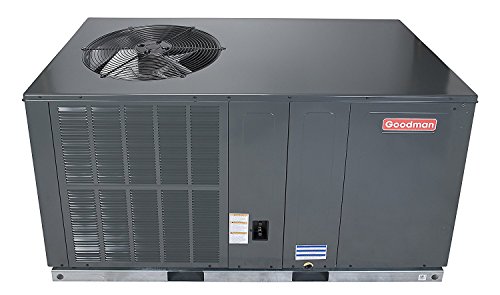
Goodman 3 TON 13.4 SEER2 Horizontal AC Only Packaged Unit (GPCH33631)
Check price on Amazon
Senville Central Air Conditioning System, Heat Pump, 3 Ton, 20kW Aux | 36000 BTU Air Handler and Condenser Included, 208/230V, Whole House Air Conditioner
Check price on Amazon
Senville Central Air Conditioning System, Heat Pump, Inverter, 3 Ton | 36000 BTU Air Handler and Condenser Included, 208/230V, Whole House Air Conditioner
Check price on Amazon
ACiQ 2.5 Ton 14.3 SEER2 Central Air Conditioner Unit - R32 AC Condenser | 230V Single Stage, Energy Efficient Air Conditioning, Outdoor Central HVAC Unit for Ducted AC Split Systems
Check price on Amazon
Goodman 3 ton 14 SEER2 Complete Split System with upflow coil and single stage 80% AFUE 80k BTU furnace with install accessories! (GLXS3BN3610 CAPTA3626B3 GR9S800803BN)
Check price on Amazon
ACiQ 3 Ton 13.4 SEER2 Packaged Central AC System with Install Kit | R32 Horizontal All-in-One Air Conditioning System Package Unit, 36000 BTU, 230V Residential or Commercial
Check price on Amazon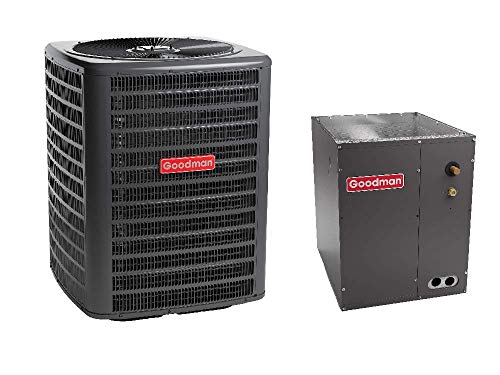
Goodman 14.3 SEER2 3.0 TON Condenser and coil (GLXS4BA3610 CAPTA3626B3)
Check price on Amazon