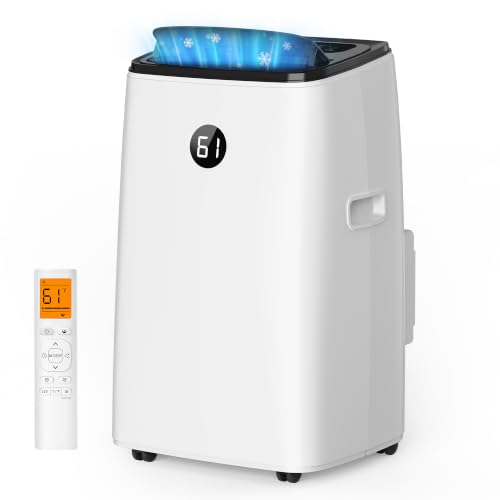
Quiet Energy Efficient Portable Air Conditioner: The Complete Buyer's Guide
Discover how to choose a portable AC that cools effectively, runs quietly enough for bedrooms and home offices, and keeps energy use under control — without sacrificing comfort or convenience.
START THE GUIDEKey Takeaways
- Quiet operation is defined by a sound level typically under 50 dB — premium and luxury-tier models can reach the low 40s, which is comparable to a quiet library.
- Energy efficiency in portable ACs is measured by CEER (Combined Energy Efficiency Ratio); higher values mean better efficiency within the category.
- Inverter-driven compressors are the top-tier choice for both low noise and efficient part-load operation.
- Dual-hose models are more efficient than single-hose units because they balance indoor air pressure.
- Proper sizing matters: an oversized unit cycles on and off, which is noisy and inefficient; an undersized unit runs continuously.
Why Quiet and Efficient Matter Together
Portable air conditioners are popular because they require no permanent installation and can be moved between rooms. However, many early-generation units were notoriously loud and thirsty for electricity. Modern engineering has changed that. Today, a well-designed quiet energy efficient portable air conditioner can deliver comfortable cooling in a bedroom, nursery, or home office without dominating the soundscape or inflating your electricity bill.
The two goals — low noise and high efficiency — are closely linked. A unit with a variable-speed (inverter) compressor can run at a low, steady output instead of repeatedly starting and stopping at full power. That smooth operation is both quieter and more energy-efficient in the long run. Similarly, a well-insulated cabinet and vibration-dampening mounts reduce mechanical noise while also helping the unit retain cooling capacity.
This guide walks you through the specifications, features, and trade-offs that matter most, so you can make a confident decision before you buy.
Editorial note: This page focuses on helping you understand what to look for in a quiet, efficient portable AC. Product recommendations are presented by market tier rather than by any numeric value, so the guidance stays relevant over time.
Understanding Noise Levels in Portable ACs
Noise is the most common complaint about portable air conditioners, and it is also the hardest specification to interpret because manufacturers measure it in different ways. Here is what the numbers actually mean.
Decibels (dB): A Practical Scale
Sound pressure is measured in decibels. The scale is logarithmic, so a 10 dB increase roughly doubles perceived loudness. For reference:
| Sound Level (dB) | Comparable Environment | Suitability for Portable AC |
|---|---|---|
| 30–40 dB | Quiet library, soft whisper | Excellent — top-tier quiet operation |
| 40–50 dB | Quiet office, refrigerator hum | Very good — suitable for bedrooms |
| 50–55 dB | Normal conversation | Acceptable — fine for living areas |
| 55–60 dB | Busy office, light traffic | Noticeable — better for daytime use |
| 60+ dB | Vacuum cleaner, lively restaurant | Loud — avoid in sleeping spaces |
Low, Medium, and High Fan Speeds
Most portable ACs publish a noise rating for the highest fan speed. In practice, you will spend most of your time on low or medium. A unit rated at 52 dB on high may drop to the mid-40s on low — which is a meaningful difference in a bedroom. When comparing models, look for the lowest published sound level, not just the headline number.
What Causes Noise in a Portable AC?
- Compressor vibration — the largest contributor; inverter compressors and rubber mounts reduce it.
- Fan and airflow — larger, slower-spinning fans move the same air with less noise.
- Cabinet resonance — premium materials and internal damping reduce rattle.
- Duct turbulence — short, straight exhaust runs are quieter than long, kinked ones.
For a deeper comparison of quiet models across categories, see our guide to the quietest air conditioners and the quietest 10,000 BTU portable air conditioner options.
Energy Efficiency: What the Ratings Tell You
Portable air conditioners are rated differently from central systems and window units. Understanding the labels helps you compare models on a level playing field.
CEER (Combined Energy Efficiency Ratio)
CEER is the standard efficiency metric for portable ACs. It combines full-load and part-load performance into a single number. A higher CEER means more cooling per unit of electricity. Within the portable category:
- Entry-level units often sit at the lower end of the CEER range.
- Mid-range models improve efficiency through better heat exchangers and two-speed fans.
- Premium and luxury units pair inverter compressors with optimized airflow for the highest CEER values available in portable form.
Inverter vs. Non-Inverter Compressors
A traditional non-inverter compressor runs at a fixed speed and cycles on and off. An inverter compressor varies its speed continuously. The practical benefits of inverter technology are significant:
- Quieter operation — no hard starts, and the compressor can settle into a low, steady hum.
- Better part-load efficiency — most of the time you need only a fraction of full capacity.
- More stable temperature — fewer swings between too warm and too cold.
- Longer compressor life — fewer start-stop cycles reduce wear.
For a broader look at how efficiency ratings compare across categories, read our explainer on recommended SEER ratings for air conditioners.
Dual-Hose vs. Single-Hose Design
Single-hose portable ACs draw conditioned indoor air, use it to cool the condenser, and exhaust it outside. That creates negative pressure, pulling warm outdoor air in through gaps. Dual-hose models pull outdoor air in through one hose and exhaust it through the other, keeping indoor pressure balanced. The result is better real-world efficiency and more consistent cooling. If efficiency is a priority, a dual-hose design is the better choice.
How to Size a Portable AC for Efficient Cooling
An oversized portable AC cools the room quickly, then cycles off — and each restart is noisy and draws a surge of power. An undersized unit runs continuously at high fan speed, which is also loud and inefficient. Correct sizing is the foundation of quiet, efficient operation.
Cooling capacity is measured in BTU (British Thermal Units). A simplified rule of thumb for a standard room with average ceiling height and insulation:
| Room Size | Cooling Capacity (BTU) | Typical Use Case |
|---|---|---|
| Up to 150 sq ft | 5,000–6,000 | Small bedroom, home office |
| 150–250 sq ft | 8,000–10,000 | Medium bedroom, living area |
| 250–400 sq ft | 12,000–14,000 | Large bedroom, open-plan space |
| 400–550 sq ft | 14,000–18,000 | Studio apartment, large living room |
Adjust upward for sunny rooms, high ceilings, kitchens, or rooms with many occupants. For a precise calculation, use our guide to how to size an air conditioner and the BTU calculator by room size.
Features That Reduce Noise and Improve Efficiency
Beyond the compressor and size, several design features influence how quiet and efficient a portable AC will be in daily use.
Variable-Speed Fan
A multi-speed or variable-speed fan lets the unit match airflow to demand. On mild days you can run it on low, which is both quieter and more efficient than cycling a single-speed fan on and off.
Sleep Mode and Programmable Timers
Sleep mode gradually raises the set temperature and lowers fan speed over the night, reducing energy use and noise. A programmable timer lets you cool the room before bedtime and shut the unit down automatically. Pairing the AC with a programmable thermostat strategy for the rest of the home keeps the whole system balanced.
Sound-Dampening Cabinets
Premium and luxury-tier portable ACs often use thicker cabinet panels, internal foam insulation, and rubber isolators for the compressor. These details are rarely highlighted in marketing, but they make a noticeable difference in perceived noise.
Auto-Evaporation and Self-Diagnosis
Auto-evaporation reuses condensate water to cool the condenser, which improves efficiency and reduces the need to drain the tank. Self-diagnosis features help you catch issues early, before they affect performance.
Portable AC Tiers: What Each Level Offers
Portable air conditioners fall into broad market tiers. The table below summarizes what you can generally expect from each tier, using universal quality descriptors rather than numeric values.
| Tier | Typical Noise Profile | Efficiency & Features | Best For |
|---|---|---|---|
| Entry-Level | 50–55 dB on high; simple single-speed compressor | Basic CEER; single-hose; mechanical controls | Occasional use in living areas; short cooling sessions |
| Mid-Range | 45–50 dB on high; two-speed fan; improved cabinet damping | Better CEER; dual-hose options; digital controls; timer | Bedrooms and home offices where quiet matters |
| Premium | Low-to-mid 40s dB on low; inverter compressor; vibration isolation | High CEER; dual-hose; auto-evaporation; smart controls | |
| Luxury | Low 40s dB; flagship acoustic engineering | Top CEER in category; full inverter; air purification; app control | Nurseries, master bedrooms, noise-sensitive environments |
Tier descriptions reflect relative market positioning and are provided for general guidance only.
Installation and Placement for Quiet Operation
Even a premium-tier portable AC can be noisy if it is installed poorly. Follow these practices to get the best acoustic and efficiency results:
- Keep the exhaust hose short and straight. Long, coiled, or kinked hoses increase back pressure, forcing the fan to work harder and louder.
- Seal the window kit. Gaps let hot air in and cool air out, forcing the unit to run longer. Use the foam seals included with most kits.
- Place the unit on a level, solid surface. Vibration on a hollow floor or uneven surface amplifies noise.
- Leave clearance around the intake and exhaust. Restricted airflow increases fan speed and sound.
- Avoid direct sunlight on the unit. A shaded location reduces the load on the compressor.
If you are also considering window-mounted options, our guide to proper installation of window AC units covers similar principles.
Maintenance Tips for Long-Term Quiet Efficiency
A well-maintained portable AC stays quieter and more efficient over its service life. Schedule these tasks:
- Clean or replace the air filter every two to four weeks during heavy use. A clogged filter strains the fan and compressor.
- Drain the water tank regularly unless the unit has auto-evaporation; standing water can cause odors and reduce cooling.
- Inspect the exhaust hose for cracks or kinks at the start of each season.
- Vacuum the intake grille to remove dust buildup.
- Store the unit upright during the off-season, and let it sit upright for several hours before restarting.
For a whole-home approach to efficiency, consider pairing portable cooling with professional air duct cleaning and a seasonal maintenance plan.
Common Mistakes to Avoid
- Buying by BTU alone. A high-BTU single-hose unit can be louder and less efficient than a properly sized dual-hose model.
- Ignoring the low-speed noise rating. The headline number is usually the loudest setting; check the quietest one.
- Placing the unit in a corner. Recirculated air and restricted exhaust raise noise and reduce cooling.
- Skipping the window seal. Poor sealing undermines efficiency no matter how good the unit is.
- Expecting whole-home cooling. Portable ACs are room-specific solutions; for multi-room comfort, explore ductless mini-split systems.
Portable AC vs. Other Quiet Cooling Options
Portable ACs are not the only quiet, efficient option. The right choice depends on your space and constraints:
| Option | Noise Profile | Efficiency | Best For |
|---|---|---|---|
| Quiet portable AC (dual-hose, inverter) | Low-to-mid 40s dB (premium tier) | Good within category | Renters, rooms without window support, flexible placement |
| Quiet window AC | Low 40s dB (top-tier models) | Generally higher than portable | Standard double-hung windows, permanent install |
| Ductless mini-split | Low 20s–30s dB indoor unit | Highest among room solutions | Homeowners, long-term investment |
| Central AC | Depends on ductwork and outdoor unit | High for whole-home | Whole-home comfort with existing ducts |
If window installation is an option, our guides to the quietest window AC for a small bedroom and the quietest most energy-efficient window air conditioner are useful comparisons. For ductless options, see the pros and cons of ductless air conditioning.
Ready to Compare Quiet, Efficient Portable ACs?
Explore our curated recommendations for quiet, energy-efficient portable air conditioners organized by tier and use case.
VIEW RECOMMENDATIONSFrequently Asked Questions
How quiet can a portable air conditioner realistically be?
The quietest portable ACs on the market operate in the low 40s dB on their lowest fan speed — roughly the sound of a quiet library or a soft refrigerator hum. Premium and luxury-tier inverter models achieve this through variable-speed compressors, larger slow-spinning fans, and sound-dampened cabinets. Entry-level units typically run at 50 dB or higher, especially on maximum fan speed.
Is an inverter portable air conditioner worth it for efficiency?
Yes. Inverter compressors vary their speed continuously rather than cycling on and off at full power. This provides three benefits: quieter operation, more stable room temperature, and better part-load efficiency. Because portable ACs typically run for long stretches, the efficiency gain over a season is meaningful, and the reduced start-stop wear contributes to a longer compressor life.
Should I choose a single-hose or dual-hose portable AC?
Dual-hose models are generally more efficient and provide more consistent cooling because they balance indoor air pressure. Single-hose units exhaust conditioned indoor air, creating negative pressure that pulls warm outdoor air through gaps. If efficiency and comfort are priorities, a dual-hose design is the better choice. Single-hose units remain suitable for occasional or supplemental cooling in small spaces.
Can I use a portable AC in a bedroom overnight?
Yes, provided the unit is quiet enough for sleeping. Look for a model with a low-speed rating in the 40–48 dB range, a sleep mode that gradually adjusts temperature and fan speed, and a programmable timer. Premium-tier inverter models are the best fit for bedrooms and nurseries. Place the unit on a solid surface and keep the exhaust hose as short and straight as possible to minimize noise.
How do I know if a portable AC is sized correctly for my room?
As a starting point, match the BTU rating to the room area: 5,000–6,000 BTU for up to 150 sq ft, 8,000–10,000 BTU for 150–250 sq ft, and 12,000–14,000 BTU for 250–400 sq ft. Adjust upward for sunny exposures, high ceilings, kitchens, or rooms with multiple occupants. An oversized unit cycles noisily and inefficiently; an undersized unit runs continuously at high fan speed.
What maintenance keeps a portable AC quiet and efficient?
Clean or replace the air filter every two to four weeks during heavy use, drain the water tank regularly (unless the unit has auto-evaporation), inspect the exhaust hose for cracks or kinks at the start of each season, and vacuum the intake grille to remove dust. These simple tasks prevent the fan and compressor from working harder than necessary, which keeps noise and energy use in check.
Can a portable AC cool an entire apartment or house?
No. Portable air conditioners are designed for room-specific cooling. They work best in a single enclosed space with a window or door for exhaust. For multi-room or whole-home cooling, a ductless mini-split system or central air conditioning is a more appropriate and efficient solution. Portable ACs excel as supplemental or temporary cooling for renters, home offices, and bedrooms.
For related reading, see our overview of the pros and cons of a portable air conditioner and additional considerations for portable ACs.