
Replace Home Air Conditioner: A Complete Decision and Replacement Guide
Know when replacement makes more sense than repair, how to size a new system correctly, which efficiency ratings matter, and what a smooth installation process looks like from start to finish.
Start With the Warning SignsWhy this guide matters: Replacing a home air conditioner is a major decision that affects comfort, energy use, and long-term reliability. Most homeowners research carefully before committing. This guide walks you through every stage of the replacement journey so you can move forward with confidence instead of guesswork.
When Should You Replace Your Home Air Conditioner?
An air conditioner does not usually fail without warning. In most cases, the system shows a series of signals over months or even years. Recognizing these signals early gives you time to plan a replacement on your own schedule rather than during an emergency.
Age Beyond Expected Lifespan
A central AC that has passed the 12 to 15 year mark is approaching the end of its reliable service window. Even if it still runs, efficiency and parts availability decline.
Rising Energy Consumption
If your electricity usage climbs without changes in habits or weather, the system may be losing efficiency as components wear out.
Frequent Repairs
Multiple service calls within a single cooling season often signal that the system is entering a replacement phase rather than a repair phase.
Uneven Cooling
Some rooms staying warm while others cool well can indicate declining compressor performance or duct-related issues that a new system may resolve.
Legacy Refrigerant
Systems using phased-out refrigerants face shrinking service options. Moving to a modern refrigerant system is often the practical path forward.
Excessive Noise or Vibration
Grinding, rattling, or persistent vibration from the outdoor unit suggests internal wear that may not be worth repairing on an older system.
If several of these signs appear at once, replacement deserves serious consideration. For a deeper look at how replacement fits into the broader picture, review the guide on HVAC replacement and the related article on what to do when your central air conditioner stops working.
Repair or Replace? A Practical Framework
The decision is rarely about a single factor. A useful way to think about it is to weigh the age of the system, the nature of the problem, and the trajectory of repairs against the expected lifespan of a new unit.
Lean Toward Repair When
- The system is under 8 years old
- The issue is isolated, such as a failed capacitor or thermostat
- The unit has a strong maintenance history
- The repair is covered by an active warranty
Lean Toward Replacement When
- The system is past 12 years of age
- The compressor or coil is failing
- Repairs are recurring season after season
- The unit uses a refrigerant that is being phased out
Consider a Full System Upgrade When
- The furnace or air handler is equally old
- Ductwork needs sealing or reconfiguration
- You want modern efficiency and smart controls
- Zoning would improve comfort significantly
A repair-versus-replace analysis is often clearer when you look at the full system rather than the outdoor unit alone. The article on outdoor AC unit replacement explains how the outdoor half fits into the overall decision, while replacing an air conditioner condenser covers the scenario where only the condenser is in question.
Sizing the Replacement System Correctly
Sizing is the single most consequential technical decision in a replacement. An undersized unit struggles to keep up during peak heat, while an oversized unit cools too quickly, cycles frequently, and leaves humidity unchecked. Both outcomes reduce comfort and shorten equipment life.
Professional sizing relies on a Manual J load calculation, which accounts for square footage, ceiling height, insulation, window area and orientation, air infiltration, and local climate. A reputable contractor will perform this calculation rather than relying on a simple rule of thumb. You can learn more about the process in the installation guide and in the overview of installing an air conditioning unit.
For homes that also need heating, pairing the new AC with an appropriately sized furnace is equally important. The article on a natural gas furnace and AC unit combination explains how the two systems should be matched.
| Home Size (Approx.) | Typical Cooling Capacity | Common System Type | Notes |
|---|---|---|---|
| Up to 1,000 sq ft | 1.5 to 2 tons | Window, mini-split, or small central | Often suits apartments and compact homes |
| 1,000 to 1,800 sq ft | 2 to 3 tons | Central or multi-zone mini-split | The most common residential replacement range |
| 1,800 to 2,800 sq ft | 3 to 4 tons | Central or ducted system | Duct condition strongly affects performance |
| 2,800 sq ft and above | 4 to 5+ tons | Central or zoned multi-system | Zoning often improves comfort and efficiency |
Understanding Efficiency Ratings for a Replacement
Efficiency ratings determine how much cooling a system delivers per unit of electricity consumed. The current benchmark is SEER2, which replaced the older SEER metric under updated Department of Energy standards. Higher SEER2 ratings indicate greater efficiency, but the right target depends on your climate region and how much you run the system.
Regions with hotter summers generally benefit more from higher-efficiency equipment, while mild climates may find that a mid-range efficiency unit delivers a better balance. For a fuller explanation of how ratings work, see the guide on top-rated energy-efficient air conditioners. Incentive programs may also apply, and the overview of tax credits for new AC systems explains the qualification landscape.
| Efficiency Tier | Typical SEER2 Range | Best For | Considerations |
|---|---|---|---|
| Essential Tier | Minimum compliant ratings | Mild climates and moderate usage | Solid choice for the tier; meets code requirements |
| Balanced Tier | Mid-range ratings | Most residential replacements | Good value for its tier; balanced efficiency and features |
| High-End Tier | High-efficiency ratings | Hot climates and heavy usage | Feature-rich for its class; efficient in the long run |
| Top-Tier | Highest available ratings | Long-term investment and maximum efficiency | Premium materials and advanced controls |
Choosing the Right System Type for Your Replacement
The best replacement system depends on your home's existing infrastructure. Homes with well-maintained ductwork can often replace a central system directly, while homes without ducts may benefit from a ductless approach. The comparison of split ductless air conditioning systems and split units is a useful starting point.
Central Air Replacement
- Reuses existing ductwork when it is in good condition
- Delivers whole-home cooling from a single system
- Works well with zoning for multi-story homes
- Requires an outdoor unit and indoor air handler
Ductless Mini-Split Replacement
- Ideal for homes without ductwork or with sealed rooms
- Room-by-room control improves efficiency
- Quieter operation in living spaces
- Requires wall or ceiling space for indoor heads
Window and Portable Replacements
- Simplest path for single rooms
- Installation is often straightforward for the same footprint
- Portable options add flexibility for renters
- Best for targeted cooling rather than whole-home needs
For homes in transition or with unusual layouts, a VRV system may offer more granular control than a traditional central replacement. Homes with older construction may also need duct or electrical upgrades, which the article on installing air conditioning in an old house addresses.
The Replacement Process Step by Step
A well-managed replacement follows a predictable sequence. Knowing what to expect helps you ask the right questions and avoid surprises.
- Assess the current system. A technician evaluates the existing unit, ductwork, electrical supply, and refrigerant lines to determine what can be reused.
- Perform a load calculation. A Manual J calculation establishes the correct capacity for your home rather than relying on the old unit's size.
- Select the equipment and components. The replacement system, air handler, thermostat, and any duct modifications are chosen together for compatibility.
- Prepare the site. The old unit is safely disconnected, refrigerant is recovered in line with regulations, and the installation area is readied.
- Install the new system. The outdoor unit, indoor coil or air handler, line set, and electrical connections are installed and secured.
- Evacuate and charge the system. The lines are vacuumed and refrigerant is added to the manufacturer's specified charge.
- Commission and test. Airflow, refrigerant pressures, temperature differentials, and thermostat behavior are verified before handover.
- Register the warranty and set a maintenance plan. Registration preserves coverage, and a maintenance plan protects long-term performance.
Understanding the sequence makes it easier to evaluate contractor proposals. For broader guidance on working with installers, see the installation guide and the comparison of local HVAC contractors versus big-box stores.
What Can Be Reused During a Replacement?
Not every component needs to be replaced. In many cases, portions of the existing infrastructure remain serviceable and reduce the scope of work.
- Ductwork: Reusable if it is sealed, properly sized, and free of major leaks. Learn how to improve it with sealing air ducts.
- Electrical supply: Often reusable if it meets current code for the new unit's requirements.
- Refrigerant lines: Sometimes reusable after inspection, though many replacements include new line sets for reliability.
- Thermostat: Reusable if it is compatible with the new system, though upgrading to a programmable thermostat is a common improvement.
If the outdoor unit is being replaced but the indoor coil is old, matching a new outdoor unit with an aging indoor coil can undermine efficiency and warranty coverage. The article on line set replacement explains when new lines are advisable.
Permits, Codes, and Refrigerant Regulations
Replacement work generally requires a permit in most jurisdictions, and the installation must comply with local building codes and refrigerant handling rules. Skipping permits can complicate future inspections and insurance claims.
The guide on how to get an AC permit walks through the typical process. Refrigerant handling is regulated at the federal level, and technicians must follow recovery and charging rules. Homeowners should confirm that the contractor is licensed and insured before work begins.
Planning the Replacement Around Your Home and Schedule
Most residential replacements take one to two days depending on system type and access. Central replacements may require indoor and outdoor work on the same day, while mini-split installations can sometimes be completed over a slightly longer window if multiple indoor heads are involved.
If you have flexibility, schedule the replacement during milder weather so the home does not go without cooling during peak heat. For households with medical needs or infants, discuss timing with the contractor in advance.
Homeowners who are temporarily without a system may find a portable unit helpful as a bridge, and the guide to portable air conditioning units is a useful reference for short-term comfort.
After the Replacement: Protecting Your Investment
The first weeks after installation are the best time to establish good habits. Confirm that airflow is even, that the thermostat is set appropriately, and that the outdoor unit has clear space around it. Register the warranty promptly and schedule the first maintenance visit.
Regular maintenance preserves efficiency and extends equipment life. Useful starting points include cleaning the AC filter and cleaning condenser coils. A structured maintenance plan or preventative maintenance schedule keeps the system on track season after season.
If your replacement also involves updating older ductwork, the article on ductwork replacement is relevant for mobile and manufactured homes. Homeowners evaluating a full system update may also want to review refrigerant leak repair versus replacement when a leak is discovered during the process.
Recommended Air Conditioners for Replacement
⚠️ AFFILIATE DISCLOSURE: This website contains affiliate links. As an Amazon Associate, we earn from qualifying purchases. If you make a purchase through these links, we may receive a small commission at no additional cost to you. Read our full affiliate policy.

Amazon Basics 12x12x1 Air Filter 6-Pack, MERV 11 AC Furnace Filters, Dust, Pet, Allergen Control , Removes Pollen and Lint (Actual Size: 11.75" x 11.75" x 0.75")
Check price on Amazon
Amazon Basics 20x20x1 Air Filter 6-Pack, MERV 11 AC Furnace Filters, Dust, Pet, Allergen Control , Electrostatic (Actual Size: 19.75 x 19.75 x .75)
Check price on Amazon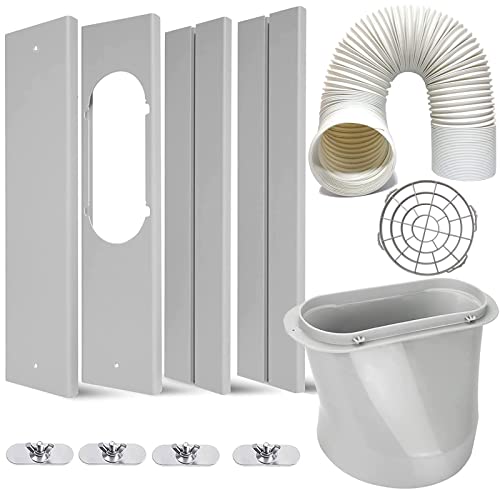
LEZIFU Portable Air Conditioner Kit with Hose, Adjustable Window Seal with 5.9 Inch Diameter 59" Length Hose for Vertical/Horizontal Window
Check price on Amazon
Filtrete 20x30x1 Air Filter, MERV 5, MPR 300, 6 HVAC Filters | Basic Dust & Lint, 3-Month AC/Furnace Filters, Cleaner Air, Reliable Airflow, (Act. Size 19.81x29.81x0.81 in)
Check price on Amazon
WJ85X21746 for GE Window Air Conditioner Filter Replacement Replaces AP6280063,4588851, A0010209471,for GE Window Ac Filter Fit for GE AHQ06LYQ1,AHR05LWQ2,AHQ06LYW1 More, for Ge Air Conditioner Parts
Check price on Amazon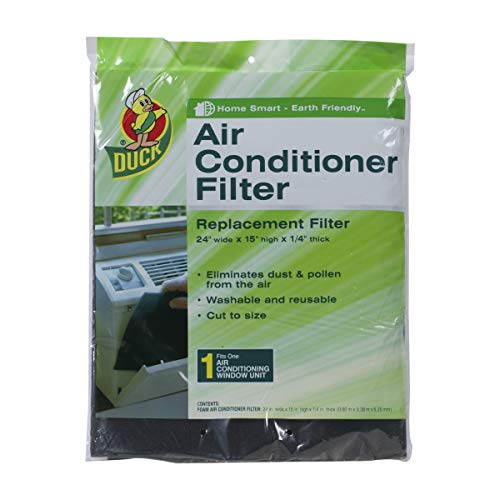
Duck Brand Replacement Air Conditioner Foam Filter, 24-Inch x 15-Inch x 1/4-Inch, 1285234
Check price on Amazon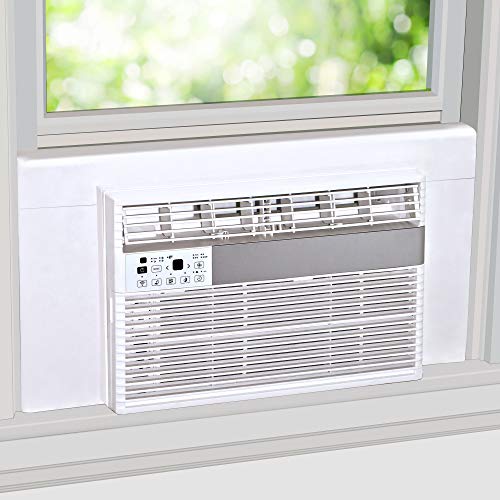
Breeze Stop Surround Insulation Side Panels White for Window AC Unit Indoor Air Conditioner Cover for Winter and Summer
Check price on AmazonFrequently Asked Questions About AC Replacement
How long does a home air conditioner last?
A well-maintained central air conditioner typically lasts 15 to 20 years, while window and portable units generally last 8 to 12 years. Climate, usage patterns, and maintenance frequency all influence lifespan.
What size air conditioner do I need for my home?
Sizing depends on square footage, ceiling height, insulation, window area, and climate zone. A professional Manual J load calculation is the most accurate method. Central AC capacity is measured in tons, where one ton equals 12,000 BTU per hour.
Should I repair or replace my air conditioner?
If your unit is over 12 years old, requires frequent repairs, uses legacy refrigerant, or repairs approach half the value of a new system, replacement is usually the more sensible long-term decision.
What is SEER2 and why does it matter?
SEER2 is the updated seasonal energy efficiency ratio used under current DOE standards. Higher SEER2 ratings indicate greater efficiency. Minimum ratings vary by region, so check your local requirements before choosing a replacement unit.
Can I replace only the outdoor unit?
Replacing only the outdoor unit is sometimes possible, but pairing a new outdoor unit with an aging indoor coil can reduce efficiency and may affect warranty coverage. A matched system is generally the better choice.
How long does a replacement take?
Most residential replacements take one to two days. Multi-zone or ductless installations with several indoor heads may take slightly longer depending on access and site conditions.
Ready to Compare Replacement Options?
Review the recommended systems above and check availability through the provided links. Take your time, confirm sizing with a qualified professional, and choose the tier that fits your home and climate.
Explore Replacement Options