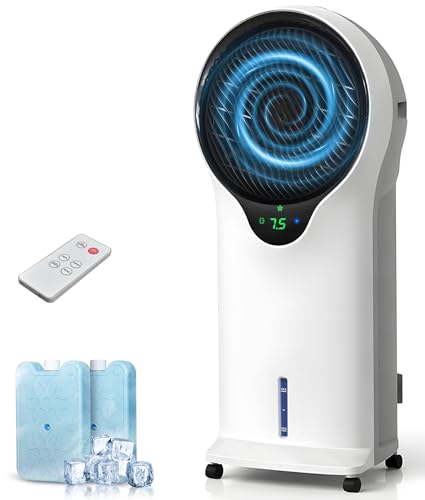
Roof Mounted Evaporative Coolers for Sale
Rooftop evaporative coolers deliver whole-home cooling in dry climates by pushing cooled, filtered air through roof ducts. This guide explains how they work, how to size and choose one, and what installation and maintenance involve.
Quick answer: A roof mounted evaporative cooler (also called a rooftop swamp cooler) sits on the roof and cools outside air by evaporating water through pads, then pushes that air into the home through ducts. It works best in dry, low-humidity climates and requires proper sizing in CFM, a strong roof structure, water supply, and seasonal maintenance. In humid regions, a refrigerated central air system is usually a better fit.
Why Choose a Roof Mounted Evaporative Cooler
Evaporative coolers, often called swamp coolers, use the natural process of water evaporation to cool air. They consume far less electricity than compressor-based air conditioners because they rely on a fan and a water pump rather than a refrigerant cycle. A roof mounted unit takes advantage of the roof space, keeps the cooler out of the yard, and can distribute cooled air through existing or new roof ducts to multiple rooms.
Roof mounting is especially common in dry regions where homes already have roof ducting or a central cooling layout. It provides whole-home cooling without the footprint of a ground-mounted unit. The trade-off is that installation is more involved, maintenance requires roof access, and the cooler only performs well in the right climate. For buyers evaluating central systems, see central air set up and ratings of central air conditioning systems.
How a Rooftop Evaporative Cooler Works
A rooftop cooler draws outside air through louvered sides and across water-saturated pads. As the air passes through the pads, water evaporates and absorbs heat, lowering the air temperature. A blower then pushes the cooled air into the home through roof ducts. The air pressurizes the house and exits through open windows or dedicated relief vents, carrying heat and stale air with it.
Unlike a refrigerated air conditioner, an evaporative cooler does not recirculate indoor air. It constantly brings in fresh outside air, which improves ventilation but means the cooling effect depends heavily on the outdoor humidity. The drier the outside air, the greater the temperature drop. This is why evaporative cooling works well in arid climates and poorly in humid ones. For a comparison with portable options, see portable AC units that don't require venting.
Types of Roof Mounted Evaporative Coolers
Rooftop coolers come in a few configurations. The right choice depends on your roof structure, duct layout, and climate.
| Type | How It Moves Air | Best For |
|---|---|---|
| Down-draft cooler | Blower pushes air downward through a roof curb into ducts | Homes with roof ducts and a central cooling layout |
| Side-draft cooler | Blower pushes air horizontally into a side duct connection | Roofs where a side connection fits the duct route |
| Single-inlet vs. dual-inlet | Air enters from one or two sides of the cabinet | Dual-inlet models move more air with less restriction |
Down-Draft vs. Side-Draft
Down-draft units are the most common for residential roof installations because they connect directly to a roof curb and deliver air straight down into the duct system. Side-draft units are useful when the duct connection must exit the side of the cabinet. Match the cooler's discharge type to your existing ductwork or planned layout.
Single-Inlet vs. Dual-Inlet
Single-inlet coolers draw air from one side; dual-inlet models draw from two sides, which increases airflow and reduces static pressure. Dual-inlet models are often a solid choice for larger homes or where the cooler must push air through longer duct runs.
Sizing a Roof Mounted Evaporative Cooler
Coolers are rated in CFM (cubic feet per minute). A common starting guideline is roughly 1 CFM per square foot of living space, adjusted for ceiling height, insulation, window area, and climate. A professional load estimate is the most reliable method, especially for larger homes or unusual layouts. An undersized cooler will not cool the home; an oversized unit can create excessive airflow and humidity buildup.
The table below shows a general starting range for typical residential spaces. Use it as a rough guide, then confirm with a qualified HVAC professional. For related sizing context, see central air unit for 1000 sq ft house and central air unit for 1400 square foot house.
| Home Size | Approx. CFM Range | Notes |
|---|---|---|
| Up to 1,000 sq ft | 1,000 – 2,000 CFM | Small homes or compact layouts; adjust for ceiling height |
| 1,000 – 1,500 sq ft | 1,500 – 3,000 CFM | Dual-inlet often beneficial for duct runs |
| 1,500 – 2,000 sq ft | 2,000 – 4,000 CFM | Confirm duct sizing and roof curb compatibility |
| 2,000 – 3,000+ sq ft | 3,000 – 5,000+ CFM | Professional load estimate strongly recommended |
How to Choose a Rooftop Evaporative Cooler
When comparing models for sale, focus on construction quality, airflow, pad type, and the features that support reliable operation. Use the table below to guide your comparison.
| Factor | What to Check | Why It Matters |
|---|---|---|
| Cooling capacity | CFM rating at typical static pressure | Must match home size and duct system |
| Cabinet construction | Heavy-duty steel, weather-resistant coating | Withstands sun, rain, and seasonal exposure |
| Pad type | Rigid media, aspen, or synthetic pads | Affects cooling efficiency and maintenance interval |
| Blower and motor | Belt-drive or direct-drive; motor quality | Influences airflow, noise, and service life |
| Water distribution | Spider tubing, trough, or spray system | Even water coverage improves cooling and pad life |
| Roof curb compatibility | Curb dimensions and adapter options | Ensures a secure, weather-tight installation |
| Tier | Entry-level, mid-range, premium | Higher tiers usually offer better build quality and efficiency |
Choose a Tier That Fits the Climate and Duty Cycle
Entry-level rooftop coolers are suitable for mild climates and occasional use. Mid-range models typically offer better cabinets, improved water distribution, and more efficient pads. Premium and top-tier units often include heavy-duty cabinets, high-efficiency blowers, and advanced controls. In hot, dry climates where the cooler runs daily through the season, a mid-range or premium model is often a solid choice for its class. For broader buying context, see HVAC buying guide and HVAC system buying guide.
Features Worth Prioritizing
- Variable-speed blower for quieter operation and better comfort control.
- Automatic water purge to reduce mineral buildup and extend pad life.
- Thermostat and remote control for convenience.
- Rigid media pads for longer service intervals and better cooling.
- Weather-resistant cabinet coating to resist rust and sun damage.
Installation Considerations
Rooftop installation is more involved than placing a ground-mounted unit. The roof must support the cooler's weight and the curb must be sealed properly to prevent leaks. Water supply lines, drain lines, and electrical connections must be routed correctly. Duct connections must be sized to match the cooler's airflow.
Because of the structural, electrical, and roofing work involved, professional installation is strongly recommended. A qualified HVAC contractor can confirm roof load capacity, build or adapt the curb, connect ducts, and ensure the unit is level and weather-tight. For related guidance, see HVAC contractor and HVAC inspection checklist.
Pre-Installation Checklist
- Confirm the roof can support the cooler and curb weight.
- Verify the duct system is sized for the cooler's CFM.
- Plan the water supply and drain routes.
- Confirm electrical power availability and safety disconnects.
- Check local codes and permit requirements.
- Select a location that allows service access.
Maintenance and Common Issues
Regular maintenance keeps a rooftop cooler efficient and extends its service life. Typical tasks include replacing or cleaning the cooling pads, flushing the water pan, checking the water distribution system, inspecting the belt and bearings on belt-drive models, and winterizing the unit to prevent freeze damage. Neglecting maintenance leads to mineral buildup, reduced airflow, and unpleasant odors.
Common issues include weak airflow from clogged pads, water leaks from a cracked pan or loose fittings, and unusual noise from worn bearings or a loose belt. Many of these problems are straightforward to fix during a seasonal service visit. For related maintenance context, see HVAC maintenance guide and HVAC maintenance plan.
Winterizing a Rooftop Cooler
In freezing climates, the cooler must be drained and covered before winter. Trapped water can freeze and crack the pan, fittings, or pump. Follow the manufacturer's winterization instructions and shut off the water supply.
Climate Suitability
Roof mounted evaporative coolers perform best in hot, dry climates with low humidity. In these conditions, the temperature drop across the pads can be substantial, and the constant supply of fresh air improves indoor comfort. In humid climates, the air is already close to saturation, so evaporation is limited and the cooler provides little cooling. In those regions, a refrigerated central air system or a ductless mini-split is generally the better choice. For indoor comfort context, see indoor air quality and I need a dehumidifier in my house.
Frequently Asked Questions
How does a roof mounted evaporative cooler work?
A roof mounted evaporative cooler draws outside air through water-saturated pads, cools it by evaporation, and delivers it through roof ducts into the home. It pushes air through the house and out open windows or vents, providing whole-home cooling in dry climates.
What size roof mounted evaporative cooler do I need?
Sizing depends on the home's square footage, ceiling height, insulation, and local climate. Coolers are rated in CFM (cubic feet per minute). A common starting point is roughly 1 CFM per square foot of living space, but a professional load estimate is the most reliable method.
Can a roof mounted evaporative cooler replace a central air conditioner?
In dry climates with low humidity, a well-sized roof mounted evaporative cooler can cool an entire home effectively. In humid climates, evaporative cooling is much less effective, and a refrigerated central air system is usually the better choice.
What maintenance does a rooftop evaporative cooler need?
Regular maintenance includes replacing or cleaning the cooling pads, flushing the water pan, checking the water distribution system, inspecting the belt and bearings, and winterizing the unit to prevent freeze damage.
Are rooftop evaporative coolers energy efficient?
Yes, they typically use far less electricity than compressor-based air conditioners because they rely on a fan and water pump rather than a refrigerant cycle. However, they also use water, and their effectiveness depends on the climate.
Ready to compare roof mounted evaporative coolers and related cooling options? Browse our recommended products below.
View Recommended ProductsRelated Guides
Central air set up Ratings of central AC systems Central air for 1000 sq ft house Central air for 1400 sq ft house Portable AC units without venting HVAC buying guide HVAC maintenance guide Indoor air quality guide