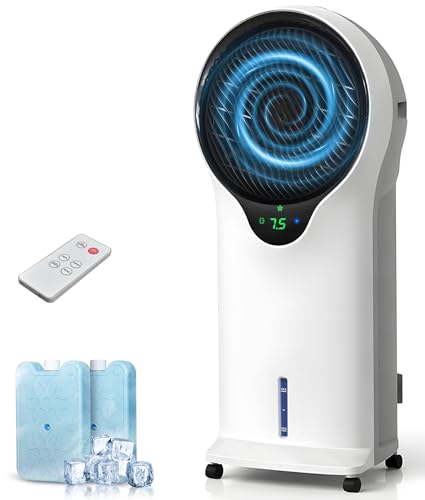
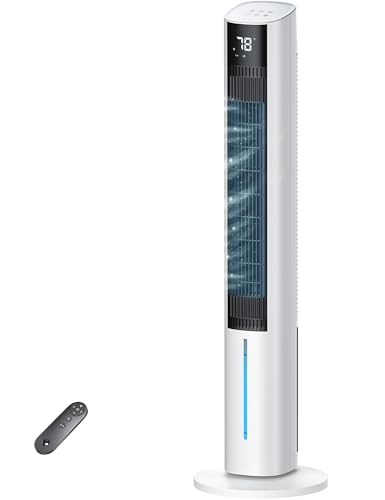
Small Evaporative Air Cooler: Complete Buying Guide
When summer heat sets in, not every space can support a traditional air conditioner. Maybe you rent and cannot install a window unit, or you want a low-power cooling solution for a garage, workshop, or patio. A small evaporative air cooler offers a lightweight, energy-efficient alternative that works remarkably well in the right conditions.
This guide explains exactly how evaporative coolers work, where they excel, where they fall short, and how to choose the right size and features for your space. By the end, you will know whether a small evaporative cooler is the right tool for your cooling needs and how to use one effectively.
Key takeaway: Small evaporative air coolers are most effective in hot, dry climates with low humidity. They use water evaporation to cool air naturally and consume far less electricity than refrigerated air conditioners. In humid climates, they underperform and can make a room feel muggy.
How Evaporative Air Coolers Work
An evaporative cooler — also called a swamp cooler or air cooler — cools air through the natural process of water evaporation. A pump circulates water over a cooling pad or honeycomb medium. A fan draws warm, dry outside air through the wet pad, where water evaporates and absorbs heat. The result is cooler, slightly more humid air blown into the room.
This is fundamentally different from a refrigerated air conditioner, which uses a compressor and refrigerant to transfer heat outdoors. Evaporative coolers have no compressor, no refrigerant, and no exhaust hose. They simply need a water reservoir and a power source. That simplicity is why they are lighter, more portable, and generally consume less electricity.
The Role of Humidity
Evaporation rate depends on how dry the air is. In a dry climate — think desert Southwest — evaporative cooling can drop air temperature by 15 to 25 degrees Fahrenheit. In a humid climate, the air is already close to saturation, so evaporation slows dramatically and cooling becomes minimal. This single factor determines whether an evaporative cooler will work for you.
Ideal Conditions for a Small Evaporative Cooler
Evaporative coolers perform best when relative humidity is below about 50 percent. They are widely used in arid regions and are increasingly popular for spot cooling in semi-outdoor spaces. Ideal applications include:
- Dry climates: Desert regions, high plains, and inland areas with low humidity.
- Garages and workshops: Spaces that are not connected to central cooling.
- Patios and covered porches: Semi-outdoor areas where a breeze and evaporative cooling combine well.
- Warehouses and shops: Large, open spaces where directed airflow matters more than precise temperature control.
- Spot cooling: Cooling one person or one work area rather than an entire room.
If you live in a humid region, an evaporative cooler will not deliver the cooling you expect. In that case, a small refrigerated unit is the better path. A small air conditioner that doesn't need a window covers portable and mini-split options that work regardless of humidity. For very small spaces, a small area air conditioner may be a better fit.
Small Evaporative Cooler vs. Portable Air Conditioner
The two products are often compared, but they serve different purposes. Here is how they differ across the factors that matter most.
| Factor | Small Evaporative Cooler | Portable Air Conditioner |
|---|---|---|
| Cooling method | Water evaporation | Refrigerant compressor |
| Best climate | Hot and dry (low humidity) | Any climate |
| Humidity effect | Adds humidity to the air | Removes humidity from the air |
| Exhaust requirement | None — no hose needed | Requires a vent hose |
| Power draw | Very low | Moderate to high |
| Maintenance | Refill water, clean pads | Empty condensate, clean filter |
If your climate is dry and you want a simple, low-power solution with no venting, an evaporative cooler is the better choice. If humidity is high or you need true temperature control, a refrigerated unit is necessary. For a broader look at compact cooling without windows, the small AC unit that doesn't need a window guide covers the full range of options.
Sizing a Small Evaporative Cooler
Evaporative coolers are rated by airflow in cubic feet per minute (CFM), not BTU. To choose the right size, you need the room's volume and the desired air exchange rate.
Basic CFM Formula
Multiply the room's length by width by ceiling height to get cubic feet. Then divide by two for a standard air exchange, or by two to four for a higher exchange rate in hot climates. For example, a 12 by 15 foot room with 8-foot ceilings is 1,440 cubic feet. Dividing by two gives a baseline of about 720 CFM.
Small evaporative coolers typically range from 200 to 800 CFM. These are best for spot cooling, small rooms, garages, and personal spaces rather than whole-home cooling. If you need to cool a larger area, a larger unit is required.
Adjustments for Real Conditions
- Sun exposure: Add 10 to 20 percent for south- or west-facing rooms.
- Occupancy: Add roughly 400 CFM per additional person if the space is densely occupied.
- Open spaces: Garages and patios benefit from higher airflow because air escapes easily.
- Humidity: In marginal climates, higher airflow helps offset reduced evaporation.
For a complementary view of how cooling capacity is calculated for refrigerated units, see the room size for a 5,000 BTU air conditioner guide. The logic is different, but the principle of matching capacity to room conditions is the same.
Features That Matter
Water Tank Capacity
Larger tanks mean less frequent refilling. Small units often hold two to five gallons, which may last a few hours on low fan speed. If you plan to run the cooler all day, look for a unit with a larger tank or a continuous water supply connection.
Cooling Pad Type
Honeycomb cellulose pads offer the best evaporation efficiency and durability. Rigid media pads last longer but may cost slightly more within their tier. Cheap aspen pads work but degrade faster and require more frequent replacement. Prioritize units with honeycomb pads for the best balance of performance and longevity.
Fan Speed and Airflow Direction
Multiple fan speeds let you balance cooling and noise. Adjustable louvers or oscillation help direct airflow where you need it. For personal cooling, a unit with a focused airflow pattern is more effective than one that spreads air broadly.
Portability
Castors, handles, and a lightweight body make a small cooler easy to move between rooms or out to a patio. If portability is a priority, check the weight when the tank is full, not just dry.
Noise Level
Evaporative coolers are generally quieter than portable air conditioners because they lack a compressor. However, fan noise varies. For bedrooms, look for a unit with a low-speed setting and a decibel rating under 50 dB.
Smart Features
Some small coolers offer remote controls, timers, and even app connectivity. A smart air conditioner guide covers related smart cooling features, though evaporative coolers have fewer smart options than refrigerated units.
Installation and Placement
Evaporative coolers are among the easiest cooling devices to set up. There is no vent hose, no bracket, and no window modification. Placement still matters, though.
- Near an open window or door: Evaporative coolers work best with cross-ventilation. Fresh dry air enters, passes through the cooler, and exits through another opening. Without airflow, humidity builds and cooling diminishes.
- Away from corners: Give the unit room to draw in air. Restricted intake reduces performance.
- Close to the occupant: For spot cooling, place the unit within a few feet of the person or work area.
- Level surface: A full water tank is heavy. Place the unit on a stable, level surface to prevent tipping.
If you plan to use a cooler in a semi-outdoor space like a patio, place it upwind of the seating area so the cooled air blows toward you. Avoid placing it where strong wind will disrupt the airflow pattern.
Maintenance for Long-Term Performance
Evaporative coolers are low-maintenance but not maintenance-free. The water and pads are the two components that need regular attention.
- Drain and refill the tank regularly: Stagnant water encourages mold and mineral buildup. Drain the tank after each use if possible, or at least every few days.
- Clean or replace cooling pads: Mineral deposits clog pads over time. Rinse pads monthly and replace them when they become stiff or discolored.
- Clean the water pump and filter: Some units include a water filter to reduce mineral buildup. Clean or replace it according to the manual.
- Wipe down the interior: Mold and mildew can develop in the tank and housing. Wipe with a mild solution and dry thoroughly before storage.
- Store properly in the off-season: Empty the tank, dry all components, and store the unit covered to prevent dust accumulation.
For general cooling maintenance that applies across unit types, see the guide to cleaning an AC filter and the seasonal AC checklist.
Where Evaporative Cooling Falls Short
It is important to set realistic expectations. An evaporative cooler is not a substitute for an air conditioner in every situation.
- High humidity: Above roughly 60 percent relative humidity, cooling becomes negligible and the added moisture can feel uncomfortable.
- Sealed rooms: Without cross-ventilation, humidity rises and cooling efficiency drops. Evaporative coolers need airflow.
- Precise temperature control: Evaporative coolers cool relative to outside conditions. They cannot maintain an exact setpoint like a thermostat-driven AC.
- Allergen sensitivity: The added humidity and water system can be problematic for people with certain respiratory conditions. Consult a doctor if you are unsure.
For rooms with no ventilation path or in humid climates, a ductless solution is the better investment. A single-zone mini-split provides efficient, quiet cooling without humidity concerns, and it does not require a window. For a fully windowless setup, the single room AC unit without a window guide covers the alternatives in detail.
Common Mistakes to Avoid
- Buying an evaporative cooler for a humid climate. This is the single most common mistake. Check your local humidity before choosing.
- Oversizing or undersizing. Match CFM to room volume and conditions rather than guessing.
- Sealing the room. Evaporative coolers need ventilation. Keep a window or door cracked to allow air exchange.
- Neglecting the water. Stale water smells and breeds bacteria. Drain and refill regularly.
- Expecting refrigerated cooling. Evaporative coolers reduce temperature relative to outside air and add humidity; they do not produce cold, dry air like a compressor system.
- Ignoring pad condition. Clogged pads dramatically reduce cooling. Inspect them monthly during heavy use.
Frequently Asked Questions
Ready to Choose a Small Evaporative Air Cooler?
Compare top-rated compact evaporative coolers selected for portability, airflow, and efficiency in dry climates.
View Recommended Coolers