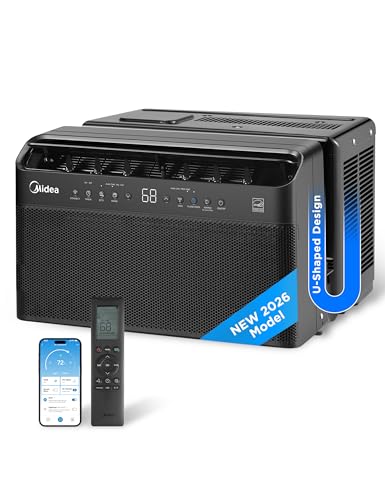
Small Air Conditioner That Doesn't Need a Window: Complete Guide
Not every room has a window that can accommodate a traditional air conditioner. Basement apartments, interior bedrooms, converted attics, and rooms with casement or awning windows all present the same challenge: how do you cool a space when a window unit simply will not fit? The good news is that a small air conditioner that doesn't need a window is no longer a niche product — modern cooling technology offers several reliable solutions.
This guide walks you through every viable windowless cooling option for small rooms. You will learn how each type works, which situations suit each best, and how to size and install a unit without making permanent structural changes. By the end, you will be ready to choose the right solution with confidence.
Key takeaway: You do not need a standard window to cool a small room. Portable air conditioners with vent kits, ductless mini-splits, and compact through-wall units all deliver effective cooling. The right choice depends on your wall structure, whether you rent or own, and how much space you can dedicate to the unit.
Why Standard Window ACs Fall Short
Traditional window air conditioners are designed for double-hung windows, where the lower sash lifts to create a rectangular opening. They rely on the window frame for support and use the opening to exhaust heat and draw in outside air for the condenser. When those conditions are not met, a standard window unit becomes impractical or unsafe.
Common scenarios that rule out a standard window AC include:
- Casement or awning windows: The sash cranks outward, leaving no stable horizontal sill to support a unit.
- Sliding windows: The opening is tall and narrow, so a horizontal unit cannot sit properly. Specialized slider and casement window units exist, but they are limited in availability.
- Basement and interior rooms: No exterior window means nowhere to mount a unit.
- Rental restrictions: Many leases prohibit window-mounted equipment for safety and appearance reasons.
- Security concerns: Ground-floor windows with AC units can be a break-in risk.
In each of these cases, a windowless cooling solution is the practical answer. The sections below cover the four main categories, with guidance on when each makes the most sense.
Option 1: Small Portable Air Conditioners
Portable air conditioners are the most flexible windowless solution. They are freestanding units on casters that cool the room and exhaust hot air through a flexible hose. The hose terminates in a window, door, or wall vent using a fabric or rigid kit that seals the opening around the hose.
How Portable Units Work Without a Window
The unit draws in room air, passes it over the evaporator coil, and blows cooled air back into the room. Heat absorbed from the room is transferred to the condenser and exhausted through the hose. The key requirement is a path for that hose — it does not need to be a window. Sliding doors, casement windows, and small wall vents all work.
For sliding doors, a sliding glass door air conditioner kit creates a secure seal. For sliding windows, a sliding window kit for a portable air conditioner or the more comprehensive sliding window portable air conditioner kit gets the job done.
Single-Hose vs. Dual-Hose Designs
Single-hose portable ACs are the most common and the simplest to set up. They exhaust hot air through one hose, which creates slight negative pressure in the room as air is pulled out. Dual-hose units use two hoses — one to draw in outside air for the condenser and one to exhaust it — which avoids negative pressure and improves efficiency in tightly sealed rooms. For very small spaces, the smallest dual-hose portable air conditioner options are worth considering.
Best Portable Options for Small Rooms
If you have limited floor space, look at the small portable air conditioner for small room category. A small lightweight portable air conditioner is easier to move between rooms and simpler to install. For a single room setup, the small portable air conditioner for one room guide covers sizing and placement in detail.
If your room is a home office, a small portable air conditioner for office will prioritize quiet operation and a compact footprint. For bedrooms, a small air conditioner for bedrooms should emphasize low noise and a reliable thermostat.
Best For
- Renters who cannot modify walls or windows
- Rooms with sliding doors or casement windows
- Spaces where cooling needs move between rooms
- Basements with a nearby door or vent opening
Limitations
- Noisier than split systems because the compressor sits inside the room
- Requires floor space and a nearby venting path
- Single-hose models can draw warm air into the room through gaps
Option 2: Ductless Mini-Split Systems
A ductless mini-split is the most capable and efficient windowless cooling solution. It consists of an indoor air-handling unit mounted on a wall or ceiling and an outdoor compressor connected by a small refrigerant line set. The only wall penetration is a three-inch hole for the lines — no window required.
For a small room, a single-zone mini-split is the ideal configuration. It delivers quiet, targeted cooling and typically achieves higher efficiency than portable or window units. If you need both heating and cooling, a single room air conditioning and heating unit provides year-round comfort from one system. For year-round temperature control specifically, the single room heating and air conditioning units category covers heat pump models.
Installation Considerations
Mini-splits require professional installation, including refrigerant line routing, vacuuming, and electrical work. This makes them best suited to homeowners planning to stay long term. The upside is a long service life, minimal noise, and no floor space consumption. If you need the most compact option, explore the smallest mini-split systems.
Best For
- Homeowners with no suitable window
- Rooms needing quiet, efficient, long-term cooling
- Spaces where exterior appearance matters
- Year-round heating and cooling in one unit
Limitations
- Higher upfront investment than portable units
- Professional installation required
- Requires an exterior wall for the line set and outdoor unit
Option 3: Small Through-the-Wall Air Conditioners
Through-the-wall units are installed permanently into an exterior wall sleeve. They look similar to window units but do not rely on a window frame. If your room has a solid exterior wall and you own the property, this is a clean, secure solution.
These units are available in capacities suitable for a single room and often include heat pump functionality. They are quieter than portable units and free up floor and window space. Installation requires cutting a wall opening and may need a dedicated electrical circuit. For small rooms, a compact through-wall unit is an excellent middle-ground option between a portable AC and a full mini-split.
Best For
- Homeowners with a suitable exterior wall
- Rooms where window space must remain clear
- Long-term installations with secure mounting
Limitations
- Permanent modification required
- Not suitable for renters
- Professional installation strongly recommended
Option 4: Freestanding and Specialized Small Units
Beyond the three main categories, several specialized products fill specific niches. A single room free-standing air conditioner is a portable unit designed for one-room use with a focus on stability and easy venting. If you need a battery-powered option for camping or off-grid use, the small portable battery-operated air conditioner category covers those models.
For spaces where a hose is impractical, a small portable air conditioner without hose uses evaporative cooling instead of refrigerant. These work best in dry climates and are not true air conditioners, but they provide meaningful relief in low-humidity conditions. A small evaporative air cooler is a related option worth understanding.
For camping and pop-up trailers, the small portable air conditioner for pop-up camper guide covers compact units that run on standard power. And if you want a small unit that also provides heat, look at the small portable air conditioner with heater or the small wall-mounted air conditioner and heater.
Comparing the Main Windowless Options
| Solution | Tier | Installation | Best For | Noise Level |
|---|---|---|---|---|
| Portable AC with vent kit | Entry-level to mid-range | DIY, no permanent changes | Renters, flexible rooms | Moderate to high |
| Ductless mini-split | Premium to luxury | Professional | Homeowners, long-term | Very low |
| Through-the-wall AC | Mid-range to premium | Professional, wall modification | Permanent installations | Low to moderate |
| Evaporative cooler | Entry-level | DIY, water fill | Dry climates only | Moderate |
Sizing a Small Windowless AC Correctly
Choosing the right cooling capacity is critical regardless of unit type. An undersized unit runs constantly without reaching the set temperature, while an oversized unit cools too quickly and cycles inefficiently, leaving the room humid.
As a starting point, a room up to roughly 150 square feet typically needs 5,000 to 6,000 BTU. For context, see the guide on room size for a 5,000 BTU air conditioner. Rooms between 150 and 250 square feet usually call for 8,000 to 10,000 BTU, while 250 to 400 square feet needs 12,000 to 14,000 BTU. Portable units are often rated in BTU as well, though their effective cooling can be lower than a window or split unit of the same rating.
Adjust upward for south-facing rooms, rooms with large unshaded windows, kitchens, and rooms with multiple occupants or heat-generating electronics. Adjust downward for heavily shaded rooms and basements, which stay naturally cooler.
For a complete sizing walkthrough, read how to size an air conditioner or use the BTU calculator by room size.
Venting and Sealing for Portable Units
The performance of a portable AC depends heavily on how well the vent kit seals. A loose or leaky kit allows hot outside air to re-enter the room, undermining cooling and raising energy use.
- Sliding doors: Use a floor-to-top fabric or rigid panel kit. A dedicated sliding glass door kit is the most reliable.
- Sliding windows: A sliding window kit secures the hose panel in the frame.
- Casement or awning windows: Look for kits designed for crank-out windows, or route the hose through a small wall vent.
- No opening at all: A portable unit cannot exhaust without a path. In that case, a mini-split or through-wall unit is the only real option.
Also consider a unit's condensate management. Many modern portable ACs evaporate condensate automatically, but in humid climates you may need to drain the tank manually. Check whether your candidate unit offers self-evaporation before committing.
Energy Efficiency and Long-Term Operation
Efficiency matters more for a single-room unit than many buyers expect, because these units often run for long hours during summer. Compare efficiency ratings within each product category rather than across categories.
Portable ACs use a different efficiency scale than central systems; look for units with variable-speed compressors when available. Mini-splits lead the category on efficiency and quiet operation, which is why they are the top-tier choice when installation is feasible. Through-wall units sit in the middle: more efficient than most portables, less efficient than a modern mini-split.
Smart controls can further reduce energy use. A smart air conditioner with scheduling and geofencing prevents cooling an empty room. A smart thermostat for an air conditioner adds precise control and remote management, and a smart air conditioner control retrofit kit can upgrade a unit that lacks built-in connectivity.
Renter-Friendly Strategies
If you rent, permanent modifications are usually off the table. The strongest renter-friendly strategies are:
- Portable AC with a door or window kit. Fully removable, no damage, and adaptable to many opening types.
- Specialized window unit for a non-standard window. If you have a sliding window, a dedicated kit or a compatible compact unit can work without modification.
- Negotiate with the landlord. Some landlords will approve a mini-split installation if a licensed contractor performs the work and the tenant covers the change.
For interior rooms with no exterior opening at all, portable units are not viable because there is nowhere to exhaust. In those cases, the practical answer is a ductless system routed to an exterior wall, or relocating the cooling need to a room that has a venting path. If your room is used for hosting guests, a single room air conditioning for guest accommodation setup with a mini-split or portable unit is often the most practical choice.
Common Mistakes to Avoid
- Oversizing the unit. An oversized AC short-cycles, leaving the room clammy. Match capacity to room size and heat load.
- Ignoring the vent path. A portable unit without a proper exhaust route will not cool effectively.
- Skipping the seal. Poorly sealed vent kits let heat back in and waste energy.
- Placing a portable unit in a corner. Restricted airflow reduces performance and can cause overheating.
- Choosing a single-hose unit for a tightly sealed room. Negative pressure pulls warm air through gaps; a dual-hose unit is better here.
- Delaying maintenance. Clean or replace filters monthly during heavy use. See the guide to cleaning an AC filter and the seasonal AC checklist.
Maintenance for Long-Term Performance
Every windowless cooling solution benefits from routine care. For portable and through-wall units, filter cleaning is the highest-impact task: a clogged filter reduces airflow, strains the compressor, and raises energy use. For mini-splits, schedule professional servicing once a year and clean the indoor filter every few weeks during the cooling season.
Inspect the vent hose and window kit for cracks each season. Check condensate drainage for portable units and ensure the drain plug is secure. For mini-splits, keep the outdoor unit clear of leaves and debris and verify the condensate line is not blocked.
If you notice reduced cooling, unusual noises, or water leakage, address the issue early. Many problems are simple to fix, such as a dirty filter or a blocked drain. For more, read the AC not cooling solution guide and the AC leaking water solution guide.
Frequently Asked Questions
Ready to Choose Your Windowless Cooling Solution?
Compare top-rated portable ACs, ductless mini-splits, and compact units selected for small rooms without windows.
View Recommended Units