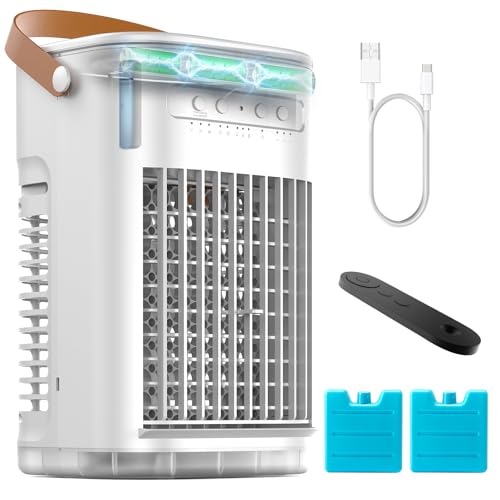
Small Portable Battery Operated Air Conditioner: Complete Guide
Everything you need to know about battery powered portable air conditioners — how they work, realistic cooling expectations, battery types, best use cases, and how to choose the right unit for camping, RVs, or emergency backup.
START READINGQuick Answer: A small portable battery operated air conditioner is a compact cooling device that runs on a rechargeable battery rather than a wall outlet. Most models deliver 2,000–5,000 BTU and cool personal spaces rather than full rooms. They are best suited for camping, RVs, tents, small offices, and emergency cooling — not as a replacement for a standard room air conditioner.
What Is a Battery Operated Portable Air Conditioner?
A battery operated portable air conditioner is a self-contained cooling unit powered by an internal rechargeable battery, a removable battery pack, or an external power station. Unlike standard portable ACs that require a wall outlet, these units can operate without mains power for a limited time.
There are three general categories:
- Evaporative (swamp) coolers: Use water evaporation to cool air. Effective in dry climates; not true air conditioners in the refrigeration sense.
- Compressor-based battery ACs: Use a small refrigeration compressor, similar to a standard AC but scaled down. More effective cooling but higher power draw and shorter battery life.
- Thermoelectric (Peltier) coolers: Use solid-state cooling. Very compact and quiet but limited cooling output, best for personal spot cooling.
Understanding which type you are looking at is essential, because "battery operated air conditioner" is used loosely in product listings and the real-world performance varies enormously between these categories.
Realistic Cooling Expectations
Battery technology limits how much cooling a portable unit can deliver. Even the best small battery AC cannot match a plug-in window or portable unit. Here is what to expect:
- Personal cooling, not room cooling: Most battery units cool the area directly in front of them (a desk, a tent sleeping area, a seat) rather than an entire room.
- Lower BTU output: Typical battery units deliver 2,000–5,000 BTU. A plug-in portable AC for the same room size often delivers 8,000–12,000 BTU.
- Limited runtime: Depending on battery capacity and cooling mode, runtime ranges from 2 to 8 hours per charge.
- Evaporative coolers need dry air: They work well in dry climates but become ineffective in high humidity.
- Compressor units drain batteries fast: True compressor-based battery ACs offer the best cooling but require large battery packs and have shorter runtimes.
Important: If you need to cool a full room on a regular basis, a plug-in small air conditioner for small rooms or a small lightweight portable air conditioner will deliver far better results. Battery units are a niche solution for specific situations.
Battery AC Types Compared
| Type | Tier | Best For |
|---|---|---|
| Evaporative battery cooler | Entry-Level | Dry climates, camping, personal cooling |
| Thermoelectric battery cooler | Entry-Level | Desk cooling, small enclosed spaces, quiet operation |
| Compressor-based battery AC | Premium | Tents, RVs, off-grid cabins, emergency cooling |
If you are camping and need a compact unit, see the smallest portable air conditioner for camping guide. For pop-up campers, the small portable air conditioner for pop-up camper guide covers power and venting requirements.
Battery Types and Runtime
The battery is the defining component of any battery operated AC. Understanding battery types helps you set realistic expectations:
Built-In Lithium-Ion Batteries
Common in small personal coolers. They are lightweight and recharge via USB or a wall adapter. Runtime is typically 2–6 hours on low settings, less on high. Built-in batteries are convenient but not user-replaceable in most cases.
Removable Battery Packs
Some larger units accept removable battery packs, similar to power tool batteries. This allows you to carry spare batteries for extended runtime. These systems are heavier and more costly but far more practical for camping or off-grid use.
External Power Stations
Some compact compressor ACs can run from a portable power station (solar generator). This offers the best runtime flexibility, but requires a large-capacity power station and careful watt-hour calculations. For more on this approach, see the solar powered portable air conditioner guide and the solar calculator.
Runtime Factors
- Cooling mode: High cool drains the battery fastest; fan-only mode lasts much longer.
- Ambient temperature: Hotter environments force the compressor to work harder.
- Battery age and capacity: Newer, larger batteries hold more charge.
- Insulation of the space: A tent or small enclosed space cools faster and drains less.
Best Use Cases for Battery Operated ACs
These units shine in specific situations where plug-in ACs are impractical:
- Camping and tent cooling: A battery unit can cool a sleeping area overnight when paired with a well-insulated tent. See the camping AC guide.
- RVs and pop-up campers: Useful for boondocking or when shore power is unavailable. The pop-up camper AC guide covers power requirements.
- Emergency backup: During power outages, a battery unit can keep a small room or sleeping area cool.
- Off-grid cabins: Pair with a solar setup for quiet, sustainable cooling.
- Small offices and desks: Personal spot cooling for a workstation. See the small portable air conditioner for office guide.
- Outdoor events and patios: Personal cooling in areas without power.
If your primary need is regular room cooling, a plug-in small portable air conditioner for one room is the more practical choice. For rooms without window access, see the small air conditioner that doesn't need a window guide.
Key Features to Look For
Battery operated ACs vary widely. Prioritize these features when comparing models:
Battery and Power
- Battery capacity (Wh): Higher watt-hours mean longer runtime. Check the stated runtime at low and high cooling settings.
- Recharge time: Some units take 4–8 hours to recharge, which matters for repeated daily use.
- Dual power options: Many units run on battery or AC power, and some support solar charging.
- Replaceable battery: A user-replaceable battery extends the unit's usable life.
Cooling Performance
- BTU or cooling capacity: Look for a stated cooling output. Beware of vague claims like "cools up to X sq ft" without BTU figures.
- Cooling type: Evaporative, thermoelectric, or compressor. Match to your climate and cooling needs.
- Water tank capacity (evaporative): Larger tanks last longer between refills.
- Airflow (CFM): Higher airflow improves perceived cooling, especially for spot cooling.
Convenience
- Portability: Handles, weight, and size matter for camping and moving between spaces.
- Noise level: Fan noise is common; quieter units are better for sleeping areas.
- Remote control or app: Convenient but usually adds battery drain for standby features.
- Timer and sleep mode: Useful for overnight use.
- Drainage: Evaporative and compressor units produce condensate; check how it is handled.
Durability
- Durable construction: Reinforced housing and weather-resistant coating matter for outdoor use.
- Solid build: Camping units take more abuse than indoor units.
What Battery Operated ACs Cannot Do
To make a good purchase decision, it helps to know the limits up front:
- They cannot replace a full-room air conditioner. Even the best battery AC cools a personal area, not an entire room, and not for extended periods.
- They cannot cool a hot room quickly. If the room is already hot and humid, a battery unit will struggle to make a noticeable difference.
- They cannot run indefinitely. Battery runtime is finite. Recharging takes hours.
- They cannot work well in humid climates unless compressor-based. Evaporative coolers become ineffective as humidity rises.
- They cannot handle large spaces. For a bedroom or living area, a plug-in unit is essential. See the small air conditioners for bedrooms guide if you want quiet, effective night cooling.
Maintenance and Care
Battery powered units need regular care to stay reliable:
- Charge the battery fully before storage and recharge every few months to prevent degradation.
- Empty and clean the water tank regularly on evaporative models to prevent mold and odors.
- Clean the filter on compressor-based units every few weeks during heavy use.
- Store in a dry place — moisture can damage battery contacts and internal components.
- Inspect the power adapter and cables for wear; damaged charging cables are a safety risk.
- Drain condensate from compressor units after each session.
If a compressor-based unit stops cooling, work through the AC not cooling troubleshooting guide before assuming the unit is faulty.
Frequently Asked Questions
Ready to Choose a Battery Operated Air Conditioner?
You now understand the realistic limits, battery types, and best use cases. Browse our recommended models below to find the right unit for camping, RV use, or emergency backup.
VIEW RECOMMENDED MODELS