Smallest Portable Air Conditioner for Camping: Compact Cooling Solutions
Discover the most compact portable air conditioners suited for tents, pop-up campers, and RV adventures. Learn how BTU ratings, power sources, exhaust requirements, and insulation realities affect real-world cooling so you can choose the right unit for your campsite.
START THE GUIDEWhat Counts as the “Smallest” Portable AC for Camping
The smallest portable air conditioners for camping fall into three broad categories, each with different size, power, and cooling characteristics:
- Personal evaporative coolers: Often under 10 pounds and 12 inches tall. They use water evaporation and a fan to produce a cool breeze. Best in dry climates; ineffective in high humidity.
- Battery-operated mini ACs: Compact compressor or thermoelectric units powered by built-in batteries or USB power banks. Cooling capacity is small, typically covering a tent or a single sleeping area.
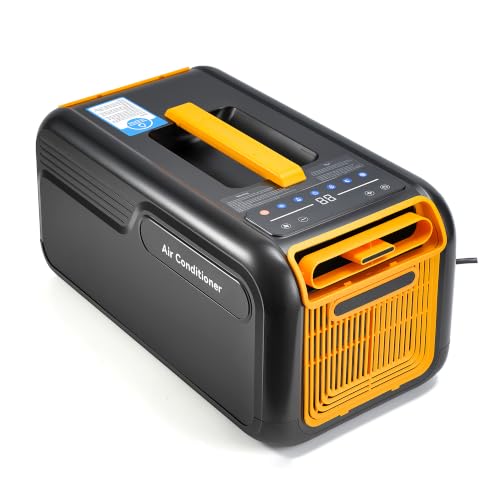
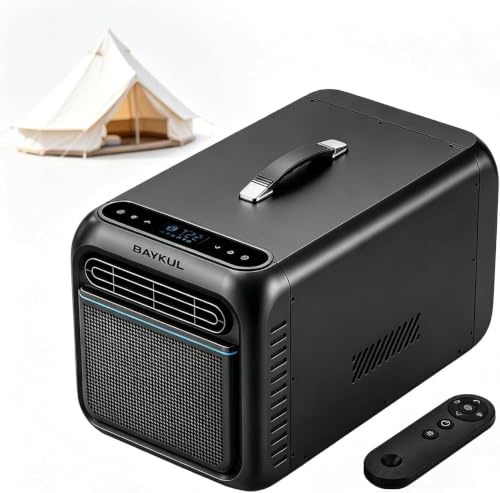
- Small compressor portable ACs: The most capable compact option, usually 15 to 40 pounds with 5,000 to 7,000 BTU. They require exhaust venting and a reliable power source, making them suitable for pop-up campers, RVs, and large tents with access to electricity.
True “smallest” units prioritize portability over raw cooling power. If your goal is to cool a small tent on a mild summer night, a battery-powered or evaporative model may be enough. If you need to bring down the temperature inside a large family tent during a heatwave, a small compressor unit is the realistic minimum. For related compact options, see the small lightweight portable air conditioner guide and the pop-up camper cooling guide.
BTU and Tent Sizing: Setting Realistic Expectations
Tent cooling loads are far higher per square foot than home cooling loads. Sun-exposed nylon can reach interior temperatures well above ambient, and every zipper and seam leaks conditioned air. Use the table below as a starting reference, then adjust for climate and tent material:
| Tent Capacity | Approx. Floor Area | Suggested BTU | Compact AC Feasibility |
|---|---|---|---|
| 1–2 person | 30–50 sq ft | 3,000–5,000 | Battery or evaporative units workable |
| 3–4 person | 60–90 sq ft | 5,000–7,000 | Small compressor AC recommended |
| 5–6 person | 100–140 sq ft | 7,000–9,000 | Compact compressor AC with venting |
| 8+ person / cabin tent | 150+ sq ft | 9,000–12,000 | Larger portable AC or mini-split |
For a deeper look at how BTU maps to room size, the 5,000 BTU room sizing reference provides useful context, even though tents require more capacity than similarly sized rooms. Campers with limited power should prioritize shade, reflective fly sheets, and cross-ventilation before adding BTU.
Power Sources: Battery, 12V, and Generator Options
Power is the single biggest constraint for camping air conditioning. A standard household outlet is rarely available at a campsite, so you need to plan how the unit will run through the night.
Battery-Operated and USB Units
Battery-powered mini ACs and USB evaporative coolers draw very little power, often under 100 watts. They can run from a portable power bank for several hours. Cooling capacity is limited, but they are the lightest and simplest option for solo campers and small tents.
Portable Power Stations
A small compressor portable AC drawing 500–700 watts requires a power station with a continuous output rating above that figure and enough watt-hours to last through the night. As a rule, plan for at least 1,000–2,000 Wh of usable capacity if you want several hours of runtime. Inverter-based power stations are quieter and safer than traditional generators.
12V and Solar Options
Some camping ACs accept 12V DC input, which pairs well with vehicle electrical systems and solar panels. Solar recharging extends runtime on multi-day trips. For related options, see the solar-powered portable AC guide and solar camping AC overview.
Generator Use
Traditional generators can power small AC units but are noisy, produce exhaust fumes, and are restricted in many campgrounds. Inverter generators are quieter and more fuel-efficient but still require careful placement away from tents.
For a broader look at low-power options, review the battery-operated portable AC guide and the energy-efficient portable AC overview.
Exhaust, Venting, and Tent Setup
Compressor-based portable ACs must exhaust hot air somewhere. In a tent, that usually means routing a hose through a zippered window or a purpose-built flap. Key considerations:
- Exhaust hose length: Longer hoses reduce efficiency. Keep the hose as short and straight as possible.
- Window kits: Many portable ACs include a sliding window panel. For tents, you may need to modify the panel or use a fabric sleeve.
- Sealing: Gaps around the exhaust hose let hot air and insects in. Use tape, fabric, or a dedicated tent vent.
- Condensate: Compressor units produce water. Some evaporate it automatically; others require a drain or manual emptying.
- Placement: Keep the unit on a level surface away from sleeping bags and fabrics that could block airflow.
Evaporative coolers and battery-powered personal units do not require venting, which simplifies tent setup. They do, however, add humidity, so they work best in dry climates. For no-vent alternatives, see the hose-free portable AC guide.
If you are cooling a pop-up camper rather than a tent, the setup is closer to an RV installation. Review the no-window AC options and window-free compact AC guide for related approaches.
Evaluating Compact Camping ACs by Product Tier
To compare models without relying on any monetary figures, this guide uses tier descriptors. Each tier reflects relative market position, build quality, and feature depth within the compact camping AC category:
Essential Tier
Basic evaporative coolers and USB-powered units. Minimal features, light weight, and simple operation. Suitable for mild climates and short trips.
Balanced Tier
Battery-operated mini ACs and compact compressor units with basic venting. A practical middle ground for weekend campers who need reliable cooling without excessive setup.
High-End Tier
Small compressor ACs with improved efficiency, quieter operation, and better sealing kits. Designed for frequent campers, pop-up campers, and extended trips.
Professional-Grade
Heavy-duty compact units with reinforced housings, enhanced corrosion protection, and higher continuous-duty ratings. Often specified for rental fleets, guided tours, and harsh environments.
Within a given tier, compare CEER or EER values for compressor units, runtime ratings for battery units, and water tank capacity for evaporative coolers. A balanced-tier model often delivers the best combination of portability and cooling for typical camping use, while a high-end tier unit justifies its position through quieter operation and longer service life. For similar comparisons, see the one-room portable AC guide and small room portable AC overview.
Climate and Environment: Matching the Unit to Your Campsite
The right camping AC depends heavily on where you camp:
Dry, Desert, and High-Altitude Sites
Evaporative coolers shine in dry air. They add moisture to the air, which can be welcome in arid conditions. They draw little power and are among the lightest options. The small evaporative air cooler guide explains capacity and water usage.
Humid, Coastal, and Forest Sites
In humid conditions, evaporative cooling becomes ineffective. Compressor-based portable ACs are the realistic choice because they remove moisture as they cool. A 5,000–7,000 BTU unit is the practical minimum for a family tent.
Mild Summer Nights
When overnight temperatures drop into the 60s or low 70s, a simple fan or battery-powered personal cooler is often sufficient. Saving power for the hottest afternoon hours is a smart strategy.
RV and Pop-Up Camper Use
Pop-up campers and small RVs often have built-in AC or can accommodate a compact portable unit with a window vent. The pop-up camper guide covers sizing and installation considerations specific to these vehicles.
Keeping a Camping AC Running Trip After Trip
Camping ACs face dust, pollen, and rough handling. A few habits extend their life:
- Clean filters after every trip. Dust and pollen from campsites clog filters quickly. Rinse and dry reusable filters before storage.
- Drain and dry water tanks. Evaporative coolers and compressor units with condensate tanks should be emptied and dried to prevent mold.
- Inspect hoses and seals. Exhaust hoses and window kits degrade with UV exposure and repeated folding.
- Store in a dry, dust-free place. A carrying bag or storage bin protects the unit between trips.
- Charge batteries to storage level. Lithium power stations and built-in batteries last longer when stored at partial charge.
For general cleaning guidance, see the AC filter cleaning guide.
Quick Buyer Checklist for Compact Camping ACs
- Estimate your tent’s interior temperature and humidity to decide between evaporative, battery, and compressor units.
- Match BTU to tent size and climate; plan for 5,000–7,000 BTU in a family tent.
- Confirm your power source can deliver the continuous wattage for several hours.
- Check whether the unit requires exhaust venting and whether your tent can accommodate it.
- Weigh the unit and consider how far you will carry it from vehicle to campsite.
- Review the noise rating; quiet operation matters at night in a tent.
- Look for sturdy housings and sealed controls that tolerate dust and moisture.
- Verify warranty coverage and availability of replacement filters or hoses.
Frequently Asked Questions
What is the smallest portable air conditioner for camping?
The smallest camping-friendly portable ACs are compact evaporative coolers and mini compressor units weighing under 15 pounds and measuring roughly 12 to 16 inches in any dimension. Battery-operated and USB-powered models are the most compact option, though their cooling capacity is limited to personal or tent-sized spaces.
Can a portable air conditioner run on a camping battery?
Small compressor-based portable ACs typically draw 400 to 800 watts and require a portable power station rated well above that continuous load. Battery-operated and evaporative models draw far less, sometimes under 100 watts, and can run from a modest power bank or 12V source for several hours.
How many BTU do I need to cool a camping tent?
Tents have poor insulation, so BTU requirements are higher per square foot than a house. As a rough guide, a 2-person tent may need 3,000 to 5,000 BTU, a 4-person tent 5,000 to 7,000 BTU, and a large family tent 7,000 to 10,000 BTU. Wind, sun exposure, and tent material significantly affect the real cooling load.
Do portable camping air conditioners need a window for exhaust?
Compressor-based portable ACs need a vent for hot exhaust air, typically routed through a window panel or tent flap using a hose kit. Evaporative coolers and battery-powered personal units do not require exhaust venting, which makes them easier to use in sealed tents.
Is a portable AC or a fan better for camping?
A fan uses far less power and is sufficient in dry, breezy conditions. A portable AC becomes worthwhile in hot, humid climates where airflow alone cannot provide comfort. Many campers bring both: a fan for mild nights and a small AC for peak afternoon heat.